

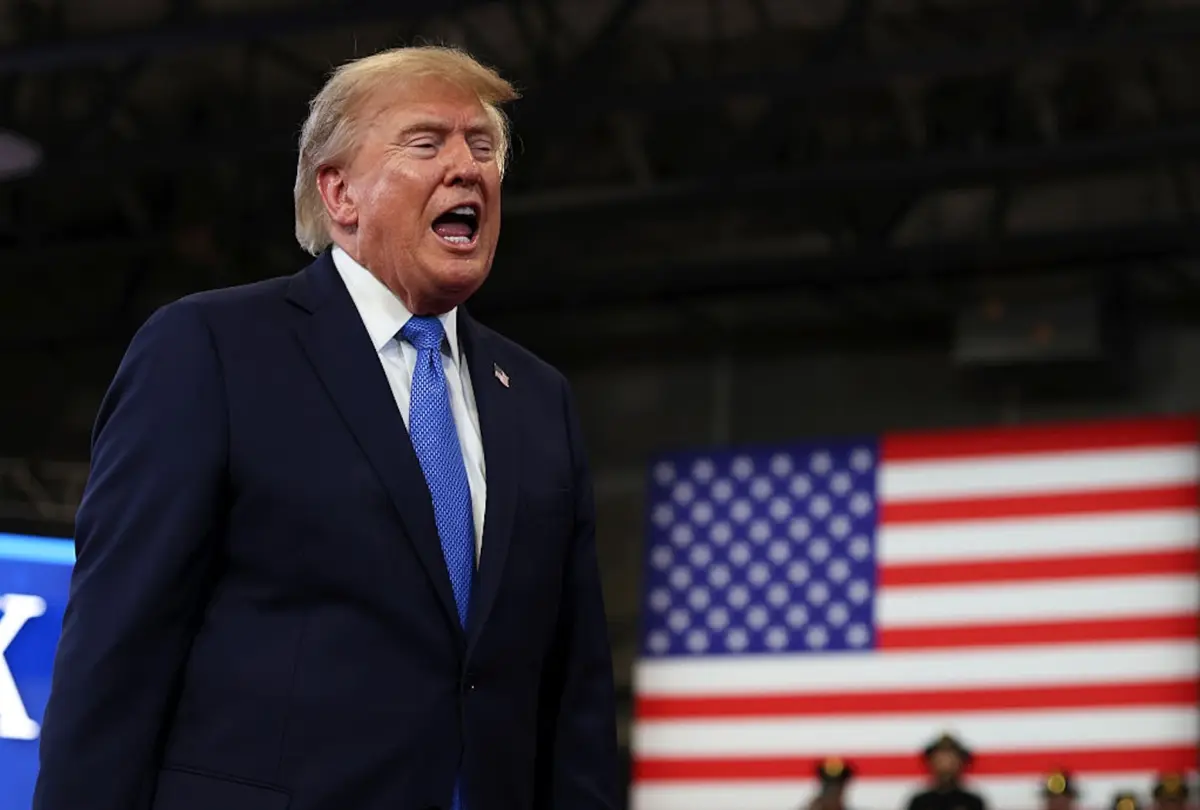
WASHINGTON — As voters cast their ballots across the nation during a high-stakes election cycle, President Donald Trump trained his sights not just on his political opponents, but on a familiar and historically vital ally: Fox News. In a flurry of blistering posts on Truth Social on Tuesday, November 3, 2026, the president unleashed a multi-pronged assault on the conservative cable giant, accusing the network of turning against him, coddling Democrats, manipulating polling data, and alienating its core base of viewers.
The public tirade underscores a persistent, volatile dynamic between the 47th president and a network that helped propel his political rise, yet frequently finds itself in his crosshairs whenever its coverage deviates from absolute fealty. This latest escalation highlights broader tensions regarding media consumption, network ratings, and the shifting boundaries of loyalty within the modern conservative movement.
Executive Overview
The friction between President Trump and Fox News reached a boiling point on Election Day, as the network attempted to navigate a complex political landscape. Taking to his proprietary social media platform, Trump claimed that Fox News was suffering from precipitous ratings declines entirely of its own making. Attributing the drop to what he characterized as excessive and biased coverage of Democrats, Trump declared, "FoxNews Ratings are way down (27%!) because they’re spending too much time covering the Trump Deranged Dumocrats!"
The attack extended well beyond editorial decisions. Trump took aim at the network’s proprietary polling, labeling it a series of "hit jobs," and unsubstantiatedly alleged that Fox Corporation financially backed prominent Democratic lawmakers. He also zeroed in on individual personalities, launching a personal attack against The Five co-host and Democratic strategist Jessica Tarlov.
While Fox News executives have pointed to broader macro-trends like "viewer fatigue" to explain recent audience shifts, Trump’s fiery intervention signals that the long-standing, symbiotic relationship between the conservative media empire and the leader of the Republican Party remains as fraught and transactional as ever.
Detailed Chronology: A Day of Digital Grievances
The barrage of social media posts began early Tuesday morning and continued throughout the day as election returns and day-of coverage dominated the airwaves.
1. The Ratings and "Deranged Democrats" Attack
Trump initiated his tirade by targeting the network’s overall programming strategy. In his opening post on Truth Social, he attempted to invert standard media metrics, arguing that Fox News’s commercial struggles were a direct result of its failure to fully embrace his political narrative.
"All of those people who used to watch Fox, and no longer do, get it. It’s them, not me," Trump wrote.
He asserted that his own political standing was currently "better than they have ever been," citing a CNN poll that he claimed demonstrated overwhelming, unified support among registered Republicans. By contrasting his purported popularity with the network’s numbers, Trump sought to position himself as the true voice of the conservative base while painting Fox News as increasingly out of touch.
2. Accusations of "Hit Job" Polling
Shortly after his initial ratings critique, Trump shifted his focus to the network’s polling apparatus, an occasional target of his ire during previous election cycles. He claimed that the Fox News Poll was systemically biased against him.
"The FoxNews Poll, always the worst, is so insulting with the questions they ask," Trump posted. *"Every question is a hit job, and every answer is ‘BULLS**!’"
The criticism reflects a deep-seated suspicion among the MAGA wing regarding mainstream polling operations, even those housed within conservative-leaning outlets, whenever those surveys show tight races or unfavorable metrics.
3. Financial Allegations Against Fox Corp.
In a more sweeping and unsubstantiated accusation, Trump expanded his grievances from editorial content to corporate financing. He questioned why Fox Corporation—or its corporate leadership—was allegedly providing financial support to high-ranking Democratic politicians and campaign committees.
Without presenting empirical evidence or financial records to substantiate his claims, Trump specifically named House Minority Leader Hakeem Jeffries (D-N.Y.) alongside Representatives Jamie Raskin (D-Md.), Ted Lieu (D-Calif.), and Pete Aguilar (D-Calif.). The allegation was designed to fuel a narrative among his followers that the network’s corporate umbrella was secretly hedging its bets or pandering to the progressive establishment.
4. Personal Vitriol Directed at Jessica Tarlov
The most visceral portion of the president’s rant targeted Jessica Tarlov, a liberal commentator and permanent co-host of Fox News’ high-rated afternoon roundtable program, The Five. Known for defending Democratic policies and pushing back against conservative orthodoxies on-air, Tarlov has frequently drawn the ire of conservative viewers.
Trump made it clear that he actively avoided segments featuring Tarlov, writing:
"I can’t stand Jessica Tarlov’s voice — DUMB AS A ROCK, but it’s the voice that gets me."
He added that he routinely changed channels whenever she appeared on screen, a theatrical declaration designed to signal his disdain to his millions of followers and validate their own frustrations with opposing viewpoints on cable news.
Supporting Context & Metrics: Ratings, Reality, and Murdoch’s Defense
To evaluate Trump’s claims, media analysts and industry watchdogs turned to recent Nielsen data and statements from network leadership.
The October Ratings Slump
Trump’s assertion that Fox News’ ratings were down 27% is broadly rooted in actual telemetry data from the previous month, though his attribution of the decline is disputed. According to data published by TheWrap utilizing Nielsen metrics, Fox News experienced a 27% drop in its total-day audience during October compared to the same period in the previous year.
However, media economists note that such fluctuations are typical in non-presidential or mid-cycle political environments, where audience engagement naturally ebbs following the peak intensity of a major election season. Despite the drop, Fox News retained its dominant position, easily outperforming competitors MSNBC and CNN to remain the most-watched cable news network in the country.
Lachlan Murdoch’s Explanation: Viewer Fatigue
On the eve of the midterms, Fox Corporation CEO Lachlan Murdoch addressed the ratings slide during an earnings call. Murdoch attributed the decline not to political alienation or editorial bias, but rather to a phenomenon known in the broadcasting industry as "viewer fatigue."
Following months of relentless political advertising, wall-to-wall campaign coverage, and heightened partisan rhetoric, ordinary television consumers frequently tune out of news programming altogether—a trend that affects all cable networks to varying degrees during post-election cycles.
Trump’s Historical Precedent
Undaunted by corporate explanations, Trump insisted that the network was repeating past mistakes that nearly brought it to ruin.
"They’re way down, not because of me, but because they are AGAINST me!" Trump wrote. "This happened once before, and Fox almost collapsed. It’s happening again!"
This was a thinly veiled reference to the post-2020 election period, when a segment of Trump’s base temporarily abandoned Fox News in favor of upstart right-wing competitors like Newsmax and One America News (OAN) after the network correctly called Arizona for Joe Biden on election night. While Fox eventually recovered much of its audience by recalibrating its primetime lineup, the memory of that viewer revolt remains a potent threat in the ecosystem of conservative media.
Official Statements and Industry Reactions
As of Tuesday evening, neither Fox News Media nor Fox Corporation executives had issued a formal, on-the-record response to the president’s Truth Social outburst. Traditionally, corporate leadership at the network chooses to absorb such public broadsides rather than engage in a direct, escalating public feud with a figure who commands significant influence over a vital portion of their viewership.
Media critics and industry observers, however, were quick to analyze the implications of Trump’s comments:
- The Balancing Act: Analysts note that Fox News occupies a precarious commercial space. To maintain its market dominance, the network must continuously appeal to the core populist conservative base that demands absolute alignment with Donald Trump. Simultaneously, the inclusion of liberal voices like Jessica Tarlov on shows like The Five provides a veneer of ideological diversity and generates high-engagement conflict that drives ratings—even if it occasionally infuriates the network’s most loyal constituents.
- The Weaponization of Media Criticism: By framing the network’s editorial choices as a betrayal, Trump effectively weaponizes his social media reach to police coverage in real time. This strategy pressures producers and anchors to tread carefully when analyzing his administration or reporting unfavorable polling data, knowing that any deviation could trigger a digital backlash from the leader of the party.
Future Outlook: A Marriage of Convenience Under Strain
The turbulent relationship between Donald Trump and Fox News is unlikely to stabilize permanently. It operates as a high-stakes marriage of convenience: Trump requires a massive, sympathetic television platform to broadcast his message directly to millions of voters, while Fox News relies on the magnetic, ratings-driving pull of the Trump phenomenon to maintain its financial supremacy in the cable television landscape.
Yet, as the media landscape fragments further into digital-first platforms, independent streaming services, and hyper-partisan alternative networks, the leverage dynamic continues to evolve. Trump’s willingness to openly bash Fox News’s corporate leadership, its polling methods, and its on-air talent demonstrates that he views media outlets not as independent journalistic institutions, but as extensions of his political coalition.
As this election cycle concludes and the nation looks toward future legislative and executive battles, the central question remains whether Fox News will adjust its programming to appease an increasingly demanding political base, or whether the network will continue to weather the digital storms fired off from Mar-a-Lago in defense of its broader editorial independence. For now, the remote controls in millions of conservative households—and perhaps the president’s own—will remain a battleground for the soul of conservative media.
