

Published: November 3, 2026
By: Alex Galbraith (Adapted & Expanded)
Executive Overview
In a high-stakes electoral showdown that captured the attention of the entire nation, Democratic Senator Jon Ossoff secured a commanding victory in Georgia on Tuesday, easily defeating Republican Representative Mike Collins. Projected by the Associated Press, Ossoff’s resounding win marks a dramatic consolidation of Democratic power in a pivotal Southern battleground state that has long served as a bellwether for shifting national demographics.
The victory is more than a local triumph; it is a watershed moment for the Democratic Party. Coming on the heels of a grueling legislative cycle, a historic government shutdown, and lingering economic anxieties, Ossoff’s campaign blueprint offers a masterclass in modern retail politics. By relentlessly anchoring his platform to tangible kitchen-table issues—most notably the preservation of Affordable Care Act (ACA) subsidies, soaring inflation, and foreign policy overreach—Ossoff neutralized early Republican advantages following Donald Trump’s 2024 victory in the state.
Yet, beyond the immediate math of the Senate chamber, this successful defense of his seat immediately accelerates speculation regarding Ossoff’s future on the national stage. Frequently touted by political insiders as a formidable contender for the 2028 presidential nomination, the incumbent senator’s aggressive posture, sharp rhetoric, and proven ability to win a diverse, high-turnover electorate elevate him to the upper echelon of the Democratic Party’s rising stars. As political pundits dissect the contours of his campaign, Ossoff’s sweeping win forces a recalibration of national electoral maps and sets off early tremors for the next presidential cycle.
Detailed Chronology: From Vulnerable Incumbent to Definitive Victor
The 2024 Aftermath and Early Vulnerabilities
Following Donald Trump’s victory in Georgia during the 2024 presidential election, conventional political wisdom dictated that Jon Ossoff would face an uphill battle defending his Senate seat. Historical trends in midterm and post-presidential cycles typically favor the party out of power, and early electoral forecasts predicted a difficult environment for any Southern Democrat attempting to hold statewide office in a polarized climate.
Republicans, sensing an opening, coalesced around firebrand GOP Representative Mike Collins. Collins hoped to ride the lingering momentum of the conservative base to flip the seat and expand the Republican Senate footprint.
The Crucible of the Government Shutdown
The turning point of the 2026 campaign materialized during a brutal, record-breaking federal government shutdown. While Washington gridlocked, Ossoff leveraged the crisis to crystallize his core message. Rather than retreating to defensive talking points, the senator staked his entire political viability on a fierce defense of healthcare affordability.
By tying his campaign directly to the protection of essential Affordable Care Act subsidies, Ossoff framed the legislative impasse not as a distant Beltway squabble, but as a direct assault on the economic security of working-class Georgian families. This calculated risk paid massive dividends, shifting public sentiment and insulating him from generic anti-incumbent backlash.
The Final Stretch and Collins’ Missteps
As election day approached, the momentum decisively swung toward the incumbent. While Ossoff executed a disciplined, hyper-localized ground game focusing on affordability, inflation, and the financial toll of escalating foreign entanglements—specifically hammering Trump’s costly conflict with Iran—Representative Collins’ campaign faltered under the weight of mounting self-inflicted controversies.
Collins faced persistent scrutiny regarding internal campaign payroll practices and awkward associations with alleged white nationalists. These distractions blunted the challenger’s message, preventing the Republican campaign from executing a unified closing argument and leaving an opening for Ossoff to capture key suburban and independent voters across the Peach State.
Supporting Context & Metrics: The Anatomy of an Upset
To fully understand the magnitude of Ossoff’s victory, one must examine the socio-political dynamics transforming Georgia over the past decade. Once a reliably red anchor of the Deep South, Georgia’s rapid urbanization—particularly in the Atlanta metropolitan area, anchored by counties like DeKalb, Fulton, Gwinnett, and Cobb—has fundamentally altered the state’s electoral math.
Economic Anxiety as a Decisive Wedge
Exit polling and campaign tracking data from the 2026 midterms revealed that economic pragmatism outranked abstract ideological purity for a vast majority of Georgia voters. Key metrics highlighted:
- Healthcare Priorities: Over 68% of independent voters surveyed in suburban Atlanta cited the preservation of healthcare subsidies and ACA protections as a top-three voting priority.
- Inflationary Pressures: Despite national economic indicators showing stabilization, localized cost-of-living increases in housing and consumer goods remained potent grievances, which Ossoff successfully pinned on congressional Republican obstructionism.
- Foreign Policy Fatigue: Ossoff’s aggressive stump speeches connecting domestic economic stagnation to expensive, unfocused foreign entanglements—such as the protracted conflict with Iran under the Trump administration—resonated strongly with veterans and working-class families alike.
The Shift in Campaign Style: Embracing the "Fighter" Persona
Historically, Democrats running in Southern states have often felt compelled to adopt a cautious, centrist demeanor designed to appease moderate Republicans. Ossoff discarded this playbook entirely for his 2026 reelection bid. Drawing stylistic comparisons to fiery progressives like Michigan’s Abdul El-Sayed, Ossoff embraced an unvarnished, aggressive counter-punching strategy.
Rather than shying away from direct confrontations with national Republican figures, Ossoff leaned into them, displaying a razor-sharp rhetorical edge that energized the Democratic base and generated viral campaign moments. This pivot signaled a broader evolution in how competitive Democrats intend to campaign in the post-Trump political era: refusing to yield the cultural or media narrative to their opponents.
Official Statements and Campaign Rhetoric
Ossoff’s campaign rhetoric throughout the summer and fall of 2026 defined a new standard for aggressive incumbent defense. Rather than hiding behind sanitized policy briefs, the senator regularly used his platform to skewer national Republican leadership and administration figures.
A quintessential moment occurred during a fiery campaign stop in August, when Ossoff drew both gasps and roaring applause by lampooning the priorities of the executive branch and targeting a high-profile controversy surrounding Trump aide Natalie Harp:
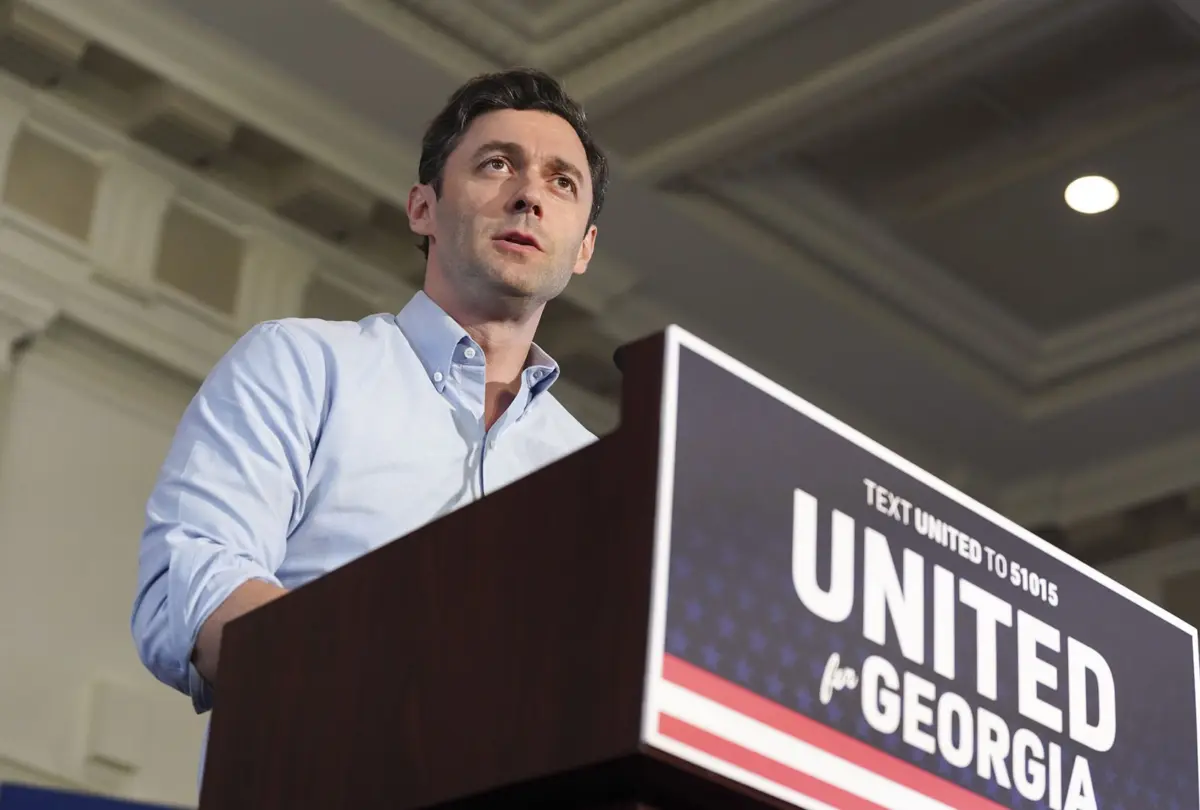
"So [Trump] doesn’t want to do this job," Ossoff declared to a packed auditorium of enthusiastic supporters. "He wants to build his ballroom and travel with Natalie on their apparently defenseless flying palace gifted by the Emir of Qatar."
This unscripted, direct-to-the-jugular style initially caused some consternation among traditional centrist commentators who clung to antiquated notions of detached political decorum. However, on the ground, the approach proved wildly effective at driving voter turnout and dominating local and national news cycles.
While the senator’s campaign staff maintained strict discipline regarding day-to-day legislative duties, Ossoff’s public addresses signaled a politician entirely comfortable operating on the national stage, effortlessly shifting from granular local agricultural and infrastructure concerns to broad critiques of executive overreach.
Future Outlook: The 2028 Horizon and National Implications
With his Senate seat secured for another six years, Jon Ossoff instantly transitions from a localized battleground incumbent to one of the most consequential figures in the future of the national Democratic Party.
The 2028 Presidential Speculation
Long before Tuesday night’s AP projections made it official, political analysts and donors had already begun whispering about Ossoff as a premier presidential contender for the 2028 Democratic primary. His ability to win statewide in Georgia—twice—puts him in an extraordinarily elite club of modern Southern Democrats, alongside figures like Jimmy Carter and Bill Clinton.
When directly questioned about his presidential ambitions, Ossoff has consistently downplayed the chatter, publicly maintaining that he has "zero interest in running for president." However, seasoned political observers note that such denials are standard protocol for incumbent senators fresh off arduous legislative campaigns.
What to Watch Next
All eyes will be fixed on Ossoff’s victory speech later tonight. Pundits, party strategists, and potential primary rivals will parse every word, cadence, and thematic choice for hidden clues regarding his national ambitions.
Whether Ossoff chooses to remain a powerful anchor in the United States Senate—where he can build seniority, spearhead legislative initiatives, and position himself as a elder statesman of a new generation—or decides to heed the inevitable calls to test the national waters in 2028, one reality remains indisputable: Georgia politics will never be the same, and Jon Ossoff has firmly cemented his place at the center of the American political conversation.
