

Executive Overview
With less than a week remaining before a high-stakes midterm election cycle, the political landscape is shifting dramatically. Across the country, the Republican Party’s grip on competitive districts is loosening, signaling a potential wave for the opposition. Facing narrowing margins and slipping poll numbers, GOP leadership has noticeably pivoted away from policy debates toward a darker, more familiar strategy: overt, unvarnished bigotry.
In the final stretch of the campaign, President Donald Trump, Vice President JD Vance, and top administration surrogates have amplified a wave of inflammatory rhetoric. While earlier phases of the election cycle relied heavily on red-baiting, manufactured panic over progressive figures, and routine attacks on transgender Americans, the closing days of the campaign have seen a wholesale resurgence of xenophobia. Most alarmingly, the party has leaned heavily into overt Islamophobia and anti-Arab bigotry.
From rallies in Michigan targeting high-profile Muslim and Arab-American candidates to sweeping, derogatory generalizations about foreign nations, the strategy reflects a desperate attempt to energize an aggrieved political base. This commentary examines how the modern Republican apparatus has abandoned traditional political dog-whistles in favor of brazenly exclusionary rhetoric, tracing the historical evolution of GOP messaging from the coded language of the late 20th century to the unfiltered rhetoric of today’s MAGA movement.
Detailed Chronology: The Escalation of Campaign Rhetoric
The trajectory of the 2026 midterm cycle has been marked by a shifting series of manufactured flashpoints, as conservative strategists search for a narrative that resonates broadly outside their core base.
Early-Cycle Fixations: Red-Baiting and Culture Wars
In the months following the 2025 electoral victories of progressive and democratic socialist figures—including New York Mayor Zohran Mamdani—the Republican Party initially gravitated toward red-baiting. Mainstream Democrats were repeatedly cast as communist sympathizers in an effort to scare moderate suburban voters. Concurrently, the party maintained its perennial focus on transgender Americans, utilizing exaggerated claims about local educational institutions to generate cultural anxiety.
The Xenophobic Foundation
Xenophobia has served as a central organizing principle of Donald Trump’s political career. While major legislative promises—such as avoiding new international conflicts or driving down consumer prices immediately upon taking office—have faced mixed results, the administration has aggressively pursued mass deportations and immigrant incarcerations. Latinos have borne the brunt of these policies, frequently characterized by campaign surrogates as violent criminals.
As the calendar turned toward the final stretch of the campaign, the scope of targeted groups expanded. Haitian immigrants faced intense scrutiny, echoing baseless claims promoted by Vice President JD Vance during the 2024 presidential race regarding cultural practices and communities. A viral social media post by Bo French, the GOP nominee for Texas Railroad Commissioner, briefly highlighted a growing conservative antipathy toward Indian Americans—a notable development given that both Vance and Ohio gubernatorial candidate Vivek Ramaswamy are the children of Indian immigrants.
The Pivot to Islamophobia
When broader attacks failed to secure the necessary electoral momentum, the campaign returned to a familiar playbook: Islamophobia.
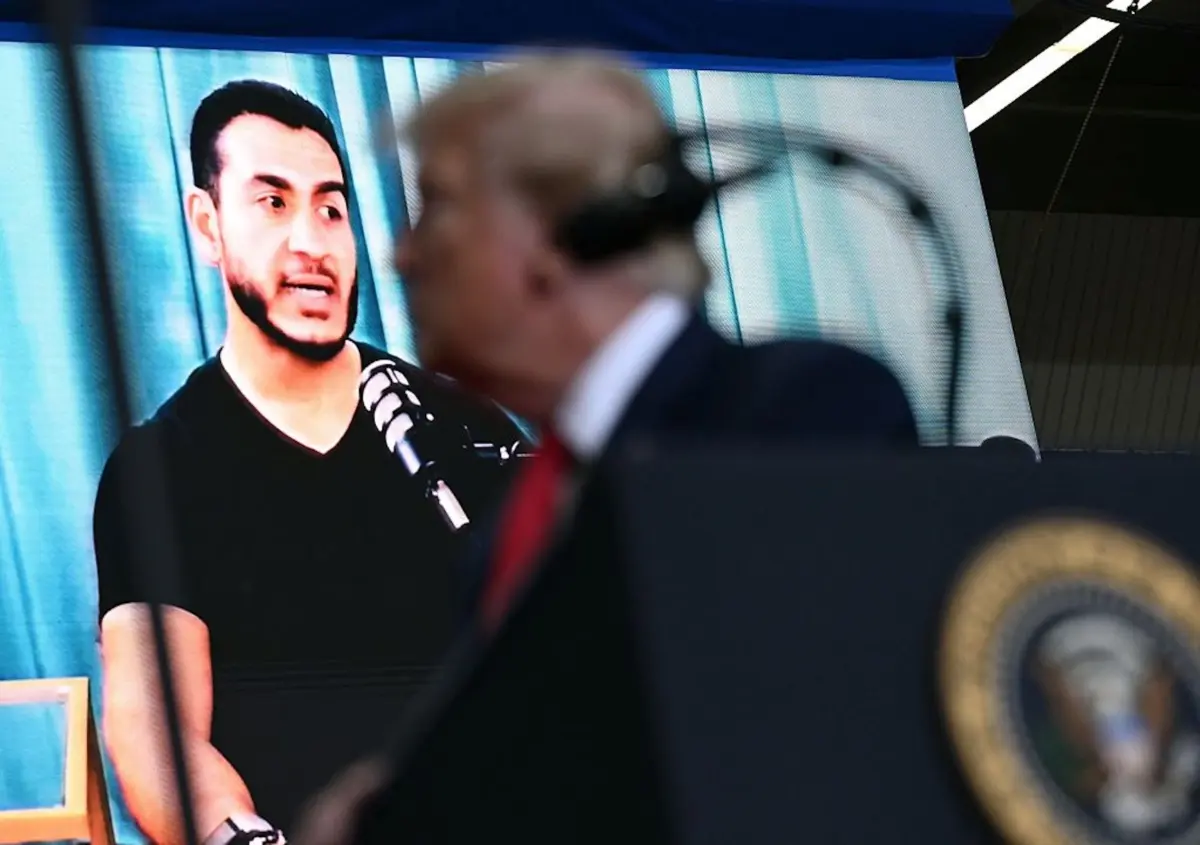
In late October 2026, the rhetoric reached a fever pitch during campaign stops in the Midwest. During a rally in Port Huron, Michigan, President Trump trained his sights on Dr. Abdul El-Sayed, the Michigan-born Democratic nominee for the U.S. Senate. Labeling El-Sayed a "violent jihadist," Trump’s remarks were compounded by Vice President Vance, who publicly described the candidate as a "psychopath" pushing "anti-white racial hatred."
Simultaneously, Health and Human Services Secretary Robert F. Kennedy Jr. delivered remarks attacking the global Muslim population, asserting sweeping and demonstrably false claims regarding cultural and academic contributions. These developments mark a clear escalation in the administration’s closing electoral strategy.
Supporting Context & Metrics: Historical Roots and Modern Shifts
To understand the severity of the current rhetoric, it is necessary to examine how conservative political communication has evolved over the past half-century.
From Dog-Whistles to Direct Attacks
For decades, political strategists understood that explicit racism and xenophobia risked alienating crucial blocks of suburban, college-educated white voters. Lee Atwater, a notorious advisor to Presidents Ronald Reagan and George H.W. Bush, famously outlined the mechanics of the "Southern Strategy." Atwater explained that to maintain a coalition without relying on overtly racist terminology, campaigns had to utilize coded language—substituting policy debates over "welfare," "busing," or "states’ rights" for explicit racial animus.
- Richard Nixon: Popularized the phrase "law and order" as a proxy for cracking down on urban civil rights demonstrations.
- Ronald Reagan: Utilized the trope of the "welfare queen" during his 1976 primary campaign and launched his 1980 general election campaign with a speech on "states’ rights" in Philadelphia, Mississippi, near the site where three civil rights workers were murdered in 1964.
- Donald Trump: Shattered the traditional boundaries of political speech by embracing "birtherism" against President Barack Obama, frequently emphasizing his middle name to stoke suspicion.
The Contemporary Landscape
In the current political climate, the subtlety championed by Atwater has been largely discarded. Modern MAGA rallies routinely feature explicit attacks on immigrant communities, foreign nations, and religious minorities.
Data compiled by civil rights organizations and watchdog groups throughout the 2026 cycle indicate a sharp uptick in online harassment and rhetoric directed at Arab-Americans and Muslims, particularly in battleground states like Michigan and Minnesota. Minnesota has long been a focal point for the administration, largely due to its prominent Somali-American community and the national profile of figures like Representative Ilhan Omar. Remarks characterizing foreign nations in vulgar terms and calling for domestic populations to "fight back" against immigrant neighbors represent a departure from historical political norms, moving away from coded language toward explicit confrontation.
Official Statements and Campaign Responses
The rhetoric deployed in the closing days of the midterm campaign has drawn sharp rebukes from civil rights organizations, interfaith coalitions, and Democratic leaders, while being vigorously defended or amplified by administration officials.
The Administration’s Defense
Surrogates for the administration have maintained that their warnings regarding national security, border enforcement, and cultural integration are legitimate matters of public debate. During his Michigan rally, President Trump defended his focus on local demographics, arguing that aggressive rhetoric is necessary to protect domestic communities. Vice President Vance similarly doubled down on his characterizations of opposition candidates, framing his attacks as a defense of traditional American values against progressive policies.
Condemnations and Civil Rights Alerts
In response, organizations such as the Council on American-Islamic Relations (CAIR) and various legal advocacy groups have issued urgent warnings regarding the safety of candidates and voters.
"The systematic deployment of anti-Muslim bigotry and xenophobia for electoral gain is a direct threat to the safety of American communities," said a coalition representative in a joint statement released following the Michigan rallies. "When public officials characterize entire religious and ethnic groups as inherently dangerous or foreign, it normalizes violence and undermines the foundational principles of a pluralistic democracy."
Democratic campaign committees have likewise condemned the messaging, arguing that the reliance on inflammatory rhetoric demonstrates a lack of viable solutions for economic and domestic challenges facing voters ahead of election day.
Future Outlook: The Long-Term Impact on American Politics
As the 2026 midterms draw to a close, political analysts are assessing the broader consequences of this rhetorical shift for the future of American governance and electoral politics.
Short-Term Electoral Calculus
In the immediate term, the success of this strategy remains to be seen. While aggressive mobilization techniques often succeed in turning out highly committed base voters, they risk accelerating alienation among independent and moderate suburban voters who historically decide tight congressional races. Close Senate and House races in states like Michigan, Mississippi, and other competitive battlegrounds will serve as a referendum on whether fear-based identity politics can override economic and localized concerns.
Institutional Norms and Democratic Discourse
Beyond the immediate electoral outcomes, the normalization of overt Islamophobia and xenophobia poses long-term challenges for the American political system. As the boundaries of acceptable public discourse continue to expand outward, the capacity for bipartisan consensus on domestic security, immigration reform, and civil rights diminishes.
Historians and political scientists note that once a political party abandons coded language in favor of explicit identity-based attacks, returning to institutional norms becomes increasingly difficult. Whether the electorate rejects or rewards this strategy at the ballot box in November will establish a critical precedent for future national campaigns, determining whether open bigotry remains a central pillar of modern American political strategy.
