

Executive Overview
For millions of viewers tuning in each week, Dancing with the Stars (DWTS) represents the pinnacle of television escapism—a dazzling weekly spectacle of sequins, high-energy choreography, and celebrity reinvention. Yet, beneath the polished exterior of the ballroom lies a grueling crucible of intense physical labor, high-stakes public scrutiny, and mounting psychological pressure.
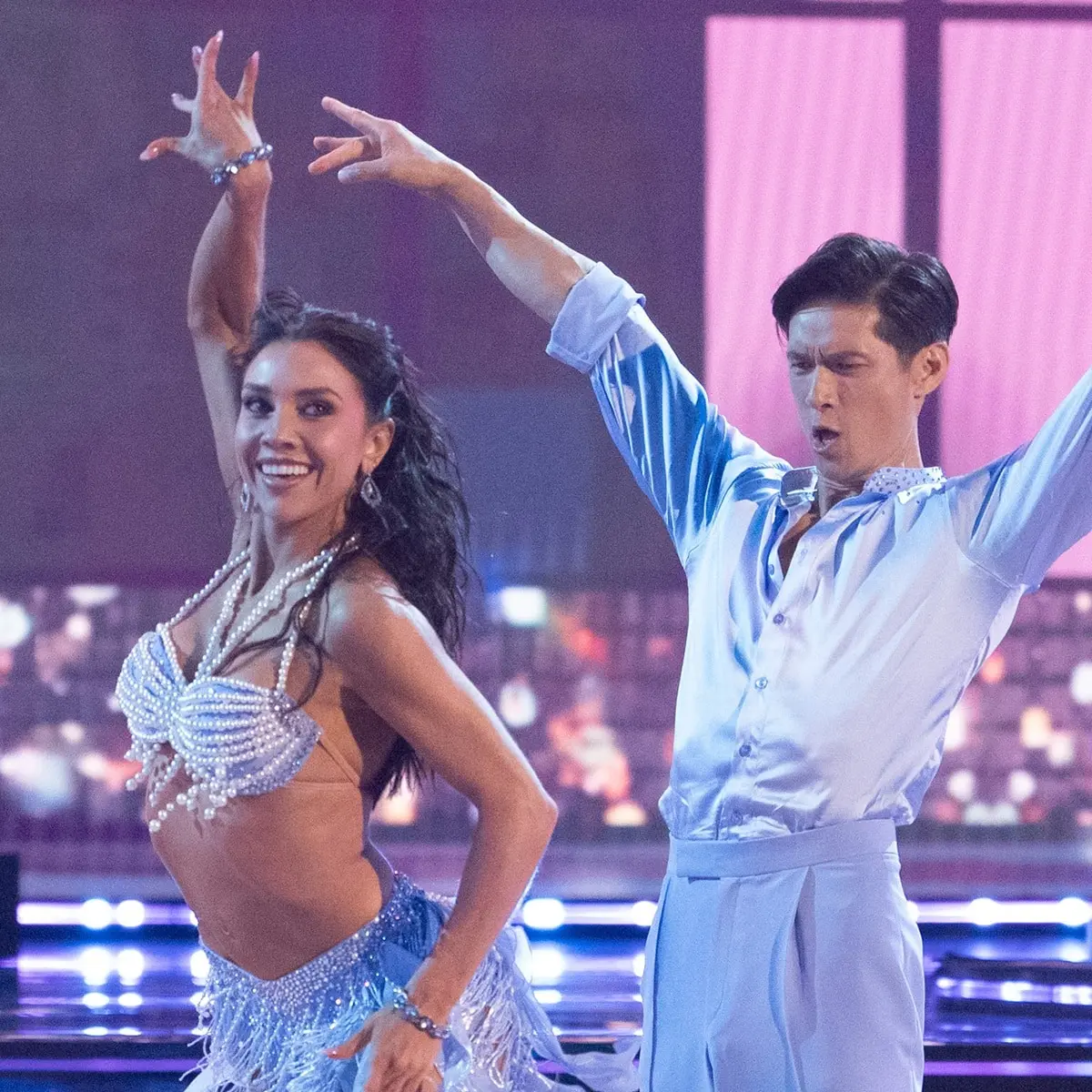
The realities of this demanding environment were laid bare following the dramatic elimination of Glee star Harry Shum Jr. and his professional partner, Jenna Johnson, during the Season 35 semifinals on November 17. Exiting the competition after a run that earned them consecutive perfect 10s from the judges, the duo offered a remarkably candid glimpse into the toll the season had taken. Citing a "chaotic" atmosphere defined by intense social media toxicity and offscreen controversies, Shum and Johnson revealed that they and their fellow castmates emerged from the experience "trauma bonded."
This deep-dive investigative report examines the events surrounding Shum and Johnson’s departure, the broader cultural and social media pressures facing modern reality television contestants, the lingering impact of unscripted offscreen drama, and the rigorous economic, logistical, and operational realities that power one of television’s most enduring franchises.
Detailed Chronology: The Road to the Semifinals and Elimination
Season 35 of Dancing with the Stars was framed from the outset as a high-intensity battleground, pairing seasoned professional dancers with a diverse array of actors, athletes, and internet personalities. Among the standout pairings was Harry Shum Jr.—known globally for his dynamic dance background and acting chops—and Jenna Johnson, a veteran pro with a history of deep tournament runs.
Throughout the season, Shum and Johnson consistently delivered technically demanding and emotionally resonant routines. However, the path to the semifinals was far from straightforward, punctuated by intense competition and a volatile digital landscape.
The Semifinal Turning Point
By the time the competition reached the November 17 semifinals, the field had narrowed significantly. Shum and Johnson delivered two standout routines that evening, securing rave reviews and perfect 10s across the board from judges Carrie Ann Inaba, Derek Hough, and Bruno Tonioli. Despite the judges’ validation, the combined weight of viewer voting and cumulative scores resulted in Shum and Johnson’s elimination just steps away from the grand finale.
Rather than expressing bitterness, Shum’s immediate reaction was one of unexpected tranquility. In an exclusive post-show interview with E! News, the actor admitted to feeling a profound sense of peace.
"I oddly feel like at ease," Shum reflected. "I don’t feel sad. It’s really weird. I kind of felt like we accomplished everything we wanted to. Would’ve been nice to do a finale, but I think we’ll have our own finale in some sort of way, shape or form in the future."
With Shum and Johnson’s exit, the path to the finale cleared for the remaining heavy-hitting pairs: Maura Higgins and Mark Ballas, Amber Glenn and Pasha Pashkov, Ezra Frech and Daniella Karagach, Connor Wood and Rylee Arnold, and Tatyana Ali and Jan Ravnik. As he stepped away, Shum offered parting words of encouragement to the finalists: "You are good enough. You deserve to be where you’re at. Love this experience, and I think we’ve all been able to do something really incredible in our own way."
Supporting Context & Metrics: Unpacking the "Trauma Bond" and Digital Toxicity
While the ballroom lights shine bright, the psychological landscape of contemporary reality television has evolved into an increasingly perilous domain. For Shum and Johnson, the challenges of Season 35 extended far beyond mastering difficult choreography; they were deeply intertwined with the relentless nature of modern social media culture.
The Social Media Crucible
Addressing reporters and interviewers after their elimination, Shum did not mince words regarding the digital environment surrounding the show. He highlighted a pervasive culture of online negativity that he believes heavily impacts the entire cast.
"There’s a lot of trauma bond just because this year has been a little crazy," Shum explained. "Social media is a little nuts. I hope they address that at a certain point, because I think there’s a good amount of bullying that doesn’t feel really good, and I think the rest of the cast feels it."
The concept of a "trauma bond"—traditionally used in psychology to describe emotional attachments born out of a cycle of abuse, stress, or shared adversity—was utilized by Johnson and Shum to capture the unique camaraderie forged among the cast members. Isolated by grueling rehearsal schedules and subjected to the microscopic scrutiny of internet fandoms, the celebrity-pro pairs found themselves leaning heavily on one another for mutual survival and emotional support.
Anatomy of an Offscreen Controversy
The pressure-cooker atmosphere of Season 35 was further exacerbated by high-profile offscreen drama involving the extended DWTS family. Earlier in the season, tensions flared when Jenna Johnson’s husband, fellow pro Val Chmerkovskiy, posted a concerning message directed at judge Carrie Ann Inaba.
The public dispute stemmed from Inaba’s critical commentary regarding a specific lift performed by Johnson and Shum. In his online response, Chmerkovskiy made a direct reference to Will Smith’s infamous 2022 Oscar slap—an escalation that prompted swift network intervention. Chmerkovskiy was suspended from the show for a week while producers and cast members worked behind the scenes to de-escalate the situation and clear the air.
The incident underscored the blurred lines between professional critique and personal defense in an era where performers and their loved ones maintain direct, unfiltered lines of communication with fans via social media platforms.
Official Statements and Healing: The Aftermath of Conflict
In the wake of the Chmerkovskiy-Inaba controversy, efforts toward reconciliation were swift and public, demonstrating a commitment to restoring harmony within the production.
Carrie Ann Inaba took to Instagram to address the situation directly, emphasizing mutual respect and professionalism among the women in the DWTS ecosystem:
"I wish everyone knew that we had hugged after the Super Bowl show," Inaba wrote, "and that we walked away from the night as two powerful women who are professional and also emotional. And this is allowed."
Adding to her statement, the veteran judge emphasized her ongoing commitment to open dialogue:
"I am always open and available to listen, discuss and find a peaceful understanding. And this has always been true."
This public display of reconciliation helped stabilize the set as the competition entered its final, most intense weeks. It served as a reminder that beneath the competitive drive, the cast and crew operate within a tight-knit professional community striving to maintain equilibrium amid high-stress conditions.
Future Outlook: Inside the Business, Logistics, and Mechanics of DWTS
Beyond the interpersonal drama and emotional highs and lows, Dancing with the Stars remains a massive, highly structured television enterprise. Understanding the ecosystem that produces the show sheds light on why the stakes—and the corresponding pressures—are so exceptionally high for everyone involved.
Financial Realities: What Do Celebrities and Pros Make?
The financial architecture of DWTS has long been a subject of industry fascination. Reports, including disclosures compiled by Variety and insights shared by former contestants like radio personality Bobby Bones, reveal a tiered compensation structure designed to reward longevity in the competition.
- Celebrity Base Pay: Historically, contestants command a baseline guarantee of approximately $125,000 covering the rehearsal period and the first two weeks of live shows. As contestants survive subsequent elimination rounds, incremental weekly bonuses push potential earnings higher. While older industry estimates capped standard earnings around $295,000, high-performing or prominent stars have reportedly negotiated significantly higher totals through extended runs. Bobby Bones famously noted on Jason Tartick’s Trading Secrets podcast that his victory in Season 27 yielded close to $400,000 total via escalating weekly bonuses.
- Professional Dancers: The show’s professional dance partners operate under specialized contracts that guarantee compensation for a specific number of weeks, mitigating the risk of early elimination. However, as Jenna Johnson noted during an appearance on Kelly Stafford and Hank Winchester’s podcast The Morning After, contracts vary widely. Crucially, pros do not receive an increased payout or cash prize for winning the coveted Len Goodman Mirrorball Trophy. Instead, financial incentives are tied to reaching the finale, which secures full-season pay alongside a dedicated performance bonus.
- Troupe Members and Demotions: The financial hierarchy also impacts the broader dance ensemble. Former pro Lindsay Arnold revealed on Trading Secrets that transitioning from a main professional pairing to a troupe member resulted in a salary reduction of more than 50 percent, highlighting the competitive nature of securing a top-tier slot on the show’s roster.
The Matchmaking Process and Creative Rigor
The alchemy that pairs celebrities with professional dancers is governed strictly behind closed doors. According to interviews with former showrunner Rob Wade and past cast members, pros have virtually no input regarding their partners.
"You get no say," Lindsay Arnold explained on Maggie Sellers’ Hot Smart Rich podcast. "It’s very much just, ‘Here’s your partner. Make it work.’"
Selections are executed by production teams based on rigorous criteria encompassing height, physical build, general personality traits, and interpersonal compatibility. As Wade noted, historical missteps in pairing incompatible personalities proved disastrous for morale, making careful behavioral matching essential for a sustainable production.
The Exhausting Rehearsal and Production Cycle
The physical toll of DWTS cannot be overstated. Current and former participants routinely describe an all-consuming schedule that leaves virtually no room for personal pursuits during the active season.
Rylee Arnold detailed the relentless daily cadence on the Lightweights Podcast:
- Daily Rehearsals: Four-hour blocks scheduled strictly across morning, afternoon, or evening windows.
- Administrative and Creative Work: Beyond physical training, pros spend hours meeting with creative teams, coordinating choreography, and analyzing technical performance footage.
- The Weekly Grind: Tuesdays serve as live show days, followed immediately by continuous rehearsals from Wednesday through Sunday. Mondays are dedicated to camera-blocking sessions before the cycle repeats live on Tuesday.
This punishing schedule is mirrored behind the scenes by the costume department. Led by designers like Daniela Gschwendtner and Steven Norman Lee, a dedicated team of tailors and artisans creates custom outfits for every single pair from scratch each week, often completing fitting adjustments mere hours before live broadcast.
Conclusion
As Season 35 draws toward its ultimate conclusion, the experiences articulated by Harry Shum Jr. and Jenna Johnson offer a vital reality check regarding the true cost of unscripted entertainment. The "trauma bond" forged by the cast is symbolic of an environment where physical exhaustion, digital vitriol, and high-pressure competition converge.
Yet, it is precisely this intense crucible that transforms a standard dance competition into a culturally magnetic television event. By laying bare their vulnerabilities, advocating for healthier digital spaces, and ultimately finding peace in their artistic output, Shum and Johnson have redefined what it means to exit the ballroom with grace—leaving a lasting imprint on a franchise that continues to demand absolute resilience from everyone who enters its doors.
