

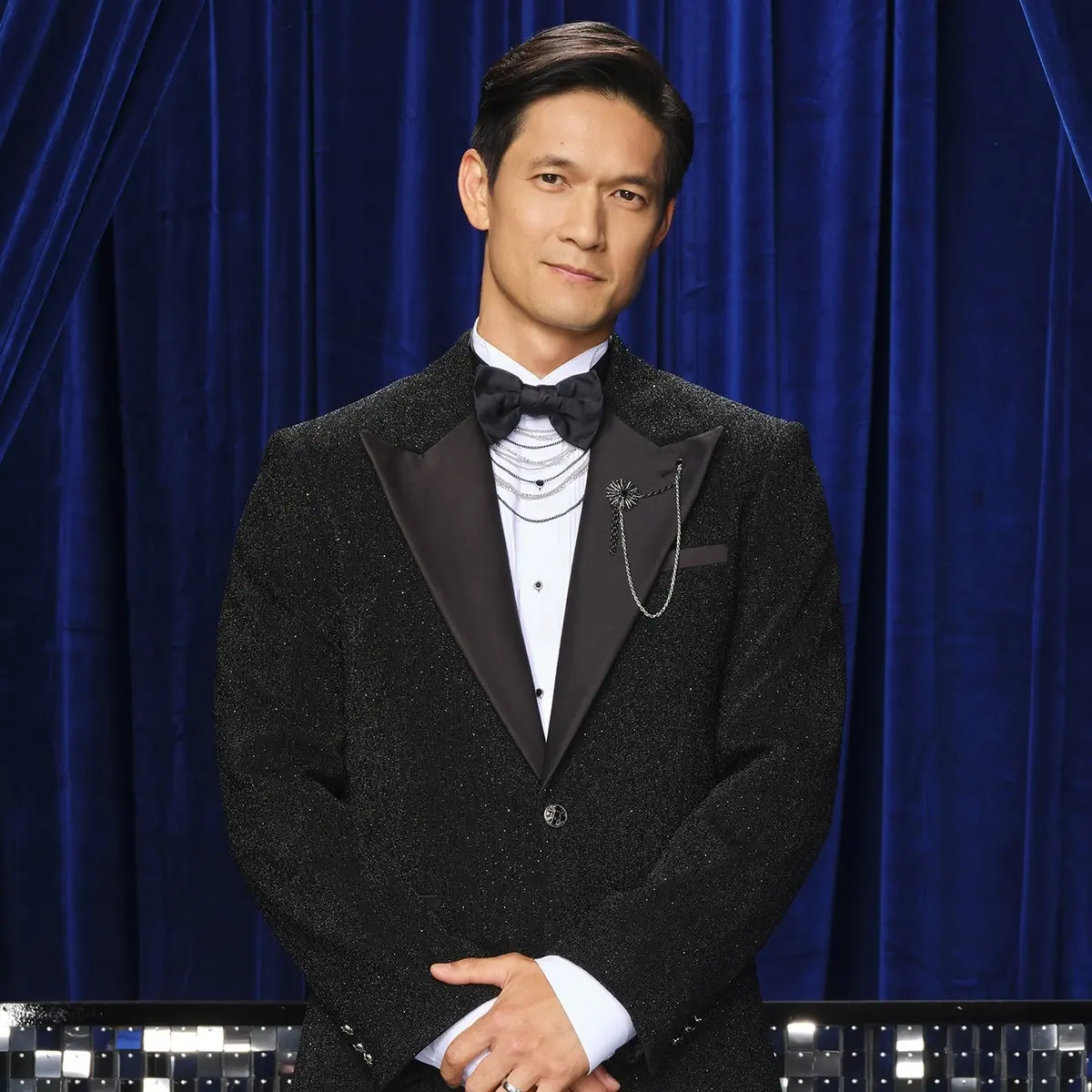
The competitive ballroom floor of ABC’s flagship reality competition series, Dancing with the Stars (DWTS), is rarely described as a low-stress environment. However, the emotional fallout from Season 35’s rigorous semifinal episode has brought to light a deeper, more candid look at the psychological toll exacted on its participants. Following a heartbreaking elimination just one week prior to the grand finale, Glee alum Harry Shum Jr. and professional dance partner Jenna Johnson sat down for an exclusive post-show debrief. While Shum expressed a surprising sense of serenity regarding his departure, the conversation quickly pivoted to the intense physical and emotional crucible of the competition, with the duo playfully characterizing their shared experience as a "trauma bond" forged through the relentless demands of the show.
Shum’s journey on Season 35 was defined by high-stakes performances, creative breakthroughs, and a deeply emotional tribute to his late Glee costar, Naya Rivera. Yet, beneath the glamour of rhinestones, custom weekly costuming, and prime-time applause lies a machine fueled by grueling four-hour daily rehearsals, exhaustive press cycles, and strict production timelines.
This article explores the nuances of Shum and Johnson’s elimination, the emotional weight of their artistry, and the broader structural realities of Dancing with the Stars. By examining behind-the-scenes compensation models, strict pairing protocols, and the demanding lifestyle of professional and celebrity dancers alike, we uncover the true price of chasing the coveted Len Goodman Mirrorball Trophy.
Detailed Chronology: The Road to the Semifinals
The path to the Season 35 semifinals was characterized by rapid development and high emotional stakes for Harry Shum Jr. Best known for his gravity-defying moves on Fox’s Glee and his dramatic performances in Grey’s Anatomy, Shum entered the ballroom with a built-in rhythm, but not the specialized technical training required for competitive Latin and Ballroom styles.
Paired with seasoned pro Jenna Johnson—a veteran champion known for her victories with Adam Rippon and Joey Graziadei—Shum faced an uphill battle against a fiercely competitive roster. The partnership immediately locked into a grueling schedule. According to insights shared by fellow DWTS alumni regarding typical production schedules, Shum and Johnson’s daily routine likely consisted of mandatory four-hour physical blocks, supplemented by choreography planning, media obligations, and continuous adjustments dictated by the show’s uncompromising timeline.
The breaking point of their emotional journey arrived during the Nov. 17 semifinal episode. Facing the chopping block just one week shy of the finale, Shum delivered a poignant quickstep set to Naya Rivera’s iconic cover of Amy Winehouse’s "Valerie." The performance served as a direct homage to the 2010 Glee episode in which Shum and Rivera originally danced together.
"It felt like that song alone meant so much to so many people, and even to us," Shum reflected in his post-elimination interview with E! News, offering a special nod to fellow Glee alum Heather Morris. "It was a moment where you kind of saw the underdog be able to have the spotlight, and I always remember that feeling."
Despite the emotional resonance of the tribute, the judges’ scores and viewer votes fell short, resulting in Shum and Johnson’s elimination. While the actor maintained an unexpected sense of tranquility—stating, "I oddly feel at ease. I don’t feel sad—it’s really weird. I kind of felt like we accomplished everything we wanted to"—Johnson admitted to heartbreak over a specific unfulfilled vision: an "epic" and "really fun" freestyle routine designed for the grand finale that the ballroom would never witness.
Supporting Context & Metrics: The Financial and Operational Realities of DWTS
To fully understand the weight of a Dancing with the Stars elimination, one must examine the intricate mechanics and financial structures that govern the production. Far from a casual celebrity cameo, participating in DWTS requires an all-encompassing lifestyle change for both stars and professional partners.
Celebrity and Professional Compensation Models
The financial architecture of the show has long been a subject of industry speculation. In 2019, Variety reported that celebrity contestants secured a base guarantee of $125,000 covering the rehearsal period and the first two weeks of live shows. Progressing further into the competition triggers incremental weekly bonuses, with historical maximums capping near $295,000.
However, recent disclosures from past participants suggest these figures can vary. During a September 2025 appearance on Jason Tartick’s Trading Secrets podcast, Season 27 winner Bobby Bones detailed a more lucrative sliding scale for high-advancement competitors. Bones estimated earning roughly $50,000 per episode late in the season, culminating in a total payout approaching $400,000. ABC has consistently declined to publicly confirm these specific financial figures.
For professional dancers like Jenna Johnson, compensation relies on tiered contracts that guarantee payment up to specific elimination thresholds. While winning the championship does not yield a cash grand prize—beyond the physical Len Goodman Mirrorball Trophy and regional bragging rights—making it to the finale ensures full-season compensation alongside performance bonuses. Conversely, demotions within the dance troupe can drastically alter a dancer’s earnings; former pro Lindsay Arnold famously revealed that her salary was slashed by more than half when she transitioned from a main professional partner to a troupe member.
The Pairing Process and Rehearsal Demands
The formation of celebrity-pro partnerships is an exercise in clinical precision managed entirely by production executives. According to Lindsay Arnold and Jenna Johnson, professional dancers have virtually zero input regarding their partners.
"You get no say," Arnold noted during a May 2025 podcast appearance. "It’s very much just, ‘Here’s your partner. Make it work.’"
Pairings are kept strictly confidential until the moment of the live reveal to capture authentic reactions on camera. Former showrunner Rob Wade explained that the matchmaking criteria prioritize height, physical build, and psychological compatibility to prevent on-air friction.
Once paired, the physical toll is immediate. Season 33 breakout star Rylee Arnold outlined the relentless cadence of the rehearsal calendar in late 2024: four-hour daily blocks (scheduled in strict morning, afternoon, or evening shifts), followed by production meetings, choreographic review, and independent study. With camera blocking taking place on Mondays and live shows airing on Tuesdays, the professional and celebrity duos operate in an endless loop with virtually no scheduled days off.
The Costume Department Machine
Complementing the intense physical training is an astonishingly fast-paced creative department. Costume designer Daniela Gschwendtner revealed that the wardrobe team operates on a strict five-day turnaround from initial concept to finished garment—translating to roughly half a day per custom-made outfit, exclusive of hand-applied rhinestones. With approximately 20 dedicated staff members and an independent tailor shop, the production manufactures entirely new wardrobes weekly, ensuring contestants never repeat competitive looks while managing a massive logistical enterprise.
Official Statements and Industry Perspectives
The internal dynamics of the ballroom often mirror intense theatrical productions, where high pressure breeds profound camaraderie. Shum and Johnson’s candid admission of a "trauma bond" speaks volumes about the psychological conditioning required to survive weeks of public scrutiny, physical exhaustion, and rigorous critique from judges.
-
Harry Shum Jr. on Artistic Fulfillment:
"I want to make more art with her, and that’s what it’s really about. I like making art that people enjoy. So, to me, I felt that energy [in] the people that I did see and the people that really loved what we were able to do in this dance… I’m now a trained dancer because of her."
-
Jenna Johnson on the Unseen Finale:
"That’s the part that I’m most heartbroken about. We had concocted this incredible journey that the ballroom won’t see this time. But maybe we’ll put it out there somewhere."
These statements underscore a thematic shift among modern DWTS contestants: while the competitive drive to lift the Mirrorball Trophy remains fierce, the true currency of the show is often found in the cross-disciplinary skill acquisition and deep interpersonal bonds formed in the rehearsal studio. For Shum, transitioning from an actor with rhythmic flair to a functionally trained ballroom dancer represents a career milestone that transcends a place on the leaderboard.
Future Outlook: Life After the Ballroom
As Season 35 hurtles toward its definitive conclusion, the ripple effects of Harry Shum Jr. and Jenna Johnson’s partnership will undoubtedly extend beyond the television screen. For Shum, the experience has unlocked a renewed appreciation for live, physical performance—a domain he navigated effortlessly on Glee but explored through an entirely different lens under Johnson’s strict technical tutelage.
The concept of the "trauma bond" coined by the pair highlights an evolving narrative within reality television: transparency regarding the mental and physical exhaustion demanded by elite competition. As audiences increasingly demand authenticity from public figures, the willingness of stars to pull back the curtain on the grueling mechanics of television production fosters a deeper connection with viewers.
Looking forward, fans may yet see the realization of the unperformed freestyle number Johnson teased in post-elimination coverage. Whether brought to life via digital platforms, future concert tours, or specialized promotional events, the creative output of the Shum-Johnson pairing has firmly established a lasting footprint in the ballroom’s storied history. Ultimately, while the competition ends with a single winning couple, partnerships like Harry’s and Jenna’s demonstrate that artistic victory is measured not by placement, but by transformation.
