

Executive Overview
The political landscape of the United States experienced a tectonic upheaval following the closing of polls in the November 2026 midterm elections, shattering years of manufactured conservative dominance and exposing deep, structural fractures within the Make America Great Again (MAGA) movement. For months leading up to the election, right-wing media apparatuses—anchored by Fox News, prominent streaming influencers, and partisan surrogates—projected an air of invincibility. Pundits assured viewers that a wave of conservative enthusiasm, fueled by cultural anxieties and economic grievances, would easily secure congressional majorities and preserve state-level strongholds.
Instead, the electorate delivered a historic rebuke. Driven by voter fatigue over soaring living costs, foreign entanglements, and the tangible impacts of controversial legislative packages, Americans orchestrated a sweeping "blue tsunami." The resulting political map featured historic breakthroughs, including a wave of first-time minority and progressive governors and senators across traditionally conservative and swing states alike.
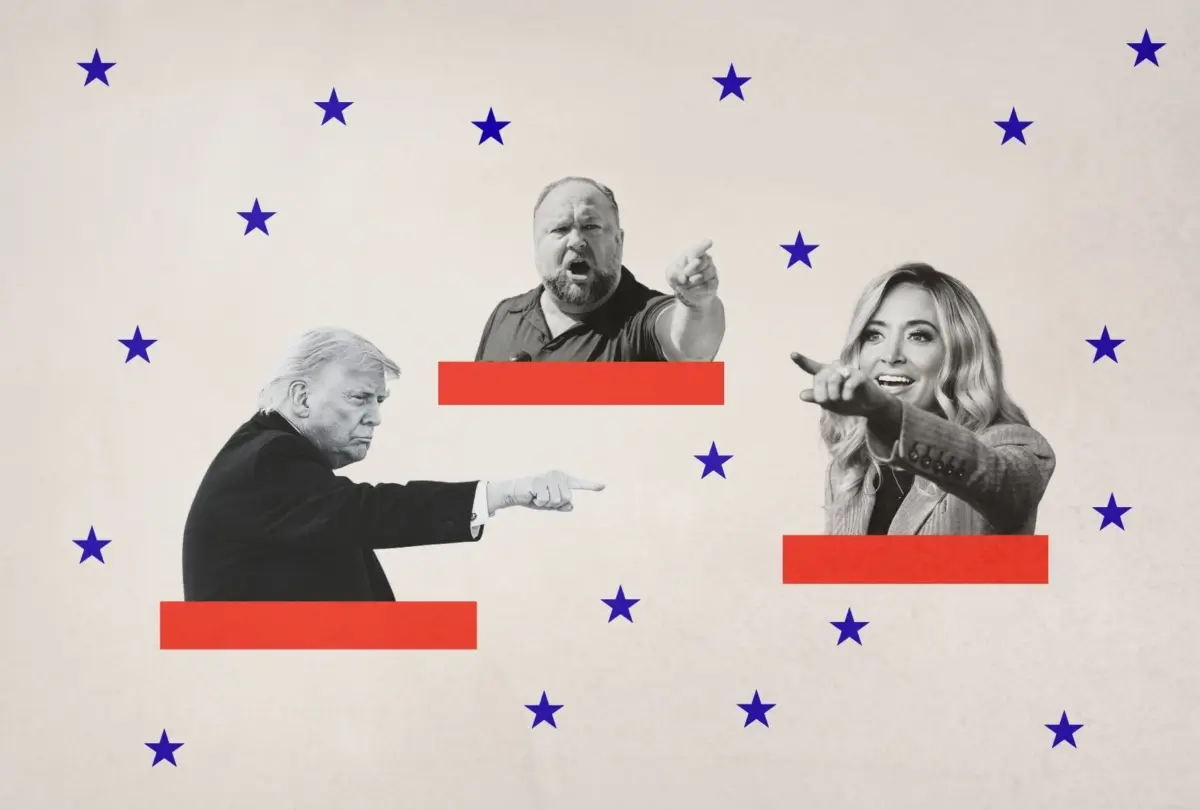
In the wake of this electoral catastrophe, the conservative ecosystem underwent a rapid and chaotic implosion. Rather than engaging in constructive self-reflection, leading figures within the MAGA movement and right-wing media engaged in a vicious circular firing squad. Conspiratorial figures like Alex Jones suggested that Donald Trump was a "Democratic sleeper cell," mainstream influencers pointed fingers at immigration and voting access laws, and conservative lawmakers engaged in blistering public feuds. Ultimately, the 2026 midterms laid bare an uncomfortable truth for the American right: the contemporary conservative movement was a uniquely Trump-specific phenomenon, utterly incapable of sustaining its cultural hallucinations when confronted with economic reality.
Detailed Chronology: From Election Eve Hubris to Morning-After Panic
The Final Hours of Denial
As late as forty-five minutes before the first polls closed on Tuesday, November 4, 2026, the conservative media bubble remained entirely detached from the impending political reality. On Fox News’ The Five, co-host Greg Gutfeld offered a sardonic summation of the network’s election-eve posture, joking, "Gas prices are so high, I’m going to vote for the party that wanted to trans my kids." Gutfeld and his colleagues dismissed the possibility of a Democratic resurgence, insisting that no blue wave was materializing.
Across social media and streaming platforms, the sentiment was echoed with absolute certainty. Outkick founder and Fox contributor Clay Travis posted at 3:00 p.m. EST that Republicans were surging in Florida and that mainstream polling was about to be proven wrong once again. Right-wing influencers and commentators spent the afternoon reassuring millions of viewers that the electorate was unified behind the MAGA agenda, blind to the subterranean currents shifting against them.
The Polls Close and the Delusions Shatter
When the ballots were counted, the narrative of a permanent right-wing realignment evaporated. The American electorate decisively rejected the prevailing economic and cultural platform, delivering an avalanche of votes that caught both political parties off guard.
The scope of the Democratic victory was historic, reshaping statehouses and federal delegations across the nation:
- Georgia elected Keisha Lance Bottoms as the state’s and the nation’s first Black woman governor.
- Michigan sent Dr. Abdul El-Sayed to Washington as the country’s first Muslim senator.
- New Hampshire broke barriers by electing Chris Pappas as the first openly gay man in the Senate.
- New Mexico made Deb Haaland its first Native American woman governor, while Minnesota selected Peggy Flanagan as its first Native American woman senator.
- Texas delivered a stunning upset as Gina Hinojosa defeated three-term incumbent Governor Greg Abbott, becoming the state’s first Latina governor and its first Democratic governor in over thirty years.
- Ohio elected its first woman governor, Dr. Amy Acton, and South Carolina tapped Dr. Annie Andrews as its first elected woman senator.
- Kansas broke a 94-year drought by electing a Democrat to the U.S. Senate.
Even Rupert Murdoch’s New York Post—traditionally a loyal house organ for Donald Trump—abandoned its spin, running a front-page headline blaring "BLUE TSUNAMI" alongside the declaration: "Trump suffers historic rebuke as Dems romp in midterms." Meanwhile, on Fox and Friends, anchor Ainsley Earhart was forced to pivot from triumphalism to warning viewers that "your wallet and your way of life" were now vulnerable to incoming Democratic majorities.
Supporting Context & Metrics: The Anatomy of a Movement’s Collapse
The 2026 midterms revealed that the conservative media apparatus had spent years confusing its ability to dominate online cultural conversations with genuine electoral representation. Several structural factors contributed to the collapse:
- The Economic Reality vs. The "Trump Dividend": Months prior to the election, the administration heavily promoted its signature legislative packages, including the controversial "$5,000 Trump Dividend" checks. Voters, however, viewed the financial maneuvers as superficial remedies for rampant inflation. Middle- and working-class Americans increasingly found the cost of living—spanning housing, fuel, and groceries—insurmountable.
- The Limits of Cult-of-Personality Politics: The political architecture of Trump 2.0 operated largely without the traditional establishment guardrails that characterized his first term, such as moderate advisors or institutional stalwarts. When the economy soured, voters could no longer treat Trump’s governance as harmless entertainment. Furthermore, the MAGA brand proved non-transferable to down-ballot imitators and regional surrogates.
- The Wealth and Influence Exodus: High-profile billionaires and tech moguls who heavily invested in conservative strongholds—such as Elon Musk, who reportedly funneled $150 million into Texas to secure Republican dominance—saw their efforts utterly neutralized by the groundswell of voter turnout. By Wednesday morning, early celebratory declarations had quietly vanished from influential social media profiles.
Official Statements and Internal Warfare
As the scale of the defeat became undeniable, the right-wing ecosystem abandoned any pretense of unity. Instead of assessing policy failures, leading figures launched into a frantic cycle of finger-pointing, institutional distrust, and personal vitriol.
Fox News and the White House Reaction
During Fox News’ live election night coverage, former New York City Mayor Bill de Blasio was seated between former Trump press secretaries Kayleigh McEnany and Karoline Leavitt. De Blasio bluntly told the panel they were "missing the plot," pointing to foreign wars and crushing domestic inflation as the primary drivers of voter revolt.
Watching from the White House, Donald Trump took to Truth Social to express his fury over the network’s programming choices:
"Why does FoxNews have deBlasio… I can’t stand Jessica Tarlov’s voice — DUMB AS A ROCK, but it’s the voice that gets me."
When Greg Gutfeld read the president’s text message live on air—illustrating Fox News’ modern function as a real-time suggestion box for the executive branch—liberal panelist Jessica Tarlov responded via X: "Reality is a tricky thing," adding that the president "should get better at dealing with it."
The Influencer Ecosystem’s Circular Firing Squad
On alternative media platforms and rival networks like Newsmax, commentators scrambled to diagnose the loss through increasingly bizarre lenses.
- Alex Jones, livestreaming his reaction to the returns, offered one of the most radical departures from orthodox MAGA thought, claiming that Donald Trump was actually a deep-state operative: "I think he’s a Democrat. I’m 100% at war with Trump. He’s not that rtarded. He did this on purpose. I think he’s the ultimate Democrat sleeper cell and he works for them."*
- Influencers and Pundits such as Benny Johnson and the account Libs of TikTok invoked Great Replacement theories, while Fox’s Lawrence Jones surveyed Texas and warned supporters, "There is a lesson here. Don’t be so welcoming."
- Laura Loomer adopted a catastrophic tone on social media, posting, "America is over and so is the American Dream." Other commentators blamed Senate leadership for failing to pass restrictive voting legislation like the SAVE Act, effectively arguing that the solution to a sweeping electoral repudiation was reducing the size of the electorate.
- Mainstream Right-Wing Commentators offered starkly cynical takes: The Daily Wire’s Ben Shapiro posted the "everything is fine" fire GIF, while The Federalist’s Sean Davis deployed the hot-dog-suit meme, symbolizing a refusal to accept accountability.
Public Feuds Among Lawmakers
The recriminations quickly turned personal among elected officials. Representative Nancy Mace appeared on Fox News and bluntly told host Mark Levin to "STFU," blaming his favored foreign conflicts for alienating working-class Americans struggling to afford housing, gas, and groceries.
Levin fired back viciously on social media, labeling Mace a "washed up political loser" and "one of the most mentally unhinged POS to ever be in Congress," adding that she was angry because she would "actually have to now work for a living."
Meanwhile, Florida Governor Ron DeSantis highlighted his state’s solitary status, gloating that with governors’ races lost in Texas, Ohio, and Georgia, Florida stood alone among the ten most populous states with a Republican governor. Adding a bizarre footnote to the week’s events, Katie Miller—podcaster, administration spouse, and prominent MAGA surrogate—admitted during an interview with CBS News that she had not voted at all in Virginia, citing fears of doxxing and prioritizing her personal safety over civic participation.
Future Outlook
The 2026 midterm elections mark a profound inflection point in American politics. The mythology of an inevitable, permanent MAGA realignment has been irrevocably punctured by an electorate prioritizing economic stability, institutional competence, and tangible domestic relief over perpetual cultural grievance.
As Democrats prepare to install Hakeem Jeffries as the nation’s first Black speaker of the House and assume working majorities in both chambers of Congress, the conservative movement faces an existential crisis. Stripped of its electoral aura and mired in internal recriminations, right-wing media and political leadership must decide whether to double down on conspiratorial isolation or undergo a painful, comprehensive reckoning. For now, however, the loudest voices of the populist right remain trapped in a circular firing squad—performing for one another while the political reality they long denied continues to reshape the nation.
