The rapid integration of generative artificial intelligence into design and prototyping workflows has promised unprecedented velocity for product teams. Yet, design leaders and engineers frequently encounter a frustrating reality: AI-generated prototypes rarely deliver consistent, production-ready results. Instead of coherent systems, teams are handed fragmented interfaces plagued by tiny inconsistencies scattered across components, undocumented design decisions, lingering hard-coded values, and arbitrary layouts.
The root cause of this friction is not a lack of capability within modern Large Language Models (LLMs), but rather a fundamental mismatch in how human intent is communicated to automated systems. Expecting an AI model to spontaneously deduce complex design hierarchies, accessibility standards, and nuanced design system tokens directly from static mockups or raw design files is an exercise in frustration.
Drawing from a pioneering practical framework developed by Hardik Pandya of Atlassian, the industry is shifting toward a more disciplined paradigm: treating design decisions as foundational infrastructure and transforming traditional design systems into AI-ready ecosystems. By implementing structured spec files, strict token layers, and automated auditing tools like FigmaLint, organizations can drastically reduce "design drift," minimize human oversight, and elevate the reliability of AI-generated interfaces.
Detailed Chronology: The Evolution of AI Prototyping and the Shift Toward Structured Guidance
Phase 1: The Illusion of Autonomous Interpretation (Early LLM Prototyping)
When AI-assisted code generation and prototyping tools first emerged, the prevailing methodology relied on zero-shot or few-shot inference directly from visual assets. Designers would upload screenshots, high-fidelity Figma mockups, or wireframes, asking LLMs to "translate this into code" or "generate a functional prototype."
Initially celebrated as a breakthrough, this approach quickly hit a ceiling. Without explicit, machine-readable rules, models were forced to rely on probabilistic assumptions. An AI would frequently hallucinate spacing values, substitute inconsistent color codes, or completely overlook accessibility (a11y) guidelines. The resulting prototypes required extensive refactoring, often negating the time saved during the initial generation phase.
Phase 2: Recognizing the Context Deficit
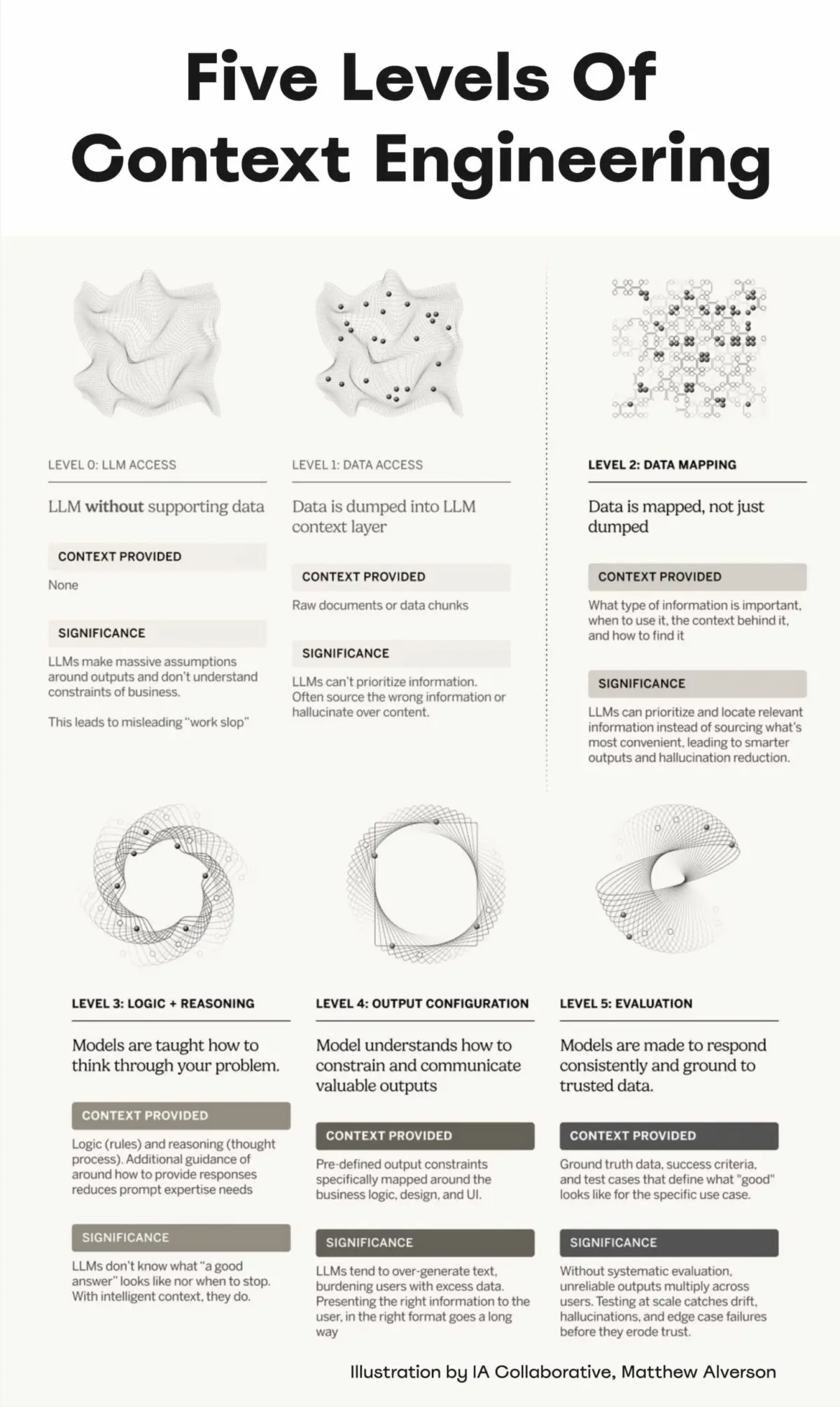
As product teams scaled their usage of AI across larger codebases, engineering and design leadership identified that the core bottleneck was not model intelligence, but context engineering. Models lacked a unified source of truth. Design systems lived in sprawling Figma libraries, while implementation rules were scattered across disparate documentation pages, Jira tickets, and developer memory.
The industry realized that AI models cannot successfully implement a design system they cannot mathematically parse. Just as human developers require comprehensive documentation and style guides, AI agents demand structured, predictable inputs to consistently execute design decisions.
Phase 3: The Atlassian Framework and the Rise of "AI-Ready" Design Systems
A significant turning point arrived with the publication of Hardik Pandya’s practical guide on crafting LLM-readable design systems. Pandya introduced a systematic methodology designed to eliminate ambiguity. By shifting away from visual guesswork and moving toward explicit, text-based specifications—complemented by automated validation tools—teams began treating design systems not merely as visual assets, but as functional infrastructure designed for both human and machine consumption.
Supporting Context & Metrics: The Mechanics of AI-Ready Design Systems
To achieve deterministic, high-quality AI outputs, organizations must restructure how design knowledge is captured, maintained, and delivered to LLMs. This architectural transformation relies on three core pillars: Spec Files, Token Layers, and Automated Auditing.
1. Design Decisions as Infrastructure
In a traditional workflow, design decisions are often treated as ephemeral choices made during critique sessions or locked inside individual design files. In an AI-ready workflow, these decisions must be treated as robust infrastructure.
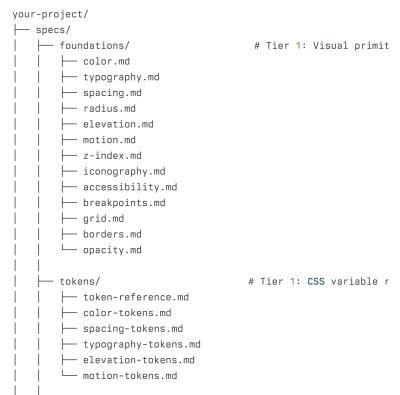
Every rule regarding spacing scales, typography hierarchies, component behaviors, and accessibility constraints must be codified into structured Markdown files ("spec files"). When an AI agent is tasked with building a feature or generating a prototype, it consumes these spec files directly. Because text-based instructions are significantly more token-efficient and precise than raster or vector imagery, the model operates with strict guardrails rather than making probabilistic guesses.
2. The Three-Layer Architecture
An effective AI-ready design system framework relies on a precise three-layer operational model:
The Spec File Layer: Centralized Markdown documentation outlining design principles, layout rules, component do’s and don’ts, and workflow priorities. This provides the contextual reasoning that guides the AI’s structural decisions.
The Token Layer: A strictly maintained, closed set of named design variables (e.g., color tokens, spacing tokens, elevation tiers). By restricting the AI to a predefined vocabulary, organizations prevent the model from inventing plausible yet unauthorized CSS values ad hoc.
The Audit Layer: Automated scripts and plugins—such as the free Figma plugin FigmaLint—that actively scan design systems and prototypes. These tools flag hard-coded values, unlinked tokens, missing interactive states, and detached instances. The AI can then ingest this audit feedback to self-correct its outputs in real-time.
3. Context Engineering and Maintenance Cycles
Maintaining an AI-ready design system requires continuous lifecycle management. As design systems evolve and ship updates, sync routines must automatically flag which spec files require revision. If an AI consumes outdated documentation, design drift inevitably occurs. Consequently, technical writing and documentation maintenance have transformed into critical pillars of modern product design engineering.
Official Perspectives and Industry Expert Insights
Industry leaders emphasize that overcoming design debt in the era of artificial intelligence requires a fundamental shift in designer responsibilities.
"AI cannot magically resolve technical debt or design debt without proper guidance. It relies heavily on clear decisions, established priorities, and well-defined principles."
— Design Systems Engineering Community
Experts point out that the efficiency of AI-assisted engineering is directly proportional to the clarity of human input. When designers invest time in structured context engineering—defining explicit rules, enforcing token discipline, and keeping spec files synchronized—the downstream efficiency gains compound exponentially. Conversely, neglecting the foundational infrastructure guarantees that automated tools will accelerate the creation of inconsistent, fragmented user interfaces.
Future Outlook: The Road Ahead for AI-Driven UX Design
As organizations continue to refine their design operations, the boundary between design tools and code repositories will continue to blur. Several key trends are shaping the future of AI-ready design systems:
Deterministic Code Generation via Specs: Rather than generating code directly from visual mockups, future AI workflows will increasingly rely on compiling structured Markdown spec files and token schemas directly into production-grade component code. This drastically reduces visual regressions and token mismatch.
Autonomous Design System Linting: Automated agents will run continuously in the background alongside tools like FigmaLint, instantly catching and rectifying token violations, accessibility regressions, and state omissions before code ever reaches a pull request.
The Rise of Context Engineering as a Core Discipline: Specialized roles within product design and engineering will focus explicitly on optimizing how organizational knowledge, design rules, and brand guidelines are packaged for consumption by LLMs and autonomous agents.
Ultimately, the successful integration of AI in design is not about replacing human creativity, but about codifying human intent with absolute precision. The more deliberate and disciplined teams become in structuring their design systems today, the more reliable, scalable, and harmonious their automated prototypes will be tomorrow.
Explore Further: Design Patterns For AI Interfaces
To dive deeper into the evolving landscape of UX and interface design for automated systems, explore Design Patterns For AI Interfaces—a comprehensive video course featuring real-world examples and UX guidelines designed to help product teams build AI features that users truly trust and value.