

Executive Overview
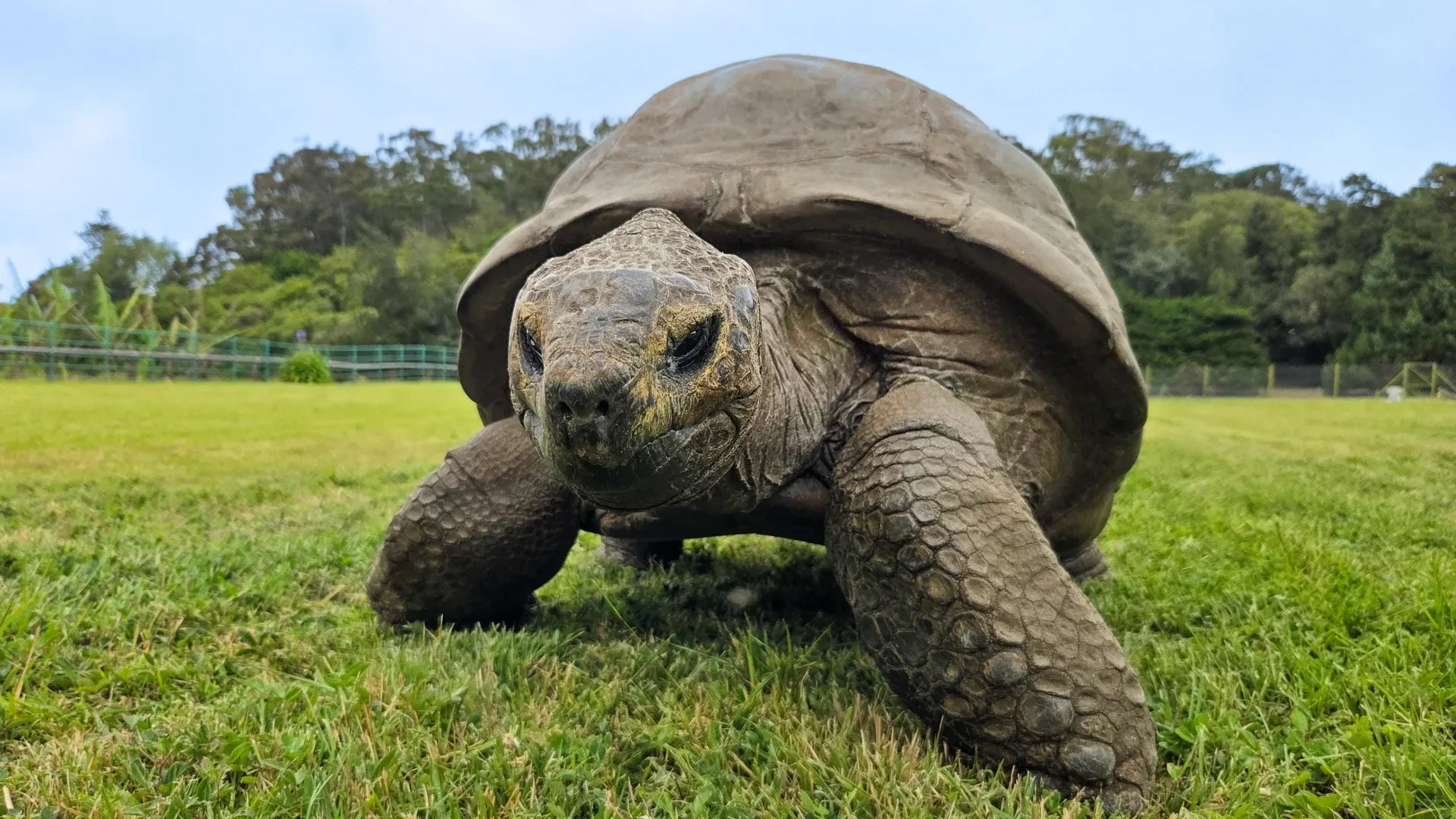
For nearly two centuries, a single inhabitant of a remote South Atlantic estate has watched empires rise, industrial revolutions reshape the globe, and the very fabric of modern science emerge. Jonathan, an Aldabra giant tortoise (Aldabrachelys gigantea) estimated to be approximately 194 years old, stands alone as the oldest known living land animal on Earth. Hatched around 1832—during the reigns of William IV in the United Kingdom and Andrew Jackson in the United States—Jonathan was already alive when Charles Darwin was formulating his theories of evolution on the HMS Beagle and when Queen Victoria ascended to the British throne.
Yet, Jonathan’s true significance to the scientific community extends far beyond his historical longevity. In a groundbreaking study recently published in the journal Science Advances, an international coalition of researchers has peered into the genetic and epigenetic machinery that has allowed this remarkable reptile to defy the standard biological rules of aging. Led by scientists from Kallel, a U.S.-based nonprofit organization dedicated to longevity research, in collaboration with esteemed academic figures like Dr. Justin Gerlach of Peterhouse, University of Cambridge, the investigation has revealed profound clues regarding how Jonathan has maintained cellular resilience across two centuries.
The findings indicate that Jonathan’s extraordinary lifespan is not merely the product of fortunate ancestral genetics. Rather, his body has actively resisted many of the standard genomic and epigenomic degradations that typically accumulate with age. By identifying 287 distinctive genetic variants associated with protection against senescence—alongside a remarkably stable epigenome—the research team has opened an unprecedented window into the biology of extreme longevity. These discoveries do more than celebrate a living historical artifact; they provide a potential biological blueprint that researchers hope to decode to combat age-related decline and chronic disease in humans.
Detailed Chronology: Two Centuries of History and Scientific Discovery
To fully comprehend the magnitude of Jonathan’s biological resilience, one must trace the timeline of his existence alongside the concurrent milestones of human history and scientific inquiry.
- c. 1832 (The Hatching): Jonathan is believed to have hatched on the remote coral atolls of the Seychelles. Around this time, the world population crosses the 1-billion threshold, and the first electric telegraph is being conceptualized.
- 1882 (Arrival on St. Helena): Having reached full adult size, Jonathan is transported from the Seychelles to the British Overseas Territory of St. Helena as a diplomatic gift to the island’s governor. He takes up permanent residence on the manicured lawns of Plantation House, the governor’s official residence, where he continues to graze today.
- The 20th Century (Witnessing Global Transformation): Throughout his tenure on St. Helena, Jonathan survives two World Wars, the dawn of aviation, the atomic age, the Cold War, and the digital revolution. He quietly outlives successive British monarchs, governors, generations of caretakers, and veterinarians.
- The 21st Century (Modern Veterinary Oversight): Entering his 190s, Jonathan experiences typical age-related ailments, including blindness from cataracts and a loss of the sense of smell. However, specialized dietary interventions—hand-fed high-calorie, nutrient-rich vegetables by dedicated handlers—allow him to maintain a robust physiological baseline that baffles attending veterinary teams.
- Recent Years (Epigenetic and Genomic Sequencing): Recognizing his unparalleled status, researchers orchestrate the first-ever epigenetic and genetic sequencing of a giant tortoise of his age. This culminates in the landmark Science Advances publication, shifting Jonathan’s status from a regional curiosity to a paramount subject in translational longevity research.
Supporting Context & Metrics: Decoding the Biology of Extreme Longevity
The mechanics of aging have long baffled gerontologists. In most mammals and vertebrates, the passage of time is marked by a predictable cascade of cellular failures: DNA accumulates mutations, telomeres shorten, chronic low-grade inflammation sets in, and the epigenome—the chemical markers dictating gene expression—becomes disorganized. This disorganization causes essential genes to switch off while harmful ones activate, driving tissue degeneration.
Jonathan’s biology, however, tells a remarkably different story.
Genomic Guardians: The 287 Variants
Through comprehensive genomic profiling, researchers isolated 287 distinctive genetic variants unique to or pronounced in Jonathan’s lineage. These variants are not randomly distributed; instead, they cluster heavily around physiological pathways critical to survival:
- DNA Repair Mechanisms: Variants enhance the cell’s ability to correct double-strand breaks and nucleotide errors, preventing the accumulation of lethal mutations.
- Inflammatory Control: Pathways regulating cytokine production are tightly modulated, preventing the chronic, systemic inflammation (often termed "inflammaging") that accelerates tissue breakdown in humans and other mammals.
- Insulin Signaling: Metabolic controls remain responsive, mitigating the cellular damage associated with oxidative stress and glycemic dysregulation.
- Tumor Suppression: Enhanced apoptotic and tumor-suppressive pathways allow Jonathan’s massive cellular architecture to efficiently neutralize pre-cancerous cells before they can form malignant tumors.
Epigenetic Stability
Perhaps the most startling discovery emerged when scientists analyzed Jonathan’s epigenome. By comparing his epigenetic profile with those of younger Aldabra giant tortoises (Aldabrachelys gigantea), the research team expected to find the widespread hyper- and hypo-methylation patterns typical of advanced biological age.
Instead, Jonathan’s gene regulatory networks—particularly those governing energy production and DNA repair—exhibited an astonishing degree of stability. Despite having weathered nearly 200 years of environmental exposure, metabolic turnover, and cellular replication, his epigenetic controls closely mirrored those of his much younger relatives. This structural preservation suggests that the secret to multi-century lifespans lies not merely in avoiding damage, but in the active, persistent maintenance of youthful gene regulation over geological timescales.
Official Statements and Expert Insights
The implications of this research have galvanized the scientific community, bridging evolutionary biology, herpetology, and translational medicine.
Dr. Justin Gerlach, Director of Studies at Peterhouse, University of Cambridge, and a leading authority on giant tortoise ecology and conservation who participated in the study, emphasized the rarity of the opportunity:
"We found that the gene regulators involved in energy production and DNA repair have remained incredibly stable in Jonathan over almost two centuries. There are few creatures that could tell us more about aging than the giant tortoises of the Galapagos and Seychelles islands. Working with a really old giant tortoise is such a privilege: you get a sense of the tortoise being your collaborator, not your study subject."
Reflecting on his decades of field research, Dr. Gerlach noted that while his historical focus centered on ecology and population preservation, peering into the molecular architecture of these animals provides a breathtaking perspective on evolutionary biology.
On the biomedical horizon, the translation of these findings into human applications is being aggressively championed by the study’s senior author, Dr. Stephen Clark, MD, PhD, founder of Kallel:
"Nature has already solved the puzzle of aging in remarkable ways, and Jonathan’s genome provides a blueprint for cellular resilience. Our goal is to take these evolutionary insights and immediately translate them into practical, affordable treatments for everyday people. Aging is the greatest risk factor for nearly every chronic disease we face, and through the generosity of philanthropic partners, we can democratize access to longevity medicine."
Dr. Clark’s perspective underscores a paradigm shift in bigerontology: moving away from viewing aging as an inevitable, untreatable consequence of time, and toward treating it as a mutable biological process for which nature has already engineered successful countermeasures.
Future Outlook: Translating the Tortoise Blueprint to Human Medicine
While the findings surrounding Jonathan’s genome and epigenome are profoundly exciting, researchers emphasize that the journey from genomic discovery to clinical therapeutics is long and rigorous.
Challenges in Translation
Replicating the protective mechanisms observed in Aldabrachelys gigantea within human physiology presents significant hurdles. Human metabolic rates, body temperatures, and cellular environments differ vastly from those of cold-blooded, slow-metabolizing giant reptiles. Furthermore, the sheer complexity of human regulatory pathways means that activating a specific DNA-repair or tumor-suppressive variant without triggering unintended side effects requires surgical precision.
The Roadmap Ahead
Despite these challenges, the research has charted a clear strategic path for future investigations:
- Functional Validation: Researchers are currently testing the identified 287 genetic variants in cellular and animal models to determine their exact mechanisms of action.
- Epigenetic Rejuvenation Therapies: By understanding how Jonathan’s epigenome resists drift over centuries, scientists hope to design small molecules or gene-therapy vectors capable of stabilizing human epigenetic markers.
- Cross-Species Longevity Consortia: The success of the Kallel-led project has sparked a broader movement to sequence and analyze the genomes of other exceptionally long-lived species, such as the Greenland shark and the bowhead whale, creating a comprehensive database of nature’s anti-aging adaptations.
As Jonathan continues to roam the lush gardens of Plantation House on St. Helena—nibbling on grass, basking in the Atlantic sun, and remaining blissfully unaware of his status as a scientific icon—he serves as a living monument to endurance. More than that, he stands as a silent sentinel pointing humanity toward a future where the relentless march of time may no longer dictate the limits of human health.
