

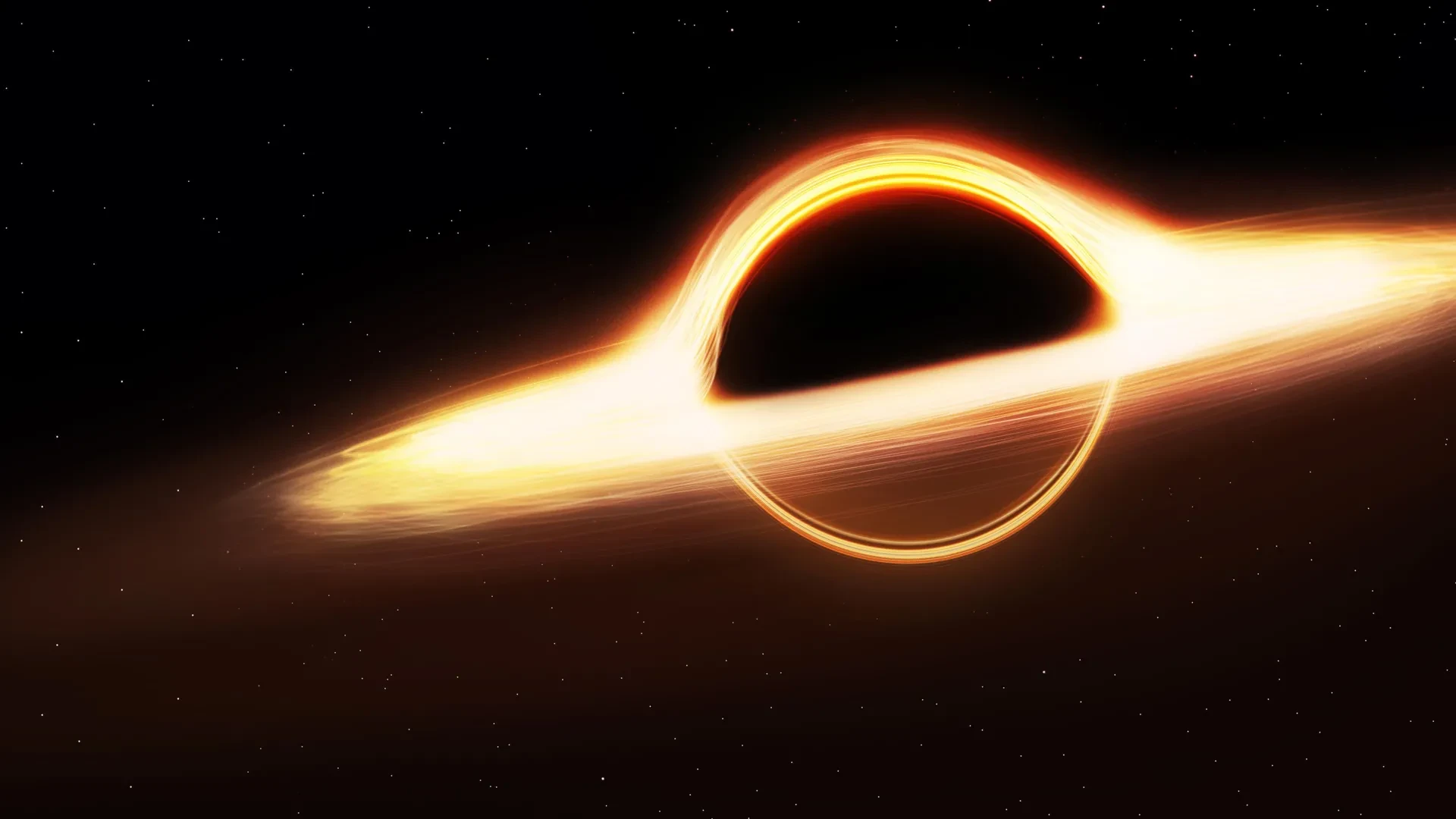
Executive Overview
For centuries, humanity has looked to the night sky and understood the death of a massive star as a cataclysmic event. Traditionally, when giant stars—those many times more massive than our Sun—exhaust their nuclear fuel, they are believed to expire in blinding, violent glory. These stellar explosions, known as supernovae, scatter heavy elements across the cosmos while their compressed cores collapse under gravity to form hyper-dense neutron stars or stellar-mass black holes.
Yet, theoretical astrophysics has long harbored a shadowy alternative: some massive stars may die quietly. Instead of detonating outward in a radiant flash, they could experience catastrophic core collapse directly inward, pulling their immense mass past the event horizon and effectively vanishing from the visible universe without a cosmic bang.
Now, a groundbreaking study led by researchers at the California Institute of Technology (Caltech) has unveiled compelling new evidence suggesting that this stealthy, quieter form of stellar death is not merely a theoretical curiosity. It may, in fact, be the primary manufacturing plant for a vast, hidden population of black holes lurking across the cosmos.
Published in the journal Physical Review D under the title "Low-mass failed supernovae and the 10 solar-mass peak in the merging black hole mass distribution," the research leverages a decade of gravitational-wave astronomy. By analyzing data collected by the international LIGO, Virgo, and KAGRA detector network, the team identified distinctive statistical patterns in merging black holes. Most notably, they discovered a massive surge of black holes weighing approximately 10 times the mass of our Sun, accompanied by an unexpected desert of objects in the 12 to 16 solar-mass range.
While the findings do not offer a direct, optical snapshot of a star winking out of existence, they align with theoretical models of "failed supernovae." This milestone study bridges the gap between raw gravitational-wave data and the complex astrophysics governing the most extreme environments in the universe, opening a revolutionary window into stellar evolution.
Detailed Chronology
The Dawn of Gravitational-Wave Astronomy (2015)
To understand how modern astrophysics arrived at this discovery, one must retrace a decade of technological and scientific triumphs. The story begins in September 2015, when the Laser Interferometer Gravitational-wave Observatory (LIGO)—funded by the National Science Foundation (NSF) and operating twin detectors in Livingston, Louisiana, and Hanford, Washington—made history.
For the first time, scientists directly detected gravitational waves: microscopic, fleeting ripples in the fabric of spacetime predicted by Albert Einstein a century prior. These ripples were generated by the cataclysmic collision and merger of two ancient black holes located billions of light-years away.
That single detection transformed astronomy. Instead of relying solely on light, X-rays, and radio waves to observe the universe, humanity gained a new sensory organ capable of "listening" to the universe’s most violent invisible events. In the years following, LIGO expanded its reach, forging a powerful international collaboration with the Virgo observatory in Italy and the Kamioka Gravitational-wave Detector (KAGRA) in Japan. Together, this global detector network has recorded more than 300 black hole collisions, amassing a rich catalog of cosmic data ripe for deep statistical analysis.
Uncovering the Mass Puzzle (Recent Years)
With hundreds of gravitational-wave events logged, researchers shifted their focus from individual detections to population-level studies. Isaac Legred, who completed this work as a Caltech PhD candidate before joining the University of Illinois Urbana-Champaign as a postdoctoral researcher, began examining the demographic distribution of merging black holes.
Alongside Caltech physics professor and William H. Hurt Scholar Katerina Chatziioannou and former group member Jacob Golomb, the team set out to analyze the precise masses of 257 distinct black holes involved in mergers detected over the network’s operational lifetime.
As the researchers crunched the numbers, an unexpected and striking pattern materialized from the data. Rather than being smoothly distributed across a wide spectrum of sizes, the black holes exhibited a towering, anomalous spike. Approximately three-quarters of the observed mergers featured at least one black hole weighing roughly 10 times the mass of the Sun.
Even more perplexing than the abundance of 10 solar-mass black holes was what lay immediately beside them. The team uncovered a distinct, statistically significant gap in the mass distribution: an apparent desert of black holes weighing between 12 and 16 solar masses. This was the first time such a sharp void had been documented with this level of confidence. Furthermore, when the researchers analyzed the spin rates of these objects, they discovered that the 10 solar-mass black holes exhibited rotational speeds concentrated within a much narrower range than their heavier or lighter counterparts.
Connecting Data to Theory
Faced with a mountain of statistical evidence, the Caltech-led team realized they were looking at the fingerprint of a distinct subpopulation of black holes. The concentration of masses, the scarcity of objects in the 12–16 solar-mass window, and the uniform spin characteristics pointed directly to a shared, specialized origin story.
Drawing upon decades of theoretical astrophysics regarding stellar collapse, the researchers concluded that these properties match the theoretical footprint of failed supernovae. If a generation of massive stars systematically bypassed the explosive phase of their deaths—collapsing directly into black holes without shedding their outer mantles in a visible blast—they would naturally produce a tightly clustered population of black holes with specific mass and spin parameters. Thus, the silent deaths of massive stars left an indelible, echoing signature in the gravitational waves rippling across spacetime.
Supporting Context & Metrics
To fully appreciate the significance of the Caltech team’s findings, it is essential to examine the underlying metrics, astrophysical mechanisms, and observational hurdles that define modern gravitational-wave science.
The Physics of Stellar Collapse
In standard stellar evolution, a star with more than roughly 8 to 20 times the mass of our Sun spends millions of years fusing elements in its core. When iron accumulates in the core—having exhausted all viable nuclear fusion pathways—outward thermal pressure fails to balance the crushing inward force of gravity. The core collapses within fractions of a second.
In a normal supernova, this collapse triggers a violent rebound, sending a shockwave that blows the star’s outer layers into space. However, if the star’s core is exceptionally dense, or if fallback accretion rapidly overwhelms the outward explosion energy, the shockwave stalls. The entire star—core and outer envelope alike—plunges past the Schwarzschild radius, forming a black hole with no accompanying optical display.
Key Data Metrics from the Study
- Dataset: 257 distinct black hole mergers analyzed from the LIGO, Virgo, and KAGRA observational campaigns.
- The Dominant Peak: Roughly 75% (three-quarters) of the analyzed mergers featured black holes scaling in at approximately 10 solar masses.
- The Mass Gap: A pronounced paucity of black holes identified in the 12 to 16 solar-mass bracket, marking a unique structural anomaly in cosmic demographics.
- Spin Characteristics: 10 solar-mass black holes displayed tightly constrained rotation rates, setting them apart from the broader, more randomly spinning black hole population.
- Timeline of Research: Culminated in a study published in Physical Review D by lead author Isaac Legred (PhD ’25), senior author Katerina Chatziioannou, and contributor Jacob Golomb (PhD ’25).
The Observational Paradox
Studying failed supernovae through traditional electromagnetic astronomy is notoriously difficult. When a massive star explodes, astronomers can capture its fading light, analyze its chemical composition through spectroscopy, and track its remnants for decades.
When a star fails to explode, astronomers are left staring at an empty patch of sky where a luminous supergiant once sat. Because no photons are emitted during the direct collapse, the star simply vanishes. Consequently, gravitational-wave astronomy has become the premier—and arguably only—tool capable of unmasking these dark, silent cosmic events.
Official Statements
The implications of this research have resonated deeply within the global astrophysics community, shedding light on the intricate relationship between theoretical physics and empirical observation.
Katerina Chatziioannou, Caltech Physics Professor and William H. Hurt Scholar:
"A vast majority of the merging black holes in the universe are about 10 times the mass of our Sun. Our data are showing that this group of black holes may have a common origin—they may be a distinct subpopulation that failed to go supernova. These results represent a connection between the gravitational-wave data and underlying astrophysics we are trying to extract."
Isaac Legred, Postdoctoral Researcher at the University of Illinois Urbana-Champaign and Lead Author:
"We see 10 solar-mass black holes merging all the time. But why are, say, 14 solar-mass black holes so rare? The gap we see in the distribution of masses indicates there may be a special cocktail of internal physics that goes into forming the abundance of 10 solar-mass black holes."
Addressing the unique observational challenges of tracking stars that die without a trace, Legred added:
"We can look up at the sky and try to study historical records of massive stars that failed to explode, but it’s challenging because they just vanish without exploding, leaving a dark patch of sky. With this study, we show the gravitational-wave data are consistent with most binary black holes forming from a very special kind of failed supernova, but more research is needed. Black holes are born in some of the most extreme environments in the universe, so the prospect of better understanding their formation is very exciting."
Future Outlook
As gravitational-wave astronomy enters its second decade, the horizon for discovery is expanding rapidly. The findings published by the Caltech team mark a critical stepping stone, but they also lay the groundwork for future investigations that will test, refine, and challenge current models of stellar death.
Upcoming Detector Upgrades
The international gravitational-wave network—comprising LIGO, Virgo, and KAGRA—is continually undergoing technological overhauls to increase its sensitivity. Upcoming observing runs will feature advanced quantum squeezing techniques and upgraded optics, allowing detectors to peer deeper into the universe than ever before. With heightened sensitivity comes an exponential increase in the detection rate of black hole mergers, turning a sample size of hundreds into a catalog of thousands.
Resolving the Mass Gap and Spin Dynamics
Future gravitational-wave data will be crucial for confirming whether the 12 to 16 solar-mass gap observed in this study holds true across a larger, more statistically robust sample. If the gap persists, it will force astrophysicists to re-evaluate stellar evolution models, providing strict constraints on the internal nuclear reactions, mass-loss rates, and metallicity of massive stars before they die. Similarly, mapping the precise spin distributions of these black holes will help scientists determine whether they formed in isolated binary systems or through dynamic interactions in dense stellar clusters.
Bridging Multi-Messenger Astronomy
While failed supernovae remain invisible in optical light, advancements in neutrino astronomy and next-generation radio telescopes may soon offer complementary insights. When a massive star collapses directly into a black hole, it is expected to emit a massive burst of neutrinos—subatomic particles that can pass through matter unhindered. By combining gravitational-wave data with future neutrino detections, scientists hope to catch a failed supernova in the act of collapsing in real time.
Ultimately, the work led by Chatziioannou, Legred, and Golomb demonstrates that the universe’s most profound secrets are often hidden in plain sight—or, in this case, in the silent spaces where light refuses to tread. By listening to the cosmic symphony of colliding black holes, humanity is slowly piecing together the true, multifaceted life stories of the universe’s most magnificent and destructive titans.
