

The landscape of the National Football League (NFL) was rocked by a high-stakes
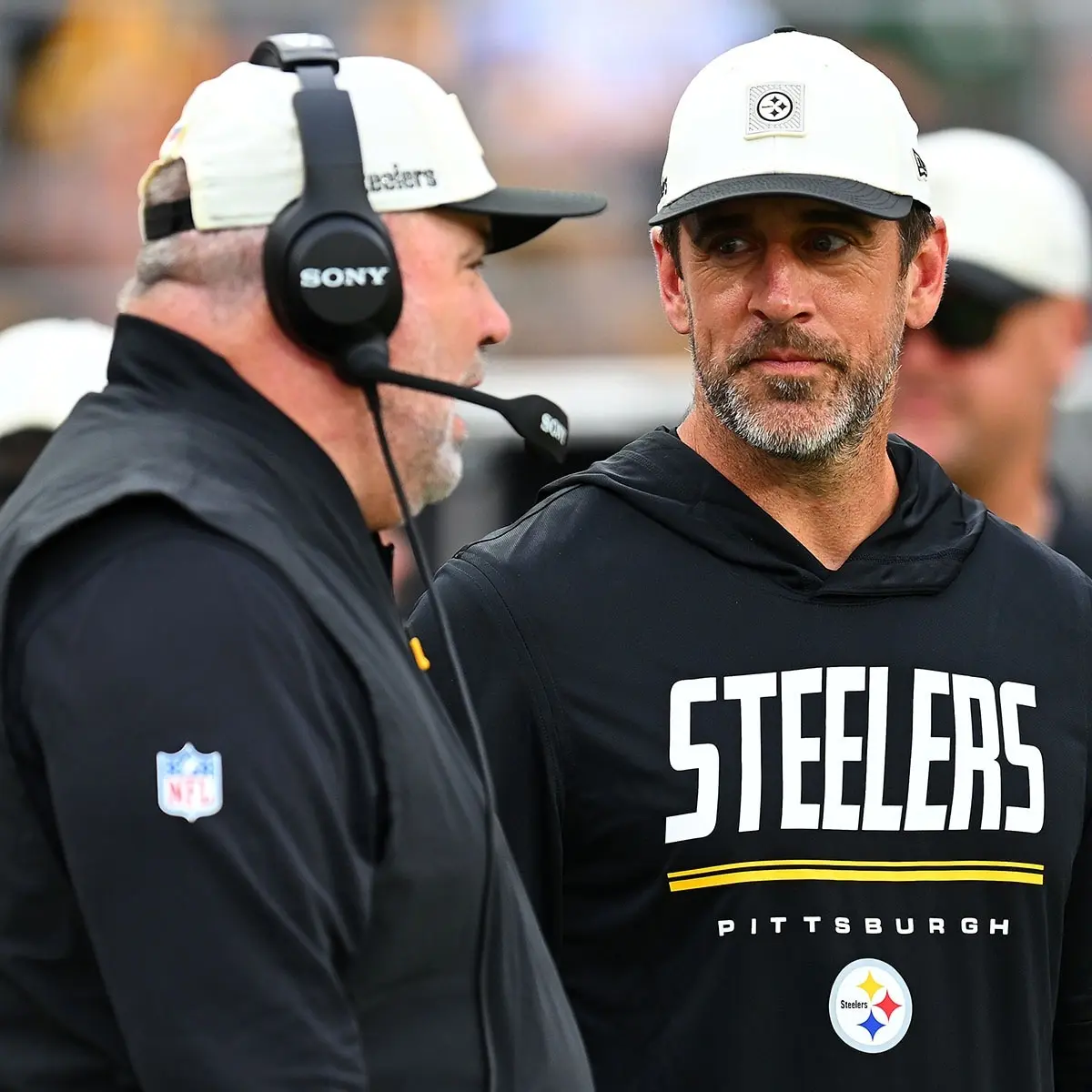
personnel conflict as the Pittsburgh Steelers officially released 42-year-old veteran quarterback Aaron Rodgers. The parting of ways follows a volatile series of events triggered by Rodgers’ sudden benching in favor of backup teammate Mason Rudolph. Rather than quietly accepting the demotion, Rodgers launched a scathing public critique of head coach Mike McCarthy during a November appearance on The Pat McAfee Show, exposing what he characterized as systemic organizational dysfunction, subpar leadership, and professional neglect within the Steelers’ coaching staff.
Rodgers’ abrupt exit from Pittsburgh caps a tumultuous chapter in a storied career that has long crossed the boundary between elite athletic achievement and cultural friction. By airing internal grievances—including explosive allegations that McCarthy repeatedly slept through critical quarterback meetings and failed to adequately prepare the squad for high-stakes matchups—Rodgers forced a showdown that left franchise leadership with little choice but to sever ties.
Simultaneously, the release coincides with the rollout of Netflix’s upcoming docuseries, Aaron Rodgers: Enigma, which provides a profound, unvarnished look at the quarterback’s personal evolution. The series chronicles his departure from a rigid, conservative upbringing in Chico, California, his complex spiritual awakening, the relentless pressures of mainstream celebrity, and the deeply entrenched estrangement from his family. This dual convergence of professional crisis and personal introspection highlights the ongoing narrative of a transcendent athlete who routinely challenges institutional authority, regardless of the personal and professional cost.
Detailed Chronology
The Breaking Point: From Signal-Caller to Sideline
The tension between Aaron Rodgers and head coach Mike McCarthy reached a definitive boiling point in late November, shifting rapidly from private disagreement to a public spectacle. According to Rodgers, the initial decision to strip him of his starting duties caught him entirely off guard. During a strategic review leading up to a crucial stretch of the NFL season, McCarthy elected to hand the keys of the offense to backup quarterback Mason Rudolph, bypassing any transparent, collaborative dialogue with his veteran leader.
Appearing on the November 25 episode of The Pat McAfee Show, Rodgers detailed the confusing sequence of events that led to his demotion. He revealed that despite holding extensive conversations with McCarthy in the days preceding the decision, the concept of a benching was never raised. The reality of the situation only crystallized when Rodgers overheard a call involving team leadership where a participant exclaimed disbelief over the move—prompting Rodgers to ask what was happening because he was entirely out of the loop.
Exposing the Inner Sanctum: Meeting Room Allegations
Rather than mitigating the fallout, Rodgers escalated the situation by detailing severe operational lapses within the Steelers’ coaching infrastructure. Drawing on his extensive history with McCarthy—dating back over a decade of shared tenure with the Green Bay Packers—Rodgers claimed that the 63-year-old head coach had grown physically and mentally detached from his day-to-day responsibilities.
Most damaging were Rodgers’ accounts of McCarthy’s conduct during mandatory team preparation. The quarterback recounted an incident in a quarterback meeting where McCarthy arrived late, settled into his seat, and began snoring within ten minutes. According to Rodgers, the head coach briefly awoke, rattled his papers to feign attentiveness, fell back asleep five minutes later, and ultimately walked out of the room as if nothing had occurred.
Rodgers framed these critiques not as petty grievances, but as manifestations of genuine concern for an individual he viewed as unhealthy and unfit to serve as a primary play-caller. He noted that McCarthy’s absenteeism extended to vital pre-game preparations, explicitly highlighting missed planning sessions ahead of the Steelers’ difficult loss to the Philadelphia Eagles on November 22. Days prior to being declared inactive, Rodgers confronted McCarthy directly, asserting that systemic changes were mandatory for the betterment of the team.
The Fallout and Immediate Dismissal
The public airing of these internal dynamics forced the hand of the Pittsburgh front office. Recognizing the untenable nature of a player publicly undermining his head coach while accusing the coaching staff of negligence, the Steelers organization acted swiftly. On November 25, the franchise took to social media to officially announce the termination of the veteran quarterback’s contract, tweeting a succinct and definitive statement: "We have released QB Aaron Rodgers."
Supporting Context & Metrics
A Legacy of Institutional Friction
Aaron Rodgers’ career has consistently been defined by an unyielding willingness to question established hierarchies. From his early days at Butte College to his record-setting tenure with the Green Bay Packers, and finally his brief, high-profile stint in Pittsburgh, Rodgers has maintained a complex relationship with organizational control. His critique of Mike McCarthy is merely the latest iteration of a lifelong pattern: an insistence on absolute transparency and accountability, often executed with a bluntness that alienates traditional sports management.
The Personal Evolution: From Chico to Berkeley
The psychological framework driving Rodgers’ confrontational approach to authority is thoroughly examined in the Netflix docuseries Aaron Rodgers: Enigma. Raised in a devout, highly conservative environment in Chico, California, Rodgers experienced a profound ideological shift when he transferred from Butte College to the University of California, Berkeley.
The academic and cultural environment of Berkeley exposed the young athlete to divergent perspectives, systematically dismantling the rigid dogmas of his youth. Rodgers has frequently noted that the dogmatic, black-and-white framework of the conservative Christian church he grew up in—where absolute moral judgments dictated right and wrong—ultimately failed to serve his intellectual and spiritual needs. Embracing a philosophy of continuous questioning, he began to uncouple from institutionalized religion during his high-school and college years, setting the stage for a lifetime of challenging conventional norms.
Spiritual Awakening and Plant Medicine
Following his victory in Super Bowl XLV and the acquisition of a Super Bowl MVP title during the 2011–12 NFL season, Rodgers experienced a profound existential crisis. Recognizing that athletic supremacy was not the ultimate antidote to internal restlessness, he embarked on an extensive spiritual journey.
Rodgers immersed himself in the progressive theological teachings of authors like Rob Bell, whose inclusive, nonjudgmental approach to faith helped dismantle the lingering influence of his restrictive upbringing. This philosophical exploration eventually expanded into alternative practices, including the use of ayahuasca. Rodgers has openly credited the Amazonian plant medicine with providing deep healing for his mind, body, and spirit, helping him navigate the immense psychological pressures of professional sports and cultural scrutiny.
The Fame Monster and Family Estrangement
The intersection of unprecedented celebrity and personal privacy has proved to be a persistent battleground in Rodgers’ life. Capturing the Lombardi Trophy vaulted him into a stratosphere of hyper-visibility, marked by intense paparazzi scrutiny, high-profile relationships with public figures such as Olivia Munn, Danica Patrick, and Shailene Woodley, and ubiquitous commercial campaigns.
Rodgers has expressed deep frustration regarding how his expanding fame altered his interpersonal dynamics, noting that many individuals within his orbit—including family members—implored him to contract his presence and moderate his public profile.
This tension contributed significantly to the long-standing estrangement from his family, most notably his brother Jordan Rodgers. The rift went public in 2016 when Jordan appeared on The Bachelorette, featuring a hometown date that conspicuously highlighted two empty dining chairs intended for Aaron and his then-partner. Rodgers has openly criticized the televised display as an opportunistic bid for fame, maintaining that he was never even invited to the gathering. Despite the profound distance, Rodgers acknowledges that reconciliation remains a theoretical possibility on the long and winding timeline of their respective journeys.
Official Statements
Faced with an unprecedented public relations crisis, key figures within the Pittsburgh Steelers organization addressed the media to chart a path forward following the quarterback’s release.
Head Coach Mike McCarthy initially declined to engage directly with the specifics of Rodgers’ allegations during his November 25 press conference. Instead, McCarthy pivoted toward a message of organizational resilience and leadership validation, emphasizing his proven track record of success in the National Football League.
"I know how to win, and that’s the facts," McCarthy stated, as reported by ESPN. "I plan on winning here because of the men, because of this organization, what we’ve got started and the opportunity we have to learn and grow today because of some of the things that frankly should have been talked about earlier. This is a growth opportunity that I intend to take full advantage of."
The Pittsburgh front office, meanwhile, maintained a disciplined silence regarding the internal operational failures alleged by Rodgers, choosing instead to focus entirely on roster stabilization following the release of their high-profile signal-caller. Representatives for Jordan Rodgers, Ed Rodgers, and Darla Rodgers have not yet responded to requests for comment regarding the disclosures made in the Enigma docuseries.
Future Outlook
For the Pittsburgh Steelers
The immediate post-Rodgers era in Pittsburgh demands stabilization and unity. With Mason Rudolph stepping into the starting role, the coaching staff faces mounting pressure to demonstrate that the offensive strategy can function efficiently without a future Hall of Fame quarterback anchoring the huddle.
Mike McCarthy retains the full, albeit cautious, backing of ownership, but the margin for error has evaporated. To justify the organization’s loyalty and silence lingering doubts regarding team preparedness, McCarthy must translate his stated "growth opportunity" into immediate on-field success, guiding the Steelers through a treacherous late-season schedule.
For Aaron Rodgers
At 42 years old, Aaron Rodgers stands at a critical crossroads in his professional life. Whether this abrupt departure from Pittsburgh signals the definitive conclusion of his illustrious playing career or merely serves as the precursor to one final chapter with a new franchise remains to be seen. Given his unique competitive drive, historical resilience, and penchant for defying conventional narratives, the football world will monitor his next moves with intense speculation.
Ultimately, whether on the gridiron or within the broader cultural landscape, Rodgers continues to write his own script—one defined by uncompromising authenticity, spiritual exploration, and an unyielding refusal to conform to institutional expectations.
