

EXECUTIVE OVERVIEW
Over the past two years, the software industry has suffered from a collective, reactionary panic. Faced with the existential threat of looking outdated, nearly every B2B software-as-a-service (SaaS) vendor scrambled to staple a generative artificial intelligence feature onto their product. Chat panels spontaneously materialized in the corners of tired enterprise dashboards; "Summarize with AI" buttons were shoehorned next to every text input field; and procurement pricing pages quietly expanded to feature line items for consumption-based "AI credits."
Yet, beneath this manic push for proprietary artificial intelligence capabilities, a profound structural shift has quietly occurred on the ground level of enterprise organizations. Employees have stopped using fragmented, vendor-specific application bots. Instead, they have consolidated around centralized enterprise-grade intelligence engines—corporate deployments of Claude, ChatGPT, or Microsoft 365 Copilot.
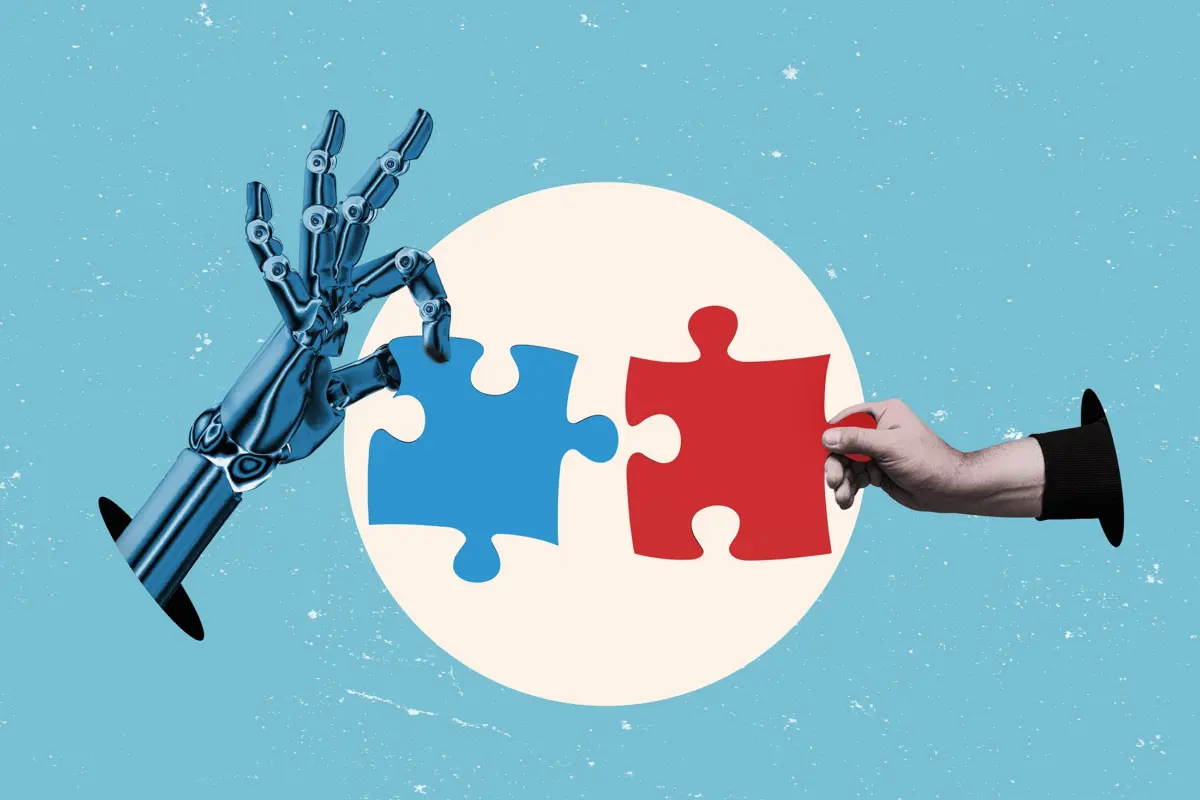
For software vendors, this realization demands a radical strategic pivot. The era of the proprietary in-app chatbot is coming to an end. The future belongs not to companies building isolated assistants, but to those that adopt a "Bring Your Own Agent" (BYOA) framework. By leveraging open protocols like the Model Context Protocol (MCP), software companies can stop burning capital on reselling compute tokens and start positioning their platforms as foundational data layers for the AI assistants enterprises have already chosen.
DETAILED CHRONOLOGY: THE RISE, PEAK, AND STAGNATION OF AI FEATURE FATIGUE
Phase 1: The Panic Add-On Era (2022–2023)
When generative large language models burst into mainstream enterprise consciousness, software executives faced a binary choice: integrate AI or face obsolescence. The initial execution of this mandate was necessarily rapid and superficial. Venture-backed startups and legacy enterprise vendors alike rushed to deploy conversational interfaces.
However, this rush created an unintended consequence: architectural chaos within client organizations. When a mid-sized enterprise adopted eight to ten distinct business tools—ranging from customer relationship management (CRM) systems and project trackers to specialized help desk suites—they inadvertently introduced eight to ten isolated AI assistants.
Each bot operated within a vacuum. The help desk AI possessed zero visibility into the historical context logged in the CRM. The project tracker’s assistant remained blind to strategic executive conversations taking place in corporate communication channels. Far from streamlining operations, this dynamic generated severe "AI sprawl," burdening users with fragmented interfaces, inconsistent data privacy policies, and artificial usage limitations.
Phase 2: The Enterprise Standardization of Centralized AI (2023–2024)
Simultaneously, enterprise IT, legal, and compliance departments intervened. Realizing that employees were haphazardly pasting sensitive corporate data into disparate third-party web apps, organizations moved quickly to centralize their AI infrastructure.
Companies negotiated enterprise-wide contracts for standardized platforms like Microsoft 365 Copilot, enterprise-tier ChatGPT, or managed instances of Anthropic’s Claude. These centralized deployments underwent rigorous security reviews, integrated deeply with single sign-on (SSO) systems, and ingested corporate documents, email archives, and internal wikis.
Consequently, employees developed a clear preference. They abandoned the clunky, single-purpose chatbots living inside individual software tools. They relied instead on their corporate "at-home AI"—the trusted, legally cleared assistant that already understood the broader context of the business.
Phase 3: The Emergence of the Open Protocol Paradigm (Late 2024–Present)
As enterprise users rejected isolated feature-level bots, software architects began searching for interoperable solutions. The introduction of open standards, most notably Anthropic’s Model Context Protocol (MCP), provided the necessary technical bridge. MCP established a standardized method for AI models to safely discover, query, and execute actions within external software applications.
This technological maturation crystallized a new philosophy among forward-thinking software leaders: rather than competing with foundational model providers by building subpar generic chatbots, software vendors should focus exclusively on making their core application logic easily discoverable by the customer’s existing AI agent.
SUPPORTING CONTEXT & METRICS: THE ECONOMIC REALITIES OF BYOA
The shift toward a "Bring Your Own Agent" architecture is driven as much by hard economics and engineering realities as it is by user experience.
The Token-Reselling Trap
When software vendors construct conversational features directly on top of foundational models, they inadvertently enter the compute-reselling business. Under this model, vendors buy processing power wholesale from frontier labs and retail it to their customers.
- Compressed Margins: Vendor costs scale directly with usage volume, exposing profit margins to sudden upstream pricing changes by model providers.
- Administrative Bloat: Engineering teams are forced to build complex credit-tracking systems, usage caps, and metering logic—resources diverted away from enhancing core product functionality.
- The BYOA Solution: Under a Bring Your Own Agent model, the customer’s enterprise AI subscription covers the underlying compute costs. The software vendor provides secure data schemas and actionable endpoints, entirely absolved of token-brokerage overhead.
Competing Against Trillion-Dollar R&D Budgets
No standard software vendor can sustainably match the pace of innovation of dedicated frontier AI labs. Attempting to build a superior general-purpose conversational assistant is a fundamentally flawed race. However, optimizing a product to serve as the most secure, responsive, and data-rich tool that an enterprise assistant can connect to is a winning strategic differentiator.
The Rise of New Distribution Channels
Perhaps the most overlooked advantage of adopting open integration standards is organic customer acquisition. AI clients and modern developer ecosystems are rapidly deploying connector directories, independent MCP registries, and listing marketplaces.
For software vendors, publishing an officially supported integration endpoint acts as an uncrowded, high-intent marketing channel. It places the product directly in front of enterprise buyers at the exact micro-moment when they are evaluating tools to connect with their corporate AI infrastructure.
OFFICIAL PERSPECTIVES: THE TECHNICAL REALITIES OF IMPLEMENTATION
For engineering leadership contemplating how to execute a BYOA strategy, the technical implementation generally crystallizes around two distinct approaches: localized packages versus hosted HTTP endpoints. Industry consensus strongly favors the latter.
The Danger of Localized Packages
In the early days of extensible AI integrations, developers frequently relied on command-line tools or local package managers (such as npm packages) running directly on the user’s local workstation to bridge local data with external models. While functional for individual hobbyists, this approach introduces insurmountable enterprise friction:
- Version Fragmentation: Locally installed packages are notoriously difficult to update uniformly. When bugs are patched or new capabilities added, legacy versions persist across user machines, leading to systemic failures.
- Security & Compliance Nightmares: Modern enterprise security teams maintain zero-tolerance policies regarding unvetted third-party code executing locally within corporate environments, particularly given the rising threat of supply-chain attacks. Requesting security clearance for a local package that possesses programmatic access to sensitive company data is a near-impossible hurdle.
The Superiority of Hosted Endpoints over HTTP
The modern standard relies on exposing a secure, streamable HTTP-transport endpoint directly on the vendor’s managed servers.
+-----------------------------------+             +----------------------------------+
|   Enterprise AI Assistant         |             |   SaaS Vendor Infrastructure     |
|   (Claude / ChatGPT / Copilot)    |             |                                  |
|                                   |             |   - Core Application Logic       |
+------------------+----------------+             +-----------------+----------------+
                   |                                                |
                   |       Secure HTTPS / OAuth 2.0                 |
                   +------------------------------------------------+
(Model Context Protocol - MCP)- Centralized Control: Because the integration lives on the vendor’s managed servers, bug fixes and feature deployments propagate instantly to every connected user without client-side intervention.
- Streamlined Security Reviews: Enterprise security teams already accustomed to vetting HTTPS-based SaaS vendors can easily audit a standardized OAuth-authenticated endpoint. Once the organization approves the endpoint, administrators can deploy the connector organization-wide with a single administrative action, ensuring individual employees connect strictly within the boundaries of their existing granular user permissions.
FUTURE OUTLOOK: REBUILDING SOFTWARE FOR THE AGENTIC AGE
The migration to Bring Your Own Agent architectures forces a healthy introspective discipline upon software product teams. Once product managers accept that the conversational user interface will inevitably be handled by the client’s centralized AI assistant, the fundamental design question shifts from:
"What superficial AI features should we build into our dashboard?"
to:
"What robust, secure capabilities can our product perform, and how cleanly can we expose them via standardized protocols?"
This shift redirects engineering energy toward foundational excellence. Core functionalities—such as clean database structuring, robust API design, granular role-based access controls, and transparent permissioning—become the primary metrics of product quality. These architectural improvements benefit every user, regardless of whether they interact with the platform manually via a graphical user interface or programmatically via an automated corporate agent.
Admittedly, certain backend artificial intelligence use cases retain intrinsic value inside the application layer. Automated, background processes—such as silent ticket categorization, anomaly detection, or predictive data hygiene running invisibly without direct user prompting—remain optimal candidates for internal machine learning models.
However, the user-facing conversational assistant—the entity that talks, reasons, and synthesizes cross-platform workflows—belongs firmly to the customer. B2B buyers do not want another isolated chatbot fragmenting their workflow. They demand that the sophisticated assistant they already pay for and trust should seamlessly interface with every piece of software in their technology stack. Software vendors that embrace this reality will thrive; those clinging to proprietary walled-garden bots risk becoming obsolete relics of the early AI gold rush.
