

Executive Overview
The 2026 U.S. midterm elections presented a complex political landscape for the LGBTQ+ community, defined by a stark and revealing dichotomy. On one side of the ledger, a historic wave of electoral victories underscored the growing political power, resilience, and mainstream acceptance of gay candidates and their allies. From New Hampshire to Texas, campaigns that leaned heavily on anti-gay rhetoric or weaponized candidates’ personal lives saw diminishing returns—and, in many cases, catastrophic failure at the ballot box.
Yet, this celebration of political maturity was sharply countered by a simultaneous wave of restrictive ballot measures targeting transgender youth across multiple states. While voters routinely rejected prejudice against gay men in major legislative races, they proved dangerously susceptible to messaging targeting transgender children in locker rooms and healthcare clinics.
This article examines the 2026 midterms as a watershed moment in American politics. It analyzes the crumbling utility of traditional homophobia as an electoral wedge issue, juxtaposed against the strategic migration of political animus toward the most vulnerable members of the queer community. Through a detailed breakdown of key races, socio-political metrics, and expert commentary, this report explores how the architecture of political backlash is evolving, and what these contradictory outcomes mean for the future of civil rights in the United States.
Detailed Chronology: Key Races and Ballot Measures on Election Night
The night of November 3, 2026, will be remembered as a night of political earthquakes, offering both unprecedented triumphs and sobering defeats.
The Historic Breakthroughs for Gay Leaders
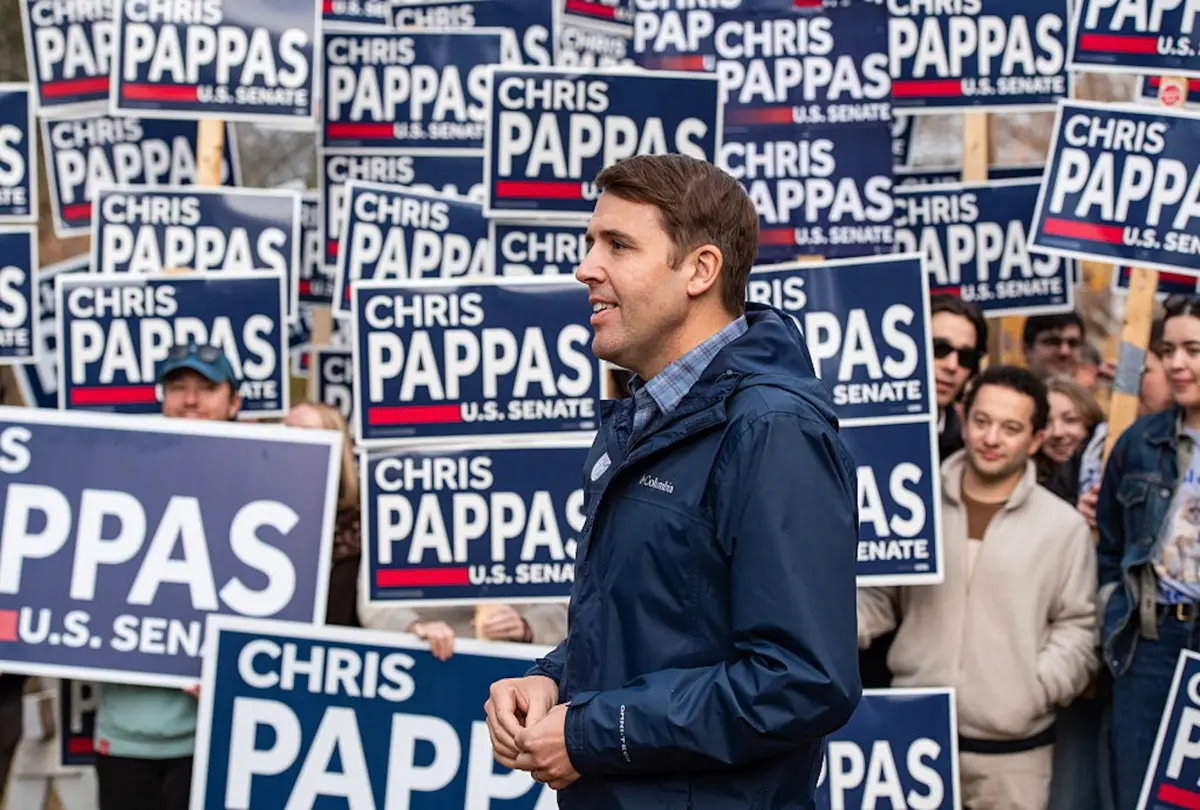
In New Hampshire, U.S. Representative Chris Pappas secured a monumental victory in the state’s U.S. Senate race. Pappas’s triumph made him the first openly gay man ever elected to the United States Senate, providing a crucial margin that helped Democrats retain or expand their influence in the chamber.
Meanwhile, in Indiana, J.D. Ford made history by unseating a Republican incumbent to win a seat in the state’s House of Representatives, building upon his legacy as the first openly gay person elected to the Indiana legislature.
Even in the heart of Texas—long considered an impregnable fortress for conservative wedge politics—voters dramatically rewrote the script. James Talarico, a progressive Democrat, decisively defeated Ken Paxton to become the first Democrat to win a statewide office in over thirty years. Talarico’s victory was particularly notable given that anti-LGBTQ+ messaging constituted the single largest category of advertising deployed by Paxton’s campaign. Furthermore, the race played out on a national stage where the Vice President of the United States utilized "gay" as a derogatory punchline against Talarico, who is straight. The electorate’s resounding rejection of this tactic signaled a profound cultural shift.
The Long Island Test of Resilience
On Long Island, New York, congressional candidate Chris Gallant faced a brutal intrusion into his personal life when private photographs were leaked in an eleventh-hour attempt to sink his campaign in a district previously carried by Donald Trump.
Instead of retreating or folding under the weight of manufactured shame, Gallant leaned into radical authenticity. He came within roughly two points—or approximately 6,700 votes—of flipping a seat that forecasters had rated as safely Republican for incumbent Nick LaLota. In his concession speech, Gallant refused the stigma entirely, addressing his constituents not as a disgraced candidate, but as a neighbor and "brother in arms." The razor-thin margin proved that attempts to weaponize personal privacy and sexual identity are rapidly losing their historical potency.
The Down-Ballot Backlash Against Transgender Youth
Even as major legislative seats fell to candidates defying old prejudices, election night revealed a darker, highly organized counter-offensive further down the ballot.
In Arizona and Nebraska, voters overwhelmingly approved ballot initiatives designed to ban transgender girls from participating in female scholastic sports categories. In Colorado, two controversial measures—one restricting sports participation and another heavily limiting gender-affirming surgical care for minors—narrowly trended toward passage. Similarly, in Washington State, an initiative aimed at restricting transgender youth in sports passed comfortably.
This concurrency presented a jarring split screen: the same electorate that refused to punish a Senate candidate for his sexual orientation simultaneously voted to marginalize transgender children.
Supporting Context & Metrics: The Evolution of the Wedge Issue
To understand the 2026 midterms, one must analyze how wedge politics have evolved over the past three decades.
The Dulling of the Anti-Gay Weapon
In the 1990s and early 2000s, political strategists routinely used anti-gay rhetoric as a blunt instrument to drive voter turnout and fracture opposition. The strategy was simple, cheap, and effective. However, generational turnover, the normalization of same-sex marriage, and increased visibility in media have systematically hollowed out the cultural fear that once fueled these campaigns.
The data from 2026 confirms this trajectory. When campaigns in Texas and New York attempted to make a candidate’s actual or insinuated gayness the central pillar of their platform, voters perceived it as a distraction from pressing economic and structural issues. The political cost of homophobia has begun to outweigh its benefits, leading candidates like Pappas, Ford, and Talarico to victories that would have been statistically improbable twenty years ago.
The Relocation of Animus
Political strategist data from the 2026 cycle reveals a calculated pivot by conservative political operations. Recognizing that the electorate has largely matured past generalized homophobia, machine politics redirected its cultural anxieties toward a newer, less protected demographic: transgender youth.
Because transgender individuals represent a tiny fraction of the population—and because minors lack direct voting power—they became the primary focus of millions of dollars in dark-money advertising and state-level ballot initiatives. The mechanics of the campaign remained identical to the anti-gay crusades of previous decades: invoking notions of "protection," framing minorities as predatory, and manufacturing a crisis out of demographic shifts.
The success of these ballot measures in states like Washington, Arizona, and Nebraska demonstrates that while mainstream homophobia is receding, partisan cruelty simply shifts downward to wherever it can still extract political capital.
Official Statements and Political Reactions
The morning after the election, political leaders, civil rights advocates, and commentators offered starkly divergent assessments of the night’s results.
In a triumphant address in Manchester, New Hampshire, Senator-elect Chris Pappas focused on the historic nature of his win and the resilience of the American electorate.
"Tonight proves that Granite Staters—and Americans across this country—care infinitely more about lowering the cost of living, protecting healthcare, and defending democracy than they do about tired, hateful dog whistles," Pappas told cheering supporters. "This victory belongs to every person who ever felt they didn’t belong in the halls of power."
Conversely, LGBTQ+ civil rights organizations issued urgent warnings regarding the success of anti-transgender measures. In a joint statement, national advocacy groups emphasized that the struggle for equality remains fractured.
"We celebrate the incredible, barrier-breaking victories of leaders like Chris Pappas and J.D. Ford, which prove that gay public servants can win anywhere when judged on their merits," the statement read. "Yet we cannot look away from the calculated assault on transgender children that succeeded in multiple states last night. A community cannot be fully liberated when its most vulnerable members are sacrificed at the altar of political convenience."
Political analysts noted that the Republican party’s mixed results signal an identity crisis within the conservative base, torn between a rapidly modernizing national electorate and local party structures heavily reliant on cultural grievance culture wars.
Future Outlook: The Path Ahead for the Queer Community
The 2026 midterm elections left the LGBTQ+ political movement at a historic crossroads. The overarching narrative is no longer one of simple marginalization, but of stratified progress.
The Imperative of Solidarity
The primary lesson of the 2026 cycle is that political representation does not automatically equal collective safety. The integration of gay men and lesbians into the halls of legislative power—symbolized by historic Senate and congressional wins—has provided the community with institutional muscle. However, that newfound power carries a profound ethical responsibility.
As veteran civil rights advocates have noted, marginalized communities cannot afford to pull up the ladder after securing their own seats at the table. The resilience demonstrated by candidates like Chris Gallant—who stared down coordinated defamation and nearly flipped a red seat—must now be translated into systemic defense for transgender youth facing legislative persecution nationwide.
Legislative and Electoral Forecast
Looking toward the 2028 presidential cycle, political tacticians anticipate that the tactics deployed against transgender individuals in 2026 will be scaled up for national consumption if unchecked. The success of ballot measures in western and midwestern states proves that anti-trans rhetoric retains potency outside of the Deep South, ensuring that bodily autonomy and civil rights for minors will remain central battlegrounds.
Ultimately, the 2026 midterms shattered the illusion of a monolithic "rainbow wave." They revealed a country actively negotiating its relationship with human diversity: shedding its old prejudices against gay adults while weaponizing new anxieties against trans children. For the LGBTQ+ movement, the task ahead is clear—to dismantle the remaining machinery of exclusion entirely, ensuring that the hard-won protections of today are extended to every generation tomorrow.
