

Executive Overview
For decades, the high-end cookware market operated under an unwritten rule: heavy-duty performance, premium aesthetics, and culinary prestige came with a steep price tag. Brands like Le Creuset and Staub cemented their status as kitchen status symbols, commanding hundreds of dollars for a single enameled cast iron Dutch oven. However, the retail landscape is experiencing a seismic shift, driven by consumer fatigue, inflation pressures, and the democratization of luxury design.
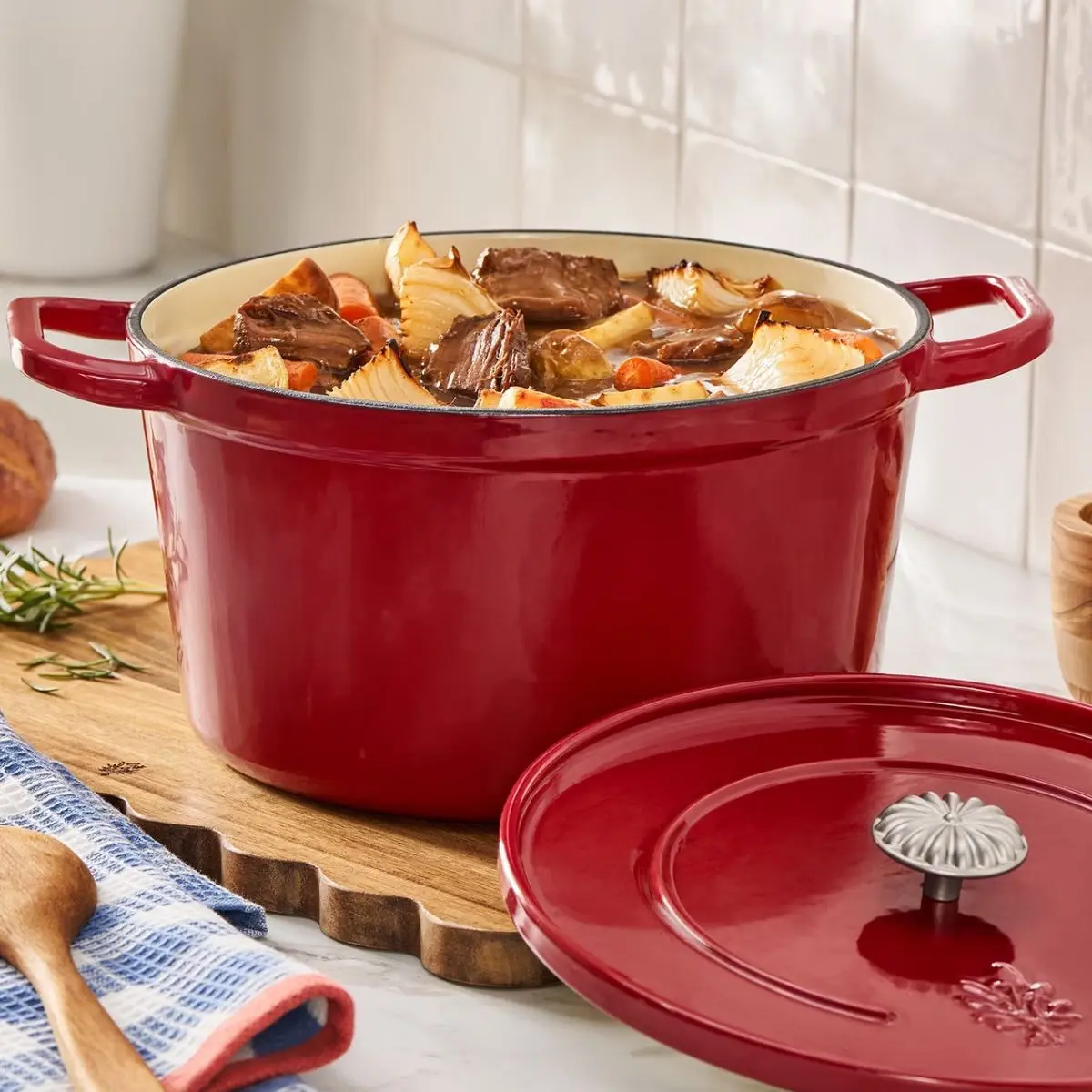
At the epicenter of this disruption is Walmart’s explosive Black Friday retail strategy, highlighted by a runaway viral hit: The Pioneer Woman 7-Quart Enameled Cast Iron Dutch Oven. Designed by Food Network star Ree Drummond, this kitchen essential has captured the public imagination—and substantial market share—by offering comparable performance, stunning visual appeal, and enduring durability at a fraction of the cost. Marked down to a staggering $39 (a discount of over 50%), the product has sparked a broader conversation about value engineering, celebrity-backed home lines, and the psychological appeal of the "dupe" economy.
This report provides a comprehensive analysis of how Walmart’s targeted holiday promotion successfully challenged legacy luxury brands, examining the technical specifications of the product, consumer behavioral shifts, broader home goods deals, and the future outlook for the kitchenware industry.
Detailed Chronology: The Rise of the Affordable Luxury Kitchen Market
The trajectory of the modern kitchenware market did not shift overnight. It is the culmination of a decade-long evolution in manufacturing, social media marketing, and celebrity brand integration.
Phase 1: The Monopolization of Prestige Cookware (Pre-2018)
For generations, enameled cast iron was synonymous with French heritage brands. Culinary enthusiasts viewed pieces costing $350 to $500 as lifetime investments. The barrier to entry was high, effectively segmenting the market between serious home cooks willing to invest in luxury pieces and budget-conscious consumers who relied on standard aluminum or thin stainless-steel alternatives that lacked heat retention and aesthetic flair.
Phase 2: The Direct-to-Consumer and Big-Box Intervention (2018–2021)
As manufacturing techniques improved globally, major retailers realized that consumers deeply desired the look and feel of luxury kitchen items without the financial strain. During this period, mass-market retailers began investing heavily in exclusive celebrity lines. Ree Drummond’s The Pioneer Woman collection at Walmart became a blueprint for this strategy, combining rustic, farmhouse-chic charm with heavy-duty performance materials like enameled cast iron.
Phase 3: The "Dupe" Economy and Social Media Acceleration (2022–Present)
The rise of short-form video platforms—TikTok, Instagram Reels, and YouTube Shorts—fundamentally altered consumer discovery. Kitchen gear transformed from utilitarian objects into lifestyle aesthetics. Creators began performing head-to-head performance tests pitting high-end Dutch ovens against budget-friendly alternatives.
By late 2024 and heading into the crucial Black Friday retail window, Walmart positioned its bestselling Pioneer Woman line as the ultimate counter-narrative to inflation. By slashing the price of the 7-Quart Enameled Cast Iron Dutch Oven to $39, Walmart triggered a viral wave of consumer acquisition. Shoppers rushed to secure the item, realizing they could achieve the same culinary results—braising, stewing, baking, and roasting—without breaking the bank.
Supporting Context & Metrics: Engineering, Economics, and Consumer Trends
To understand why a $39 Dutch oven has generated such intense consumer enthusiasm, one must examine the engineering parallels between luxury standards and mass-market innovation, alongside the economic metrics driving the trend.
Material Science: Enameled Cast Iron
The primary reason chefs prefer cast iron coated in enamel is its unique combination of thermal dynamics and ease of maintenance:

- Thermal Mass and Heat Distribution: Just like its high-end French counterparts, The Pioneer Woman 7-Quart Dutch Oven features a heavy-duty cast-iron core. This allows the pot to absorb, retain, and distribute heat evenly across the base and walls, eliminating hot spots that can burn delicate sauces or stews.
- Non-Reactive Enamel Surface: The smooth interior porcelain-enamel coating prevents food from interacting with the raw iron. This means acidic ingredients like tomatoes, wine, and citrus can simmer for hours without metallic leaching.
- Cleaning and Maintenance: Unlike traditional seasoned cast iron, enameled variants do not require manual seasoning and can be washed with standard dish soap, drastically lowering the barrier to entry for novice cooks.
Product Specifications & Value Comparison
| Feature | Legacy Luxury Brands (e.g., Le Creuset) | The Pioneer Woman 7-Quart Dutch Oven |
|---|---|---|
| Material | Enameled Cast Iron | Enameled Cast Iron |
| Capacity | Typically 5.5 to 7.2 Quarts | 7-Quart (Large Capacity) |
| Versatility | Oven-safe up to 500°F+ | Oven-safe with heat-resistant knobs |
| Aesthetics | Classic gradient finishes | Vibrant farmhouse colors & patterns |
| Price Point | $380 – $500+ | $39 (Black Friday Promotional Price) |
Beyond the Dutch Oven: The Broader Walmart Holiday Home Ecosystem
The success of the Dutch oven is part of a larger, highly calculated Black Friday home goods strategy deployed by Walmart. By curating exclusive lines from some of the most recognizable names in lifestyle and culinary arts, Walmart has created an interconnected ecosystem of affordable luxury:
- The Pioneer Woman 40-Piece Brown Nonstick Cookware and Bakeware Set (Under $100): Aimed at novice home cooks and those looking for a complete kitchen overhaul, this comprehensive set bridges rustic charm with modern nonstick technology, including everything from mixing bowls to cast-iron skillets.
- Martha Stewart 5.3qt, 12-Speed Electric Stand Mixer: Targeting home bakers entering their "baking era," this heavy-duty mixer offers optimized speed settings, multiple attachments, and chic colorways that rival heritage baking brands at a fraction of the cost.
- Beautiful by Drew Barrymore 1-Liter Electric Gooseneck Kettle: Marrying high-end design with functional precision, this kettle features an angled, no-spill spout for pour-over coffee consistency, wrapped in minimalist, aesthetically pleasing pastel and neutral finishes.
- Martha Stewart 34 QT French Door Air Fryer Toaster Oven: A multi-functional powerhouse featuring 12 preset options, this appliance replaces multiple countertop gadgets, proving that space-saving culinary versatility can be both accessible and stylish.
Official Statements and Industry Insights
Retail analysts and editorial experts have closely monitored the shift toward accessible home goods. According to E! Insider Shop editors and retail researchers, consumer purchasing behavior has undergone a fundamental realignment.
"The E! Insider Shop editors and writers search the internet to find the best products out there. We interview expert sources, comb through customer reviews, and use our own personal experiences to make shopping easier for our readers," notes the editorial team behind the curation.
Industry observers point out that modern consumers are no longer willing to pay a "prestige tax" simply for a brand logo stamped onto a piece of kitchenware. When a product achieves parity in weight, heat retention, and durability—while offering versatile features like interchangeable knobs and vibrant color palettes—the economic rationalization for spending upwards of $400 evaporates.
Furthermore, culinary experts have praised Ree Drummond’s line for making functional cooking gear accessible to demographics that might otherwise be priced out of gourmet home cooking. By ensuring that large-capacity cooking vessels (like the 7-quart model) are engineered to handle everything from Sunday pot roasts to holiday sourdough baking, the brand has cultivated intense consumer loyalty.
Future Outlook: The Permanent Shift in the Kitchenware Landscape
As the retail market moves past the initial holiday rush, the implications of viral discounts like Walmart’s $39 Dutch oven will reverberate across the home goods sector for years to come.
1. Pressure on Legacy Brands
Traditional luxury cookware manufacturers can no longer rely solely on heritage status to justify exorbitant markups. To remain competitive, legacy brands will need to innovate more rapidly, offer compelling warranty extensions, or explore mid-tier sub-brands to capture value-conscious consumers who have tasted the quality of affordable enameled cast iron.
2. The Maturation of the "Dupe" Economy
What was once considered a niche retail phenomenon—finding a cheaper alternative to an expensive luxury item—has become the dominant consumer mindset. Shoppers across income brackets actively research product tear-downs and reviews to ensure they are getting maximum utility for their money. Retailers that can successfully merge influencer cachet (such as Ree Drewry, Drew Barrymore, and Martha Stewart) with reliable manufacturing will continue to dominate market share.
3. Sustainability and Longevity in Budget Goods
A critical challenge for affordable cookware brands moving forward will be dispelling the myth that "cheap means disposable." Because enameled cast iron is inherently durable and built to last for decades, budget-friendly lines that prove their longevity under rigorous, everyday use will permanently change consumer perceptions. When a $39 pot performs reliably over years of heavy use, the financial logic of purchasing a luxury alternative is permanently disrupted.
In conclusion, Walmart’s tactical pricing of The Pioneer Woman Dutch oven is more than just a fleeting holiday headline. It represents a watershed moment in retail where quality, design, accessibility, and value converge—proving that world-class culinary experiences no longer require a luxury budget.
