

Executive Overview
For millions of years, long before humanity ever synthesized its first batch of petrochemical plastic, microorganisms were quietly manufacturing their own advanced polymers. Known as polyhydroxyalkanoates (PHAs), these naturally occurring compounds are produced by a vast array of bacteria and archaea. Microbes harness PHAs as cellular storage vessels, accumulating excess carbon and energy within their walls to survive lean environmental periods. Until recently, the scientific consensus was unequivocal: only specialized microorganisms possessed the metabolic machinery required to break down these complex natural plastics.
A groundbreaking study published in Nature Ecology & Evolution by researchers at the Max Planck Institute for Marine Microbiology in Bremen, Germany, has upended this fundamental ecological paradigm. The international research team has discovered that the ability to degrade microbial PHAs is not restricted to the microbial world. Instead, a remarkably diverse spectrum of multicellular animals—ranging from deep-sea marine worms and starfish to common earthworms and terrestrial springtails—harbor specialized enzymes capable of breaking down these natural bioplastics.
This monumental discovery does more than rewrite biochemistry textbooks; it fundamentally alters our understanding of global nutrient flows. By revealing that dozens of animal species across nine distinct phyla possess the enzymatic keys to unlock PHA polymers, the research exposes a previously unrecognized pathway through which carbon stored by microorganisms flows directly into animal food webs. As industries race to scale up commercial PHA production as a sustainable alternative to conventional plastics, this research highlights that nature has been utilizing—and consuming—these circular biopolymers for hundreds of millions of years.
Detailed Chronology: From a Gutless Worm to a Global Paradigm Shift
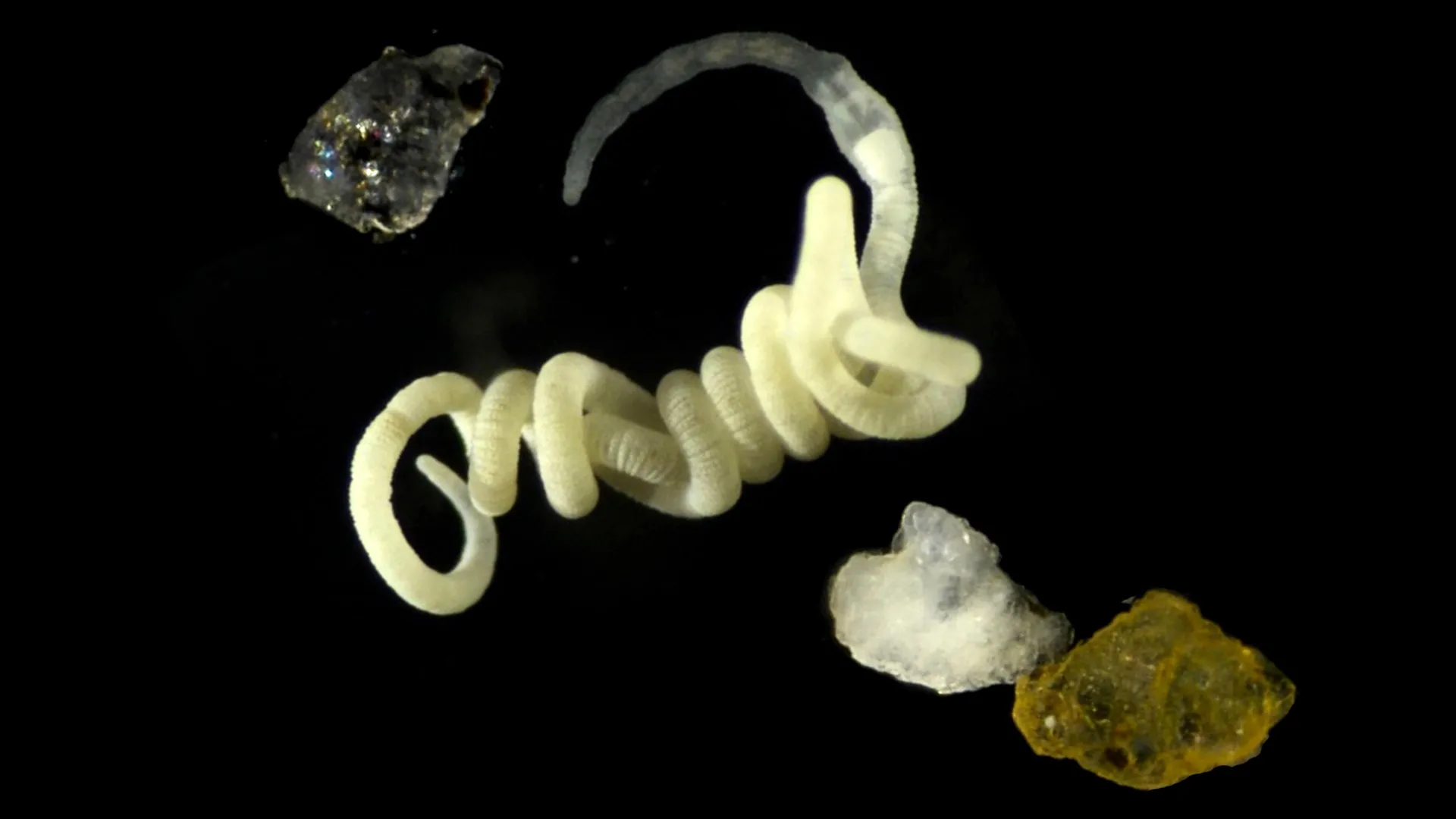
The journey to this paradigm-shifting discovery did not begin in a high-throughput genetic screening facility, but rather with one of the ocean’s most peculiar inhabitants: a slender, gutless marine worm known to science as Olavius algarvensis.
The Enigmatic Marine Worm (Olavius algarvensis)
Discovered in shallow marine sediments, Olavius algarvensis immediately captivates evolutionary biologists due to its radical anatomical adaptations. The worm completely lacks a mouth, a gut, and a digestive tract. It cannot ingest food in the conventional manner. Instead, Olavius algarvensis survives through an intimate symbiotic relationship with specialized bacteria that live directly beneath its specialized integument (skin). The worm relies on these microscopic symbionts for its primary nutrition, essentially farming and digesting its bacterial partners to sustain its life cycle.
During early investigations into the metabolic exchanges within this symbiosis, researchers noticed something striking. One of the worm’s core bacterial symbionts accumulated massive intracellular reserves of carbon structured as PHAs. Nicole Dubilier, Director at the Max Planck Institute for Marine Microbiology and corresponding author of the study, and her team began to question the dynamics of this relationship. They wondered whether the host worm had evolved a biochemical mechanism to directly tap into this rich, localized energy reserve stored inside its cellular partners.
Uncovering the Enzymatic Key
To answer this question, the researchers deployed advanced biochemical and molecular profiling techniques. The investigation bore fruit when the team successfully identified a specific enzyme within the worm’s tissues. This enzyme possessed a singular capability: it could cleave complex microbial PHA polymers into smaller, bioavailable molecules that the worm’s cells could readily absorb and metabolize.
To confirm that this was not merely an incidental chemical reaction, the team deployed high-resolution imaging techniques. The visual data provided definitive proof, revealing that the PHA-degrading enzyme was synthesized precisely in the anatomical regions where the worm digests its bacterial partners. This spatial alignment confirmed that Olavius algarvensis actively taps into the PHA energy savings account maintained by its microbial symbionts.
Expanding the Scope: A Universal Animal Trait
While discovering that a symbiotic marine worm consumes bacterial plastic was a significant milestone in its own right, the Max Planck team recognized that this adaptation might not be an isolated evolutionary anomaly. Prompted by this realization, the researchers broadened their investigation, scanning expansive genomic databases across the animal kingdom.
The results stunned the research team. They identified homologous genes encoding PHA-degrading enzymes in more than 66 distinct species spanning nine major animal phyla. To verify whether these genetic blueprints translated to functional proteins, the researchers subjected tissue samples and isolated enzymes from a diverse array of distantly related creatures to laboratory degradation assays.
The tests confirmed that enzymes extracted from a marine sponge, a common terrestrial earthworm, and a microscopic soil-dwelling springtail could all successfully degrade microbial PHAs. What began as a localized biochemical inquiry into a single gutless worm from the Mediterranean had expanded into the realization that PHA degradation is an ancient, widespread capability distributed across vastly different branches of the tree of life.
Supporting Context & Metrics: Understanding PHA Bioplastics
To fully appreciate the ecological and industrial significance of the Max Planck Institute’s findings, one must examine the chemical nature and modern trajectory of PHA bioplastics.
What are PHAs?
Polyhydroxyalkanoates are linear polyesters synthesized by bacteria through the bacterial fermentation of carbon sources. When microorganisms encounter environments rich in carbon—such as sugars, starches, or plant oils—but deficient in other essential growth nutrients like nitrogen, phosphorus, or oxygen, they channel excess carbon into intracellular granules of PHA. These polymers act as metabolic energy and carbon reserves, functioning much like mammalian adipose tissue or plant starches.
In the natural world, PHAs are found abundantly in soils, marine sediments, and aquatic biofilms. Because they are synthesized entirely through biological pathways, they are among the select few naturally occurring plastics that are completely biodegradable in diverse environments, breaking down safely into carbon dioxide and water through microbial action.
Industrial Synthesis and Applications
In recent years, the commercial sector has embraced PHAs as a sustainable, bio-based antidote to the global crisis of petrochemical plastic pollution. Industrial production typically unfolds within massive industrial fermentation vessels. Microbes are fed renewable feedstocks under tightly controlled physiological conditions, forcing them to accumulate high concentrations of PHA intracellularly. The cells are subsequently harvested, and the polymer is extracted, purified, and pelletized.
Industrial PHA Production Lifecycle:
[Renewable Feedstocks (Sugars/Oils)]
       │
       ▼
[Bacterial Fermentation Tanks]
       │
       ▼
[Intracellular PHA Accumulation]
       │
       ▼
[Extraction & Purification]
       │
       ▼
[Molding into Bioplastics (Packaging, Medical, Agricultural)]
These industrial bioplastics exhibit versatile material properties:
- Mability and Water Resistance: PHA materials can be readily molded into complex geometries, exhibit high resistance to moisture degradation, and maintain structural integrity during use.
- Packaging and Consumer Goods: They are increasingly utilized for short-term packaging solutions, single-use containers, and sustainable hygiene items.
- Agricultural Innovations: PHAs are deployed to manufacture controlled-release fertilizer beads. As the polymer shell gradually degrades in the soil, nutrients are steadily dispensed to crops.
- Advanced Medical Applications: Due to their biocompatibility and predictable resorption rates, medical-grade PHAs are utilized in resorbable surgical sutures, orthopedic fixation devices, tissue engineering scaffolds, and targeted drug delivery systems.
Despite these promising attributes, PHAs currently occupy a relatively modest share of the global bioplastics market, largely due to higher production costs compared to conventional fossil-fuel plastics. However, as global regulatory frameworks tighten and consumer demand for circular, bio-based materials surges, industrial manufacturing capacity for PHAs is projected to expand exponentially over the coming decade.
Official Statements & Expert Insights
The implications of this study have resonated deeply throughout the international scientific community, prompting leading researchers to reflect on how this discovery reshapes evolutionary history and ecological theory.
"One of the worm’s bacterial symbionts stores enormous amounts of carbon as PHA. We wondered whether the worm had evolved a way to access this rich energy reserve."
— Nicole Dubilier, Director at the Max Planck Institute for Marine Microbiology and corresponding study author.
The realization that this enzymatic capability was not restricted to marine worms, but rather shared across the animal kingdom, marked a watershed moment for the research team.
"This was the real surprise. What started as a discovery in a single marine worm turned out to be a widespread capability shared by animals from very different branches of the tree of life."
— Caroline Zeidler, First author and researcher at the Max Planck Institute for Marine Microbiology.
Looking beyond the immediate biochemical findings, the researchers emphasize that this discovery redefines the metabolic boundaries between kingdoms of life. For decades, the flow of carbon stored in microbial biopolymers was thought to be recycled exclusively by other microorganisms through mineralization. This study proves that macro-organisms participate directly in this cycle.
"Our study changes our understanding of who can use these microbial carbon stores. Animals have probably been feeding on nature’s original bioplastic for hundreds of millions of years—we’re only discovering it now."
— Maggie Sogin, Co-corresponding author, formerly of the Max Planck Institute and currently Assistant Professor at the University of California, Merced.
Future Outlook: A New Chapter in the Global Carbon Cycle
While the Max Planck study definitively proves that a diverse array of animals can dismantle natural bioplastics, it simultaneously opens up a vast frontier of unanswered scientific questions. The discovery serves as an urgent call to action for microbial ecologists, biogeochemists, and evolutionary biologists alike.
Quantifying Ecological Impact
The most pressing task for future research is to quantify the flux of carbon moving through this newly identified pathway. Scientists currently lack precise empirical metrics regarding how common animal-mediated PHA degradation is across diverse natural ecosystems. Determining the precise volume of carbon that flows from microbial reserves directly into animal biomass will require sophisticated stable isotope probing, metabolic tracing, and in-situ field studies across terrestrial, freshwater, and marine biomes.
If this pathway proves to be globally significant, it will necessitate revisions to current models of the global carbon cycle. It would mean that carbon sequestered by microorganisms into energy reserves is not merely recycled back to the inorganic pool via microbial respiration, but is instead actively integrated into higher trophic levels, fueling invertebrate growth and reproduction across ecosystems.
Evolutionary and Biotechnological Horizons
From an evolutionary standpoint, the widespread presence of PHA-degrading enzymes across disparate phyla raises intriguing questions. Did a common ancestral organism possess this enzymatic machinery before the major animal lineages diverged hundreds of millions of years ago, or did these enzymes evolve independently through convergent evolution in response to the ubiquitous presence of microbial biopolymers in the environment? Unraveling this evolutionary timeline will shed light on ancient trophic interactions between early multicellular animals and microbial mats.
On the technological front, the identification of novel, highly efficient animal-derived enzymes capable of degrading polyester polymers holds immense potential for biotechnology. As industries scale up the production of anthropogenic and natural bioplastics, understanding how diverse biological systems degrade these materials could inspire advanced enzymatic recycling technologies, novel waste-management protocols, and bio-inspired materials science applications.
Ultimately, the revelation that animals have been consuming earth’s original bioplastics for eons underscores the profound interconnectedness of life on Earth. It is a powerful reminder that even as human science races to innovate sustainable materials for the future, nature has spent hundreds of millions of years quietly perfecting the chemistry of circularity.