

Executive Overview
After years of exhaustive brand reclamation, corporate restructuring, and high-stakes cultural repositioning, Victoria’s Secret is once again transforming its most famous marketing vehicle—the iconic Fashion Show. Long criticized for promoting a narrow, exclusionary definition of beauty, the lingerie giant is officially casting aside its past exclusivity in favor of a modern, highly interactive, and community-driven ethos. The centerpiece of this pivot is the upcoming Victoria’s Secret Fashion Show, scheduled for Sunday, October 18, in Los Angeles, which represents a deliberate departure from the velvet-rope-gated spectacles of the past.
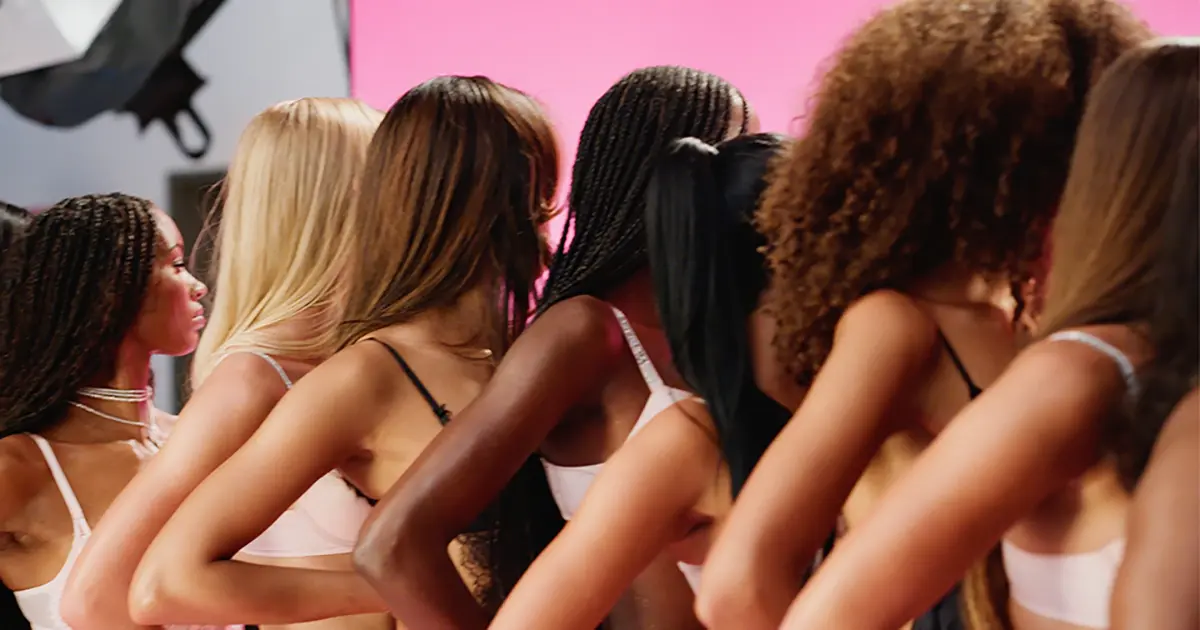
Instead of traditional, highly guarded guest lists, this year’s production is designed to be experienced collectively. The brand is utilizing public ticket drops, nationwide talent searches to crown a new generation of "Angels," and expansive digital touchpoints to democratize access. Broadcast globally via YouTube and the brand’s proprietary social channels, the event will culminate in the company’s very first post-show TikTok Live stream. This marks the second major runway production under the guidance of Chief Marketing and Customer Officer Elizabeth Preis, who joined the executive team in May 2025.
Preis and her leadership team have analyzed consumer behavior data from the 2025 revival, noting that modern audiences are no longer content to be passive spectators of luxury; they demand participation, connection, and shared cultural experiences. By reframing the show as a "night of fun and friendship," Victoria’s Secret is attempting to transition from an arbiter of unattainable perfection to an inclusive, participatory community hub. This comprehensive feature explores the operational mechanics, marketing strategies, and cultural implications of Victoria’s Secret’s ambitious blueprint to secure its market dominance for the digital age.
Detailed Chronology: From the Vault to the Runway
To understand the weight of the October 18 Los Angeles show, one must look at the tumultuous historical arc that brought Victoria’s Secret to this precise inflection point. The brand’s journey over the past decade serves as one of the most visible case studies in corporate turnaround and brand rehabilitation within the global retail and fashion industries.
The Zenith and Collapse of the Traditional "Angel" Era (1995–2018)
For over two decades, the Victoria’s Secret Fashion Show was undisputed television royalty. Launched in 1995, the broadcast grew from a sleek New York City hotel presentation into a multi-million-dollar pop culture phenomenon. Complete with feathered wings, fantasy bras encrusted with precious gems, and live musical performances by top-tier global artists, the show was watched by millions worldwide.
However, by the late 2010s, cultural winds had shifted dramatically. The rise of the body-positivity movement, coupled with a broader societal demand for inclusivity, exposed the glaring vulnerabilities of the brand’s marketing strategy. The homogenous, highly slender ideal represented by the traditional "Angels" felt increasingly tone-deaf. Coupled with controversies surrounding executive leadership and a steep decline in television ratings, the brand abruptly canceled its flagship annual fashion show in 2019. For the retail giant, the cancellation was not merely a programming change; it was an admission that its foundational brand identity was broken.
The Rebuilding Years and Corporate Restructuring (2020–2024)
Between 2020 and 2024, Victoria’s Secret underwent a radical corporate separation, spinning off from L Brands into an independent publicly traded company, and systematically purging its old leadership guard. The company replaced its iconic Angels with the "VS Collective"—a diverse group of accomplished women from sports, activism, and the arts, including Megan Rapinoe, Priyanka Chopra Jonas, and Paloma Elsesser.
In 2023, the brand tested the waters of a comeback with The Tour ’23, a documentary-style feature film and fashion showcase that highlighted independent creative talent from global fashion hubs like Lagos, Bogota, London, and Tokyo. While The Tour served as an artistic bridge away from the old format, it lacked the direct, high-octane theatricality that consumers historically associated with the brand. By 2025, the company recognized that while modernization was essential, abandoning its most potent equity—the spectacle of the live runway—was a miscalculation. The 2025 runway revival proved that consumers still craved the magic of the show, provided it was delivered with updated values.
The 2026 Paradigm: Democratization and Community (May 2025–Present)
When Elizabeth Preis stepped into the role of Chief Marketing and Customer Officer in May 2025, she inherited a brand halfway through its identity metamorphosis. Rather than leaning entirely into legacy formulas, Preis immediately initiated a customer-centric operational review.
The strategy crystallized after analyzing data from the 2025 show, which revealed a distinct consumer trend: fans were not just streaming the event individually in their living rooms; they were organizing watch parties, engaging in real-time social media debates, and treating the broadcast as a collective cultural holiday. Recognizing this grassroots enthusiasm, Preis and her marketing division engineered the 2026 event around a single core directive: transform the runway from a top-down broadcast into an interactive, communal festival. This evolution manifests in public ticket distribution, a decentralized digital footprint, and a nationwide search for the next iconic Angel, effectively shifting the power dynamic from the boardroom to the consumer base.
Supporting Context & Metrics: The Business of Reinvention
Reinventing a multi-billion-dollar brand’s signature marketing asset requires precise alignment between creative vision and hard financial metrics. The decision to invest heavily in a digitized, participatory fashion show is backed by comprehensive consumer data, shifting media consumption habits, and a clear-eyed assessment of modern retail economics.
Decoding the Modern Lingerie Consumer
Market research within the intimate apparel sector demonstrates a seismic shift in brand loyalty drivers. Gen Z and Millennial consumers—who now comprise the core demographic for growth—prioritize brand values, community engagement, and digital accessibility over traditional aspirational marketing. According to retail analytics, brands that successfully integrate interactive social media campaigns into live events experience an immediate, measurable lift in digital engagement, app downloads, and direct-to-consumer e-commerce conversion rates.
| Strategic Metric / Initiative | Traditional Era (Pre-2019) | Modern Era (2025–Present) |
|---|---|---|
| Primary Audience Engagement | Passive television viewership | Interactive streaming, social commerce, and live chat |
| Event Access | Strictly invited celebrities, editors, and elites | Public ticket drops and community-driven access |
| Casting Philosophy | Homogenous, high-standard "Angel" archetype | Diverse representation, nationwide talent searches, VS Collective |
| Post-Show Strategy | Traditional magazine coverage and archived video | TikTok Live, real-time social commerce, community curation |
| Executive Focus | Pure visual spectacle and product placement | Customer-centric community building and inclusivity |
The Power of the Second-Screen Experience
By placing the global broadcast on YouTube and the brand’s social channels, Victoria’s Secret is acknowledging that modern television screens are only half the battle. The addition of the brand’s first post-show TikTok Live stream is a calculated maneuver to capture the "second-screen" economy. During major cultural events, consumers routinely evaluate, critique, and purchase products in real-time while interacting with digital communities.
Financial analysts note that this approach significantly lowers customer acquisition costs (CAC) compared to traditional print and billboard advertising. By turning the runway show into an interactive digital storefront, Victoria’s Secret can drive immediate transactional velocity, converting runway inspiration into cart additions within seconds.
Official Statements and Industry Insights
The strategic pivot behind the Los Angeles production is anchored by the vision of Elizabeth Preis, whose leadership emphasizes empathy, collaboration, and consumer co-creation. In an exclusive interview with ADWEEK, Preis detailed the psychological shift guiding the brand’s marketing department.
"After watching how our fans gathered together to watch the 2025 event, we wanted to make sure this year was much more participatory as a night of fun and friendship," said Elizabeth Preis, Chief Marketing and Customer Officer. "The modern consumer doesn’t just want to watch a brand from afar; they want to be part of the narrative. Our goal is to break down the barrier between the runway and the real world, creating an environment where everyone feels invited to the celebration."
Industry analysts have praised this calculated evolution. Fashion marketing experts note that legacy brands often struggle with identity crises when attempting to modernize, frequently alienating their core loyalists while failing to capture younger demographics. Victoria’s Secret, however, appears to be threading the needle successfully by retaining the high-glam aesthetics that made the show famous while rewriting the social contract between the brand and its audience.
"Victoria’s Secret is executing a masterclass in brand anthropology," notes Sarah Jenkins, a senior retail strategist at Global Brand Insights. "They aren’t running away from their history anymore; they are acknowledging it, updating it, and handing the keys over to the community. By making the show participatory through ticket drops and nationwide talent searches, they are transforming spectators into stakeholders."
Future Outlook: What the Los Angeles Show Signals for Retail and Media
As the October 18 Los Angeles show approaches, the implications extend far beyond a single evening of entertainment. The event serves as a bellwether for how legacy retail brands must adapt to an increasingly decentralized, digital-first media landscape.
The Future of Fashion Week Economics
The traditional fashion show model—built on exclusivity, print media embargoes, and whispered invitations—is rapidly becoming obsolete. Brands across the luxury and mass-market spectrum are realizing that exclusivity without engagement yields diminishing returns in an era defined by social media influence. Victoria’s Secret’s hybrid approach—combining the high-production value of a physical runway with the democratic reach of global streaming and TikTok integration—establishes a new blueprint for fashion marketing.
If the Los Angeles production achieves its projected engagement metrics, expect competing lingerie and apparel brands to aggressively replicate the "participatory runway" model. The traditional fashion calendar may soon be entirely reorganized around consumer-facing digital spectacles rather than closed-door industry exhibitions.
Sustaining Momentum Beyond the Runway
The ultimate test for Victoria’s Secret will not be the viewership numbers on October 18, but the long-term retention of the community it is working so diligently to build. Transitioning the nationwide search for a new Angel from a marketing stunt into a sustainable pipeline for brand ambassadorship will require continuous dedication to authentic representation. Furthermore, the integration of real-time social commerce during events like the TikTok Live stream must translate into enduring customer loyalty rather than transient, trend-driven spikes in sales.
As Elizabeth Preis and her team put the finishing touches on the Los Angeles production, the message to the market is definitive: the wings have not been clipped; they have been redesigned for flight in an entirely new sky. By marrying spectacle with accessibility, Victoria’s Secret is attempting to prove that iconic status is not preserved by standing still, but by moving forward alongside the people who wear the brand every day.