

Executive Overview
In the modern digital publishing ecosystem, the traditional hurdles of content creation have shifted. While generating compelling narratives once required endless hours of manual research and transcription, today’s freelance writers operate in a hyper-competitive, fast-paced marketplace where time directly correlates with profitability. Conducting interviews with Subject Matter Experts (SMEs)—a cornerstone of authoritative, high-value journalism and content marketing—traditionally created a massive administrative bottleneck. A standard 20-minute expert conversation easily translates into more than 3,000 words of transcript data, demanding upwards of an hour of tedious rewinding and manual typing just to capture accurate quotes.
Enter artificial intelligence-powered transcription software. Platforms like Otter.ai have fundamentally altered this dynamic. By automating the conversion of spoken dialogue into searchable, digital text in real time, these tools have compressed a multi-step administrative chore into an instantaneous asset. For freelance writers balancing tight deadlines, complex client demands, and aggressive income targets, the integration of real-time voice transcription is no longer a luxury—it is a vital economic lever. This report explores how AI transcription tools are redefining productivity standards, evaluating the tangible Return on Investment (ROI), and examining the broader operational implications for independent writers navigating today’s digital economy.
Detailed Chronology: The Evolution of Interview Workflows
To fully understand the disruptive impact of AI transcription, one must examine how the mechanics of interviewing and reporting have evolved over the past decade.
The Pre-Digital & Manual Era
Historically, interviewing an SME meant splitting cognitive focus. Armed with a digital voice recorder (or worse, a microcassette tape recorder) and a legal pad, journalists attempted the dual task of active listening and frantic shorthand. This approach was fraught with friction. Engaging in a nuanced, spontaneous conversation while simultaneously worrying about capturing exact phrasing often led to rigid interviews and superficial angles.
Once the call concluded, the real labor began. The tape had to be replayed—often at half-speed, requiring constant pausing and rewinding. Transcribing a 20-minute audio file manually routinely took between 60 to 90 minutes. Only then could the writer begin the actual work of outlining, structuring, and drafting.

The Rise of Human Transcription Services
As the digital gig economy expanded, outsourcing emerged as a viable alternative. Freelancers could upload audio files to human transcription platforms or independent contractors on freelance marketplaces. While this solved the manual labor issue, it introduced a new set of complications: latency and cost. Human transcription typically required a turnaround time of three to five days unless the writer was willing to pay steep rush fees. In an industry where a standard turnaround window for a reported piece might be less than a week, waiting nearly a week just for raw text was rarely feasible.
The AI Revolution (2020–Present)
The landscape shifted dramatically around 2020 with the maturation of automated speech recognition (ASR) integrated with large language models. Tools like Otter.ai transformed transcription from an asynchronous bottleneck into a synchronous, automated utility. Rather than waiting days—or spending hours manually typing—writers gained access to transcripts seconds after a call ended.
This technological leap changed the cognitive load of interviewing. With the safety net of a reliable automated recorder running in the background, interviewers could abandon their notepads entirely. Attention shifted from mechanical transcription to deep, unencumbered engagement with the expert, fostering more organic conversations, dynamic follow-up questions, and ultimately, superior journalistic content.
Supporting Context & Metrics: The ROI of Automated Transcription
For independent contractors, success is inextricably linked to billable hours and efficient throughput. Every minute spent on administrative tasks is time diverted from revenue-generating writing. A granular look at the economics of freelance writing reveals why tools like Otter.ai have become indispensable fixtures in professional workflows.
The Mathematics of Time Savings
Consider a typical assignment: a 1,000-word reported article featuring at least one SME interview, commanding a flat fee of $1,200.
A traditional workflow breakdown typically looks like this:
- Research & Preparation: 1 hour
- Interview & Manual Transcription: 2 hours (20-minute call + 100 minutes of manual transcription and cleanup)
- Outlining & Drafting: 3 hours
- Editing & Polishing: 1 hour
- Total Time Invested: 7 hours
- Effective Hourly Rate: ~$171 per hour
By introducing an AI transcription tool, the transcription and cleanup phase is compressed drastically. The software generates the transcript instantly upon call completion. Even allowing for 10 minutes of editorial review and verification to catch technical nomenclature or proper nouns, the time required drops from two hours to just 10 minutes.
The revised workflow:
- Research & Preparation: 1 hour
- Interview & AI Transcription/Review: 0.5 hours
- Outlining & Drafting: 3 hours
- Editing & Polishing: 1 hour
- Total Time Invested: 5.5 hours
- Effective Hourly Rate: ~$218 per hour
Across multiple assignments—such as a writer completing three or four interview-heavy articles per month—the cumulative hours saved range from 3 to 5 hours monthly. When evaluated against an annual subscription cost of approximately $100 for a professional-tier service, the tool pays for itself within the first assignment of the billing cycle.
Key Functional Advantages Beyond Basic Transcription
While speed is the primary driver of adoption, modern AI transcription platforms offer secondary features that fundamentally enhance content creation:
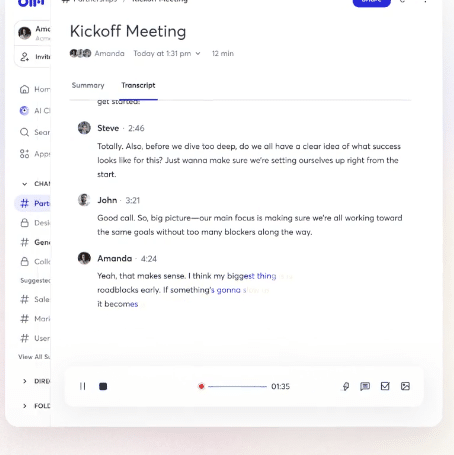
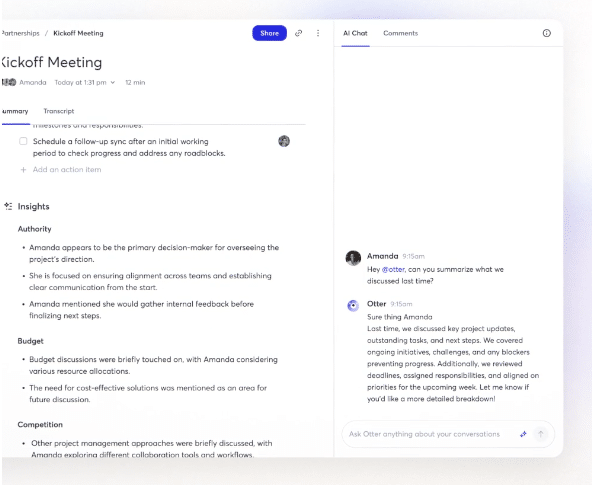
- AI Chat Search and Summarization: Modern transcription suites incorporate conversational AI search capabilities. Instead of manually scanning a 4,000-word transcript for a specific quote regarding complex topics—such as "cross-border payment regulations" or "AI-driven personalization"—writers can query the transcript directly via an integrated chatbot. The system instantly surfaces relevant segments along with contextual summaries.
- Audio Playback Synchronization: Accuracy remains a critical concern for professional writers. Advanced platforms link the generated text directly to the underlying audio file. Clicking any sentence in the transcript immediately triggers the audio playback at that exact timestamp, allowing journalists to verify contentious quotes or ambiguous phrasings in a matter of seconds.
- Seamless Calendar and Platform Integration: Automated calendar synchronization allows transcription bots to auto-join scheduled Zoom, Microsoft Teams, or Google Meet sessions without manual intervention, ensuring that every professional interaction is captured by default.
Limitations and Operational Friction Points
Despite the transformative benefits, industry professionals must navigate certain inherent limitations when integrating AI transcription into daily publishing workflows.
Accuracy Constraints and Technical Jargon
While marketing materials often tout accuracy rates exceeding 90%, real-world conditions—particularly specialized niches like fintech, biotech, or legal reporting—reveal a functional accuracy closer to 80% to 85%. Automated speech recognition models frequently struggle with niche industry acronyms, proprietary product names, and distinct regional accents. Consequently, relying on an unverified transcript for direct quotations invites factual errors. Professional journalism demands that writers treat AI transcripts as advanced drafts rather than final, publication-ready copy.
Hardware and Environmental Dependencies
Technical constraints also dictate how and where interviews can be conducted. Many transcription platforms rely on system audio capture or software-level routing. For instance, recording conversations while wearing physical headphones can inadvertently result in the software capturing only the user’s voice while missing the remote participant entirely. Writers must adapt their hardware setups—often relying on computer speakers or specialized audio routing configurations—which can limit remote mobility and privacy in public or shared working environments.
Speaker Attribution Challenges
In multi-party discussions, webinars, or panel interviews, automated diarization (speaker identification) can falter. When participants share similar vocal tonalities or speak in rapid succession, algorithms frequently misattribute quotes, labeling speakers arbitrarily as "Speaker 1" or "Speaker 2." Editors and writers must remain vigilant, cross-referencing multi-speaker transcripts to ensure absolute fidelity in attribution.
Comparative Industry Analysis: AI vs. Alternative Solutions
To contextualize the value proposition of AI transcription, it is helpful to evaluate it against competing methodologies available to modern communicators.
| Transcription Method | Average Speed / Turnaround | Cost Structure | Accuracy Level | Best Suited For |
|---|---|---|---|---|
| Manual Self-Transcription | 3x to 5x audio length | Free (High opportunity cost) | 99%+ (Dependent on typist) | Low-frequency interviews, tight budgets |
| Human Transcription Services | 3 to 5 business days | High ($1.00 – $3.00+ per audio minute) | Extremely High (95% – 99%) | Highly sensitive legal or medical dictations |
| AI Transcription Software | Real-time (Instant) | Low ($8 – $20 monthly subscription) | Moderate-High (80% – 90%+) | Freelance writers, journalists, corporate meetings |
As demonstrated, while human transcription retains an edge in absolute accuracy for specialized legal or medical contexts, its prohibitive cost and multi-day turnaround render it impractical for the fast-moving digital journalism and content marketing sectors. AI transcription occupies the optimal intersection of speed, affordability, and acceptable operational accuracy.
Future Outlook: The Next Generation of Writing Workflows
As artificial intelligence continues to mature, the boundary between research, transcription, and drafting will continue to dissolve. Looking toward the horizon, several trends are poised to shape the future of freelance writing infrastructure:
- Context-Aware Domain Training: Future transcription models will increasingly allow users to upload custom glossaries, style guides, and industry-specific lexicons prior to an interview. This will dramatically reduce error rates regarding technical terminology and proprietary brand names.
- Automated Structural Outlining: Beyond simply generating text, next-generation tools will analyze conversational transcripts to automatically suggest article outlines, identify compelling thematic narratives, and extract pull-quotes tailored to specific editorial guidelines.
- Deeper Multimodal Integration: The convergence of voice transcription with generative writing assistants will enable writers to seamlessly transition from an expert interview directly into a structurally sound first draft, all within a unified workspace.
Conclusion
For independent creators and freelance writers navigating the complexities of modern digital publishing, operational efficiency is the ultimate competitive advantage. While tools like Otter.ai and its market contemporaries are not infallible—requiring human oversight, verification, and hardware awareness—their economic and temporal benefits are undeniable. By reclaiming hours of lost administrative labor each month, writers can redirect their cognitive energy toward what matters most: conducting deeper investigations, cultivating stronger sources, and crafting compelling, authoritative stories that resonate with audiences.