As the United States stands just one week away from what is shaping up to be the most consequential midterm election cycle in recent history, the nation finds itself gripped by intense political polarization. At stake is the balance of power in both the House and the Senate—a high-stakes legislative battle unfolding against a backdrop of deep partisan division. Beyond determining control of Capitol Hill for the next two years, next Tuesday, Nov. 3, will serve as a crucial bellwether, effectively setting the stage for a momentous 2028 presidential election.
Yet, the turbulence of this season extends far beyond the ballot box. It permeates the media landscape, creating a volatile intersection where journalism, political strategy, and personal conduct collide. From local newspapers reversing long-standing policies to break their silence on toxic campaign tactics, to high-profile cable news anchors mingling with the political elite at wedding celebrations, the traditional boundaries separating the press from the political apparatus are continuously tested. Furthermore, high-profile controversies involving public figures and media personalities underscore a cultural moment where personal indiscretions rapidly evolve into professional and political liabilities.
This report provides a comprehensive examination of the closing days of the midterm cycle, exploring the meticulous work of election fact-checkers, the ethical dilemmas facing major metropolitan newspapers, the optics of media-political entanglements, and the tectonic shifts occurring within sports broadcasting.
Detailed Chronology
The Final Stretch: Fact-Checking and Election Integrity
For months, voters have navigated an unprecedented deluge of campaign speeches, digital advertisements, mailbox flyers, and televised debates. In response, the fact-checking team at Poynter’s PolitiFact has been operating at maximum capacity, scrutinizing claims originating from high-profile, contentious races spanning the nation—from Maine to Alaska, Texas to Michigan, and everywhere in between.
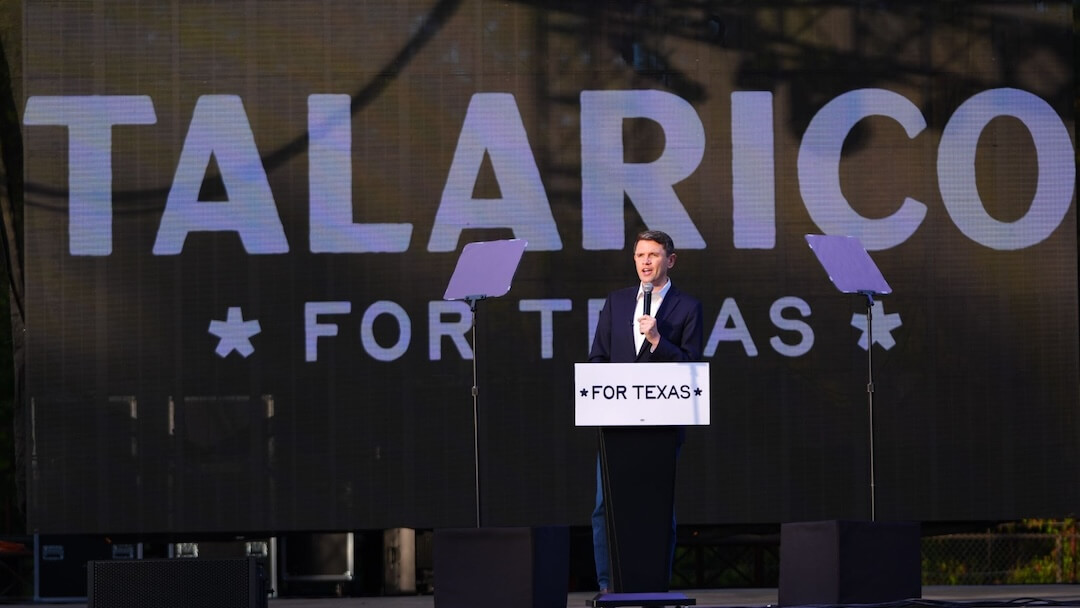
As part of the latest episode of The Poynter Report Podcast, PolitiFact Editor-in-Chief Katie Sanders joined the discussion to analyze the most contentious moments of the cycle. Sanders and the host explored tight legislative contests, including the fiercely contested Texas Senate race between Democrat James Talarico and Republican Ken Paxton, as well as the Michigan Senate showdown featuring Republican Mike Rogers and Democrat Abdul El-Sayed.
However, as the campaign clock winds down, PolitiFact’s primary focus has shifted from candidate posturing to a more insidious threat: voter intimidation and dissuasion.
"I think at this point the voters know who the candidates are, and I think in many cases they’ve made up their minds. They probably long made up their minds, right? … We’re really going to be looking out for mischief — online mischief, rumor mills, robocalls, the kind of things that seem intended to dissuade people from turning out to vote," Sanders noted during the podcast.
According to Sanders, newsrooms and election monitors must remain vigilant against coordinated disinformation campaigns designed to suppress turnout. Common tactics anticipated on election day include false reports of voting machine failures intended to stoke fears of a rigged election, or viral misinformation campaigns regarding ballot-marking procedures—such as claims concerning the use of specific pens like Sharpies. While such narratives may sound absurd, election officials and fact-checkers treat them as predictable elements of modern election interference playbooks.
The Cleveland Plain Dealer Breaks Its Silence
In the realm of print journalism, editorial boards have increasingly retreated from making political endorsements in recent years. A prominent example occurred months ago when The Cleveland Plain Dealer—Ohio’s largest newspaper—announced it would scale back its endorsement policy, opting to sit out gubernatorial races and focus exclusively on smaller, local contests.
That policy was dramatically reversed over the weekend. Propelled by a massive wave of reader outcry, the publication published an editorial under the stark headline: "We cannot remain silent: Amy Acton for governor." The newspaper endorsed Democratic candidate Amy Acton while issuing a scathing condemnation of her Republican opponent, Vivek Ramaswamy.
The catalyst for this sudden reversal was a controversial 60-second television advertisement released by the Ramaswamy campaign. In the commercial, Acton’s estranged mother labels her daughter a liar and urges voters to reject her candidacy. The emotional weight of the ad stems from a deeply traumatic past: Acton has been estranged from her mother since she was 12 years old, having been removed from the home following the arrest and conviction of her stepfather for sexually abusing her.
The advertisement provoked swift, bipartisan condemnation, though several prominent Republicans—including President Donald Trump and Vice President JD Vance—rallied to defend Ramaswamy. Speaking to reporters, Vance expressed frustration with intra-party critics:
"I have to admit that I’m a little bit disgusted when I see Republicans across the country who are whining more about that advertisement than they are about what the congressional Democrats and other Democrats want to do to the United States of America."
Despite pushback from national figures, The Cleveland Plain Dealer editorial board argued that a fundamental moral boundary had been breached. The board wrote:
"A candidate who uses childhood sexual abuse as a weapon against the person who endured it has crossed a line that Ohioans should defend, whatever their party. We are better than this. We have a responsibility to show it. Today, we endorse Democrat Amy Acton for governor."
The publication emphasized that its decision was rooted in its fundamental obligation to its readership. When faced with a choice of this magnitude, the paper determined that remaining silent would violate the trust of the community it serves. Furthermore, the editorial noted that the endorsement was not merely a reaction to the controversial ad, praising Acton’s substantive record, professional preparation, and demonstrated commitment to public service.
Republican Ohio Governor Mike DeWine also weighed in, characterizing Ramaswamy’s ad as "deeply, deeply troubling" and asserting that the campaign "needs to take it down," though DeWine maintained his endorsement of the candidate. Responding to the mounting pressure, the Ramaswamy campaign altered the spot over the weekend, editing it down to 30 seconds—though the revised version still features Acton’s mother calling her a liar.
Political and Media Fallout
The controversy drew national figures into the fray. Former President Barack Obama addressed a packed rally in Cleveland in support of Acton and Ohio Democratic Senate nominee Sherrod Brown. Obama delivered a blistering critique of Ramaswamy’s campaign strategy:
"We’ve seen there’s no line he won’t cross, no low he won’t sink to, to try to get in the limelight. I don’t know what’s happened where the standards of behavior have gotten so low that someone can run an ad like that. There’s got to be something inside you where you say no office is worth stooping that low."
Supporting Context & Metrics
The Optics of Press Proximity: Hannity’s Wedding
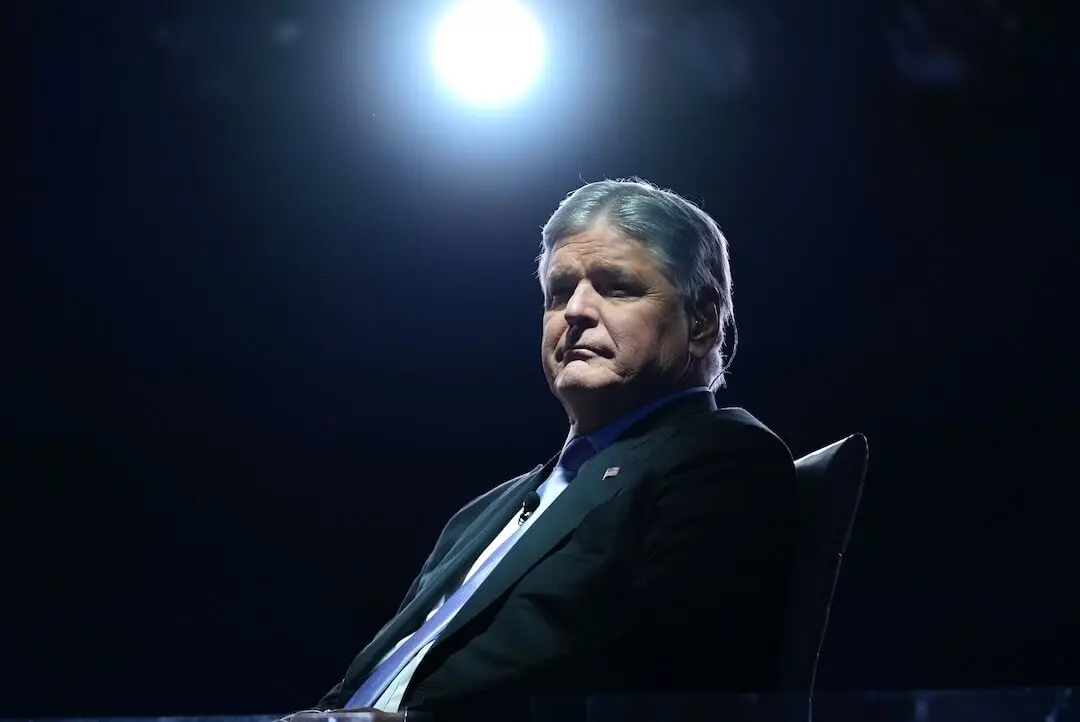
Beyond the electoral battlefield, questions regarding journalistic integrity and elite proximity continue to plague cable news networks. Over the weekend, Fox News prime-time host Sean Hannity married network colleague Ainsley Earhardt, co-host of Fox & Friends.
While personal unions between media colleagues are unremarkable in themselves, the pre-wedding rehearsal dinner optics raised significant ethical questions for an organization bearing the word "news" in its official title. The event took place at Donald Trump’s Mar-a-Lago resort, with President Donald Trump and First Lady Melania Trump in attendance.
In a statement provided to Fox News, Hannity asserted, "I’ve had a personal relationship with President Trump for over 30 years. When Ainsley and I began planning this celebration, it was important to us that he could be part of this special time in our lives." Hannity additionally confirmed that he and his bride paid fair market value to rent the venue.
The guest list for the rehearsal dinner and wedding read like a roster of the executive branch and inner circle of the administration, featuring:
White House Chief of Staff Susie Wiles
White House Deputy Chief of Staff Dan Scavino
Secretary of State Marco Rubio
Health and Human Services Secretary Robert F. Kennedy Jr.
Eric and Lara Trump
Former White House Press Secretary Karoline Leavitt
Florida Republican Governor Ron DeSantis
South Carolina Republican Senator Tim Scott
Media watchdogs noted the inherent tension in these alignments. While Hannity has never positioned himself as a traditional, neutral news reporter—operating openly as a conservative television commentator—the deep integration of prominent Fox News personalities with top executive branch officials underscores ongoing concerns regarding the blurring lines between media commentary and political governance. Observers noted parallels to past journalistic controversies, such as the scrutinized relationship between late Supreme Court Justice Ruth Bader Ginsburg and veteran legal reporter Nina Totenberg.
Public Conduct and Professional Consequences
The intersection of public visibility and professional accountability was further highlighted by the rapid downfall of Britt McHenry. Once a sports reporter who garnered national attention in 2015 following a recorded verbal altercation with a towing company employee, McHenry later transitioned into roles with Fox Nation.
Last month, McHenry secured a position as a press adviser for the State Department. Her tenure in the administration, however, proved exceptionally brief. A video surfaced on social media depicting an altercation at an NBA game in Washington between the Washington Wizards and Milwaukee Bucks.
According to reports from The Los Angeles Times and Page Six, the incident began when spectators seated behind McHenry directed insults at Bucks forward Kyle Kuzma regarding his fiancée, Winnie Harlow. McHenry reportedly intervened in Harlow’s defense. As verbal exchanges escalated, video footage captured McHenry engaged in a dispute with nearby attendees. As she and a companion attempted to leave their seats, a liquid was thrown toward the back of her head. McHenry retaliated by throwing a drink in the direction of the individual, subsequently offering middle fingers and blowing kisses to hecklers as she ascended the aisle.
The fallout was immediate. Just one day after the video surfaced—and ironically, the same day she received a promotion within the State Department—McHenry was forced to tender her resignation.
Sports Media Economics: The Aikman-Buck Dynamic
In the corporate sports media landscape, significant financial pressures are testing established partnerships. Reports have emerged indicating potential strain behind the scenes between ESPN Monday Night Football announcers Joe Buck and Troy Aikman. The duo, who cemented their status as the premier NFL broadcasting team during a two-decade tenure at Fox Sports, made a high-profile jump to ESPN in 2022 under lucrative multi-year contracts.
The current friction reportedly stems from contract negotiations: while ESPN recently secured Joe Buck with a contract extension, discussions with Aikman have stalled. According to reporting by Puck, the financial gap is substantial. Aikman, who currently earns approximately $18 million annually, is reportedly seeking a compensation package closer to $30 million—a figure that would align him more closely with Fox Sports analyst Tom Brady, who commands a salary of $37.5 million per year.
As negotiations hang in the balance, industry analysts are already speculating on potential successors should ESPN and Aikman part ways. Potential replacement candidates discussed within sports media circles include:
Fox Sports analyst Greg Olsen
ESPN studio host Jason Kelce
Alternate broadcast hosts Peyton and Eli Manning (ManningCast)
High-profile active players or coaches projected to retire or transition out of sports, such as Kansas City Chiefs tight end Travis Kelce or Los Angeles Rams head coach Sean McVay.
Despite the rumors of a potential divorce, industry insiders note that amicable resolutions remain possible, particularly given Aikman’s recent public remarks expressing deep affection for his broadcasting career and his desire to continue calling games.
Official Statements & Quotes
Katie Sanders, PolitiFact Editor-in-Chief:
"We’re really going to be looking out for mischief — online mischief, rumor mills, robocalls, the kind of things that seem intended to dissuade people from turning out to vote."
The Cleveland Plain Dealer Editorial Board:
"A candidate who uses childhood sexual abuse as a weapon against the person who endured it has crossed a line that Ohioans should defend, whatever their party. We are better than this."
JD Vance, Vice President of the United States:
"I have to admit that I’m a little bit disgusted when I see Republicans across the country who are whining more about that advertisement than they are about what the congressional Democrats and other Democrats want to do to the United States of America."
Barack Obama, Former President of the United States:
"We’ve seen there’s no line he won’t cross, no low he won’t sink to, to try to get in the limelight. I don’t know what’s happened where the standards of behavior have gotten so low that someone can run an ad like that."
Sean Hannity, Fox News Host:
"I’ve had a personal relationship with President Trump for over 30 years. When Ainsley and I began planning this celebration, it was important to us that he could be part of this special time in our lives."
Future Outlook
As the nation approaches November 3, the converging pressures of election administration, editorial accountability, and media ethics will reach a critical inflection point.
Election Day Integrity: Election officials, local newsrooms, and fact-checking organizations like PolitiFact will operate on high alert to combat coordinated disinformation campaigns, viral rumors regarding machine malfunctions, and voter suppression tactics. The resilience of the electoral infrastructure will be tested under unprecedented scrutiny.
The Evolution of Editorial Ethics: The bold reversal by The Cleveland Plain Dealer signals that metropolitan newspapers may increasingly abandon strict non-endorsement policies when confronted with what editorial boards perceive as fundamental breaches of democratic and moral norms. This dynamic could set a precedent for other legacy publications navigating highly polarized political landscapes.
Media-State Boundaries: The ongoing convergence of political elites and high-profile cable commentators—exemplified by high-society weddings hosted at political retreats—will continue to fuel public debate regarding institutional credibility and the detachment of media figures from traditional boundaries of journalistic separation.
Corporate Media Realignment: In the sports media sector, the resolution of contract negotiations between ESPN and Troy Aikman will establish a new benchmark for top-tier broadcast compensation, potentially reshaping the talent market across major networks for years to come.