

Executive Overview
The landscape of American political journalism has reached a volatile and historic inflection point. Relations between the Trump administration and the mainstream media have deteriorated from routine ideological sparring into an open structural conflict, defined by escalating legal threats, systematic restrictions on physical access, and unprecedented proposals to fundamentally alter the architecture of White House reporting.
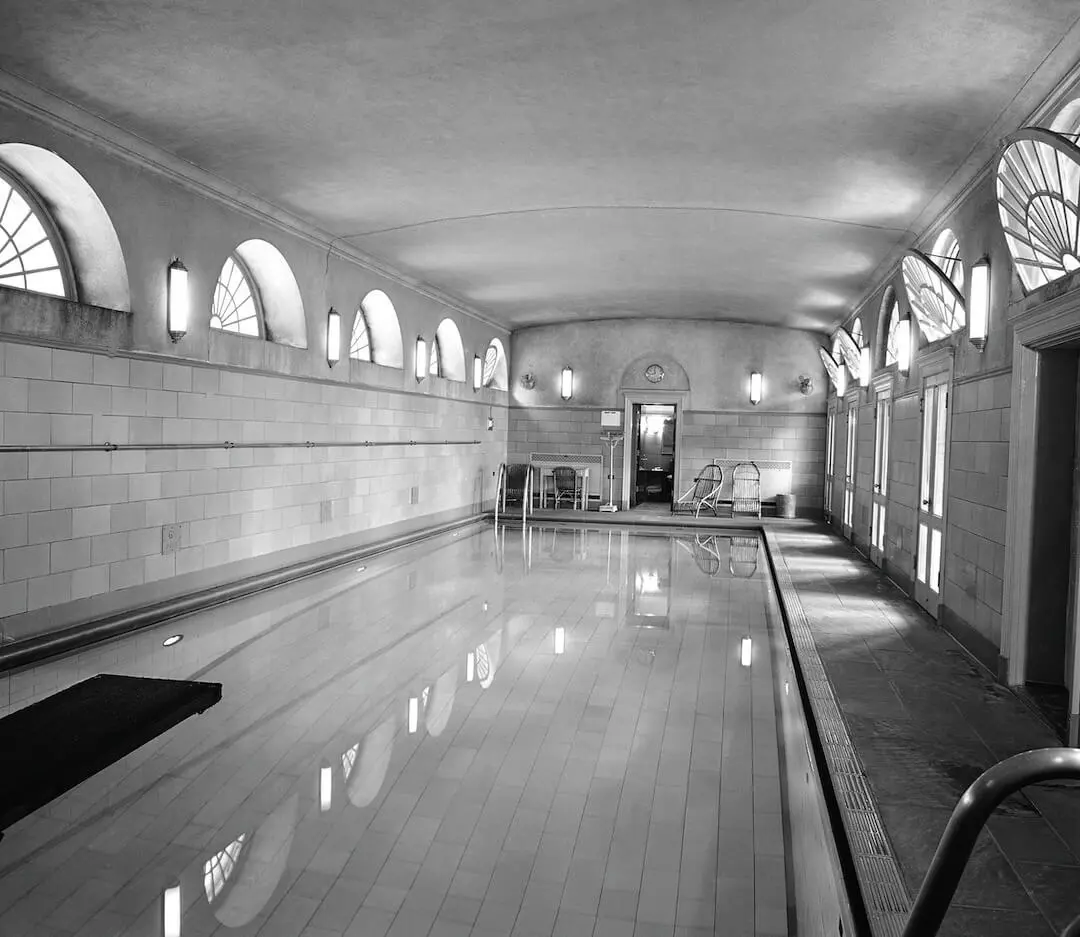
At the epicenter of this confrontation is a high-stakes legal battle between CNN and the Department of Justice, triggered by the administration’s ongoing refusal to allow the network’s journalists aboard Air Force One and into the Oval Office. This standoff is not an isolated dispute; it is part of a broader, methodical campaign by the second Trump administration to reshape the architecture of the White House press corps. From wresting control of the presidential travel pool from the independent White House Correspondents’ Association (WHCA) to floating the radical proposition of converting the iconic White House press briefing room back into an indoor swimming pool, the administration is challenging the centuries-old framework governing the relationship between the executive branch and a free press.
Simultaneously, the broader American media ecosystem is undergoing tectonic shifts. While institutional journalism fights to protect its physical proximity to the seat of power, audiences—particularly younger generations and communities of color—are migrating en masse to digital-first platforms like TikTok for their daily news consumption. Against this backdrop of institutional transition and administrative hostility, the core tenets of transparency, access, and journalistic integrity are facing their most severe stress test in modern history.
Detailed Chronology of the Access Crisis
The current crisis of press access did not materialize overnight; it represents the culmination of escalating tensions that have steadily eroded the traditional norms governing executive branch reporting.
The September 18 Ban and Initial Litigation
The structural fracture began on September 18, when the Trump administration enacted a sweeping ban, barring journalists from CNN, Politico, and MS NOW from key White House facilities. The administration justified these moves through shifting parameters of administrative control, but the targeted nature of the exclusions drew immediate condemnation from press freedom advocates.
In response, the affected outlets joined forces, filing a joint federal lawsuit against the administration. The plaintiffs secured a temporary lifeline when a federal judge issued a preliminary injunction, restoring a baseline level of access to certain White House grounds. However, the administration’s compliance with the judicial order has been partial and contentious at best.
The Air Force One and Oval Office Blackout
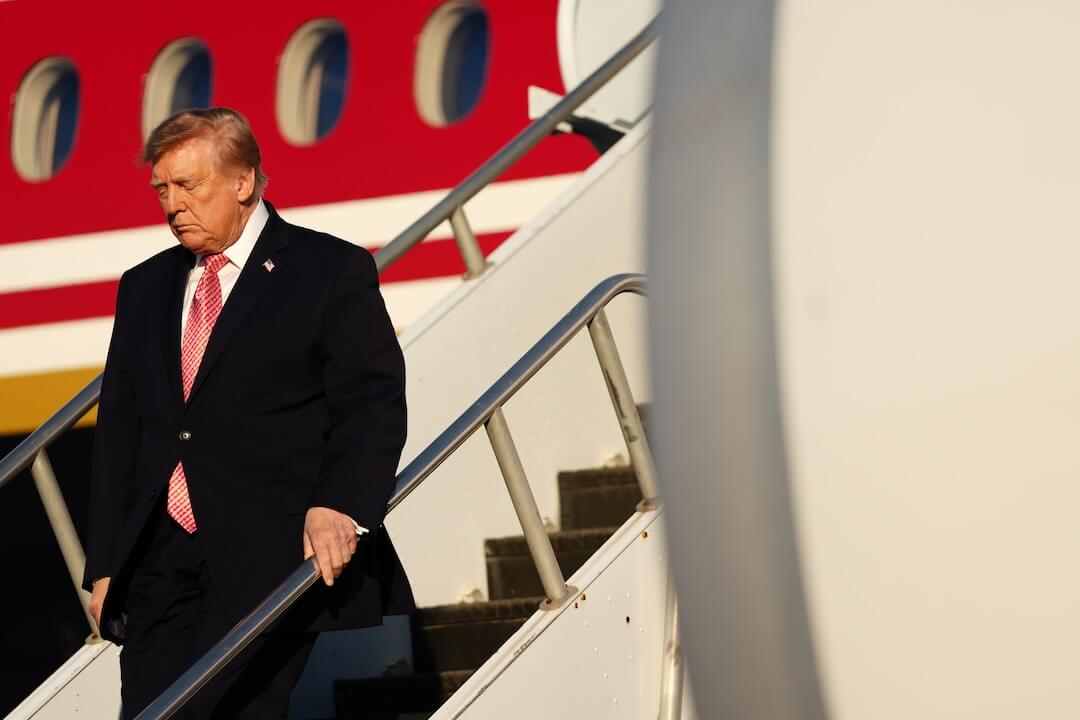
While the preliminary injunction forced the White House to grant the outlets physical entry to the grounds, the administration circumvented the spirit of the ruling by systematically freezing CNN out of the rotating presidential travel pool. The "pool"—traditionally managed by the WHCA—ensures that a representative cross-section of journalists travels with the president on Air Force One and accompanies him into high-stakes environments like the Oval Office, providing vital, firsthand reporting to the broader press corps.
Over subsequent weekends, this exclusion manifested repeatedly. Most notably, when President Trump traveled to Georgia and Florida, CNN was barred from boarding the aircraft. In a display of solidarity and institutional defiance, the four other major television networks—ABC, CBS, Fox, and NBC—declined to fill CNN’s vacant spot in the pool, resulting in mainstream television networks refusing to provide coverage of the presidential trip.
Faced with a blackout from major networks, the administration turned to alternative channels. Real America’s Voice, a conservative media network, stepped in to fill the "secondary TV" slot—a privilege routinely afforded to them whenever CNN is blocked from the pool rotation.
The Ultimatum: Boutrous’s Letter to the DOJ
The standoff escalated sharply on Monday when CNN’s outside counsel, Ted Boutrous, issued a stern warning to the Department of Justice. Characterizing the White House’s ongoing blockade as "mistaken, counterproductive, and unlawful," Boutrous demanded that the DOJ provide written confirmation by Thursday evening that the administration would unconditionally abandon its policy of excluding CNN from the Oval Office and Air Force One.
Boutrous underscored the severity of the violation by highlighting statistical realities: since the inauguration of his second term, President Trump has fielded more than 4,700 questions in the Oval Office, aboard Air Force One, and on airport tarmacs. By contrast, he has taken a mere 150 questions in the traditional White House press briefing room. Consequently, exclusion from these mobile and intimate spaces effectively silences a network’s ability to hold the executive accountable in real-time.
Despite the mounting legal pressure, the DOJ remained silent, offering no immediate response to requests for comment as scheduling rosters for subsequent presidential trips to South Carolina continued to omit CNN from the out-of-town travel pool.
Supporting Context & Metrics: Reshaping the Pool and Audience Shifts
The battle over physical access is occurring alongside profound structural shifts in how news is gathered, distributed, and consumed across the United States.
The Demise of Independent Pool Management
For decades, the logistics of the White House press pool were managed independently by the White House Correspondents’ Association, ensuring an equitable, non-partisan rotation of journalists representing diverse media outlets. The second Trump administration dismantled this precedent, seizing direct administrative control over pool assignments.
By wielding the power to curate who accompanies the president, the administration has systematically sidelined adversarial or critical reporting outlets—most notably The Associated Press, CNN, Politico, and MS NOW—while carving out dedicated spaces for digital-native platforms, conservative podcasts, and alternative media entities under the banner of "new media" seats.
The TikTok News Revolution
Even as legacy media organizations fight trench warfare for physical proximity to the West Wing, public consumption habits are undergoing a seismic transformation. Data released by the Pew Research Center reveals that one in five American adults (20%) now regularly turns to TikTok for news—a staggering leap from just 3% six years ago.
Pew Research Center: Regular TikTok News Consumers by Demographic
------------------------------------------------------------------
Age 18–29:              39%
Age 30–49:              25%
Age 50–64:              11%
Age 65 and older:        4%

Black Adults:           32%
Hispanic Adults:        35%
White Adults:           14%
Asian Adults:           14%

Democrats / Leaners:    22%
Republicans / Leaners:  15%
The demographic contours of this shift are sharply defined:
- Generational Divide: Nearly two in five young adults (39%) aged 18 to 29 rely on the short-form video platform for news, compared to a quarter of those aged 30 to 49, 11% of those aged 50 to 64, and just 4% of Americans 65 and older.
- Racial and Ethnic Disparities: Black (32%) and Hispanic (35%) adults are more than twice as likely as White (14%) or Asian (14%) adults to consume news regularly via TikTok.
- Partisan Leanings: Democrats and Democratic-leaning independents (22%) show a slightly higher propensity for utilizing the platform for news compared to their Republican counterparts (15%).
This rapid decentralization of news consumption presents a complex paradox: while legacy journalists battle for physical access to the Oval Office to maintain traditional accountability mechanisms, a rapidly expanding segment of the population is bypassing traditional media altogether in favor of algorithmic, short-form digital feeds.
Official Statements & Institutional Reactions
The friction between the executive branch and the press corps has elicited sharp rhetoric and calculated signaling from key stakeholders across the political and media spectrum.
- Ted Boutrous (Outside Counsel for CNN, Politico, and MS NOW): In his correspondence with the Department of Justice, Boutrous did not mince words, labeling the administration’s exclusionary tactics as legally untenable. "The White House’s efforts to block CNN are mistaken, counterproductive, and unlawful," Boutrous wrote, framing the exclusion as a direct violation of constitutional protections ensuring equal access and freedom of the press.
- Steven Cheung (White House Communications Director): Addressing the administration’s broader plans regarding the physical workspace of the press corps, Cheung maintained a defiant and non-committal posture. Responding to reports of potential structural overhauls, Cheung remarked, "All options remain on the table, and we will make an announcement when appropriate."
- Nikole Hannah-Jones (Award-Winning Journalist and Author): In a separate yet culturally resonant media controversy explored extensively by The New York Times, discussions surrounding media integrity, personal exposure, and public scrutiny took center stage. Reflecting on the intense public and professional backlash to her 8,000-word Times Magazine essay examining the personal costs of school integration—titled "In Fighting For Every Child, Did I Betray My Own?"—Hannah-Jones emphasized the ethical imperative of journalistic transparency. "As a journalist, as just a person who tries to walk through the world with integrity, I felt I had to be honest about how it went… She deserved to have a say. And she deserved for me to be honest about—that she did bear a cost," Hannah-Jones told PBS News, highlighting the profound personal vulnerabilities inherent in modern storytelling.
Future Outlook: The Symbolic War on the Press Briefing Room
Beyond the immediate legal battles over Air Force One seating charts, the most potent symbol of the administration’s hostility toward the traditional press corps lies in a physical renovation proposal: converting the White House press briefing room back into an indoor swimming pool.
Originally constructed as a recreational pool by President Franklin D. Roosevelt in the 1940s, the space was paved over and converted by President Richard Nixon in 1970 to accommodate the growing demands of the modern White House press corps. For over half a century, the briefing room has served as the symbolic and functional theater where executive power confronts public inquiry.
Reports indicate that President Trump has repeatedly urged former White House press secretary Karoline Leavitt to dismantle the briefing room, suggesting that evicting reporters from the West Wing could serve as her defining "legacy." While previous administrations—most notably during the presidency of Bill Clinton, when then-First Lady Hillary Clinton briefly floated a similar pool restoration plan—abandoned such ideas in the face of fierce institutional pushback, the current administration has shown little hesitation in breaking historical norms.
The Stakes for Constitutional Democracy
The proximity of the media to the seat of executive power has long served as a tangible acknowledgment of the role a free press plays in a constitutional democracy. By systematically degrading that proximity—whether by shutting networks out of mobile press pools, curating compliant alternative voices, or threatening to physically evict reporters from the West Wing entirely—the Trump administration is attempting to redefine the parameters of public accountability.
As the Thursday evening deadline set by CNN’s legal team approaches, the immediate trajectory of the conflict rests upon the Department of Justice’s response and the willingness of federal courts to enforce constitutional limits on executive power. Yet, regardless of the judicial outcome, the symbolic lines have been drawn. The ongoing struggle over the White House press corps is no longer merely about who gets a seat on a plane or a podium in a room; it is a foundational test of whether the traditional mechanisms of American political journalism can survive an administration determined to rewrite the rules of engagement.