

Executive Overview
The intersection of digital fame, unregulated internet subcultures, and the criminal justice system collided in a Massachusetts courtroom, casting a harsh light on the shadowy corners of modern social media. Braden Peters, a prominent figure within the burgeoning digital phenomenon known as "looksmaxxing" and better known to his hundreds of thousands of followers by his online moniker "Clavicular," officially entered a plea of not guilty to serious criminal charges. The arraignment marks a dramatic escalation in a legal saga that has steadily unspooled across headlines, civil courts, and viral comment sections.
Peters stands accused of egregious crimes stemming from an alleged incident in May 2025 at his family’s Cape Cod residence. The Commonwealth of Massachusetts formally charged the 21-year-old influencer with multiple felonies, including rape and a drug-related sexual assault charge, alongside a misdemeanor count of procuring alcohol for a minor. The complainant, fellow influencer Aleksandra Vasilevna Mendoza—widely recognized online as Alorah Ziva—was 17 years old at the time of the alleged assault.
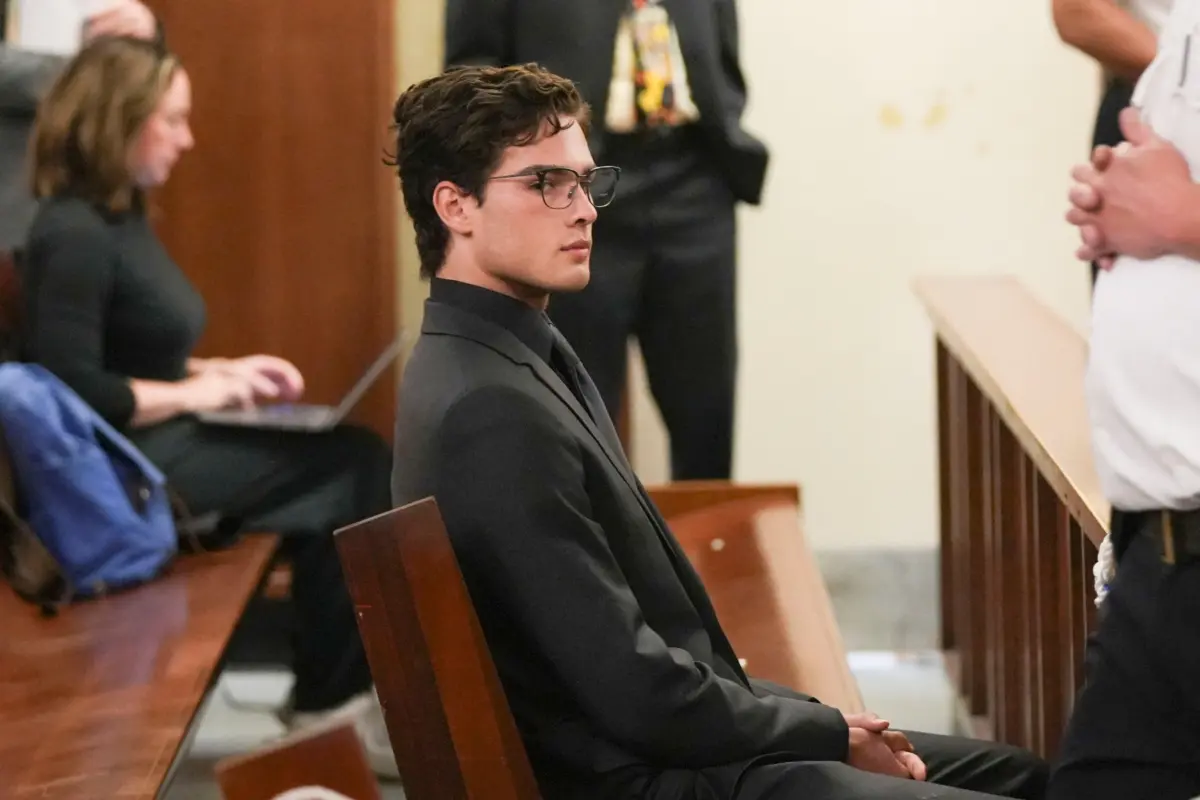
During the Thursday arraignment, a Massachusetts judge set Peters’s bail at $10,000, a sum his defense team successfully argued was appropriate given his lack of prior felony convictions and assertions that he did not represent a flight risk or a community threat. Peters promptly posted the cash bail, surrendered his passport, and agreed to strict stay-away and online non-contact orders protecting the accuser.
While Peters has previously utilized his digital platforms to vehemently deny any wrongdoing, the criminal indictment represents a severe threat to his burgeoning career. The case has not only illuminated the dark underbelly of the looksmaxxing community—a subculture fixated on physical optimization, aesthetic self-improvement, and hyper-masculinity—but has also sparked intense conversations about accountability within the creator economy. As investigators compile evidence and legal teams prepare for trial, the case serves as a cautionary tale about the real-world consequences of online subcultures crossing physical boundaries.
Detailed Chronology: From Cape Cod to the Courtroom
To fully understand the gravity of the legal battles facing Braden Peters, one must trace the timeline of events from the initial allegations to the recent courtroom developments in Massachusetts. The trajectory of this case highlights how digital partnerships and influencer collaborations can rapidly devolve into complex legal disputes.
May 23, 2025: The Alleged Incident on Cape Cod
The foundational events underpinning both the civil lawsuits and the subsequent criminal charges occurred on May 23, 2025. According to court filings, Mendoza traveled to Cape Cod at the invitation of Peters to collaborate on social media content. What was purportedly framed as a routine business trip and creative partnership devolved into a night of heavy drinking at Peters’s family home.
April 2026: The Civil Suit Filed
Months before criminal charges were formally brought, Aleksandra Vasilevna Mendoza took legal matters into her own hands by filing a civil lawsuit against Peters in April 2026. The initial complaint laid bare severe allegations, including battery, intentional infliction of emotional distress, and fraud.
Mendoza’s civil filing claimed that Peters supplied her with alcohol to the point of incapacitation, rendering her unable to legally or physically consent to sexual activity. Furthermore, the suit alleged that while Mendoza was asleep the following morning, Peters penetrated her without her consent. Perhaps most alarmingly, the initial civil complaint alleged that Peters administered an unapproved substance, potentially containing methamphetamine, without her knowledge or consent.
September 2026: Commonwealth Files Criminal Indictments
Armed with police reports, medical evaluations, and statements gathered during investigations, the Commonwealth of Massachusetts officially intervened in September 2026. Prosecutors indicted Peters on two felony counts—rape and a drug-related sex offense—as well as a misdemeanor charge for providing alcohol to a minor under the age of 21. The alignment of these charges with the dates and descriptions provided in Mendoza’s civil action signaled a transition from a private civil dispute to a state-prosecuted criminal matter.
October 2026: Strategic Legal Shifts and Refiling
As the legal pressure mounted, Mendoza’s legal representation made the strategic decision in October 2026 to refile the civil suit, temporarily removing the specific sexual assault allegations. Legal experts noted that this maneuver was designed to streamline the civil proceedings and ensure that the civil litigation would not inadvertently jeopardize or complicate the parallel criminal prosecution being pursued by the state.
December 2026: The Arraignment and Bail Hearing
The legal drama reached a critical juncture on a Thursday in December 2026, when Braden Peters surrendered to authorities and stood before a Massachusetts judge for his formal arraignment.
In the days leading up to the hearing, Peters’s defense attorneys filed petitions aimed at securing a lower bail, offering a glimpse into the defensive strategy they intend to deploy at trial. The defense highlighted subsequent interactions between Mendoza and Peters, attempting to establish that the complainant maintained a friendly, cooperative relationship with the influencer long after the date of the alleged assault. Defense filings notably included a handwritten note purportedly authored by Mendoza, which read: "Braden, you have my loyalty 100% […] I admire the man you are." Additionally, the defense pointed to social media posts where Mendoza described Peters as "so nice" and continued planned collaborations.
Despite these defense arguments, the presiding judge maintained the bail conditions at $10,000 cash. Peters fulfilled the financial requirement immediately, surrendered his travel documents, and accepted mandatory judicial orders restricting any physical or digital proximity to Mendoza.
Supporting Context & Metrics: The Rise of "Looksmaxxing" and Digital Subcultures
The criminal case against Braden Peters cannot be analyzed in a vacuum; it is deeply intertwined with the peculiar ecosystem of contemporary internet subcultures. Peters rose to prominence as an influential figure within the "looksmaxxing" community—a digital phenomenon that has experienced explosive growth across platforms like TikTok, X (formerly Twitter), and specialized online forums.
Defining "Looksmaxxing"
To the uninitiated, looksmaxxing refers to the pursuit of maximizing one’s physical attractiveness through various means, ranging from skincare routines and physical fitness to controversial practices like facial restructuring exercises, mewing (tongue posture techniques), and, in extreme cases, cosmetic surgery. While the subculture often presents itself as self-improvement, critics and sociologists note that it frequently bleeds into toxic masculinity, body dysmorphia, and radicalized online spaces that commodify human appearance.
Within this ecosystem, influencers like Peters—operating under handles like "Clavicular," a reference to the clavicle bones associated with male aesthetic ideals—cultivate dedicated followings. These digital communities thrive on engagement metrics, controversy, and hyper-competitive social hierarchies. Peters had successfully monetized his persona, turning aesthetic optimization into a lucrative brand. However, this hyper-visibility also made him a lightning rod for scrutiny, well before the rape allegations surfaced.
A History of Online Controversy
Peters’s tenure as an internet personality has been repeatedly marred by bizarre and controversial stunts. Prior to his arrest on sex crime charges, Peters made headlines for various erratic behaviors online, including a widely publicized incident in Florida where he allegedly shot a dead alligator. These stunts, while designed to drive engagement and algorithmic favor within shock-value subcultures, contributed to a broader public perception of a creator operating without boundaries or regard for conventional norms.
The juxtaposition of Peters’s digital persona—curated, hyper-masculine, and unapologetically provocative—with the sobering reality of felony rape charges underscores the volatile nature of modern influencer culture. For millions of impressionable young followers, the line between digital performance and real-world morality has become dangerously blurred.
Official Statements & Legal Positions
As the legal proceedings progress toward a trial, both the prosecution and the defense are meticulously shaping their public narratives and legal strategies. The silence from key stakeholders contrasts sharply with the aggressive legal maneuvering occurring behind closed doors.
The Defense’s Emerging Strategy
During the pre-arraignment hearings, Peters’s legal team laid out the foundational pillars of their defense. By emphasizing that Peters possesses no prior felony convictions, his lawyers successfully argued against the classification of their client as either a flight risk or a community menace.
More importantly, the defense’s submission of favorable texts, collaborative social media posts, and the glowing handwritten note from Mendoza ("Braden, you have my loyalty 100% […] I admire the man you are") signals an intent to challenge the credibility and state of mind of the accuser. Defense attorneys are expected to argue that the interactions following the alleged incident are fundamentally inconsistent with the trauma reported by the complainant, seeking to establish reasonable doubt regarding the lack of consent.
The Complainant’s Position and Legal Silence
Aleksandra Vasilevna Mendoza’s legal counsel has maintained a strict posture of discretion following Peters’s not-guilty plea, declining to offer public commentary on the courtroom proceedings. This calculated silence aligns with the strategic refiling of the civil suit in October 2026, which was engineered to insulate the victim’s testimony and civil claims from procedural interference by the defense during the state-led criminal trial.
Mendoza’s initial civil complaint and the subsequent police reports remain central to the prosecution’s case. The state carries the heavy burden of proving beyond a reasonable doubt that consent was neither given nor legally possible due to incapacitation, and that unauthorized substances were administered.
The Defendant’s Public Stance
Aside from formal legal pleas, Peters has previously utilized his social media channels to issue blanket denials of any wrongdoing. However, as the legal mandates from the court now restrict his online interactions regarding the case—particularly the strict non-contact and stay-away orders—his digital footprint concerning the allegations has grown considerably quieter. Representatives for Peters declined to comment on the record following Thursday’s arraignment.
Future Outlook: What Lies Ahead for Clavicular and the Creator Economy
As Braden Peters leaves the Massachusetts courthouse—shorn of his passport, bound by strict judicial parameters, and facing the grim reality of a multi-count felony indictment—the broader implications of the case extend far beyond a single influencer’s fate.
The Judicial Horizon
The case is now poised to move through the pre-trial discovery phase, where both defense and prosecution will exchange evidence, depose witnesses, and scrutinize police reports, medical records, and digital communications. If the case proceeds to trial, it will likely serve as a high-profile courtroom battle testing how juries evaluate digital-era relationships, modern consent, and the complex psychological dynamics between influencers and their collaborators. A conviction on the felony rape and drug charges could carry decades-long prison sentences, effectively ending Peters’s influencer career and serving as a watershed moment for accountability in digital spaces.
Impact on the Influencer Landscape
For the creator economy at large, the "Clavicular" case highlights the urgent need for institutional oversight, safety protocols, and ethical standards in creator collaborations. Platforms that have long profited from engagement-driven algorithms are increasingly facing external pressure to address the real-world harms perpetrated by their top-earning personalities.
The looksmaxxing community, meanwhile, faces an existential reckoning. As one of its most prominent figures sits under judicial restriction awaiting trial, the subculture is being forced to confront the darker elements of its digital evangelism. Whether this trial will serve as a deterrent against unchecked behavior or merely be consumed as another piece of fleeting internet drama remains to be seen. What is indisputable, however, is that the digital mirage of influencer impunity has collided violently with the unyielding machinery of the law.