

Executive Overview
Artificial intelligence has rapidly evolved from a theoretical computing frontier into the operational backbone of modern enterprise. Yet, despite the unprecedented computational power and transformative potential of tools like generative AI, large language models, and enterprise assistants, the organizational rollout of these technologies is often categorized by systemic failure, cultural friction, and profound inefficiency.
According to digital strategist and author Paul Boag, the primary issue is not the capability of the algorithms, but the profound human blindness of corporate leadership. Reflecting on lessons from the 2014 digital transformation era—as documented in his seminal book Digital Adaptation—Boag argues that contemporary enterprises are repeating historical mistakes. By treating AI as a mere IT procurement challenge rather than a complex cultural evolution, businesses are alienating their workforces, cultivating workplace anxiety, and driving critical operations underground into insecure "Shadow AI" environments.
This deep-dive investigation explores why organizations are failing at AI adoption, the psychological barrier of employee alienation, the hidden perils of over-governance, and the strategic pivot required to transform AI from a source of corporate fear into a catalyst for genuine, human-centric productivity.
Detailed Chronology: From CMS Rollouts to the Generative AI Revolution
To understand the current organizational dysfunction surrounding AI, one must examine the historical trajectory of enterprise technology integration. The parallels between today’s AI gold rush and the digital transformation era of the early 2010s are strikingly distinct.
The 2014 Digital Transformation Era
A decade ago, organizations rushed to digitize their operations. IT departments were tasked with deploying Content Management Systems (CMS), Customer Relationship Management (CRM) platforms, and enterprise intranets. Simultaneously, marketing and product divisions scrambled to launch responsive websites, mobile applications, and nascent data personalization engines.
The strategy, universally orchestrated from the top down, was fundamentally flawed. Enterprises purchased heavy, expensive technological infrastructure with the expectation that deployment equaled adoption. Little to no attention was paid to the human element—how internal staff or external customers would actually interact with these systems.
Internal intranets were notoriously counter-intuitive, forcing employees through bureaucratic workarounds. Customer-facing apps failed because they solved problems businesses thought existed, rather than what users actually needed. The result was a massive capital expenditure with negligible return on investment, characterized by glacial bureaucratic approvals and widespread employee resistance.
The 2020s: The AI Deja-Vu
Fast forward to the present day, and the playbook remains largely unchanged. Leadership teams are paralyzed by the fear of missing out (FOMO) on the artificial intelligence wave. C-suite executives read daily headlines regarding generative AI productivity gains, prompting a knee-jerk reaction: buy software licenses, issue broad corporate declarations, and consider the digital box checked.
IT departments are once again deployed as the primary shock troops. Licenses for centralized platforms—such as enterprise copilot ecosystems—are purchased in bulk and rolled out organization-wide with minimal friction or consultation. Beyond a generic, compliance-heavy video training module, employees are thrown into the deep end. They are expected to miraculously integrate autonomous agents and machine learning tools into workflows they have spent decades optimizing, all while fearing that these exact technologies are designed to render their jobs obsolete.
Supporting Context & Metrics: The Human Element of Technological Shift
The primary delusion of modern corporate leadership is viewing AI implementation as an engineering equation rather than an anthropological one. True technological integration is a cultural shift with deep implications for human psychology, labor economics, and workplace trust.
The Problem of Employee Motivation
To understand why AI adoption stalls in so many organizations, one must look at the incentive structures governing the modern workforce.
From the perspective of senior leadership, AI is a straightforward multiplier for efficiency: it promises that employees can accomplish more tasks in less time. However, from the perspective of the employee, this value proposition is fundamentally broken.
- The Productivity Trap: If an employee utilizes AI to complete a standard eight-hour workload in four hours, they do not receive four hours of free time, nor do they see a proportional increase in compensation. Instead, they are rewarded with more work within the exact same nine-to-five framework.
- The Existential Threat: Compounding this lack of incentive is the looming threat of displacement. Staff members are acutely aware that corporate enthusiasm for AI is deeply intertwined with headcount reduction strategies.
When employees view a technology as both an engine for increased, uncompensated labor and a potential executioner of their professional livelihoods, resistance is inevitable. Organizations cannot simply mandate enthusiasm; they must fundamentally realign why staff would want to participate in their own disruption.
Successful AI adoption requires framing the technology not as a corporate monitoring tool, but as an ally against drudgery. Employees are far more receptive to change when AI is deployed to strip away the most tedious, frustrating elements of their daily routines. Furthermore, progressive organizations are beginning to explore true incentives, tying AI fluency to career progression, compensation models, or sustainable workload reductions.
The Cost of Procedural Knowledge Destruction
Adopting AI is not as simple as downloading an application; it requires challenging and rewriting decades of accumulated procedural knowledge. Every professional has built mental models, institutional habits, and muscle memory that dictate how they execute tasks.
Overworked and chronically overwhelmed staff do not have the luxury of time to sit back, experiment, and re-engineer their workflows. Formal, generic training courses fail because they lack contextual relevance. A generic seminar on prompt engineering does not teach a UX researcher, a financial analyst, or a supply-chain manager how to integrate AI safely and efficiently into their specialized domain.
Official Statements and Industry Insights
Experts and organizational psychologists warn that the prevailing top-down approach to artificial intelligence is unsustainable. Industry leaders who have analyzed historical digital transitions point to decentralized, community-driven methodologies as the only viable path forward.
The Power of Social Proof Over Corporate Memos
According to change-management frameworks validated during the digital transformation era, top-down directives carry very little weight when driving behavioral change. Memos from the executive suite instructing employees to "embrace AI" routinely fall flat.
Instead, the most effective drivers of adoption are internal evangelists—the organizational enthusiasts who are already experimenting with artificial intelligence out of personal curiosity, long before leadership issues a mandate.
- Building Internal Communities: Rather than wasting capital attempting to convert the most resistant, change-averse factions of a company, organizations should identify early adopters. By bringing these enthusiasts together, providing them with dedicated time and space to share successful use cases, and letting their organic successes circulate, businesses can leverage powerful social proof.
- Peer-to-Peer Learning: Employees are inherently skeptical of executive mandates, but they are deeply influenced by peers in similar roles demonstrating tangible, practical successes. Internal showcase conferences, where staff present real-world applications they have built, consistently outperform any corporate training initiative.
Making It Safe to Fail
A major barrier to AI experimentation is the paralyzing corporate fear of making mistakes. In many enterprises, historical metrics, rigid Key Performance Indicators (KPIs), and punitive annual performance reviews create an environment where failure is treated as incompetence.
However, learning any complex new paradigm inherently involves trial, error, and misstep.
Modern horror stories abound of employees being reprimanded for token overages just weeks after being commanded to integrate AI into their work, or being subjected to such severe compliance warnings that they default to traditional, risk-free methods. If management genuinely expects their workforce to innovate, they must engineer an environment where failure is decriminalized. This requires temporarily relaxing strict governance, recalibrating performance metrics during transitional phases, and cultivating psychological safety.

Future Outlook: Managing Governance, Shadow AI, and Adaptive Rollouts
As we look toward the horizon of enterprise technology, the organizations that survive and thrive will be those that abandon heavy-handed authoritarian controls in favor of adaptive, trust-based frameworks.
The Danger of Over-Governance and "Shadow AI"
Governance is undeniably necessary when deploying powerful computing technologies, particularly regarding data privacy, copyright compliance, and security. However, corporate governance is frequently weaponized to an extreme degree, creating an operational gridlock that stifles innovation.
When IT departments issue exhaustive compliance manuals detailing every single prohibition, or when they lock down official software to a single, inadequate tool (such as a generic copilot that cannot support specialized departmental needs), they trigger an inevitable subterranean reaction: Shadow AI.
Just as employees bypassed restrictive corporate intranets in the 2010s by signing up for unauthorized cloud storage and productivity apps, today’s workforce is openly bypassing official IT channels. Frustrated by bureaucratic approval boards and inadequate internal tools, staff routinely open personal ChatGPT, Claude, or specialized AI accounts on their mobile phones and personal laptops to get their work done.
This introduces a catastrophic security blind spot. Corporate data, intellectual property, and proprietary code flow freely into consumer-grade tools completely outside the visibility of the organization.
- Listening to the Shadows: Rather than responding to Shadow AI with draconian blocks and disciplinary threats—which only pushes the behavior further underground—forward-thinking organizations view Shadow AI as diagnostic feedback. The existence of shadow tools explicitly highlights where official enterprise technology is falling short. Leadership must interview staff to understand what personal tools are achieving that official systems cannot, and integrate those capabilities into the approved tech stack.
Principles Over Policies
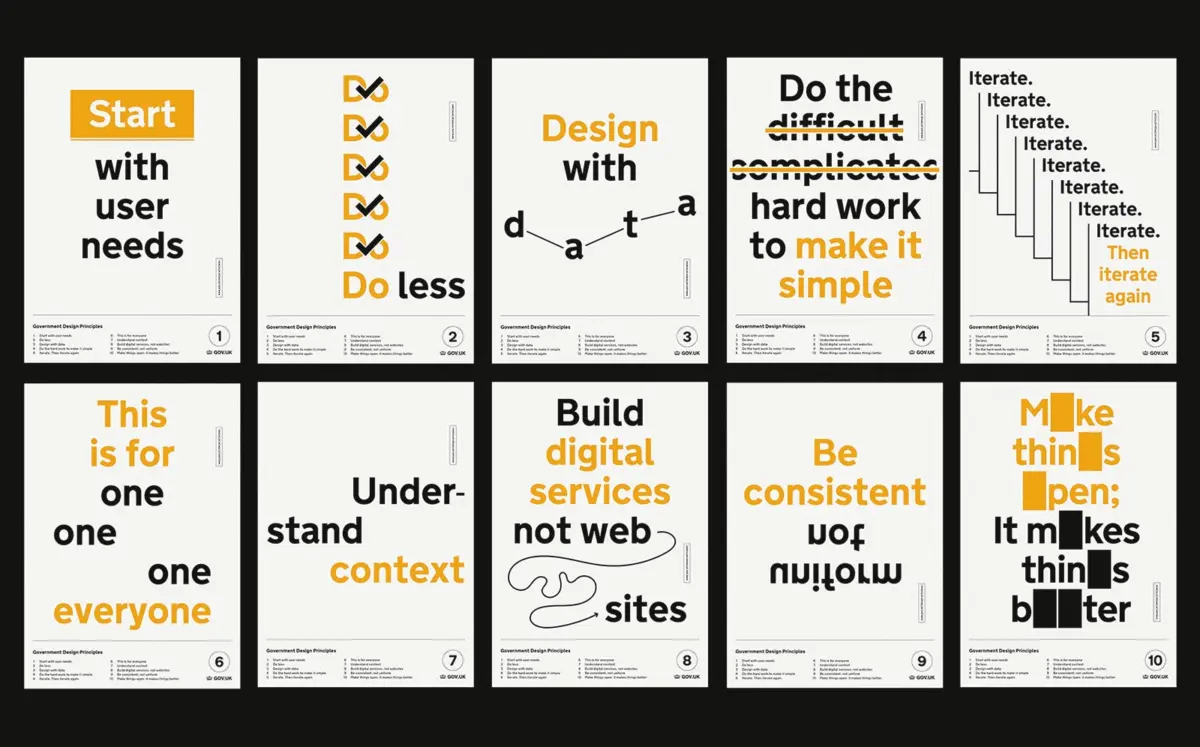
To successfully govern AI without crushing momentum, organizations should replace sprawling legalistic rulebooks with concise, high-level principles. Taking a cue from successful public-sector models—such as the UK Government’s digital design principles—enterprises should establish a short set of core tenets that fit on a single poster, demonstrating institutional trust in the common sense and professional integrity of their workforce.
Conclusion: People Before Code
The artificial intelligence revolution is not ultimately a technological test; it is an ultimate stress test of corporate culture, empathy, and change management.
Organizations that persist in treating AI as an IT procurement exercise—ignoring the psychological burdens, the lack of employee motivation, the necessity of safe experimentation, and the dangers of over-governance—will find themselves bogged down by expensive software licenses and deeply alienated workforces.
The path forward requires humility from leadership. By acknowledging the human side of adaptation, respecting the lessons learned from the digital transformation era, and prioritizing employee enablement over centralized control, organizations can successfully navigate the AI era and turn technological disruption into enduring enterprise value.