

Executive Overview
The digital landscape of the twenty-first century is littered with the ghosts of once-dominant technological titans. Among them, LimeWire holds a particularly nostalgic—and notorious—place in internet history. As the quintessential peer-to-peer (P2P) file-sharing software of the 2000s, LimeWire was synonymous with the wild west era of digital music discovery, copyright battles, and the democratization of media consumption. However, the brand has executed one of the most astonishing pivots in technological history. Today, LimeWire has been thoroughly resurrected, shedding its past as a litigation-plagued file-sharing client to emerge as a cutting-edge, AI-powered content publishing and monetization platform.
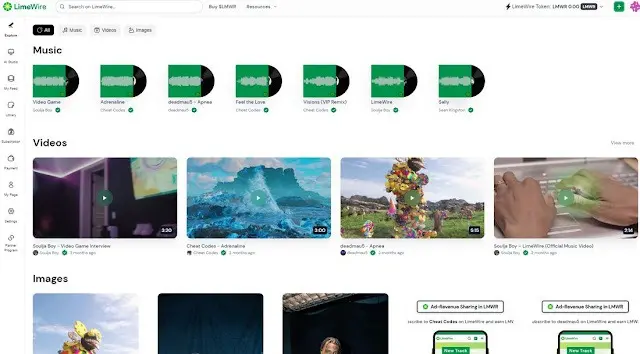
In its current incarnation, LimeWire is designed to capture the explosive momentum of the generative artificial intelligence boom. By combining state-of-the-art neural networks for image creation with integrated blockchain infrastructure, the platform offers a holistic ecosystem where creators, digital artists, and enthusiasts can generate, publish, trade, and monetize digital assets. The platform has attracted notable mainstream and musical figures—including Deadmau5, Soulja Boy, and Sean Kingston—who utilize its infrastructure to release multimedia content, NFT-backed music, and digital art.
This comprehensive report provides an in-depth examination of the modern LimeWire platform. We will explore its foundational transformation, dissect its powerful AI image generation suite, analyze its unique economic architecture powered by Non-Fungible Tokens (NFTs) and the LMWR utility token, and evaluate its tiered pricing structures. Furthermore, we will contextualize its strategic positioning within the broader generative AI market and forecast its trajectory as it expands into multimedia video and audio production.
Detailed Chronology: The Journey from P2P Infamy to AI Innovation
To fully appreciate LimeWire’s current standing in the generative AI space, it is essential to contextualize its historical trajectory through a detailed chronological lens.
Era 1: The P2P Supremacy (2000–2010)
Launched in 2000 by Mark Gorton, LimeWire quickly became the dominant Java-based file-sharing client on the Gnutella network. Alongside competitors like Napster, Kazaa, and BitTorrent clients, LimeWire allowed millions of global users to share music, movies, and software directly from computer to computer. At its peak, it was installed on millions of desktops worldwide.
However, this decentralized file-sharing model placed the company at the epicenter of historic legal battles with the Recording Industry Association of America (RIAA). The landmark federal lawsuit Arista Records LLC v. Lime Wire LLC ruled that the company and its founder actively induced copyright infringement. In late 2010, a federal court issued a permanent injunction, forcing LimeWire to permanently disable its search, downloading, and file-sharing functionalities. The brand went dark, seemingly consigned to internet folklore.
Era 2: The Blockchain Rebirth (2022)
More than a decade after its forced shutdown, the LimeWire brand was acquired by private investors who recognized its immense, enduring global brand recognition. In 2022, the platform re-emerged not as a decentralized file-sharing utility for pirated media, but as an officially licensed digital collectibles marketplace focused primarily on music and pop culture NFTs. Operating on blockchains such as Polygon and Algorand, this relaunch positioned LimeWire as a bridge between mainstream digital creators and the burgeoning Web3 economy.
Era 3: The Generative AI Integration (2023–Present)
Recognizing that the digital creation landscape was shifting rapidly toward generative artificial intelligence, LimeWire underwent its most profound evolution yet. Transforming into LimeWire AI Studio, the platform integrated sophisticated machine learning architectures—including various iterations of Stable Diffusion and OpenAI’s DALL-E models. By merging AI content creation with its pre-existing Web3 marketplace and ad-revenue sharing frameworks, LimeWire successfully positioned itself as an all-in-one content creation, publishing, and monetization hub for the modern digital creator economy.
Supporting Context & Metrics: Inside the LimeWire AI Studio
At the heart of the modern LimeWire ecosystem is LimeWire Studio, a dynamic workspace engineered to lower the technical barriers of digital art production while maximizing monetization channels for its users.
Advanced AI Image Generation Tools
LimeWire is not merely a single-model wrapper; it is a multi-model generative powerhouse. The platform currently supports an array of industry-leading open-source and proprietary models, including:
- Stable Diffusion 2.1
- Stable Diffusion XL (SDXL)
- DALL-E 2
This multi-model integration allows users to experiment with vastly different aesthetic frameworks. Whether a creator is aiming for hyper-realistic cinematic compositions, intricate digital paintings, nostalgic pixel art, expressive anime, or classic analog film grain, LimeWire’s prompt-to-image interface accommodates diverse artistic visions.
Furthermore, the platform incorporates granular controls that appeal to both novice creators and experienced prompt engineers. Users can adjust samplers, fine-tune image quality, scale resolution, and utilize negative prompting to eliminate undesirable artifacts from their generated outputs. LimeWire’s development roadmap also includes the continuous training of its own proprietary AI models, ensuring that the platform remains at the cutting edge of generative art technology.
The Automated NFT Minting Pipeline
One of LimeWire’s most distinctive structural features is its frictionless approach to Web3 integration. Traditional digital art marketplaces often require creators to navigate complex wallet setups, pay volatile gas fees, and manually deploy smart contracts to mint NFTs.
On LimeWire, the process is entirely automated:
- Creation: The user generates an image or piece of content using the AI Studio tools.
- Publication: Upon hitting the publish button, the platform automatically mints the creation as a Non-Fungible Token on either the Polygon or Algorand blockchain.
- Authentication: This minting process encodes a unique digital signature directly onto the blockchain, permanently verifying ownership, provenance, and authenticity in the decentralized space.
Flexible Distribution Models
Creators retain absolute sovereignty over how their minted assets are distributed and consumed across the LimeWire community:
- Public Access: Creators can publish their works to the open feed. Publicly accessible content can be discovered by any platform user, fostering organic community growth, social engagement, and decentralized trading of the asset as an NFT.
- Subscriber-Only Exclusivity: For creators looking to build intimate communities and recurring revenue streams, LimeWire permits gated content publishing. Creators can lock specific posts, making them exclusively available to paid subscribers and dedicated fans.
Additionally, a built-in royalty mechanism ensures sustainable creator incentives: each time an NFT is traded on the secondary market within the LimeWire ecosystem, the original creator automatically receives a 2.5% royalty fee.
Official Statements and Economic Framework: The LMWR Token & Revenue Sharing
LimeWire’s business model departs significantly from traditional SaaS (Software-as-a-Service) AI tools by redistributing financial value directly back to its user base. The platform operates on a dual-incentive economic engine comprising traditional fiat monetization and a native utility cryptocurrency.
The Ad-Revenue Sharing Model
In a bid to rival traditional content platforms like YouTube and Medium, LimeWire introduced an aggressive ad-revenue sharing program. When creators publish their AI-generated images, music, or videos on the platform, they become eligible to earn a direct percentage of the advertising revenue generated when other users view their content.
Depending on the creator’s subscription tier, users can receive anywhere from 50% up to 70% of all ad revenue generated by their published digital assets. This transforms LimeWire from a standard utility tool into a viable micro-economy where hobbyists and professional designers alike can generate passive income alongside their creative workflows.
LMWR: The Native Utility Token
All financial earnings distributed by LimeWire are paid out in LMWR tokens, the platform’s native cryptocurrency.
- Monthly Distributions: Creator earnings are calculated and disbursed on a monthly basis directly into the user’s integrated account wallet.
- Liquidity and Exchange: LMWR is not trapped within a closed garden; it is a fully liquid digital asset traded on numerous prominent centralized and decentralized cryptocurrency exchanges, including Kraken, ByBit, and Uniswap.
- Platform Utility: Beyond cashing out to fiat or trading on external exchanges, users can utilize LMWR tokens directly within the LimeWire ecosystem to purchase additional AI prompt credits, pay for premium subscriptions, and interact with the digital marketplace.
Tiered Subscription Plans and Resource Allocation
LimeWire operates on a freemium model designed to accommodate everyone from casual experimenters to high-volume commercial digital agencies. The platform’s pricing tiers scale dynamically based on credit allocation, generation speed, and ad-revenue share percentages:
| Plan Tier | Monthly Price | Credit Allocation | Estimated Monthly Image Generations | Ad Revenue Share | Key Perks & Features |
|---|---|---|---|---|---|
| Free Tier | $0 | 10 Credits | Up to 20 images/day | 50% | Basic model access, community feed access. |
| Basic Plan | $9.99 | 1,000 Credits | Up to 2,000 images | 50% | Early access to new AI models, Pro profile badge, creation history, ad-free experience. |
| Plus Plan | $29.00 | 3,750 Credits | Up to 7,500 images | 60% | Faster generation speeds, priority queue access, Pro badge, full history. |
| Pro Plan | $49.00 | 5,000 Credits | Up to 10,000 images | 70% | Maximum ad revenue share, expedited rendering, Pro badge. |
| Advanced Plan | $99.00 | 11,250 Credits | Up to 22,500 images | 70% | Enterprise-level credit volume, highest generation priority, maximum revenue share. |
Note: All paid tiers eliminate platform advertisements, provide faster rendering times via priority server queues, grant a verified Pro profile badge, and unlock comprehensive creation histories.
Future Outlook: Expanding into Audio and Video Generation
As the generative artificial intelligence market matures, platform survival hinges on continuous innovation and multi-modal expansion. While LimeWire’s current primary focus remains firmly anchored in advanced AI image generation, the platform’s executive leadership has outlined aggressive infrastructural roadmaps for the immediate future.
The Multi-Modal Horizon: AI Music and Video
The next major strategic phase for LimeWire involves the rollout of comprehensive AI music and video generation tools. Given the brand’s historical roots in the music industry—and its current roster of high-profile music artists like Deadmau5 and Soulja Boy—the introduction of generative audio and video suites represents a natural and highly strategic evolution.
By integrating text-to-audio and text-to-video neural networks into LimeWire Studio, the platform aims to provide an end-to-end production studio for multimedia creators. Imagine an independent musician generating an album cover using Stable Diffusion XL, composing an accompanying AI-assisted soundtrack, and producing a synchronized AI music video—all within a single dashboard, before instantly minting the entire multimedia package as an NFT and publishing it to a subscriber-gated community.
Navigating Regulatory and Market Challenges
Despite its ambitious roadmap, LimeWire operates in a fiercely competitive and legally complex environment. The generative AI market is crowded with tech giants like OpenAI (DALL-E 3), Midjourney, and Adobe (Firefly), all vying for market dominance. Furthermore, ongoing global debates surrounding AI copyright infringement, data scraping ethics, and the regulatory classification of utility tokens like LMWR present hurdles that LimeWire’s legal and technical teams must continually navigate.
However, by positioning itself at the intersection of generative AI, blockchain authentication, and creator-economy monetization, LimeWire has successfully engineered a compelling value proposition. It bridges the gap between decentralized asset ownership and high-performance creative tooling.
Conclusion
The transformation of LimeWire from an infamous peer-to-peer file-sharing software into a sophisticated, AI-driven content studio stands as one of the most fascinating corporate rebirths of the digital age. By dismantling traditional barriers to entry in digital art and integrating seamless Web3 monetization models, LimeWire empowers designers, musicians, and digital artists to turn imagination into verifiable, revenue-generating assets with just a few clicks.
With its flexible free-to-use tier, robust multi-model image generation toolkits, automated NFT minting pipelines, and lucrative ad-revenue sharing model powered by LMWR tokens, LimeWire has established a formidable presence in the modern creator economy. As the platform prepares to launch its highly anticipated AI music and video generation tools, creators, artists, and digital enthusiasts alike would do well to keep a close eye on LimeWire as it continues to redefine the boundaries of AI-powered art and digital distribution.