

Originally published in The Student Press Report, a national news desk highlighting the successes and challenges facing college journalism.
Executive Overview
In the ecosystem of modern democratic governance, public records are the lifeblood of accountability. They are the mechanisms by which citizens, watchdog groups, and journalists peer behind the curtain of institutional power to examine how taxpayer dollars are spent, how policies are formulated, and how decisions impacting the public good are made. Yet, an insidious and increasingly effective strategy has taken root across local, state, and federal government agencies—and within the hallowed halls of public higher education.
Public officials and university administrators have discovered a way to suppress public scrutiny without ever uttering a definitive "no." Instead of outright denying access to records, they rely on a strategy of procedural attrition: they make the pursuit of public documents so complex, so financially punitive, and so exhausting that requesters simply give up.
This administrative stonewalling creates what legal scholars and civil liberties advocates describe as a "chilling effect" on the public’s right to know. Just as government actions that penalize speech can lead citizens to self-censor to avoid retribution, the weaponization of the public records process exhausts the reporters and watchdogs who try to answer questions officials would rather leave unasked.
This systemic evasion is not theoretical; it is an active, daily war of attrition waged against the First Amendment. From state universities using privacy laws as multi-thousand-dollar smoke screens to federal agencies sitting on Freedom of Information Act (FOIA) requests for the better part of a year, the architecture of open government is buckling under the weight of institutional bad faith. For student journalists, who must balance the crushing demands of investigative reporting with full-time course loads, this bureaucratic warfare threatens to extinguish accountability journalism before it even begins.
Detailed Chronology: A Year-Long Battle with UMass Boston
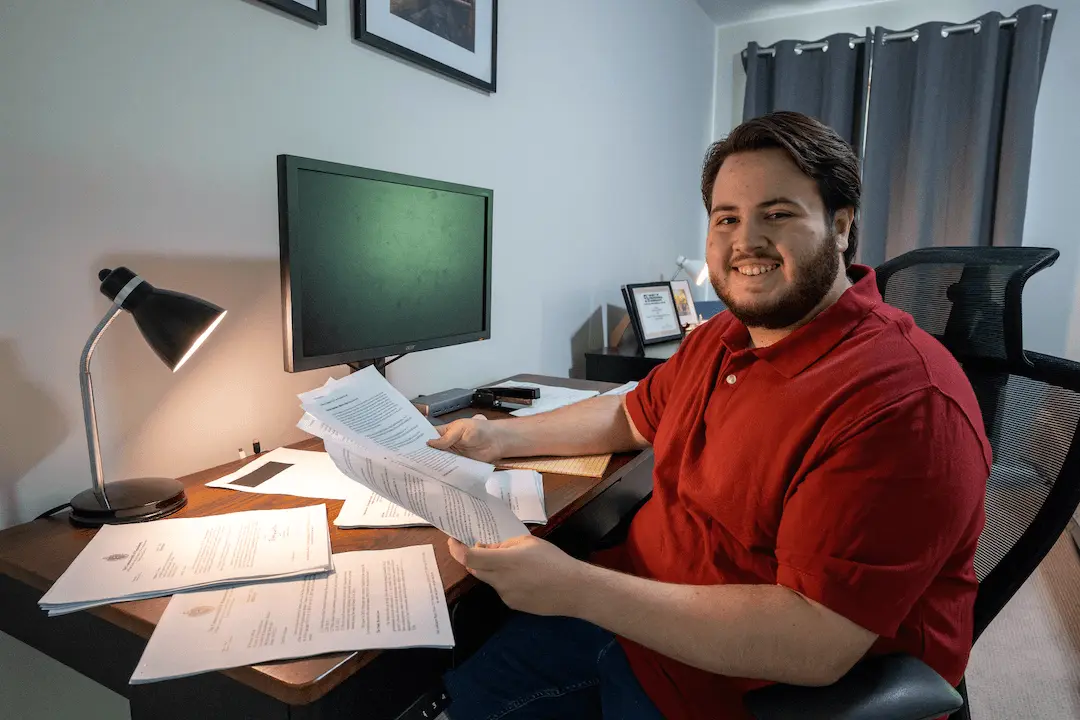
The reality of modern public records obstruction can be mapped through a personal chronicle of resistance. Earlier this year, writing for the campus newspaper The Mass Media, I set out to investigate UMass Boston’s financial and institutional involvement in a Vatican climate initiative. Public documents revealed that hundreds of thousands of dollars in campus summit funds had been funneled toward Vatican-related efforts. Naturally, we sought the corresponding emails, administrative communications, and financial ledgers to understand how and why these decisions were made.
What followed was not a cooperative exchange of information, but a nearly year-long legal and bureaucratic endurance test.
At virtually every turn, UMass Boston administrators deployed a masterclass in delay tactics:
- Missed Deadlines: Legal mandates meant to ensure swift turnaround times were treated as loose suggestions, routinely ignored without explanation.
- Frivolous Exemptions: The university repeatedly claimed sweeping public records exemptions to withhold basic correspondence—exemptions that the Massachusetts Supervisor of Records subsequently rejected or heavily questioned upon appeal.
- Financial Barricades: Administrators levied exorbitant processing fees that exceeded $1,000, framing the costs as necessary for redacting sensitive material.
Every procedural hurdle was engineered to make reporting slower, harder, and financially untenable for a student publication operating on a shoestring budget. More damaging than the financial strain, however, was the psychological toll. The endless stonewalling left me drained, sapping the energy required to pursue public records for subsequent investigative pieces.
When an appeal is finally decided, the ritualized response from the state offers little comfort. After weeks of tracking deadlines, consulting legal support organizations, researching relevant case law, drafting elaborate appeal letters, and compiling dozens of required email attachments, the outcome is almost always the same. Two weeks later, an order lands in the inbox detailing the flaws in the university’s behavior, only to conclude with a toothless mandate:
"UMass is ordered to provide Mr. Levin with a response to the request, provided in a manner consistent with this order, the Public Records Law, and its Regulations within ten (10) business days… Mr. Levin may appeal the substantive nature of UMass’ response within 90 days."
It is a text so familiar it can be recited from memory. Yet, each time it arrives, it signifies that the investigation has moved not a single inch closer to publication. It is a loop designed not to enforce compliance, but to wear the requester down.
Supporting Context & Metrics: A National Crisis of Transparency
My experience at UMass Boston is far from an isolated incident. It is symptomatic of a broader, systemic decay in transparency across the United States—a decay so profound that it has caught the attention of national press watchdogs and legal scholars alike.
The Massachusetts "Black Hole"
Massachusetts serves as a prime case study in how statutory promise can curdle into administrative reality. On paper, the Commonwealth boasts a robust public records framework. Government bodies are legally obligated to respond to requests within 10 business days. Documents are legally presumed to be public unless the government can discharge its burden of proving a specific statutory exemption applies. When a request is denied, requesters can file an informal appeal with the Supervisor of Records, who possesses the statutory authority to order timely relief and refer bad-faith violations to the state Attorney General.
In practice, however, this system is a paper tiger. Even when the Supervisor of Records rules in favor of the requester, the remedy is functionally weak: the supervisor merely orders the records custodian to provide a revised response. This initiates a legally sanctioned month-long delay loop. The supervisor takes 10 business days to rule, then grants the custodian another 10 business days to issue a revised response. If the custodian rewords the denial without substantively altering its position, the cycle repeats.
The structural failure of this system is so severe that this year, the Society of Professional Journalists awarded the entire state of Massachusetts its annual Black Hole Award, citing the "most heinous violations of the public’s right to know" through broad exemptions, weak enforcement mechanisms, and persistent, calculated delays.
Federal Delays and FOIA Erosion
The rot extends far beyond municipal and state levels. At the federal scale, the Freedom of Information Act is experiencing a profound operational crisis. A comprehensive New York Times analysis revealed that federal agencies successfully fulfilled only about 47% of FOIA requests in fiscal year 2025—a precipitous drop from the 63% fulfillment rate recorded in 2010.
Despite a statutory 20-day deadline under federal law, requesters now wait an average of 240 days just to receive a baseline response from federal agencies.
Worse still, executive branch entities are actively seeking to dismantle the legal foundations of public preservation. In April, the Department of Justice’s Office of Legal Counsel published a memorandum advancing the radical legal argument that the Presidential Records Act—the Nixon-era statute designed to ensure presidential documents are preserved and eventually released to the public—is unconstitutional. Should this legal theory gain traction, it threatens to eviscerate another cornerstone of federal historical and investigative transparency.
Official Statements and Institutional Tactics: Weaponizing FERPA
Public educational institutions have proven particularly adept at cloaking their operations in secrecy, routinely perverting federal privacy statutes to block public scrutiny.
Public schools and universities are undeniably subject to state and federal public records laws. However, when faced with uncomfortable inquiries, administrators routinely invoke the Family Educational Rights and Privacy Act (FERPA)—a federal law originally designed strictly to protect students’ educational records from unauthorized disclosure—as a blanket justification for withholding any document that so much as mentions a student.
The Student Press Law Center (SPLC), a legal advocacy group dedicated to protecting student journalists, has documented these abuses for decades, dating back to at least 2005. Historically, educational institutions have cited FERPA to withhold records as mundane as campus parking tickets, the minutes of public committee meetings, and the names of individuals receiving complimentary football tickets.
In recent years, this tactic has evolved to shield high-stakes financial dealings. Colleges and universities have routinely cited FERPA to avoid disclosing the financial details of Name, Image, and Likeness (NIL) contracts for student-athletes. In my own reporting at UMass Boston, the administration used the law to justify levying a $1,000 fee simply to have staff review administrative emails for the accidental inclusion of student names.
The Jurisprudential Reality
These institutional arguments fundamentally misrepresent the law. The U.S. Supreme Court has explicitly ruled that FERPA applies strictly and narrowly to documents that are directly related to a student and maintained by the school as part of an institutional permanent educational file (see Owasso Independent School District v. Falvo). State courts across California, Maryland, Michigan, North Carolina, and Ohio have consistently applied this ruling to limit the statute’s scope.
As one North Carolina appeals court astutely noted:
"FERPA does not provide a student with an invisible cloak so that the student can remain hidden from public view while enrolled."
Despite clear judicial repudiation, schools continue to weaponize privacy arguments. Their goal is not legal compliance, but psychological and financial deterrence—discouraging everyday citizens and student reporters from pressing forward with legitimate inquiries.
Future Outlook: The Toll on Student Journalism and Democracy
The cumulative impact of this bureaucratic obstructionism is deeply corrosive to the future of investigative journalism.
The personal calculus for a reporter navigating these waters has become bleak. Passion for truth-seeking often collides with basic pragmatism. Newsrooms operate under relentless production cycles; there are daily deadlines to meet and pages to fill. An investigative story that requires a year of administrative combat simply cannot help get the current week’s paper printed. Furthermore, the longer an investigation stalls in appeals, the more likely the subject matter is to become obsolete by the time publication is finally achieved. Protracted delays also amplify the risk that months of grueling work will culminate in the realization that a lead was ultimately a dead end.
More concerning is the human cost. For student journalists, the psychological stress of fighting institutional bureaucracy is absorbed on top of rigorous academic coursework, extracurricular commitments, and financial pressures. When reporters are forced to choose between mental burnout and abandoning vital public-interest stories, journalism loses.
Public records have served as the bedrock of investigative reporting for generations. They are the primary tools used to expose systemic government corruption, financial mismanagement, and institutional abuse of power. Without unfettered access to primary source documents, journalists are rendered incapable of painting an accurate, complete picture of institutional reality. Instead, voters and taxpayers are left to evaluate their governments and universities based solely on self-serving public relations narratives crafted by the very officials under scrutiny.
The government does not belong to the bureaucrats who staff its offices; it belongs to the people. By extension, government records are public property. Until policymakers establish meaningful, enforceable penalties for administrative stonewalling—and until institutions respect the spirit of open government laws—the public’s right to know will remain under siege. Our public officials, university presidents, and institutional leaders must be compelled to act like it.