

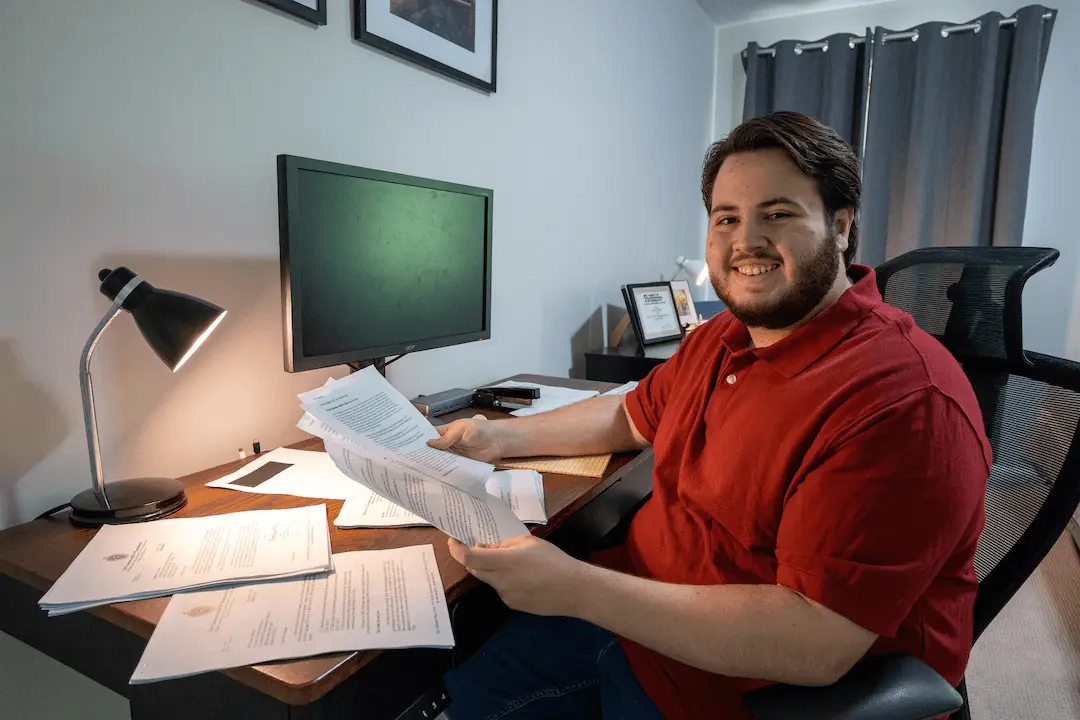
Originally published in The Student Press Report, a national news desk highlighting the successes and challenges facing college journalism.
Executive Overview
In the architecture of modern governance, outright denials of public information are increasingly becoming a tactic of the past. Government agencies, public universities, and municipal bodies have discovered a far more insidious and effective method to keep the public—and the journalists who serve them—in the dark: exhaustion by compliance.
Rather than saying "no" and inviting immediate legal challenges, officials simply weaponize the procedural machinery of public records laws. They turn the pursuit of truth into a grueling, protracted war of attrition. By manufacturing delays, invoking frivolous exemptions, and imposing exorbitant financial barriers, public institutions ensure that the cost of seeking information vastly outweighs its immediate utility.
This systemic stonewalling creates a profound chilling effect on the public’s right to know. Just as legal scholars recognize that government actions can compel citizens to self-censor out of fear of retribution, the systematic abuse of public records laws forces journalists and watchdogs to abandon investigations. The message to the press is clear: investigate us at your own peril, and prepare to drain your financial resources, your academic focus, and your emotional well-being to do so.
Nowhere is this crisis more acute than in higher education and state-level governance, where public trust sits at historic lows. As transparency diminishes, democracy suffers, leaving citizens to evaluate their institutions based solely on curated narratives crafted by the very officials being scrutinized.
Detailed Chronology: A Student Journalist’s Year-Long Battle with UMass Boston
The reality of this bureaucratic warfare is best understood not through abstract legal theory, but through firsthand experience. Earlier this year, The Mass Media, the student newspaper at the University of Massachusetts Boston, published an investigative report detailing the university’s financial involvement in a Vatican climate initiative, tracking the allocation of $380,000 in summit funds.
As the reporter behind that investigation, I spent the better part of a year fighting UMass Boston’s systematic attempts to suppress public records related to the story. What should have been a straightforward records request turned into a labyrinthine legal battle that exposed the deep hostility public institutions hold toward transparency.
At every conceivable juncture, university administrators deployed delaying tactics designed to break down the reporting process:
- Missed Legal Deadlines: Administrators repeatedly ignored statutory timelines, forcing constant follow-ups and delaying initial disclosures by months.
- Frivolous Exemptions: The university claimed sweeping, legally baseless exemptions to withhold core documents—exemptions that the state’s supervisor of records subsequently rejected or sharply questioned.
- Prohibitive Financial Barriers: UMass Boston levied fee estimates exceeding $1,000 just to process and review routine communications.
The goal of these tactics was transparent: make the reporting slower, harder, and economically unviable. But the toll extended far beyond the campus newspaper’s operating budget. The relentless stonewalling left me mentally and emotionally drained, ultimately discouraging me from pursuing public records for subsequent stories because I lacked the energy to endure another months-long bureaucratic siege.
The Illusion of Enforcement
My experience is far from an anomaly. It is the predictable outcome of a deeply flawed oversight structure.
On paper, Massachusetts boasts a robust public records framework. Government entities are legally mandated to respond to requests within 10 business days. Records are presumed public unless the custodian can legally prove a specific exemption applies. When a request is denied, the requester can file an informal appeal with the state’s supervisor of records, an official empowered to order "timely and appropriate relief" and refer non-compliance to the state attorney general.
In practice, however, this mechanism is an exercise in administrative theater.
Even when the supervisor of records rules in favor of the journalist, the statutory remedy is rarely enforcement; instead, it is a do-over. The supervisor simply orders the custodian to provide a "revised response." This sets off a legally sanctioned, perpetual loop of delays:
- The supervisor of records takes 10 business days to evaluate the appeal.
- The supervisor then grants the custodian another 10 business days to issue a revised response.
- If the agency issues a reworded yet substantively identical denial, the entire appeals process must begin anew.
For the requester, this translates into weeks of painstaking labor: tracking statutory deadlines, consulting legal support organizations, constructing legal arguments, researching case law, drafting appeal letters, and compiling the dozens of mandatory email attachments required by the state.
When a favorable ruling finally arrives weeks later, it inevitably concludes with identical boilerplate language:
"UMass is ordered to provide Mr. Levin with a response to the request, provided in a manner consistent with this order, the Public Records Law, and its Regulations within ten (10) business days… Mr. Levin may appeal the substantive nature of UMass’ response within 90 days."
Having read this exact phraseology countless times, I can recite it from memory. Each time it arrived, it meant only one thing: I was no closer to holding documents in my hand, and no closer to having a story to publish.
Supporting Context & Metrics: A National Crisis of Transparency
The obstacles faced by student journalists in Massachusetts reflect a broader, nationwide deterioration of government transparency at both the state and federal levels.
The Federal Level: FOIA in Decline
The federal Freedom of Information Act (FOIA) is experiencing a historic degradation of compliance. A comprehensive New York Times analysis revealed that federal agencies successfully fulfilled only about 47% of FOIA requests in fiscal year 2025—a steep decline from the 63% fulfillment rate recorded in 2010.
Despite a statutory 20-day response deadline under federal law, the Times reported that requesters waited an average of 240 days simply to receive an initial response from federal agencies.
Compounding these delays are ideological and structural attacks on executive transparency. In April, the Department of Justice’s Office of Legal Counsel published a memorandum arguing that the Presidential Records Act—the post-Watergate statute designed to preserve presidential records for public release after a term in office—is unconstitutional. If this constitutional interpretation gains traction, it threatens to dismantle one of the most critical pillars of modern government accountability.
Massachusetts: The "Black Hole" State
At the state level, Massachusetts has earned national infamy for its opaque governance. This year, the Society of Professional Journalists awarded the entire state its annual Black Hole Award, recognizing it for "the most heinous violations of the public’s right to know." The award cited broad statutory exemptions, weak enforcement mechanisms, and persistent, systemic delays that effectively choke off public access to government information.
Higher Education and the Weaponization of FERPA
Public educational institutions occupy a uniquely aggressive posture regarding public records avoidance. While public universities and K-12 school districts are legally bound by state sunshine laws, they routinely invoke the Family Educational Rights and Privacy Act (FERPA)—a federal statute designed to protect student educational records—as an all-encompassing shield to withhold any document containing even a passing reference to a student.
The Student Press Law Center (SPLC), a legal advocacy group dedicated to protecting student journalists, has documented abuses of FERPA dating back to at least 2005. Historically, schools have cited the statute to withhold seemingly innocuous public records, including:
- Parking ticket logs
- Public committee meeting minutes
- Lists of football ticket recipients
In recent years, universities have modernized these tactics, leveraging FERPA to conceal lucrative Name, Image, and Likeness (NIL) athletic contracts from public scrutiny. In my own reporting, UMass Boston cited FERPA to justify imposing a prohibitive $1,000+ fee to screen administrators’ internal emails for student names.
Official Statements and Legal Precedents
The legal arguments deployed by universities to withhold public documents collapse under judicial scrutiny, yet institutions continue to use them precisely because the litigation process is costly and slow.
Federal and state courts have repeatedly ruled that FERPA was never intended to serve as a blanket exemption for institutional transparency. The U.S. Supreme Court established in Gonzaga University v. Doe (2002) that FERPA applies narrowly to educational records directly related to a student and maintained as part of a permanent institutional file.
Appellate courts across the country have affirmed this narrow interpretation. Notably, a North Carolina appeals court explicitly wrote:
"FERPA does not provide a student with an invisible cloak so that the student can remain hidden from public view while enrolled."
Similar judicial guardrails have been established by courts in California, Maryland, Michigan, and Ohio. Yet, despite clear legal precedent, public universities continue to issue expansive, legally dubious interpretations of privacy laws. Their objective is not to win in court, but to impose procedural fatigue, successfully deterring citizens and journalists from pressing forward.
Future Outlook: The Human Cost and the Threat to Democracy
The cumulative impact of this bureaucratic obstructionism is deeply corrosive to the future of journalism.
Despite a deep commitment to investigative reporting, I have found myself instinctively avoiding story ideas that rely on public records requests. The pragmatic reasons are stark: newsrooms operate under strict deadlines, and pages must be filled weekly. An investigative piece that requires a year of procedural combat simply cannot help a student newsroom meet its production schedule. Furthermore, the longer an investigation stalls, the greater the risk that the story becomes stale by the time publication is finally achieved—or worse, that months of grueling work reveal a dead end.
More powerfully, however, avoiding public records is an instinctive self-preservation mechanism. It is an effort to shield oneself from the chronic stress that months of bad-faith administrative conflict add to an already demanding profession. For student journalists, this psychological toll is compounded by the pressures of balancing coursework and academic careers. This is a cruel trade-off that no reporter should be forced to make.
The Indispensable Role of Public Documents
For decades, public records have served as the bedrock of investigative journalism. They are the primary tools through which systemic government abuses, fiscal mismanagement, and public corruption are brought to light. Without unfettered access to primary documents, journalists are rendered blind, unable to paint an accurate, comprehensive picture of institutional actions. Consequently, voters are left to evaluate their elected officials and public institutions based exclusively on sanitized PR narratives and selective disclosures.
Government agencies do not own the information they generate; they merely hold it in trust. The government belongs to the people, and so do its records.
Until public officials face genuine, enforceable penalties for stonewalling, transparency will remain an illusion—and the public’s right to know will continue to be slowly choked out by procedural delay.