

Executive Overview
The global media landscape is undergoing a profound structural and personnel transformation, marked by high-profile exits, escalating First Amendment legal battles, and sweeping operational cutbacks. At the center of this seismic shift is CNN, which faces the impending departure of its legendary chief international anchor, Christiane Amanpour, after an extraordinary 43-year tenure. This loss is compounded by the exit of senior global affairs analyst Bianna Golodryga, as well as an escalating legal dispute with the White House over press access to Air Force One.
Simultaneously, traditional and digital networks alike are aggressively rethinking their operational strategies. CBS News is heavily expanding its digital footprint with a slate of new original podcasts while navigating internal editorial accountability following a high-profile social media retraction by chief legal correspondent Jan Crawford. Across the pond, the BBC has announced severe structural downsizing, targeting over 100 job cuts to meet mounting financial shortfalls. Coupled with ongoing high-stakes judicial proceedings—including Fox News’s Supreme Court petition regarding reporter source protections and former President Donald Trump’s legally mandated deposition timeline—the media industry stands at a critical juncture of legal, economic, and editorial realignment.
Detailed Chronology & Industry Developments
The End of an Era: CNN Loses Key Anchors
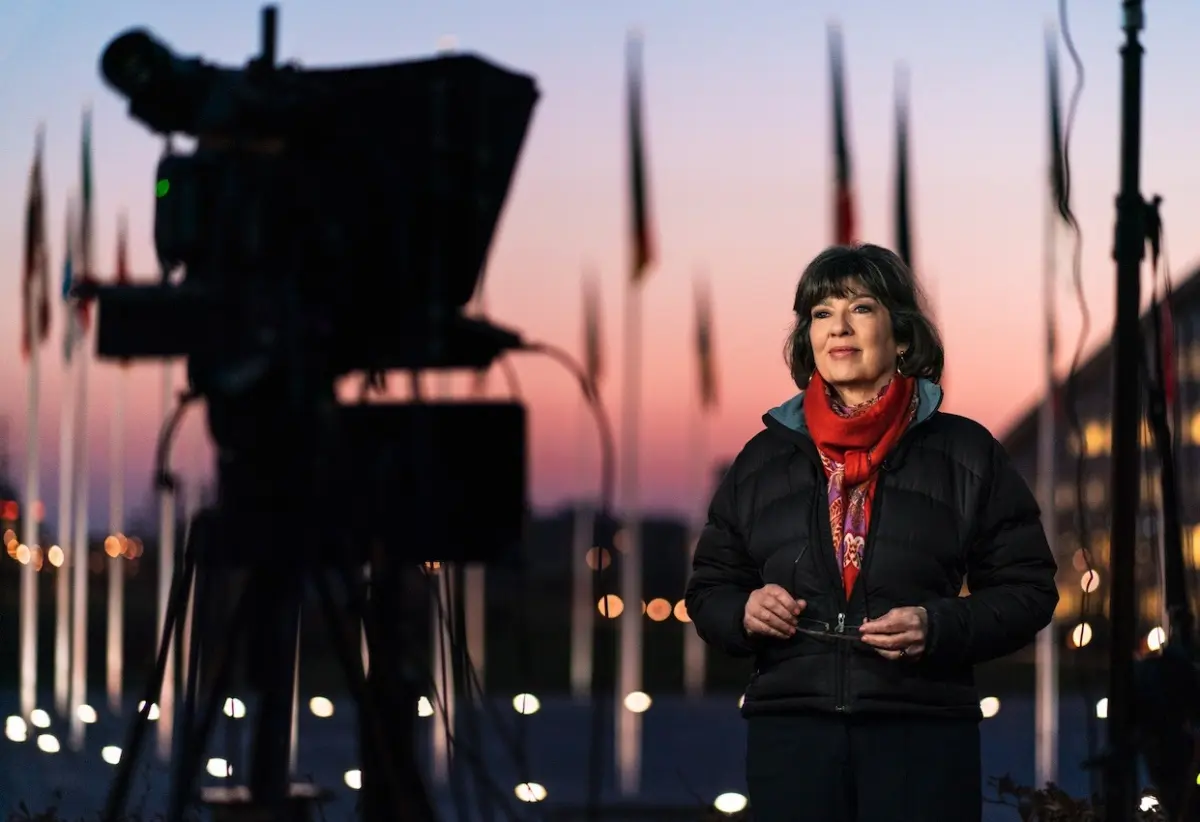
The television news industry was left reeling following Christiane Amanpour’s emotional on-air announcement on Monday. Delivering the news at the conclusion of her eponymous CNN International program—which is also simulcast on PBS—Amanpour revealed that she will be stepping down from the network in June.
“After thinking about this carefully for several months and experiencing a few sleepless nights, as you can imagine, I have decided to separate from CNN, my partner of 43 fantastic years,” Amanpour told viewers.
According to network programming updates, her daily broadcast will continue through the end of the calendar year before transitioning into a weekly format leading up to her final departure next summer. While Amanpour did not cite a singular catalyst for her exit, she expressed deep gratitude to her production teams and the global viewing audience. CNN CEO Mark Thompson addressed the news in an internal memo, confirming that leadership had been in discussions with Amanpour regarding her future for months. “I’m very sorry to see her go, but I’ve come to accept that this is the right time for her, both personally and professionally,” Thompson wrote.
Compounding CNN’s structural adjustment is the departure of anchor and senior global affairs analyst Bianna Golodryga. After a nine-year tenure at the network, Golodryga announced her exit to pursue an external opportunity. Industry reports from Variety and Adweek indicate that Golodryga is currently in advanced discussions with Politico regarding a high-level global affairs role, alongside talks with CBS News—where she previously worked—for a potential contributor position.
Legal Battles Over Press Access and Source Confidentiality
Tensions between the media and the federal government have intensified on multiple legal fronts. CNN has threatened further legal escalation against the White House following repeated exclusions from traveling aboard Air Force One during designated TV pool rotations. In a formal letter to the United States Department of Justice, CNN’s outside counsel, Ted Boutrous, condemned the administration’s actions. “These efforts to retaliate and discriminate against CNN based on the content of its news coverage are mistaken, counterproductive, and unlawful,” Boutrous stated.
Meanwhile, the First Amendment legal battles surrounding reporter privilege have reached the steps of the highest court in the nation. Fox News has officially petitioned the Supreme Court to hear an appeal in a high-profile case involving journalist Catherine Herridge. The network is urging the Supreme Court to vacate a civil contempt order that previously imposed punishing daily fines of $800. Fox News maintains that the lower court rulings threaten the foundational confidentiality of journalistic sources, warning that a failure to protect reporter-source privileges could severely chill investigative reporting nationwide by empowering courts to compel the exposure of confidential whistleblowers.
In judicial news involving international media, U.S. Magistrate Judge Enjoliqué Lett has issued a strict compliance order mandating that former President Donald Trump appear for a deposition by December 11. The deposition is part of an ongoing, high-stakes $10 billion civil lawsuit filed against the BBC. Following numerous delays by the defense, Judge Lett warned that failure to comply with the December deadline could result in severe judicial sanctions, up to and including the dismissal of the lawsuit.
CBS News: Podcasts, Retractions, and Executive Leadership
CBS News is aggressively expanding its digital portfolio while managing internal editorial policies. The network announced the launch of two original audio programs designed to leverage its prominent on-air talent. Great Questions with Tony Dokoupil, hosted by the CBS Evening News anchor, will debut on Monday, October 26, airing twice weekly to explore the systemic issues driving the global news cycle. Additionally, CBS Mornings co-host Vlad Duthiers and anchor Kelly O’Grady are teaming up to launch Straight Up, a weekly podcast focusing on trending pop culture and societal talking points.
However, the network also faced internal editorial scrutiny recently. Jan Crawford, CBS News chief legal correspondent, faced public criticism after posting a video from a town hall featuring Michigan Democratic Senate candidate Abdul El-Sayed, accompanied by critical commentary regarding his stance on the Muslim Brotherhood. Crawford subsequently deleted the post and issued a public apology via social media, explicitly stating that the original tweet constituted “a violation of CBS News standards.”
On the executive front, CBS News has finalized the leadership structure for its flagship morning program. Jon Tower has been officially named the permanent executive producer of CBS Mornings, shedding his interim tag. Tower inherits the challenge of boosting ratings for the morning broadcast, which recently welcomed the high-profile return of journalist Norah O’Donnell.
International Cutbacks: BBC Downsizing
Economic pressures continue to ravage traditional broadcasting operations internationally. BBC News leadership informed staff members that the network will eliminate more than 100 roles over the coming months. According to industry reports from Deadline, the workforce reduction is projected to yield immediate savings of $7.4 million. Newly appointed BBC News director Rachel Jupp defended the measures as a painful necessity. In an internal memo, Jupp noted that while the cuts are unavoidable, “they are not sufficient to meet our funding reduction,” signaling that further downsizing may be implemented in the near future.
Industry Accolades
Amidst the sweeping operational changes across the media sector, individual achievements continue to be recognized. MS NOW anchors and commentators Jonathan Capehart and Eugene Daniels have been officially named to the prestigious Out100 2026 honoree list, celebrating their prominent contributions to journalism and public discourse.
Supporting Context & Metrics
To fully understand the magnitude of these developments, it is necessary to examine the underlying quantitative data and historical metrics driving these industry shifts:
- Christiane Amanpour’s Tenure: 43 years at CNN, establishing her as one of the most recognizable and decorated foreign correspondents in modern broadcast history.
- Bianna Golodryga’s CNN Run: Nearly 7 years of full-time service starting from September 2019, following a distinguished career across multiple major broadcast networks.
- BBC Financial Restructuring: Elimination of over 100 newsroom roles yielding an immediate projected savings of $7.4 million, with leadership warning of prospective future deficits.
- Fox News Judicial Penalties: Contested civil contempt order carrying daily penalties of $800, centered on the preservation of reporter-source confidentiality.
- Pending Judicial Deadlines: December 11 deadline set by U.S. Magistrate Judge Enjoliqué Lett for former President Donald Trump’s deposition in the BBC’s $10 billion lawsuit.
Official Statements
The gravity of the current media landscape is best reflected in the direct statements issued by industry executives and legal representatives:
Christiane Amanpour, on her departure from CNN:
“After thinking about this carefully for several months and experiencing a few sleepless nights, as you can imagine. I have decided to separate from CNN, my partner of 43 fantastic years.”Mark Thompson, CNN CEO, in a memo to staffers:
“I’m very sorry to see her go, but I’ve come to accept that this is the right time for her, both personally and professionally.”Ted Boutrous, CNN Outside Counsel, in a letter to the DOJ:
“These efforts to retaliate and discriminate against CNN based on the content of its news coverage are mistaken, counterproductive, and unlawful.”Bianna Golodryga, announcing her departure via social media:
“After nine wonderful years at CNN, I’ve decided to leave for an opportunity that I couldn’t pass up. I’m grateful for the experiences, friendships and support from fabulous colleagues during my CNN years.”Jan Crawford, CBS News Chief Legal Correspondent, addressing social media standards:
“Earlier, I tweeted a video from an Abdul El-Sayed town hall. I deleted that tweet because it was a violation of CBS News standards. I apologize.”Rachel Jupp, BBC News Director, on upcoming staff cuts:
These cuts are necessary, “but they are not sufficient to meet our funding reduction.”
Future Outlook
The coming months will serve as a critical crucible for the global news media. As CNN prepares for a post-Amanpour era, network leadership must navigate the dual challenges of filling an irreplaceable journalistic void while aggressively pushing back against executive branch limitations on press access. The outcome of CNN’s legal challenges regarding Air Force One travel will establish vital precedents concerning government retaliation and First Amendment protections for pool reporting.
Concurrently, the Supreme Court’s decision on whether to hear Fox News’s appeal regarding Catherine Herridge’s source confidentiality case will reverberate throughout the investigative journalism community. A refusal to hear the case—or an unfavorable ruling—could permanently alter how whistleblowers interact with reporters, threatening the viability of confidential source-based reporting.
Finally, the ongoing economic retrenchment demonstrated by the BBC’s layoffs and CBS’s strategic pivot toward cost-efficient digital expansions, such as original podcasting units, underscore a broader economic reality: legacy media organizations must continually adapt their financial and operational models to survive in an increasingly fragmented, digital-first global economy.