

Executive Overview
The contemporary American media ecosystem finds itself at an unprecedented crossroads, defined by intense legal battles involving high-ranking government officials, shifting access protocols for the White House press corps, corporate takeovers of storied journalistic institutions, and the ongoing structural evolution of digital newsrooms.
At the center of these developments is President Donald Trump, who is currently navigating a high-stakes $10 billion defamation lawsuit against the British Broadcasting Corporation (BBC). This legal maneuver may ultimately force the president to testify under oath regarding claims of reputational and business damage stemming from a deceptively edited documentary. Simultaneously, the Trump administration’s relationship with the press continues to deteriorate, marked by the systematic exclusion of disfavored news outlets from Air Force One travel pools and explosive rhetorical clashes between officials and White House correspondents.
Beyond the beltway, the institutional pillars of journalism are undergoing radical transformations. Scientific American, the United States’ oldest continuously published magazine, has faced severe downsizing, editorial censorship, and corporate restructuring under pressure from political climates and publisher realignments. Meanwhile, legal actions such as The Marshall Project’s lawsuit against Immigration and Customs Enforcement (ICE) underscore the ongoing struggle for government transparency. Finally, as legendary newsroom leaders pass away and prominent ethics figures step down, the industry is forced to reckon with the preservation of institutional memory, the future of reader trust, and the survival of the Fourth Estate in an increasingly hostile digital age.
Detailed Chronology
The BBC Lawsuit and Trump’s Deposition Mandate
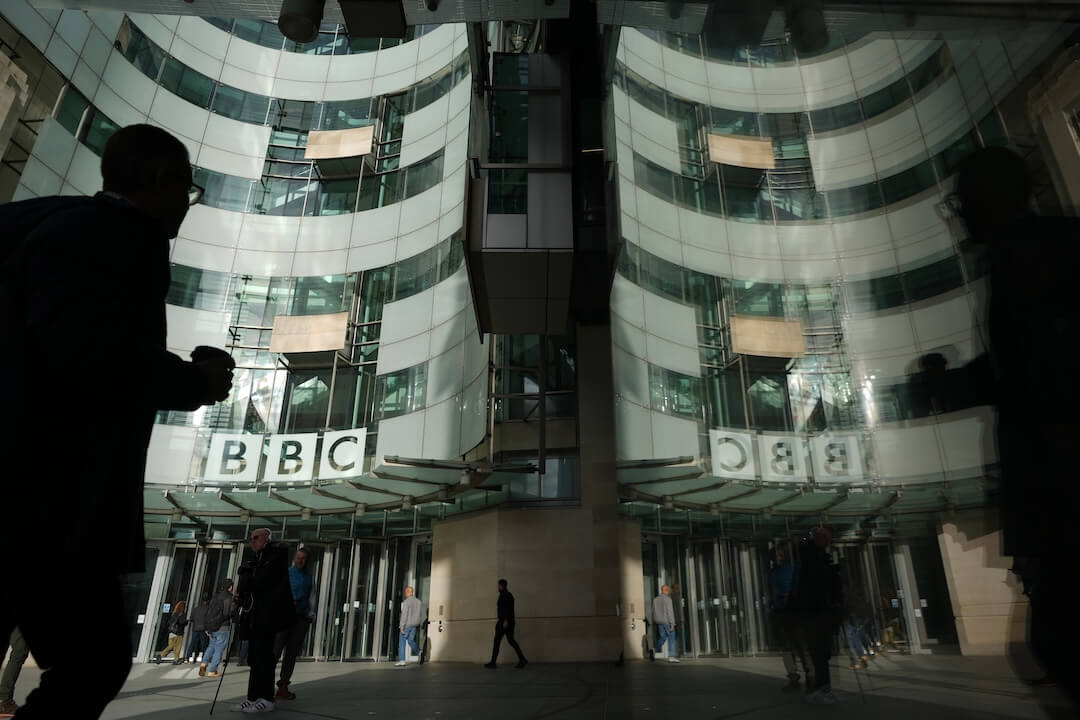
The roots of the Trump-BBC litigation trace back to the lead-up to the 2024 presidential election, during which the British broadcaster aired a documentary entitled Trump: A Second Chance?. The program spliced together disparate segments of President Trump’s January 6, 2021, speech, effectively combining remarks delivered nearly an hour apart to create the false impression of a continuous, direct call for violent action at the U.S. Capitol.
While the BBC later issued an apology acknowledging that the edit generated a "mistaken impression," the network denied liability for defamation. In response, Trump filed a staggering $10 billion lawsuit claiming direct harm to his businesses and reputation.
The litigation has taken a procedural turn that places the plaintiff in an uncomfortable hot seat. On Thursday, U.S. Magistrate Judge Enjoliqué Lett ordered Trump to sit for a video-recorded deposition by December 11, warning that failure to comply could result in severe sanctions, including the dismissal of his lawsuit. BBC attorneys have repeatedly argued that Trump has deliberately delayed the discovery process, noting that an initially scheduled October 16 deposition was canceled under the guise of a "matter of national importance"—which ultimately consisted of campaigning in Georgia and attending a fundraiser at Mar-a-Lago.
Legal analysts note that while Trump is a veteran litigant, his role as a plaintiff exposes him to the mandatory obligation of answering questions under oath—a hurdle he has historically evaded, such as when he dropped a $500 million lawsuit against former attorney Michael Cohen in 2023 just days before his scheduled deposition.
White House Press Pool Restrictions and Escalating Rhetoric
In tandem with his legal sparring, the Trump administration has intensified its clampdown on independent media access. For the third time in less than a week, the White House blocked a prominent journalistic outlet from traveling aboard Air Force One as part of the rotating press pool.
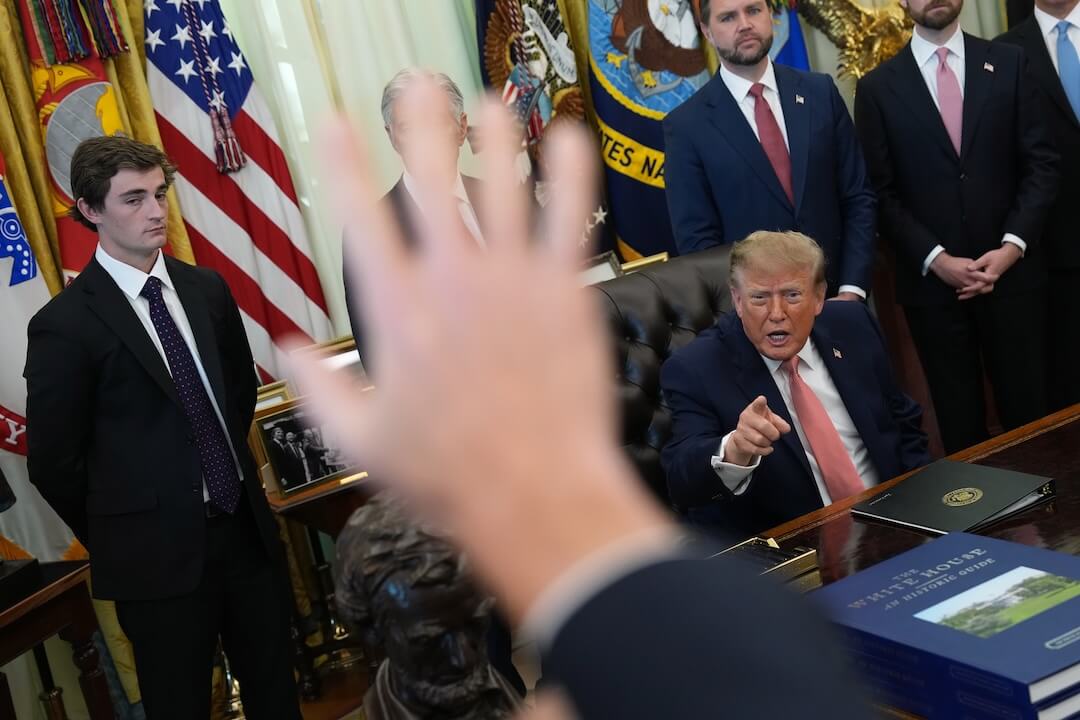
The latest target was The Independent, whose White House correspondent, Andrew Feinberg, was slated to serve as the primary print representative on a trip to South Dakota. Feinberg’s exclusion followed an intense Oval Office press exchange on Tuesday, during which he pressed the president on an administration whistleblower reward initiative. When Feinberg attempted follow-up inquiries, President Trump dismissed him as a "sick person."
The confrontation escalated rapidly through official government channels. The administration’s rapid-response apparatus and high-ranking officials utilized social media to disparage Feinberg with derogatory language. By Thursday, the White House press office officially barred Feinberg from the presidential trip without explanation. This incident aligns with a broader pattern initiated in February 2025, when the White House stripped the independent White House Correspondents’ Association of its role in managing pool rotations. Since then, outlets such as CNN, The Wall Street Journal, HuffPost, Politico, and The Associated Press have faced varying degrees of exclusion, prompting multiple legal challenges over violations of press access.
Scientific American and Corporate Turmoil
Away from Washington, institutional journalism is buckling under financial and political pressures. Scientific American, America’s oldest continuously published magazine, has shrunk dramatically amid attempts by corporate leadership to suppress political coverage.
Until recently owned by the German publishing giant Springer Nature—which supplies vital research journals to federal agencies like the National Institutes of Health—the magazine faced immense pressure from its parent company to tone down political reporting as the Trump administration threatened federal subscriptions and funding. Consequently, editors were forced to pause the publication’s opinion department, which had previously run editorials critical of Trump, and reassign editorial staff.
Between layoffs, resignations, and retirements, the magazine’s staff dwindled from roughly 84 to just over 30 employees within a year and a half. In response to the erosion of editorial independence, staff unionized with the Writers Guild in April. Shortly thereafter, Springer Nature announced the sale of the magazine to LabX, leaving remaining journalists deeply anxious about the future of substantive, critical scientific reporting.
Supporting Context & Metrics
- The Scale of Litigation: President Trump’s lawsuit against the BBC demands $10 billion in damages, alleging profound business and reputational harm despite the documentary never airing domestically and Trump ultimately winning the 2024 election.
- Deposition Deadlines: U.S. Magistrate Judge Enjoliqué Lett has mandated that Trump’s deposition be completed no later than December 11, with video recording permitted strictly for legal counsel and barred from public release.
- Workforce Reduction at Scientific American: Amid corporate restructuring and political pressures, the magazine lost at least 53 out of approximately 84 employees to layoffs, resignations, and retirements over an 18-month span.
- White House Access Erosion: The White House assumed direct control of press pool rotations in February 2025, systematically blocking outlets including The Independent, CNN, The Wall Street Journal, HuffPost, Politico, and The Associated Press.
Official Statements
The legal and political friction has generated sharply contrasting declarations from key stakeholders across the media and government landscapes:
On the BBC documentary edit:
"The edit created the mistaken impression that President Trump had made a direct call for violent action."
— The BBC, in a formal public apology acknowledging the misleading splicing of the January 6 speech.On the administration’s press strategy:
"Even though the White House might insist that they are simply acting to preserve decorum around the president, they’re really trying to create a safe space where the boss won’t get uncomfortable follow-ups from reporters… The press office has made sure that anytime Trump takes questions, many if not a majority of the ‘reporters’ present will be from ideologically-driven media outlets."
— Andrew Feinberg, White House Correspondent for The Independent.On federal transparency and immigration custody:
"We are seeking the same transparency and access to information that have existed within the criminal justice system for centuries."
— Jennifer Peter, Managing Editor of The Marshall Project, regarding the lawsuit filed against ICE and CBP for detainee database records.
Future Outlook
As these multi-front battles unfold, the implications for the future of journalism and legal accountability remain profound.
The impending December 11 deposition deadline in the BBC lawsuit serves as a critical test of whether the judiciary will enforce strict procedural compliance upon a sitting or former president turned plaintiff. If Trump sits for the deposition, cross-examination by BBC attorneys could establish vital legal precedents regarding media liability, public figures, and the evidentiary thresholds required to prove reputational harm in the digital era.
Simultaneously, the legal challenges mounted by organizations like The Marshall Project against immigration authorities, alongside the ongoing lawsuits filed by major news outlets against White House access restrictions, will test the resilience of First Amendment protections and the public’s right to information.
Finally, the contraction of historical institutions like Scientific American and the transition of oversight roles—such as Kelly McBride stepping down as NPR’s public editor while the position moves to the University of Maryland—signal an industry in deep transition. As newsrooms grapple with corporate consolidation, algorithmic pressures, and political hostility, the imperative for investigative rigor, editorial independence, and unyielding public accountability has never been more urgent.