

Executive Overview
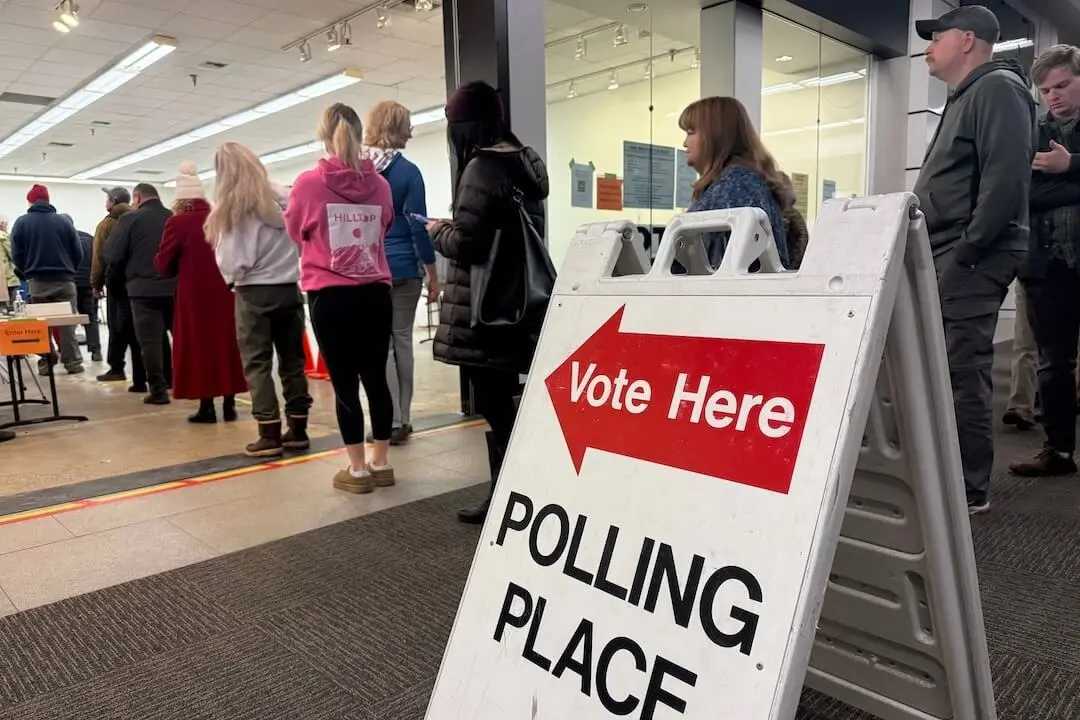
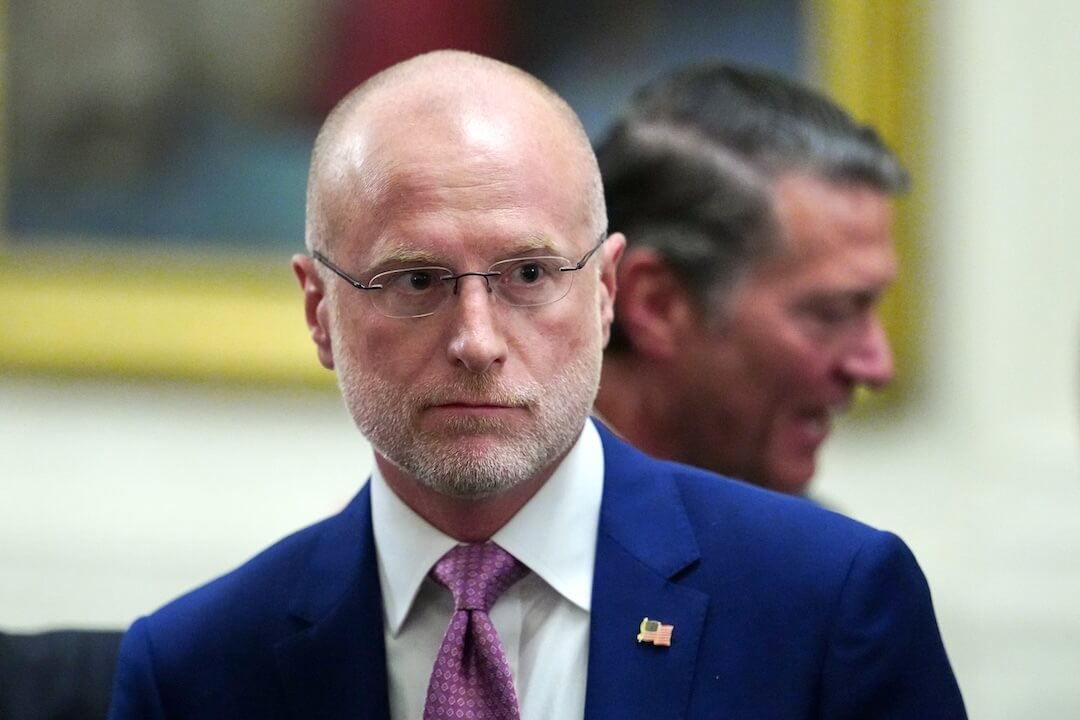
The American media ecosystem finds itself at a historic crossroads, pulled between tightening regulatory oversight, severe legal challenges, and shifting economic models. Less than two weeks before high-stakes midterm elections, Federal Communications Commission (Commision) Chair Brendan Carr issued a sweeping warning to broadcasters, asserting that the dissemination of "Fake Polls and Suppression Polls" could violate their federal regulatory obligations.
This intervention by the FCC into political polling coverage arrives against a backdrop of deep institutional distrust, exemplified by recent revelations of fabricated survey data, multi-billion-dollar legal judgments against tech giants, sweeping staff departures at legacy publications, and unprecedented cross-newsroom collaborations in remote regions like Alaska. Together, these developments paint a picture of an industry grappling with integrity, survival, and the constitutional limits of government authority.
Detailed Chronology: The Escalation of Federal Scrutiny and Industry Upheaval
The FCC Warning on Political Polling
The tension surrounding broadcast accountability intensified on a Wednesday when FCC Chair Brendan Carr took to social media to warn television and radio networks. Carr invoked federal regulations concerning news distortion and broadcast hoaxes, cautioning that airing unscientific or deliberately misleading polls could put broadcasters at odds with their federal licensing requirements.
While Carr did not name specific networks or polling organizations in his initial warning, the timing coincided with an admission from Wedgewood Polls—a newly established firm that acknowledged fabricating political surveys. These fabricated datasets had successfully infiltrated major news organizations and prominent polling aggregators before scrutiny forced their removal.
Carr argued that there has been a "significant surge" in manipulative polling designed to alter voter enthusiasm and turnout. "Many journalists and broadcasters have been amplifying or airing these Polls without regard to basic journalistic ethics and without informing the public that those Polls lack a scientific, accurate, or even real basis," Carr wrote.
The ABC Lawsuit and FCC Independence
Carr’s polling warning is part of a broader pattern of friction between federal regulators and broadcast media. In August, ABC and its corporate parent, The Walt Disney Co., filed a federal lawsuit against the FCC. The legal action alleges that the agency violated the First Amendment by threatening to revoke the broadcast licenses of eight ABC-owned stations, calling them up for early review years ahead of schedule to pressure the network over its news, comedy, and daily programming.
During a New York City appearance at Media Trends Live, FCC Commissioner Anna Gomez—the lone Democrat on the five-member commission—offered a blunt assessment of the agency’s trajectory. Gomez predicted that ABC would likely prevail in its First Amendment lawsuit, praising Disney for finding the courage to fight back. "I can tell you that I’m very glad Disney found its courage because I’ve said this time and time again: capitulation breeds capitulation, but courage inspires courage," Gomez told Axios’ Sara Fischer.
Gomez went further, questioning the agency’s institutional independence. "I have never seen an FCC that’s less independent than this FCC," she stated, adding that regulatory directives are increasingly being driven directly by the White House.
Broader Industry Pressures: Meta, Christianity Today, and Alaska
Beyond broadcast regulation, the media and technology sectors faced major shocks:
- The Meta Privacy Penalty: A New Mexico judge ordered Meta to pay a staggering $25 billion following a jury verdict finding the company liable for 43 million violations of state consumer protection laws regarding user data privacy in the wake of the Cambridge Analytica scandal. Meta plans to appeal.
- Christianity Today Layoffs: Prominent evangelical publication Christianity Today has lost more than half of its staff over a 14-month period. Former employees alleged that leadership under CEO Nicole Massie Martin and COO Thomas Addington undermined editorial independence by softening reporting to appease financial and social circles.
- Alaska Media Collaboration: Facing severe geographic and financial constraints ahead of a pivotal Senate race, competing newsrooms across Alaska have adopted an unprecedented model of cooperation. Outlets are sharing reporting memos, co-publishing content via the nonprofit Alaska News Coalition, and pooling resources to cover remote bush communities.
- Jake Tapper’s Graphic Novel Debut: CNN anchor Jake Tapper announced he will publish his graphic novel, The Butcher: The Decades-Long Hunt for Klaus Barbie, on June 1, 2027, through Top Shelf Productions, culminating three years of historical research and personal illustration.
Supporting Context & Metrics
The debate over polling integrity and broadcast regulation does not exist in a vacuum. It operates within an intensely polarized political environment characterized by low public trust in institutions and record-breaking financial penalties for information gatekeepers.
- 31%: The approval rating for President Donald Trump recorded in a Reuters/Ipsos poll released the same week, representing the lowest level of either of his presidential terms.
- $25 Billion: The record-setting penalty ordered against Meta by a New Mexico court—five times larger than Facebook’s historic $5 billion FTC privacy settlement in 2019.
- 50%: The proportion of staff lost by Christianity Today over 14 months due to layoffs and resignations amid allegations of eroding editorial independence.
- 3,000+: The number of stories republished across participating outlets through collaborative efforts by the non-profit Alaska Beacon and the Alaska News Coalition.
- 3 Years: The time CNN anchor Jake Tapper spent researching and drawing every panel of his upcoming graphic novel on Nazi war criminal Klaus Barbie.
Official Statements and Diverse Perspectives
The intersection of federal regulatory authority and journalistic freedom has generated sharp divisions among legal scholars, commissioners, and media advocates.
Defense of Press Freedom
Press freedom organizations argue that government threats against broadcasters cross constitutional boundaries. Seth Stern, chief of advocacy for the Freedom of the Press Foundation, issued a stern rebuke of Chair Carr’s warnings. Stern maintained that broadcasters hold a First Amendment right to report polling data, even if that data subsequently proves inaccurate.

"FCC policies about hoaxes and distortions must be applied narrowly to avoid clashing with the Constitution, if they can be constitutionally applied at all," Stern said. He further criticized Carr’s shift in tone compared to past positions, stating that the statutory framework governing the FCC explicitly prohibits censorship and federal meddling in free speech.
Standards of News Distortion
Democratic Commissioner Anna Gomez has previously clarified the legal threshold required to breach the FCC’s news distortion policy. According to Gomez, establishing a violation demands "a deliberate misrepresentation of something of significant importance." Under this standard, broadcasting a poll that turns out to be flawed or inaccurate would fail to meet the bar for federal sanction unless intentional deception by the broadcaster can be proven.
The Political Viewpoint
President Donald Trump has consistently challenged the validity of mainstream polling and media reporting. Speaking to reporters outside the White House, Trump asserted confidence in the upcoming midterm results while reiterating his long-standing criticism: "A lot of the polls are rigged. Just like the journalists are rigged."
Future Outlook
As the midterm elections approach, the immediate future of broadcast journalism hinges on how networks navigate the fine line between rigorous editorial verification and federal regulatory intimidation. If the FCC pursues enforcement actions against broadcasters for airing unscientific or fabricated polls, the resulting legal battles will likely establish monumental precedents for First Amendment protections in electronic media.
At the same time, the broader media landscape continues to fracture and transform. The staggering $25 billion judgment against Meta signals that state-level consumer protection laws will increasingly be utilized to police digital platforms. Simultaneously, the internal crises at legacy publications like Christianity Today highlight the precarious balance between financial survival and editorial independence.
Yet, amid institutional contraction and regulatory pressure, models of resilience are emerging. The cooperative reporting networks established by journalists in Alaska demonstrate that collaboration can sustain accountability journalism even in the face of severe economic and geographic hurdles. Whether the broader American media apparatus can maintain its independence under the dual weights of political pressure and shifting regulatory enforcement remains the definitive question for the industry’s horizon.