

Executive Overview
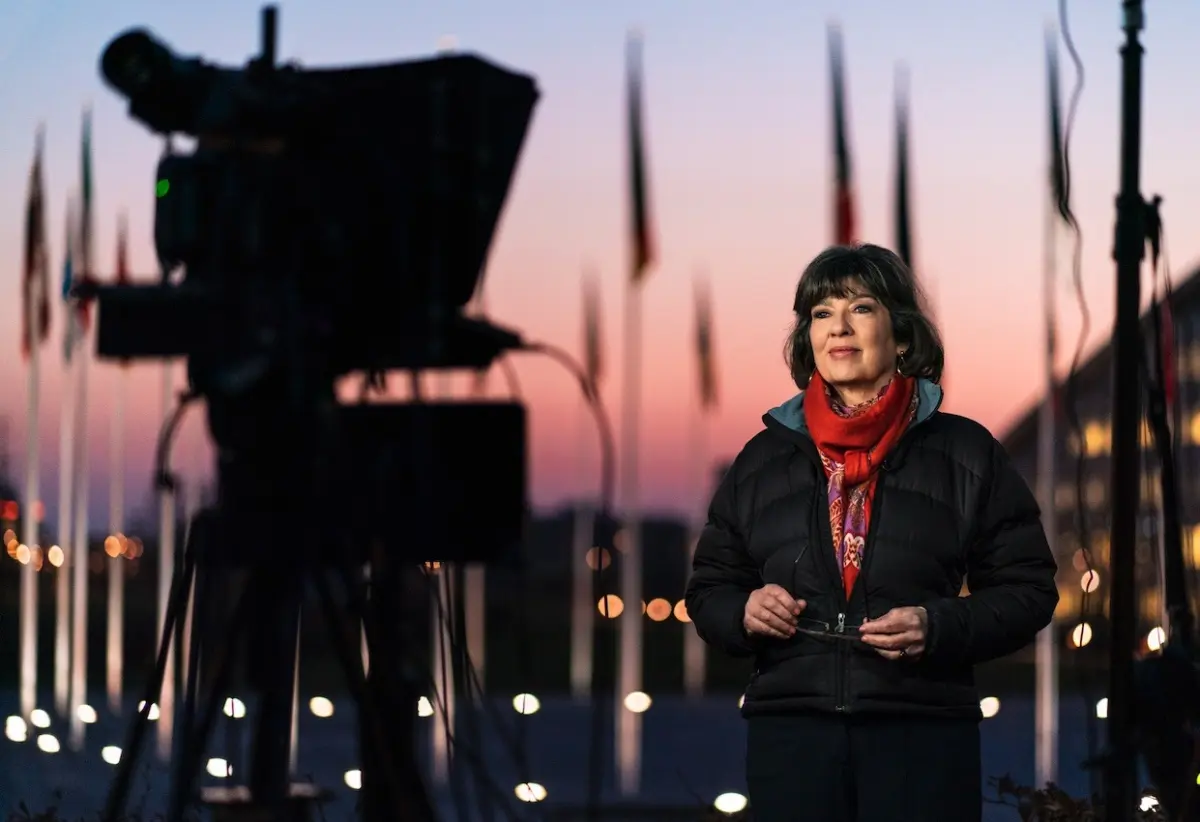
The global media industry is undergoing a period of profound transformation, marked by high-profile anchor departures, escalating legal confrontations between news organizations and government entities, and aggressive structural cost-cutting across legacy institutions. In a seismic development for international broadcasting, CNN’s legendary chief international anchor, Christiane Amanpour, has announced her departure from the network after an illustrious 43-year tenure. This exit comes amid a broader talent drain for CNN, which is also parting ways with prominent anchor Bianna Golodryga.
Concurrently, the intersection of journalism, politics, and the law continues to produce fierce friction. CNN has issued stark legal warnings to the White House over alleged retaliatory travel restrictions regarding Air Force One pool duties, while Fox News continues its high-stakes Supreme Court crusade to protect confidential journalistic sources. Across the pond and within domestic operations, structural contractions are acutely felt: the BBC has announced plans to slash over 100 roles to meet severe funding reductions, and major networks are pivoting aggressively toward digital audio expansions to capture evolving consumer habits. This report provides a comprehensive analysis of the forces reshaping modern journalism, examining the administrative, legal, and operational shifts defining the current media ecosystem.
Detailed Chronology
The past several weeks have catalyzed a cascade of organizational changes, editorial controversies, and leadership shifts across major broadcasting networks.
Late October to December: The Amanpour Transition Plan
Christiane Amanpour’s departure marks the end of an era for CNN International. Breaking the news to viewers at the conclusion of her flagship namesake program, Amanpour revealed that she had weighed the decision for several months, enduring "a few sleepless nights" before deciding to part ways with her professional home of over four decades.
To ensure a seamless transition for her global audience, Amanpour’s daily broadcast—which simultaneously airs on PBS—will maintain its regular schedule through the end of the calendar year. Beginning in January, the program will transition into a weekly format leading up to her final departure in June. While Amanpour offered no specific personal or professional reasons for her exit during her on-air announcement, CNN CEO Mark Thompson subsequently confirmed in an internal memo that discussions regarding her departure had been ongoing for months. Thompson expressed deep regret over her departure while acknowledging that the timing aligns with Amanpour’s personal and professional goals.
The Golodryga Exit and Industry Movement
Compounding CNN’s talent transition, anchor and senior global affairs analyst Bianna Golodryga announced her departure after nine years with the network, describing the move as "an opportunity that I couldn’t pass up." Industry reports indicate that Golodryga is currently engaged in high-level discussions with Politico regarding a prospective global affairs role, alongside talks with CBS News—where she previously worked—for a contributor position.
The BBC Job Reductions and Internal Restructuring
Shifting to public broadcasting, BBC News informed its staff of a sweeping cost-reduction initiative slated to eliminate more than 100 roles over the coming months. Newly appointed BBC News director Rachel Jupp addressed the cuts in an internal briefing, noting that while the measures are projected to save approximately $7.4 million, they are "not sufficient to meet our funding reduction." This sobering assessment has fueled industry speculation that further structural cuts and layoffs are imminent as public broadcasters grapple with constrained budgets and shifting digital consumption models.
Editorial Accountability and Digital Corrections
In the realm of journalistic ethics and digital oversight, CBS News chief legal correspondent Jan Crawford faced public scrutiny after posting and subsequently deleting a video clip from a town hall featuring Michigan Democratic Senate candidate Abdul El-Sayed. Crawford’s initial post offered critical commentary on El-Sayed’s handling of questions regarding the Muslim Brotherhood. Shortly after deleting the post, Crawford issued a public apology via social media, explicitly acknowledging that the tweet "was a violation of CBS News standards."
Supporting Context & Metrics
To fully understand these organizational realignments, one must examine the economic, structural, and legal metrics driving network decisions.
Financial and Structural Metrics
- $7.4 Million: The projected savings from the BBC’s current round of job cuts, which will see the elimination of over 100 positions under News Director Rachel Jupp.
- 43 Years: The length of Christiane Amanpour’s historic tenure at CNN, cementing her legacy as one of the defining foreign correspondents of the modern era.
- 9 Years: The duration of Bianna Golodryga’s tenure at CNN prior to her departure for new media opportunities.
- $10 Billion: The total damages sought in the high-profile defamation and civil lawsuit brought against the BBC, which faces a crucial court-ordered deposition deadline for former U.S. President Donald Trump.
The Podcast Economy and Audio Expansion
As traditional linear television ratings face sustained pressure, networks are increasingly turning to on-demand audio formats to diversify revenue and engage younger demographics. CBS News has significantly ramped up its podcasting investments with the launch of two new original programs anchored by its prominent on-air personalities.
- Great Questions with Tony Dokoupil: Hosted by CBS Evening News anchor Tony Dokoupil, the twice-weekly podcast aims to unpack the complex socio-political issues driving the global news cycle. It officially debuted on October 26.
- Straight Up: Co-hosted by CBS Mornings personality Vlad Duthiers and CBS News anchor Kelly O’Grady, this weekly program focuses on cultural trends, viral phenomena, and contemporary public discourse.
Simultaneously, behind-the-scenes executive stability has become a focal point for morning television. Jon Tower was officially named the permanent executive producer of CBS Mornings after serving in an interim capacity. Tower inherits the challenge of boosting ratings for the flagship morning broadcast, particularly in the wake of shifting viewer dynamics and Norah O’Donnell’s return to the network.
Official Statements
The convergence of editorial independence, corporate governance, and executive departures has prompted a series of definitive statements from media executives, legal counsel, and network stars.
On Christiane Amanpour’s Departure
Christiane Amanpour, CNN Chief International Anchor:
"After thinking about this carefully for several months and experiencing a few sleepless nights, as you can imagine, I have decided to separate from CNN, my partner of 43 fantastic years."
Mark Thompson, CNN CEO (from an internal staff memo):
"I’m very sorry to see her go, but I’ve come to accept that this is the right time for her, both personally and professionally."
On Bianna Golodryga’s Departure
Bianna Golodryga (via social media):
"After nine wonderful years at CNN, I’ve decided to leave for an opportunity that I couldn’t pass up. I’m grateful for the experiences, friendships and support from fabulous colleagues during my CNN years. Exciting news to share very soon!"
On Press Freedom and Legal Retaliation
The legal battles confronting major networks underscore a tense relationship between the press and political institutions. CNN has taken a fiercely protective stance regarding its constitutional right to cover the executive branch. In a strongly worded letter to the Department of Justice, Ted Boutrous, outside counsel for CNN, condemned the White House’s exclusion of the network from Air Force One travel rotations on designated pool days:
"These efforts to retaliate and discriminate against CNN based on the content of its news coverage are mistaken, counterproductive, and unlawful."
Concurrently, Fox News continues its defense of investigative journalism by petitioning the Supreme Court to overturn a civil contempt order—complete with daily $800 fines—issued against journalist Catherine Herridge over source confidentiality. The network maintains that compromising source privilege poses an existential threat to investigative reporting, warning that legal penalties designed to force reporters to burn confidential sources will fundamentally chill whistleblowing and accountability reporting.
In judicial proceedings involving international media, U.S. Magistrate Judge Enjoliqué Lett has issued a strict compliance order mandating that former President Donald Trump appear for a deposition by December 11 in connection with a multi-billion-dollar lawsuit filed against the BBC. The court has signaled that failure to comply could result in severe sanctions, up to and including the outright dismissal of the lawsuit.
Future Outlook
The media landscape heading into the close of the decade is defined by structural austerity, technological reinvention, and a redrawing of the talent map. As legacy networks bid farewell to generational talents like Christiane Amanpour, the challenge shifts toward cultivating a new generation of authoritative voices capable of maintaining global audience trust in an era marked by deep political polarization and misinformation.
Financially, the contraction seen at the BBC is indicative of broader pressures facing public and commercial service broadcasters alike. As advertising revenues fluctuate and traditional cable subscriptions decline, leadership teams will be forced to make difficult structural adjustments—balancing lean newsrooms with the capital-intensive demands of digital transformation.
On the legal front, the outcomes of pending Supreme Court petitions regarding reporter privilege and federal travel access will establish critical precedents for the First Amendment. Whether these rulings fortify protections for investigative journalism or empower political entities to exert operational leverage over newsrooms will shape the practice of American and international journalism for years to come. Ultimately, the resilience of the fourth estate will depend not only on its ability to navigate these financial and legal headwinds, but on its unwavering commitment to the foundational principles of independent reporting.