

Published: October 24, 2026
Dateline: WASHINGTON
Author: Political Desk / Investigative Reporting Unit
Executive Overview
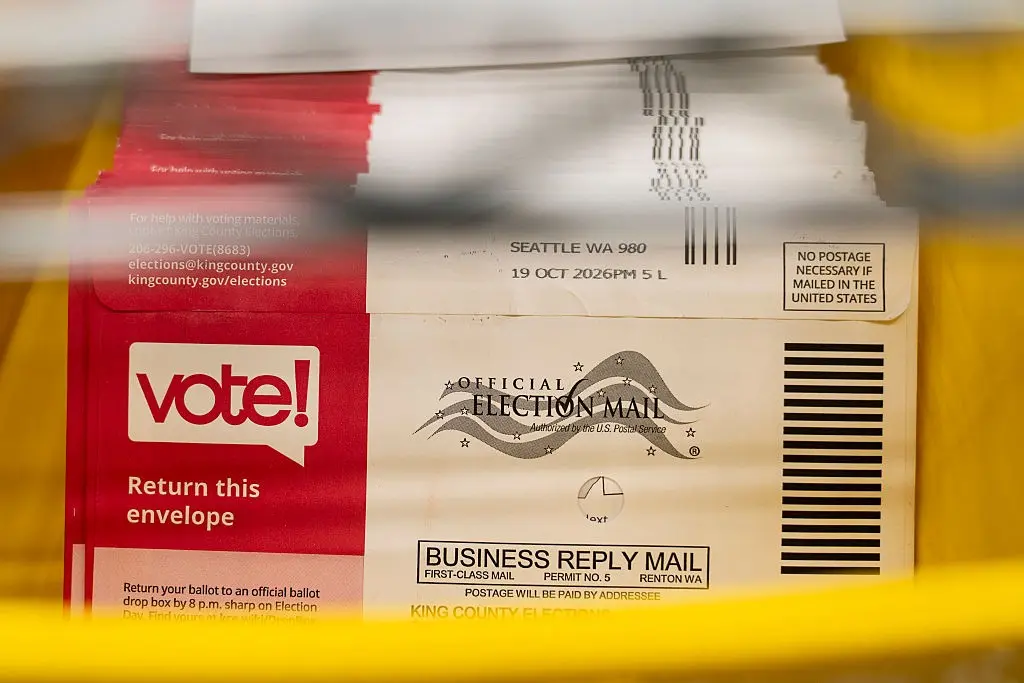
With Election Day fast approaching, the American political landscape is witnessing a striking tactical pivot from President Donald Trump alongside an aggressive, coordinated intervention by the U.S. Department of Justice (DOJ) in state-level electoral administration. Just weeks before the high-stakes 2026 midterm elections, President Trump has launched a concerted campaign urging Republican voters to embrace mail-in and early voting—a sharp reversal from his years-long campaign railing against the practice as inherently fraudulent.
Simultaneously, the federal government has injected itself directly into the mechanics of state voting systems. In California, the DOJ has issued sweeping demands to nearly two decades’ worth of county election offices, ordering them to segregate thousands of ballots flagged as potentially belonging to noncitizens. Up north in Alaska, the administration has initiated a federal lawsuit targeting the state’s high-profile Senate race, explicitly seeking to block certification under specific outcomes.
These simultaneous developments highlight a complex dual strategy: mobilizing the conservative base through expanded participation methods while leveraging federal legal frameworks to police and challenge state voting procedures. As election officials grapple with compressed timelines and unprecedented federal oversight, the final days before the midterms have transformed into a high-stakes battleground played out across social media feeds and federal courtrooms alike.
Detailed Chronology
The convergence of shifting campaign tactics and federal legal interventions accelerated sharply in mid-October 2026, setting off a scramble among state and local election administrators nationwide.
- Early October 2026: Research and post-election audits from prior cycles continue to fuel debates over mail-in ballot processing. Reports surface indicating that ballot rejection rates have climbed in rural areas, partly attributed to reductions in U.S. Postal Service (USPS) operational capacity. Despite these hurdles, internal Republican polling reveals a critical need to capture early-vote margins traditionally dominated by Democrats.
- Mid-October 2026: Federal authorities in California announce a wave of arrests—ultimately totaling 28 individuals—charging them with illegally registering to vote, with some accused of casting ballots despite being noncitizens. While academic and nonpartisan studies consistently emphasize that noncitizen voting remains statistically negligible, the arrests provide a springboard for broader federal action.
- October 23, 2026: The DOJ files a formal federal lawsuit attempting to block California election officials from counting approximately 20,000 ballots associated with individuals whom federal databases flag as potential noncitizens. On the same day, President Trump publicly confirms direct involvement in a parallel legal maneuver, telling reporters, "I’m the one that said do it," regarding an administration-backed lawsuit in Alaska.
- October 24, 2026 (Morning): The DOJ escalates its California intervention by dispatching urgent letters to election supervisors across at least 18 counties. The federal directive orders local officials to identify and segregate suspected noncitizen ballots within an aggressive 48-hour window, threatening severe legal consequences for noncompliance.
- October 24, 2026 (Afternoon): President Trump takes to Truth Social to release a flurry of coordinated messages. Abandoning his historical skepticism of remote voting, he issues a direct call to arms for the conservative electorate, urging them to maximize turnout through every available administrative channel.
Supporting Context & Metrics
To fully understand the weight of these late-cycle developments, one must examine the friction between historical campaign rhetoric, empirical data regarding election integrity, and the structural realities of state administration.
The Evolution of Trump’s Mail-In Voting Stance
For years, Donald Trump relentlessly criticized mail-in voting, characterizing absentee and universal mail-in systems as wide-open vectors for electoral fraud. This messaging historically depressed Republican participation rates in early- and mail-in voting windows, leaving the GOP structurally disadvantaged as millions of ballots were cast weeks before Election Day.
The Truth Social statements issued in late October represent a pragmatic, if abrupt, operational pivot. By instructing followers to "SWAMP the Radical Left Dumocrats with massive turnout" via early, absentee, mail-in, or in-person methods, the administration recognizes that winning competitive congressional majorities requires matching Democratic ground games ballot-for-ballot. However, this encouragement collides awkwardly with ongoing systemic issues; recent reports indicate that mail-in ballot rejections have spiked in various rural and semi-rural jurisdictions following reductions in local USPS services, creating a paradoxical environment where voters are urged to use a system that federal and local policy changes have simultaneously complicated.
The California Noncitizen Voting Dispute
At the center of the West Coast legal battle is a clash over database reliability and state sovereignty. The DOJ’s lawsuit targets roughly 20,000 voter registrations in California, arguing that these individuals may lack citizenship.
- The Federal Position: Federal prosecutors maintain that safeguarding the franchise requires zero tolerance for ineligible participation. Assistant U.S. Attorney Bill Essayli warned local administrators that processing a noncitizen’s ballot crosses a legal red line, stating: "Any election official who knowingly processes the ballot of a noncitizen is opening themselves to legal jeopardy."
- The State Pushback: California election officials and voting rights advocates strongly dispute the accuracy of the federal datasets. State authorities warn that relying on rushed, top-down federal matching lists risks sweeping up naturalized citizens and eligible voters, effectively resulting in mass disenfranchisement on the eve of an election. Independent research consistently demonstrates that noncitizen voting is exceedingly rare, typically occurring at rates statistically close to zero due to rigorous registration verification processes.
The Alaska Senate Race Complication
In Alaska, the federal lawsuit centers on a unique ballot-access and voter-confusion argument. The race features a high-stakes contest between Republican incumbent Senator Dan Sullivan and Democratic challenger Mary Peltola. Complicating the ballot is the presence of an independent or third-party candidate sharing the exact same name—Daniel Sullivan.
The administration’s lawsuit seeks to block the ultimate certification of the election under specific conditions, arguing that the presence of the similarly named candidate is structured to mislead conservative voters and artificially tilt the outcome. By inserting federal litigation into a localized ballot-labeling dispute, the DOJ has drawn sharp criticism from legal scholars who view the move as an unprecedented federal intrusion into routine state election administration.
Official Statements & Reactions
The multi-pronged federal actions and Trump’s sudden endorsement of mail-in ballots have drawn swift, polarized responses from legal experts, state officials, and political leaders across the spectrum.
- President Donald Trump, defending the administration’s legal strategy:
"I’m the one that said do it." (Acknowledging his direct directive behind the Alaska election lawsuit while simultaneously pushing his base to utilize mail and early voting streams). - First Assistant U.S. Attorney Bill Essayli, issuing a stern warning to California officials:
"Any election official who knowingly processes the ballot of a noncitizen is opening themselves to legal jeopardy." - State Election Officials (California), responding to the DOJ’s 48-hour segregation demand:
Critics and local registrars have labeled the federal directive an "impossible administrative burden" designed to sow chaos and distrust. State representatives emphasized that county offices lack the time, resources, and verified data required to safely adjudicate tens of thousands of voter files within a 48-hour window without stripping eligible citizens of their constitutional right to vote. - Voting Rights Advocates and Legal Scholars:
Legal analysts have expressed profound concern over the timing of the DOJ’s actions. Filing sweeping injunctions and issuing ultimatums mere days before polls close creates acute administrative gridlock, threatening to undermine public confidence in the final certified results regardless of who wins at the ballot box.
Future Outlook
As the clock ticks down to the 2026 midterms, the immediate consequences of these legal and tactical maneuvers remain volatile.
In California and Alaska, local election boards are scrambling to respond to federal court filings while simultaneously processing mountains of incoming ballots. Judges are expected to rule on emergency injunctions in the coming days, determining whether the contested ballots will remain segregated, discarded, or counted alongside standard votes. The outcomes of these emergency hearings could establish significant legal precedents regarding the extent of federal authority over state-run election machinery.
Meanwhile, Trump’s late-stage embrace of mail-in voting will face its ultimate stress test on election night and in the days following. If Republican turnout surges through early and mail-in channels as the president has demanded, it could reshape conservative electoral strategy for future cycles, permanently burying the post-2020 narrative that mail-in ballots are exclusively a Democratic advantage. However, if administrative confusion, postal delays, or federal legal challenges result in widespread ballot rejections, the resulting disputes over legitimacy threaten to plunge the post-election period into prolonged litigation and intense partisan friction.