

Executive Overview
For digital marketers, search engine optimization (SEO) professionals, and enterprise content strategists, the golden question remains a constant pursuit: How many backlinks do I actually need to rank on page one?
For years, the conventional wisdom in the SEO industry has leaned heavily toward brute-force link building. Many practitioners operate under the assumption that outranking a competitor simply means building more total links than they have, regardless of quality, relevance, or context. However, a deep dive into modern Search Engine Results Page (SERP) mechanics reveals a more nuanced reality: often, you do not need nearly as many backlinks as you think.

Blindly chasing high volume without upfront analytical rigor leads to wasted budgets, exhausted outreach teams, and minimal movement in the rankings. To maximize return on investment (ROI), modern SEO requires a surgical approach—one that balances quantitative volume with qualitative assessment.
This investigative tutorial outlines a battle-tested, 5-step framework designed to quickly and accurately calculate the precise quantity and quality of backlinks needed to elevate underperforming content into the top tier of Google’s search results. By auditing your existing asset portfolio, cross-referencing competitor profiles, and analyzing historical link velocity, you can transform your link-building operations from a guessing game into a predictable science.

Detailed Chronology: The 5-Step Backlink Calculation Framework
To systematically determine your link-building requirements for any given keyword or URL, follow this chronological 5-step analytical process using industry-standard tools like Ahrefs.
Step 1: Identify Your Highest-Priority Backlink Targets
Before calculating how many links you need, you must first decide where to direct your limited resources. The objective is to target high-converting assets—pages that directly drive leads, product sign-ups, or affiliate revenue—that are currently lingering on the bottom half of page one (positions 4 through 10) and require a minor structural or authoritative push to break into the top 3 spots.

There are two primary methods for isolating these high-ROI targets:
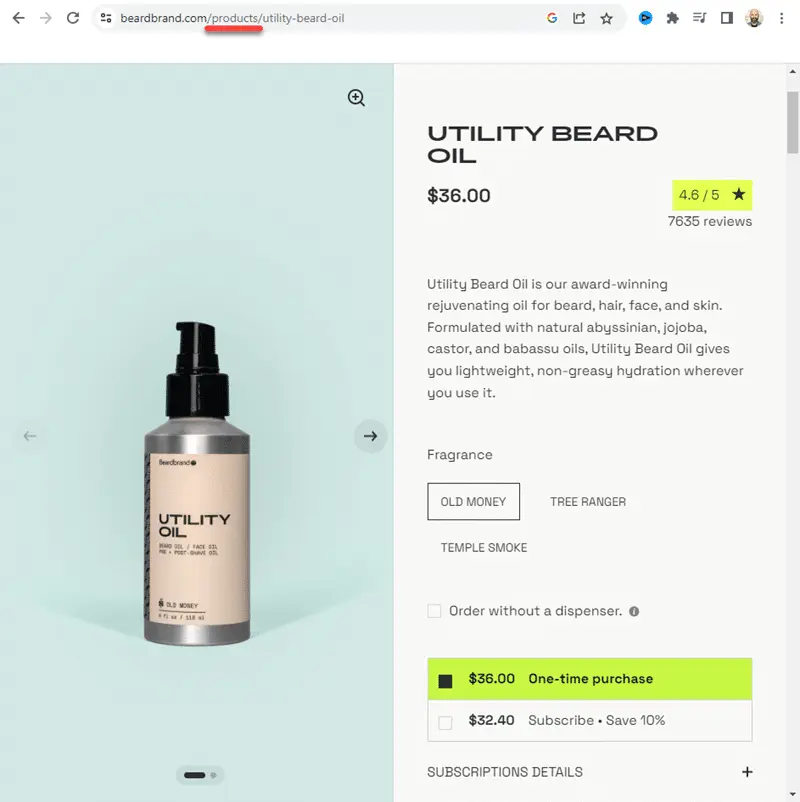
- Analyzing Subfolders: Many structured websites house their most commercially intent-driven content inside dedicated subfolders, such as
/products/,/features/,/industries/,/reviews/, or/services/. You can quickly verify this by inspecting site navigation or running an Ahrefs Site Explorer Subfolders report. Once identified, plug that subfolder URL path into Site Explorer, navigate to the Top Pages report, and apply a Positions filter for ranks 4–10. This generates an immediate, prioritized list of mid-to-bottom page-one product or service pages ripe for optimization. - Leveraging Keyword Modifiers: If your site does not utilize clean subfolder architectures, you can use keyword modifiers to extract high-priority informational or commercial targets. Navigate to the Top Pages report in Site Explorer and apply a Keyword Contains filter using modifier terms relevant to your niche, such as “best,” “software,” “tools,” “platform,” “solutions,” “alternatives,” or “vs.”
For instance, consider an established niche blog evaluating its "Best SERP Tracking Tools" guide. The primary keyword target carries significant commercial value through affiliate monetization. By identifying that the page has remained static for months, the site owner establishes an ideal candidate for a content refresh paired with targeted link acquisition.

Step 2: Review SERP Data and Benchmark Competitors
Once you have isolated your target asset, the next phase is to dissect the competitive landscape occupying the top 10 positions for that specific keyword.
From the Top Pages report, right-click the primary keyword to open the Keyword Explorer overview report. Scroll down to the SERP overview table. Here, examine the traffic potential: ranking in the top three positions frequently triples organic traffic, yielding exponential increases in downstream revenue and affiliate commissions.

Focus closely on the Referring Domains (RDs) column. Crucial warning: Raw referring domain counts can be deeply misleading. A top-ranking competitor might show hundreds of links, but that does not mean you need to replicate every single one. Instead, isolate a direct competitor that matches two vital criteria:
- A similar Domain Rating (DR) score relative to your own website.
- An identical content type and format (e.g., comparing a long-form listicle to another listicle, rather than comparing a blog post to an ecommerce category page).
Select the competitor within your domain tier that has the lowest referring domain count. This establishes an apples-to-apples benchmark and provides your lowest feasible backlink target.

Step 3: Review and Filter Competitor Backlink Profiles
Raw numbers rarely tell the whole story. To uncover the true volume of links moving the needle for your benchmark competitor, you must audit their backlink profile.
Open the competitor’s Referring Domains report in a new tab and apply strict filters to strip out low-quality noise. Filter the results to isolate editorial, contextually relevant links while excluding sitewide footers, blog comment spam, or low-grade directory links.

For example, a competitor might initially display 85 referring domains. However, once robust backlink and quality filters are applied, that number often drops significantly—frequently down to 22 relevant domains.
Next, skim through the remaining list to weed out any topically irrelevant domains (such as unrelated niche sites or unnatural PBN footprints). If the remaining sites are authentic, relevant SaaS platforms or industry publications, keep them in your target count. This filtered metric represents your true benchmark target.

Step 4: Assess Domain Rating Distributions
Quantity alone is a vanity metric in SEO; link equity is dictated by authority and relevance. Once you have established your target number of referring domains, you must evaluate the quality distribution of those links.
Analyze the Domain Rating distributions within the competitor’s profile. Does the competing page derive its authority from a handful of elite DR 80+ properties, or is it built on a foundation of mid-tier DR 50–70 links?

If a competitor commands eight DR 80+ links and nine DR 70–79 links from authoritative outlets, closing that gap will require a long-term, high-effort outreach campaign. By expanding the dropdown menus within the referring domain report, you can reverse-engineer how your competitors earned those links—identifying successful tactics such as guest contributions, digital PR, or industry collaborations. Use these qualitative insights to inform your own tactical execution.
Step 5: Determine Link Velocity Targets
Securing enough links to rank today is only half the battle. For fiercely competitive keywords, top-ranking competitors actively acquire new backlinks on a monthly or quarterly basis to defend their SERP positions.

To determine how many links you must build on an ongoing basis to remain competitive, toggle your backlink report to display New backlinks across varying time horizons (e.g., the last 30 days, 3 months, and 6 months).
If analysis reveals that a benchmark competitor has acquired zero new referring domains over the past month and only one or two over the last quarter, your ongoing maintenance requirements are remarkably low. In such scenarios, your strategy shifts from an aggressive, endless campaign to a precise two-stage approach: build ~22 links to close the immediate gap, followed by a modest cadence of 1 to 2 quarterly links to defend your hard-won ranking.

Supporting Context & Metrics
To ground these strategies in real-world application, consider a secondary case study: an enterprise software review article currently sitting at position nine in the SERPs.
A competing property with a Domain Rating of 71 manages to secure the fifth position with a mere three referring domains pointing to its URL. Upon running a filtered audit of those referring domains, the backlink profile distills down to just two high-value links within the DR 70–79 tier. Meanwhile, the unoptimized target article features four referring domains, all of which stem from low-quality, topically irrelevant directories accumulated passively over time.

Because no proactive outreach had ever been executed for the page, the baseline metrics demonstrate a clear path forward: combining a thorough content refresh with the acquisition of just a couple of DR 70+ contextual backlinks is statistically sufficient to thrust the article out of the bottom of page one and into the top five.
Given that the SERP overview indicates baseline traffic of roughly 96 organic visits per month at position nine, breaking into the top five positions unlocks the potential to triple or quadruple targeted inbound traffic without over-allocating capital.

Official Industry Statements & Expert Insights
Industry consensus among leading search engineers and enterprise SEO consultants continues to reinforce the principle of diminishing returns when it comes to raw backlink counts.
Google’s Search Liaison has repeatedly emphasized that links remain an important discovery and ranking signal, but their relative weight is continuously balanced against user intent, on-page relevance, and content freshness. As algorithmic sophistication grows, search engines are increasingly adept at identifying and discounting manipulative link velocity, making qualitative, contextually driven link acquisition the only sustainable path forward.

Advanced practitioners echo this sentiment. Rather than treating link building as an arbitrary numbers game where "more is always better," modern SEO authorities advocate for a resource-conscious approach. By auditing existing asset performance and matching competitor link profiles strictly on a tier-by-tier basis, brands can protect their profit margins while maximizing organic visibility.
Future Outlook: The Evolution of Link Equity in Modern Search
As artificial intelligence integration transforms how search engines interpret and deliver information—ushering in eras of generative engine optimization (GEO) and conversational search interfaces—the fundamental mechanics of authority are shifting.

While raw backlink volume faces declining marginal utility, the value of high-authority, topically relevant citations will only intensify. Algorithms are becoming hyper-sensitive to the contextual neighborhood of a link. Future-proofing your digital presence requires moving away from transactional link acquisition models and leaning toward strategic digital PR, brand mentions within authoritative knowledge graphs, and deep content-level collaborations.
By implementing the disciplined, 5-step auditing framework outlined above, organizations can insulate themselves against algorithmic volatility. Stop guessing how many links you need to rank. Instead, let data-driven competitive intelligence dictate your resource allocation, ensure maximum operational efficiency, and secure sustainable, long-term dominance on page one.