

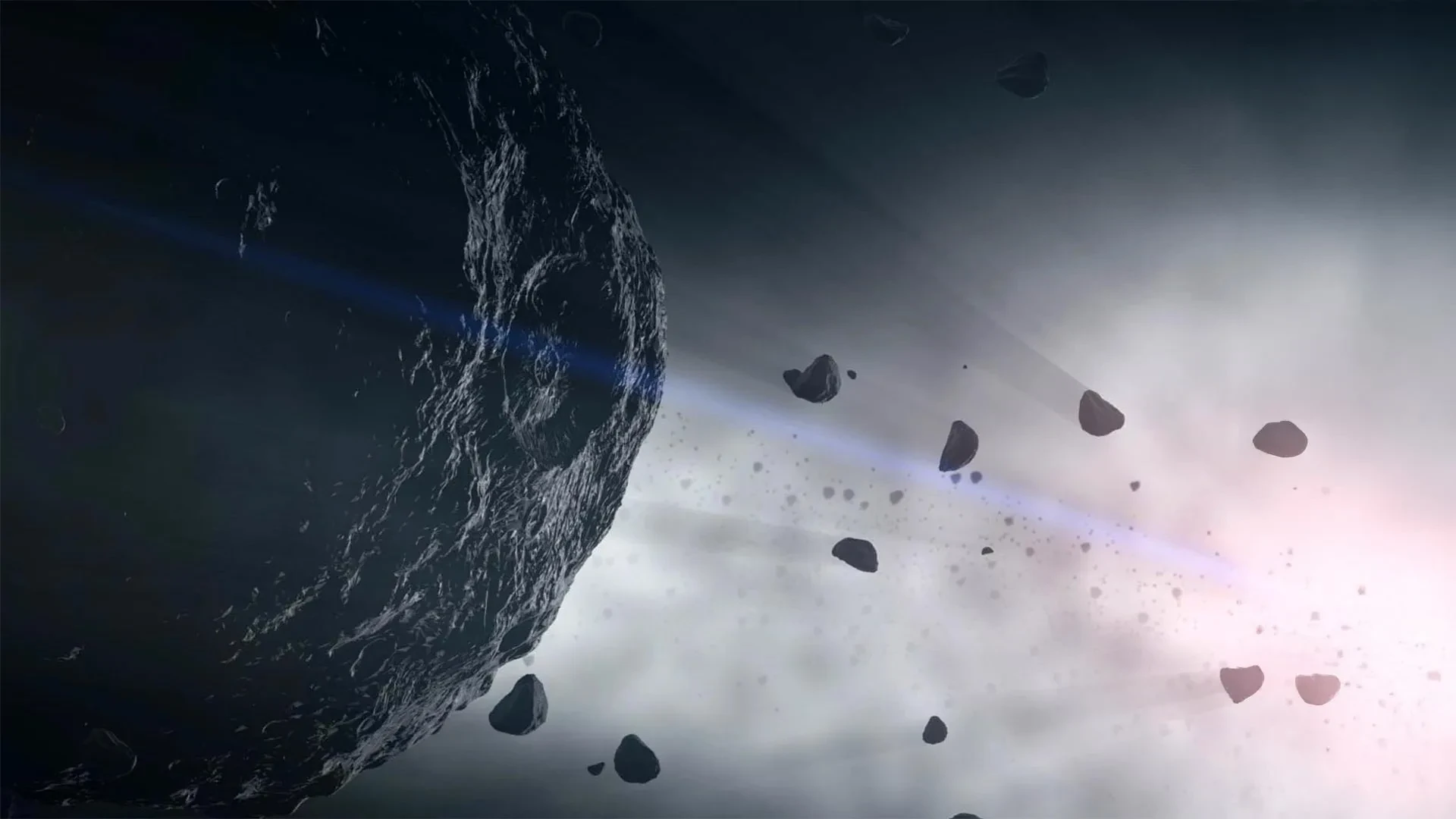
Executive Overview
For decades, planetary scientists have relied on meteorites recovered from Earth’s surface and remote telescopic observations to piece together the violent, chaotic birth of our Solar System some 4.5 billion years ago. However, these terrestrial samples are frequently altered by atmospheric entry, weathering, and contamination, leaving crucial gaps in our understanding of planetary evolution.
That paradigm shifted dramatically when NASA’s OSIRIS-REx spacecraft successfully intercepted the near-Earth asteroid 101955 Bennu, harvested an immaculate cache of pristine extraterrestrial regolith, and delivered it to Earth in a dramatic Utah desert landing on September 23, 2023.
Recent laboratory analyses of these precious fragments—specifically half a gram allocated to a team of geochemists at ETH Zurich led by Professor Maria Schönbächler—have upended long-held assumptions regarding how ancient cosmic bodies formed. Published in the journal Science Advances, this groundbreaking research reveals that Bennu is a geochemical "hybrid." Its isotopic fingerprint challenges the traditional view that primitive asteroids originated strictly in the distant, icy outer reaches of the Solar System.
Instead, the data demonstrates that Bennu’s parent material accumulated near the critical water-ice line, a boundary where matter from both the inner and outer Solar System mixed extensively. Most provocatively, the study posits that the gas giant Jupiter—forming within the first million years of solar history—acted as a colossal gravitational architect, fundamentally shaping the distribution of cosmic dust and dictating the chemical recipe from which the terrestrial planets, including Earth, were ultimately built.
Detailed Chronology: From Deep Space Sampling to Terrestrial Laboratories
To fully appreciate the significance of the ETH Zurich findings, it is essential to trace the operational timeline that brought Bennu’s ancient dust from the vacuum of space into state-of-the-art terrestrial cleanrooms.
The Journey of OSIRIS-REx and the Utah Landing
Discovered in 1999, Bennu is a carbonaceous asteroid that completes an orbit around the Sun every 1.2 years, making regular, relatively close approaches to Earth roughly every six years within a distance of approximately 300,000 kilometers (186,000 miles). Recognizing its pristine nature and potential to preserve the chemical signature of the early nebula, NASA launched the Origins, Spectral Interpretation, Resource Identification, Security-Regolith Explorer (OSIRIS-REx) mission in September 2016.
After a multi-year transit, the spacecraft rendezvoused with Bennu in late 2018, mapping its rugged, boulder-strewn surface in unprecedented detail. On October 20, 2020, OSIRIS-REx executed a daring touch-and-go maneuver, pressing its sampling head against the asteroid’s surface and capturing an estimated 120 grams of surface material before stowing it securely for the long return trip home.
On September 23, 2023, the mission reached its climax when the sample return capsule re-entered Earth’s atmosphere at blistering speeds, deploying parachutes before making a textbook touchdown in the military testing ranges of the Utah desert. The capsule was swiftly secured, placed in a specialized cleanroom environment to prevent terrestrial contamination, and subsequently distributed to laboratories across the globe for intensive multi-disciplinary analysis.
Unlocking the Molecular Vault at ETH Zurich
Among the privileged principal investigators was Professor Maria Schönbächler, Chair of Isotope Geochemistry at ETH Zurich. Her laboratory received a modest yet scientifically priceless allocation of just half a gram of Bennu’s regolith. Rather than merely cataloging the minerals present, Schönbächler’s team initiated a high-precision isotopic inventory, focusing on three specific transition and refractory elements: iron, titanium, and chromium.
Isotopes—atoms of the same chemical element possessing identical numbers of protons but varying numbers of neutrons—exhibit subtly different atomic masses. Because these mass variations remain largely immune to many secondary geological processes, they act as an indelible chemical fingerprint. By measuring the precise ratios of these isotopes, Schönbächler’s team sought to decode where Bennu’s raw ingredients were forged and how they coalesced in the protoplanetary disk.
The results of this rigorous analytical campaign revealed an astonishing homogeneity: iron and titanium isotopes were distributed with remarkable uniformity throughout the sample. More importantly, the isotopic signature matched neither typical inner-Solar-System rocks nor standard outer-system cometary materials. Instead, it aligned in striking precision with another asteroid, Ryugu (sampled by Japan’s Hayabusa2 mission), and a rare, highly primitive class of carbonaceous meteorites known as CI meteorites.
Supporting Context & Metrics: The Chemistry of Cosmic Relatives
To understand why Bennu’s isotopic alignment with Ryugu and CI meteorites is seismically important to planetary science, one must examine the specific metrics and physical reservoirs that governed the early protoplanetary disk.
The CI Meteorite Anomaly
CI meteorites—named after the Ivuna meteorite that fell in Tanzania in 1938—are among the rarest objects recovered on Earth. They are fundamentally distinct from ordinary chondrites or iron meteorites because they have undergone virtually zero thermal processing or melting since they first agglomerated 4.5 billion years ago. They represent a pristine, unaltered snapshot of the primordial solar nebula, boasting high concentrations of carbon, organic compounds, and water-bearing minerals.
Until recently, scientists could only study CI meteorites that had survived the fiery ordeal of atmospheric entry and subsequent terrestrial weathering in places like Antarctica or salt flats. The recovery of uncontaminated samples from Bennu and Ryugu provides an uncompromised baseline. The chemical signatures of Bennu, Ryugu, and CI meteorites are so closely intertwined that researchers can now definitively state they originated from the exact same ancient reservoir of cosmic dust.
| Parameter / Metric | Asteroid Bennu | Asteroid Ryugu | CI Meteorites | Inner Solar System / Earth |
|---|---|---|---|---|
| Primary Age | ~4.5 Billion Years | ~4.5 Billion Years | ~4.5 Billion Years | ~4.5 Billion Years (Processed) |
| Orbital Period | 1.2 Earth Years | 1.3 Earth Years | Variable (Interplanetary) | 1.0 Earth Year |
| Water / Volatile Content | High (Hydrated Silicates) | High (Hydrated Silicates) | High (Hydrated Silicates) | Depleted (Rocky / Refractory) |
| Isotopic Affinity | Distinct Carbonaceous | Identical to Bennu | Identical to Bennu & Ryugu | Distinct Terrestrial Signature |
| Birthplace Indicator | Water-Ice Line Hybrid | Water-Ice Line Hybrid | Water-Ice Line Hybrid | Inner Protoplanetary Disk |
Challenging Conventional Wisdom on Asteroid Birthplaces
Prior to the publication of the ETH Zurich findings, planetary migration models largely assumed a clean radial segregation within the early Solar System. The prevailing hypothesis suggested that primitive, volatile-rich asteroids and comets formed exclusively in the cold, distant outer realms beyond the frost line, far away from the scorching heat of the young Sun. Conversely, rocky bodies and terrestrial planets were thought to have assembled from refractory materials in the inner disk.
Bennu’s isotopic composition shatters this simplistic dichotomy. By demonstrating that Bennu’s ingredients represent a true hybrid of inner- and outer-disk materials, the research forces a paradigm shift. The asteroid did not form in a singular, isolated zone; it was assembled from a cosmic melting pot where materials from disparate regions of the solar nebula converged, collided, and stuck together.
Official Statements and Expert Insights
The implications of the ETH Zurich study have reverberated throughout the international planetary science community, illuminating the profound role that planetary-scale dynamics played in the formation of our cosmic neighborhood.
Reflecting on the hybrid nature of the asteroid’s composition, Professor Maria Schönbächler noted:
"Bennu is a hybrid: the material does not clearly match either the inner or the outer Solar System. Its unusual chemical composition suggests that Bennu formed from a combination of materials originating in both regions rather than from a single, isolated source."
This hybridization required a physical mechanism capable of bridging the vast distances between the inner and outer nebula. Enter Jupiter. According to the research team’s scenario, the gas giant—which ballooned to planetary mass within the first million years of solar history—acted as a massive physical and gravitational barrier within the rotating circumstellar disk.
As Jupiter accreted gas and dust at a staggering rate, its immense gravitational field disrupted the smooth inward migration of larger planetesimals, halting them in their tracks. However, it permitted ultra-fine dust particles to drift past its orbit. These microscopic grains circulated freely, meeting and mingling near the water-ice line—the boundary where ambient temperatures dipped low enough for water vapor to freeze into solid ice crystals.
At this thermal threshold, water ice acted as a natural cosmic adhesive. It coated the fine dust particles, facilitating their agglomeration into increasingly large bodies. This localized concentration process not only trapped vast quantities of water-bearing minerals but also preserved a chemical mixture that mirrors the bulk elemental composition of the Sun itself.
Schönbächler emphasized the profound terrestrial implications of this dynamic:
"Bennu may offer our best glimpse of the original mix of chemical elements from which the terrestrial planets were ultimately built."
Because these tiny, mobile dust grains circulated with extreme efficiency before locking into Bennu’s parent body, they escaped the heavy thermal processing that obliterated the primary chemical signatures of larger planets like Earth and Venus. Consequently, Bennu serves as an uncorrupted geochemical time capsule.
Future Outlook: The Horizon of Planetary Exploration
While the analysis of Bennu’s regolith has answered fundamental questions regarding the mixing of materials in the early Solar System, it has simultaneously opened new avenues of inquiry that will occupy geochemists and astrophysicists for decades to come.
Unanswered Questions and the Quest for Universal Signatures
The immediate challenge facing researchers is determining just how widespread Bennu’s unique isotopic signature truly is. As Professor Schönbächler pointed out:
"We are now wondering whether other asteroids have the same isotopic signature as Bennu and Ryugu."
To answer this, scientists require a broader library of pristine samples from diverse dynamical families across the asteroid belt. They must also model Jupiter’s early orbital migration with even greater precision to understand the exact fluid-dynamic mechanics that allowed fine dust to bypass the gas giant while blocking coarser debris. Every new laboratory analysis acts as a stress test for current numerical models of protoplanetary disk evolution.
The Phobos Sample-Return Horizon
Fortunately, the pipeline for extraterrestrial samples is robust and expanding. Looking beyond the immediate conclusion of the initial Bennu analyses, Professor Schönbächler is already preparing for the next major leap in sample-return science: Japan’s upcoming Martian Moons Exploration (MMX) mission.
Spearheaded by the Japan Aerospace Exploration Agency (JAXA), the MMX mission is scheduled to launch at the end of October 2026. Its destination is Phobos, the larger of Mars’s two irregularly shaped moons. The origin of Phobos and Deimos remains one of astronomy’s most contentious debates—scientists are fiercely divided over whether they are captured outer-system asteroids or the debris remnants of a colossal impact on the Martian surface.
JAXA’s spacecraft will touch down on Phobos, collect pristine surface and subsurface regolith, and package it for a long journey back to Earth.
Expressing her enthusiasm for the upcoming mission, Schönbächler stated:
"It would be exciting to also obtain this material to analyse in my laboratory."
Should her prospective proposal to JAXA be approved, Schönbächler and her team will join an elite global cohort awaiting the capsule’s return, which is scheduled to touch down on Earth in 2031.
Conclusion: Piecing Together the Cosmic Puzzle
The study of asteroid Bennu has transformed our theoretical framework of Solar System genesis. By demonstrating that Jupiter actively engineered the mixing of inner- and outer-nebula materials near the water-ice line, modern geochemistry has bridged the gap between microscopic isotopic anomalies and macroscopic planetary architecture.
As researchers prepare to interrogate future samples from Phobos and beyond, each grain of cosmic dust brings humanity one step closer to fully resolving the ultimate mystery: how a chaotic cloud of primordial gas and ice successfully orchestrated the creation of our world, our oceans, and ultimately, life itself.