

Executive Overview
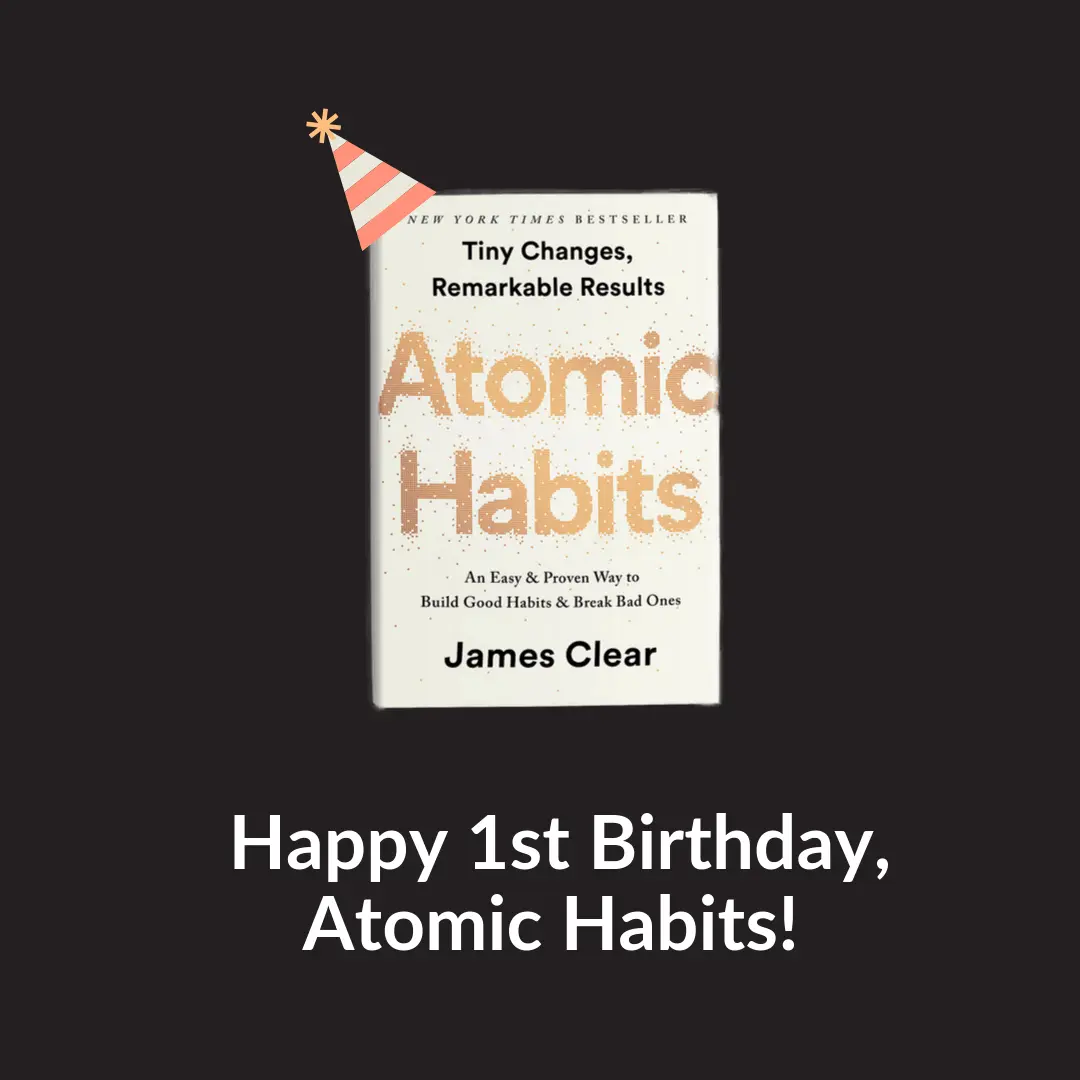
One year ago, the self-improvement landscape was permanently altered by the publication of Atomic Habits: An Easy & Proven Way to Build Good Habits & Break Bad Ones by James Clear. What began as a meticulous distillation of behavioral psychology, neuroscience, and personal experimentation rapidly evolved into a global publishing phenomenon. Today, as the title marks its official one-year anniversary, it stands not merely as a bestseller, but as a cultural touchstone that has redefined how millions of individuals approach personal growth, professional productivity, and behavioral modification.
To commemorate this significant milestone, author James Clear has rolled out a comprehensive anniversary campaign designed to give back to the readership that propelled the book to international acclaim. Eschewing traditional, self-congratulatory retrospectives, Clear has structured this anniversary around tangible value for his audience. The celebration features three distinct offerings: a substantial, limited-time price reduction on both hardcover and audiobook editions across major retailers like Amazon and Audible; an exclusive, hour-long deep-dive interview with renowned productivity expert and author Cal Newport; and a curated "Birthday Bundle" developed in partnership with premium stationery brand Baron Fig, anchored by the popular Clear Habit Journal.
This retrospective analyzes the journey of Atomic Habits over its inaugural twelve months, exploring the psychological mechanisms that made its core tenets so resonant, the broader cultural context of the productivity literature market, and the forward-looking strategies Clear is employing to maintain momentum in an increasingly crowded self-improvement ecosystem. By examining the convergence of practical systems-thinking, strategic digital marketing, and authentic community engagement, this report details how Atomic Habits transitioned from a promising manuscript into an enduring blueprint for human behavior.
Detailed Chronology: The First Year of Atomic Habits
The trajectory of Atomic Habits over the past twelve months can be traced as a masterclass in modern book marketing, sustained reader engagement, and organic word-of-mouth momentum. Understanding the timeline of its first year illuminates how contemporary non-fiction literature achieves enduring relevance in a fast-paced media environment.
Phase One: The Launch and Initial Surge (Months 1–3)
When Atomic Habits hit bookshelves and digital platforms twelve months ago, it entered a saturated market flooded with quick-fix guides and superficial motivational tracts. However, Clear’s unique value proposition—shifting the focus from monumental goal-setting to the compounding effect of tiny, incremental behavioral adjustments—immediately set the work apart.
During the initial three months, the book leveraged Clear’s already substantial digital footprint, including his widely read weekly newsletter. By offering actionable frameworks rather than abstract theories, the book quickly captured the attention of early adopters in the tech, entrepreneurship, and academic sectors. Bookstores reported consistent restocks, and early reviews praised the accessibility of concepts like the "Four Laws of Behavior Change" (Make it obvious, make it attractive, make it easy, and make it satisfying).
Phase Two: Mainstream Penetration and Global Scaling (Months 4–8)
As the months progressed, the growth curve transitioned from an initial launch spike to a steady, upward trajectory driven entirely by organic word-of-mouth. Readers began sharing their highlighted passages, habit trackers, and personal transformations across social media platforms such as LinkedIn, Twitter, and Instagram.
During this middle phase, Atomic Habits entrenched itself firmly on major bestseller lists, including The New York Times, The Wall Street Journal, and USA Today. Corporations, athletic organizations, and educational institutions began adopting the book’s principles for team-building and professional development workshops. The democratization of the book’s core message—that you do not rise to the level of your goals, but fall to the level of your systems—resounded deeply with a public exhausted by hustle culture and seeking sustainable, evidence-based methods for self-improvement.
Phase Three: Institutionalization and Anniversary Commemoration (Months 9–12)
Entering the final quarter of its first year, Atomic Habits achieved the rare status of a modern classic—a book recommended as readily by corporate executives as by therapists, educators, and fitness coaches. Recognizing the magnitude of this milestone, Clear began conceptualizing an anniversary strategy that would honor his audience rather than simply market to them.
The culmination of this planning manifested in the anniversary announcement released today. By bundling economic accessibility (the price drop), intellectual enrichment (the Cal Newport collaboration), and tactile utility (the Baron Fig partnership), Clear reinforced the core philosophy of his work: providing actionable systems that make positive change as frictionless as possible.
Supporting Context & Metrics: The Science and Strategy of Habit Formation
To fully appreciate the impact of Atomic Habits, one must examine the underlying mechanics that drove its reception. The book’s success is not an accident of timing; it is the result of a rigorous synthesis of established behavioral science translated into accessible, everyday language.
The Mathematics of Marginal Gains
At the heart of Clear’s thesis is the concept of 1% improvements. Mathematically, if you get 1% better each day for one year, you will end up thirty-seven times better by the time you’re done. Conversely, if you get 1% worse each day for a year, your decline will culminate near zero. This visualization provided readers with a comforting yet demanding paradigm shift: monumental success is not the result of radical, overnight transformation, but the compound interest of daily habits.
Visualizing the Compound Effect:
Day 1:   1.01^1   = 1.01
Day 30:  1.01^30  = 1.34  (34% improvement)
Day 180: 1.01^180 = 5.99  (Nearly 6x improvement)
Day 365: 1.01^365 = 37.78 (Over 37x improvement)
In an era defined by instant gratification, Clear’s emphasis on patience, systems over goals, and identity-based habits ("Every action you take is a vote for the type of person you wish to become") struck a profound chord. It offered an antidote to burnout culture, validating the quiet, unglamorous work of consistent execution.
Market Integration and Ecosystem Building
Beyond the pages of the hardcover edition, the Atomic Habits ecosystem expanded dynamically over the past year. The audiobook edition, narrated by the author himself, became a staple for commuters and fitness enthusiasts, reinforcing the material through auditory reinforcement.
Furthermore, the integration of physical tools—such as the aforementioned collaboration with Baron Fig—bridged the gap between digital theory and physical execution. The Clear Habit Journal allowed readers to actively track their behaviors, implementing the "Habit Stacking" and "Implementation Intentions" frameworks outlined in the text. This multi-channel approach transformed passive reading into an active, participatory lifestyle choice.
Official Statements and Collaborative Insights: The Cal Newport Dialogue
A cornerstone of the one-year anniversary celebration is the special, hour-long discussion recorded between James Clear and Cal Newport. Newport, a computer science professor at Georgetown University and the bestselling author of Deep Work, Digital Minimalism, and So Good They Can’t Ignore You, represents an ideal intellectual counterpart to Clear.
Bridging Focus and Habitual Execution
While Atomic Habits provides the framework for how to build sustainable behavioral routines, Newport’s work explores what deep, meaningful efforts those routines should be directed toward. Readers and critics alike have long noted the symbiotic relationship between their respective bibliographies.
In their anniversary discussion, Clear and Newport dissected several critical intersections of modern productivity:
- The Attention Economy: How individuals can reclaim their cognitive bandwidth from the relentless intrusion of digital distractions and algorithmic notifications.
- The Architecture of Deep Work: Practical strategies for transitioning from superficial, reactive task management to sustained, high-value cognitive output.
- Systemizing Ambition: Moving past willpower-dependent productivity by embedding deep work rituals directly into daily habit loops.
This conversation, made available to readers as part of the anniversary rollout, serves as an intellectual masterclass, elevating the anniversary from a commercial promotion to a substantive contribution to the discourse on human effectiveness.
Future Outlook: Sustaining Momentum in an Evolving Landscape
As Atomic Habits enters its second year of publication, the natural question facing its author and the broader personal development industry is one of sustainability and expansion. How does a foundational text maintain its relevance and drive continued innovation in an era of rapid technological and cultural shifts?
Deepening the Community and Digital Reach
James Clear’s primary vehicle for ongoing engagement remains his weekly email newsletter, a digital community that now boasts over three million active subscribers. The newsletter—famously structured around three short ideas from Clear, two quotes from others, and one question to ponder—acts as an ongoing laboratory for new ideas, case studies, and behavioral insights.
By maintaining a direct, spam-free line of communication with millions of readers, Clear has insulated himself from the shifting whims of social media algorithms. This direct-to-consumer model ensures that future projects, articles, and curriculum expansions will find an immediate, highly engaged audience.
The Evolution of Behavioral Design in the Workplace
Looking forward, the principles codified in Atomic Habits are increasingly finding a home in institutional settings. Organizations, healthcare providers, and educational institutions are moving away from traditional, punitive compliance models toward behavioral design frameworks rooted in Clear’s work.
Future initiatives are expected to explore how institutional environments can be engineered to make healthy, productive behaviors the default choice for employees and students alike. By shifting the focus from individual moral failing to environmental design ("Make it easy"), the philosophy of Atomic Habits is poised to influence human resources and corporate culture design significantly over the coming decade.
Conclusion
The one-year anniversary of Atomic Habits marks more than a publishing milestone; it celebrates a cultural shift toward sustainable, systems-based self-improvement. Through a combination of rigorous behavioral science, accessible frameworks, and an anniversary campaign prioritizing reader value—highlighted by price accommodations, the Cal Newport dialogue, and physical productivity tools—James Clear has reinforced the foundational ethos of his work: that true change is the byproduct of daily, compounding choices.
As millions of readers continue to integrate these lessons into their professional and personal lives, Atomic Habits solidifies its place as an indispensable guide for the modern era. For those yet to begin their journey, or for seasoned practitioners looking to refine their systems, the anniversary offerings provide an ideal entry point into a philosophy that proves small changes truly can yield remarkable results.
To explore the anniversary offerings, secure a discounted copy of the hardcover or audiobook, listen to the exclusive interview with Cal Newport, or discover the Baron Fig "Birthday Bundle," readers can visit official retail channels or join James Clear’s weekly newsletter community of over three million subscribers.