

Executive Overview
In the modern marketing ecosystem, fragmentation has quietly become the silent killer of brand equity. As media channels multiply, consumer attention fractures, and data streams isolate themselves into impenetrable corporate silos, CMOs face an unprecedented operational paradox. They possess more data than ever before, yet they struggle to craft a unified, resonant brand narrative.
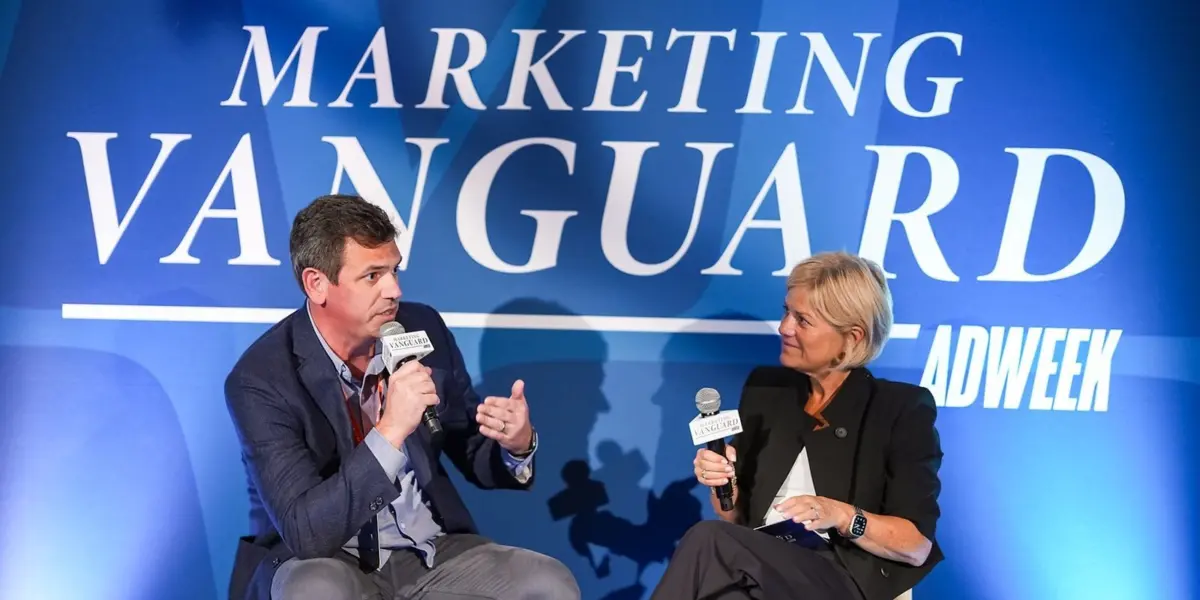
At ADWEEK’s Brandweek 2026 in Atlanta, Georgia, Bruce Williams, CEO of Dentsu X North America, took center stage to address this very crisis. Speaking during a high-profile session titled "Media As a Flywheel For Growth"—hosted by ADWEEK chief brand and community officer Jenny Rooney—Williams laid bare the structural inefficiencies plaguing contemporary media buying. His core thesis is both a diagnosis and a prescription: the traditional practice of "experience planning," which relies on stitching together media, data, content, and technology in isolated departments, is obsolete.
Instead, Williams champions a radical pivot toward "experience platforming." This strategic framework tears down internal walls, integrates multidisciplinary teams, and transforms media from a mere transactional purchase into a dynamic, self-sustaining flywheel that drives consumer engagement and commercial growth. By examining real-world executions, such as Dentsu X’s transformative work with global beverage giant Heineken, this article explores how modern agencies and brands are dismantling organizational silos to build scalable, hyper-localized, and bidirectional marketing ecosystems.
Detailed Chronology: The Brandweek 2026 Disclosures
The discourse surrounding media fragmentation reached a boiling point during the Atlanta gathering, setting the tone for the future of enterprise marketing strategy.
The Opening Salvo: Identifying the Fragmentation Trap
The session opened with Jenny Rooney probing the fundamental disconnects that continue to plague modern brand strategies. As brands scramble to maintain relevance across CTV, social commerce, retail media networks, and spatial computing environments, their operational structures have frequently failed to keep pace.
Williams articulated the daily reality for major advertisers: agencies and brand marketing teams operating in parallel universes. Media buyers often speak a different language than data scientists, who in turn operate independently from creative teams and tech integrators. This departmental isolation creates consumer experiences that feel disjointed, episodic, and transactional rather than relational.
According to Williams, solving this fracture is not merely an operational convenience; it is the single most critical prerequisite for delivering connected marketing experiences. When media, data, and content function in harmony, every consumer touchpoint acts as a positive reinforcement of the brand’s core value proposition.
Moving Beyond "Experience Planning"
A pivotal moment in the session arrived when Williams deconstructed the industry-standard term "experience planning." For years, holding companies and independent agencies have touted their prowess in crafting omnichannel journeys by stitching together disparate assets.
Williams challenged the industry to look closer at this methodology, arguing that traditional experience planning is fundamentally flawed because it is inherently siloed. Under the legacy model, a strategy is formulated at the top, handed off to a media planning team, adapted by a creative agency, and executed through separate technological conduits. By the time these elements reach the end consumer, the friction of the handoffs has diluted the campaign’s impact.
The Advent of "Experience Platforming"
To counteract the diminishing returns of traditional planning, Williams introduced the audience to "experience platforming."
Unlike planning—which implies a linear, project-based approach—platforming is structural, systemic, and continuous. It requires melding teams and capabilities so that they operate not as distinct business units, but as a unified organism. In an experience platform, the media buyer, the data analyst, the creative director, and the technologist sit at the same virtual or physical table from day one. They co-create campaigns designed to function as living, breathing ecosystems where every component reacts dynamically to consumer behavior in real time.
Supporting Context & Metrics: The Mechanics of the Growth Flywheel
To truly understand why Williams’ framework is gaining traction across the Fortune 500 landscape, one must analyze the macroeconomic and consumer trends driving modern media consumption.
The Cost of Complexity
Industry benchmarks indicate that enterprise brands continue to waste staggering percentages of their media budgets due to operational friction, overlapping targeting, and fragmented attribution models. When media buying occurs in a silo separate from retail data or local market intelligence, ad impressions are squandered on audiences that have either already converted or live outside the operational footprint of the product.
Furthermore, consumer expectations have evolved past mere personalization; consumers now demand contextual relevance and seamless brand interactions. A consumer who clicks on a targeted social ad expects the landing page, the mobile checkout, and the in-store pickup experience to reflect that initial engagement seamlessly. When organizational silos prevent these systems from communicating, the illusion of the brand breaks down, leading directly to customer churn.
Media as a Central Gateway
Williams emphasized that media can no longer be viewed as the final step in a linear marketing funnel—a mere vehicle to push messages out to passive audiences. Instead, media must occupy the absolute center of the brand and consumer experience.
By acting as a gateway to cross-channel innovation, media captures real-time intent signals, sentiment data, and transactional velocity. When fed back into the broader enterprise, these insights transform media into a literal flywheel: momentum builds upon momentum, with every campaign iteration generating proprietary data that refines future activations, lowers customer acquisition costs, and scales revenue sustainably.
Official Statements & Case Studies: The Heineken Blueprint
Theoretical frameworks are only as valuable as their practical applications. To demonstrate the efficacy of experience platforming, Williams highlighted Dentsu X’s ongoing collaboration with Heineken, showcasing how systemic integration translates into tangible market wins.
Bridging the Agency-Brand Divide
In the case of Heineken, Dentsu X helped architect a sophisticated operational framework designed to dismantle the traditional walls separating global strategy from local market execution. Rather than operating in a top-down, unidirectional mandate where a global headquarters dictates terms to regional markets, Heineken established systems capable of bidirectional communication.
This bidirectional architecture allows insights to flow freely from the agency to the brand, from local markets back to global strategists, and horizontally across disparate regional divisions. The results redefined how the beverage giant approaches go-to-market strategies.
Triangulating Data for Hyper-Local Scale
The true brilliance of the Heineken implementation lay in its data synthesis. Dentsu X integrated three distinct data pillars into a single operational dashboard:
- Competitive Data: Real-time share-of-voice and market-share intelligence across regional battlegrounds.
- Store Data: Inventory levels, point-of-sale velocity, and distribution footprints.
- Local Market Intelligence: Cultural nuances, regional event calendars, and localized consumer preferences.
By melding these streams, Heineken empowered local teams—from regional marketing directors down to individual store operators and franchisees—to make autonomous, data-driven decisions. The central strategy provided the guardrails and the scale, while local stakeholders retained the agility to execute activations tailored precisely to their immediate environments.
The Multi-Endpoint Return
The outcomes of this go-to-market plan did not simply benefit the central corporate balance sheet. Because the ecosystem was designed for bidirectional feedback, the rewards cascaded across every single endpoint in the distribution chain.
- Franchisees saw improved localized foot traffic driven by precision digital media.
- Stores optimized inventory management in anticipation of localized campaign spikes.
- Stakeholders enjoyed enhanced transparency, attribution clarity, and capital efficiency.
- Divisions across different geographic regions shared best practices instantly, eliminating redundant spending.
Reflecting on this execution, Williams encapsulated the dual mandate of modern leadership:
"It’s just different ways in which we can think about using scale solutions and point ourselves to, ‘How are we building for that?’ But also be scrappier and nimbler."
This quote captures the essence of enterprise agility in 2026: leveraging global enterprise scale while retaining the entrepreneurial scrappiness of a local startup.
Future Outlook: The Next Era of Connected Marketing
As we look toward the remainder of the decade, the principles articulated by Bruce Williams at Brandweek 2026 will undoubtedly serve as a North Star for forward-thinking marketing organizations.
The Death of the Traditional Agency Model
The era of the isolated agency roster—where a brand hires a creative agency, a separate media shop, a PR firm, and a data consultancy, leaving the CMO to act as an exhausted general contractor—is drawing to a close. Brands are increasingly demanding integrated, platform-based solutions where accountability is shared and multidisciplinary teams operate under a single, unified vision.
Leaders like Dentsu X are proving that structural reorganization is not an administrative burden, but a primary competitive differentiator. By treating media as a growth flywheel rather than an execution checkbox, agencies can unlock exponential value for their clients.
Imperatives for CMOs and Brand Leaders
For executives looking to future-proof their operations in the wake of the Atlanta summit, several key takeaways emerge:
- Audit Internal Silos: Identify where data, creative, and media teams are operating in isolation, and actively construct pathways for cross-functional collaboration.
- Embrace Experience Platforming: Move away from episodic, campaign-based stitching of assets and build permanent, systemic integration models that scale across regions and channels.
- Empower Local Agility: Utilize global data platforms to inform decision-making, but ensure that regional stakeholders, franchisees, and local markets have the autonomy to execute with nimbleness.
In a hyper-fragmented media landscape where consumer loyalty is fiercely contested, the brands that survive and thrive will not be those with the biggest budgets, but those with the most integrated, cohesive, and agile ecosystems. Through visionary leadership and systemic execution, Dentsu X and Bruce Williams are charting the course for what the next generation of brand growth truly looks like.