In an online landscape saturated with generic content, text-based customer acquisition remains a primary driver of digital commerce. However, an industry-wide transition is underway: digital marketers and agency leaders are shifting focus away from traditional, stylistic prose toward targeted direct-response copywriting engineered specifically for conversion and return on investment (ROI).
Data from top-performing digital agencies and educational platforms—including standard-bearers like Copyblogger—indicates that written channels such as long-form blogs, strategic email sequences, and platform-specific social posts continue to generate seven-figure bottom lines. The differentiator separating high-earning operators from unprofitable writers lies in the operational execution of customer research, competitive intelligence, data attribution, and targeted AI augmentation.
This report presents an in-depth analysis of the core methodologies powering high-conversion copywriting today. By examining established direct-response principles alongside modern execution tactics—ranging from ad library analytics and qualitative sentiment mining on Reddit to advanced prompt engineering for research—this overview outlines the exact systems required to turn written content into a scalable business growth asset.
Detailed Chronology: The Evolution of a High-Conversion Copywriting Framework
Developing effective conversion copy is an iterative, systematic process rather than a purely creative endeavor. The operational timeline of a high-converting campaign can be broken down into four distinct phases: research gathering, competitive analysis, workflow execution, and practical application.
Phase 1: Audience Mining and Qualitative Data Extraction
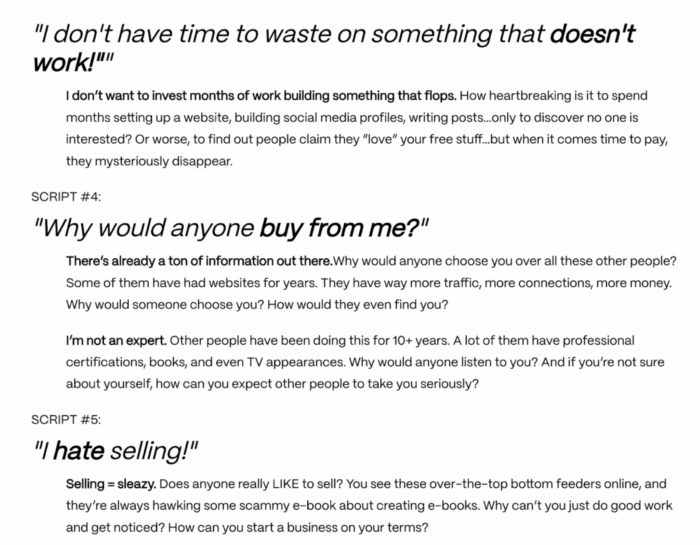
The foundation of effective copywriting rests on reflecting the target customer’s reality back to them. Rather than relying on assumptions, direct-response copywriters gather raw qualitative data to identify precise pain points, hidden objections, and natural customer syntax.
Sales Representative Interviews & Call Transcripts: Copywriters analyze sales team interactions or run recorded sales transcripts through Large Language Models (LLMs) like ChatGPT to categorize recurring objections and primary purchasing triggers.
Community Sentiment Scraping: Unfiltered customer discussions across platforms such as Reddit and Facebook groups provide valuable feedback on consumer frustrations. In the health and wellness sector, for example, thread discussions reveal the real-world obstacles behind weight-loss programs, equipping writers with authentic customer language.
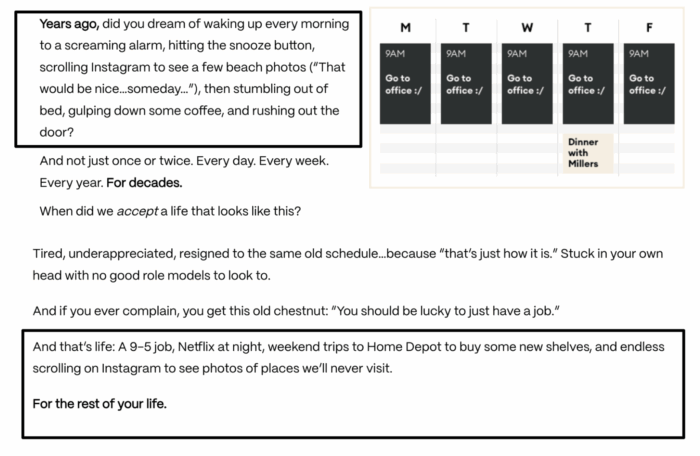
Psychological Mirroring: High-converting landing pages—such as Ramit Sethi’s Earnable platform—succeed by mirroring the user’s daily reality. Rather than relying on generic statements like "Make more money," the copy highlights specific daily experiences: working a 9-to-5 job, unwinding with streaming media, running weekend hardware errands, or scrolling through social feeds.
Phase 2: Competitive Intelligence and Swipe File Architecture
Top-performing digital campaigns rarely begin entirely from scratch. Instead, experienced copywriters analyze verified market successes to reduce testing cycles and risk.
  +--------------------------------------------------------------------------+
  |                   Competitive Intelligence Pipeline                      |
  +--------------------------------------------------------------------------+
  |  1. Meta & LinkedIn Ad Libraries                                         |
  |     └─ Target competitors; filter for longest-running campaigns.       |
  |                                                                          |
  |  2. Active Pain Point Identification                                     |
  |     ├─ Example A: Synthesia -> Highlights video shoot coordination pain. |
  |     └─ Example B: Close CRM -> Highlights lost deals due to messy data.  |
  |                                                                          |
  |  3. Curated Archiving (Swipe Files)                                      |
  |     └─ Store structural blueprints; reference databases like SwipeFile.com|
  +--------------------------------------------------------------------------+
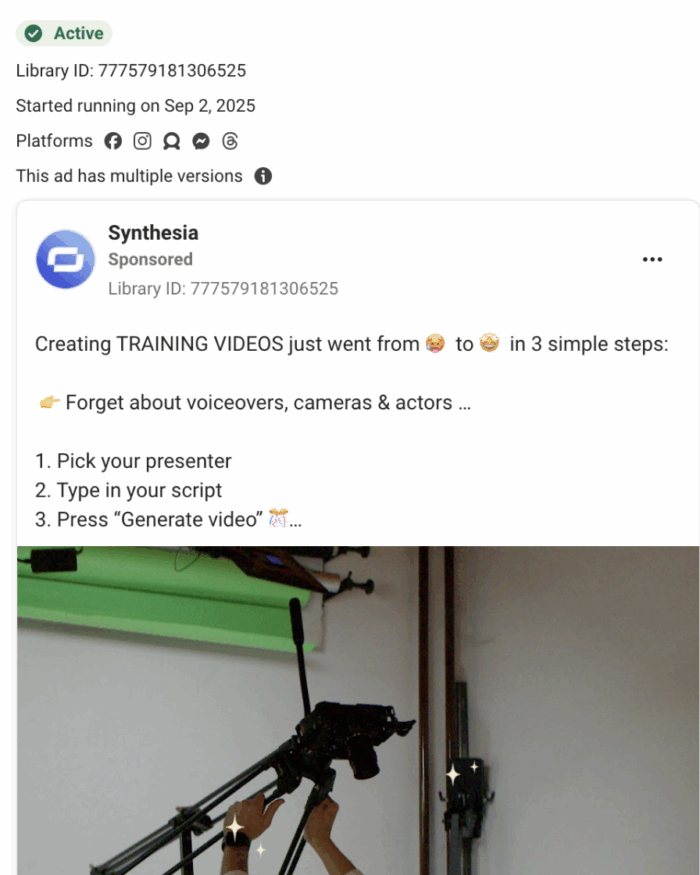
Ad Library Analytics: Utilizing the Meta Ad Library and LinkedIn Ad Library allows marketers to audit active competitor campaigns. The duration an ad stays active typically correlates with its profitability. For instance, AI video generator Synthesia ran ad campaigns focused on eliminating the hassle of live video shoots, confirming this as a primary pain point.
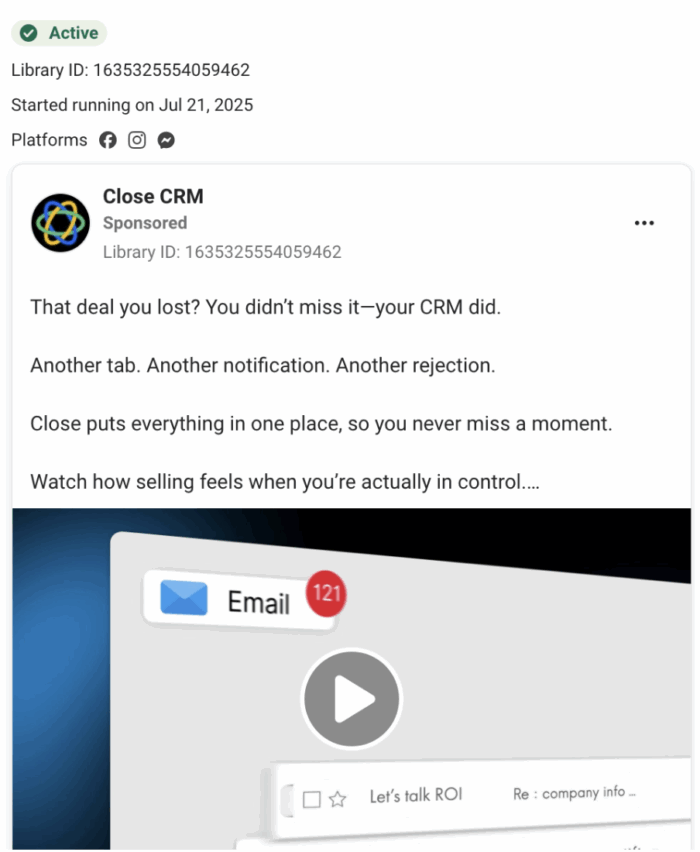
Isolating Unspoken Frustrations: Analysis of sales tool campaigns, such as those by Close CRM or HubSpot, reveals that messy data is rarely just an organizational headache—it leads directly to lost deals caused by account distraction.
Swipe File Architecture: Maintaining an organized archive of successful headlines, email sequences, and offer structures provides a reliable blueprint for new campaigns. Industry databases like Neville Medhora’s SwipeFile.com serve as useful benchmarks for proven marketing copy.
Phase 3: Process-Driven Drafting and Structured Workflows
To maintain quality and avoid writer’s block, professional copywriters rely on standardized production processes.
Structural Outlining: Before writing prose, the author maps out the core narrative: key pain points, product benefits, objection-handling scripts, and strategic call-to-action (CTA) placements.
Uninterrupted Drafting: The first draft focuses on structural sequence and message momentum, setting aside editing until the narrative is fully established.
Refinement and Polish: Final edits focus on conciseness, visual hierarchy (using short paragraphs and subheadings), and eliminating unnecessary language.
Phase 4: Intent-Based Practical Application
Copywriting skills develop faster when tested on live commercial projects where traffic performance can be directly measured.
Self-Owned Digital Assets: Developing personal authority profiles on LinkedIn or launching affiliate marketing blogs offers immediate feedback on headline performance and conversion design.
Targeting Search Intent Over Raw Volume: The value of intent-driven content is demonstrated by niche e-commerce projects. For instance, an educational content campaign focused on repairing cuckoo clocks generated calls from motivated service leads rather than casual buyers. This demonstrated that lower-volume, high-intent topics yield significantly higher conversions than broad, informative keywords.
Micro-SaaS and Vibe Coding: Modern copywriters frequently launch custom micro-tools using AI platforms like Lovable, allowing them to write and test full-funnel sales copy for dedicated SaaS products.
Supporting Context & Metrics: Measuring True Conversion Value
Evaluating copy based on artistic quality or subjective preference often leads to inconsistent marketing results. High-performing copywriters rely on concrete analytics to judge effectiveness and refine messaging.
+-----------------------------------------------------------------------+
|                    Metrics Evaluation Paradigm                        |
+-----------------------------------------------------------------------+
|  CHANNEL               SURFACE METRIC         REVENUE METRIC          |
|  -------------------------------------------------------------------  |
|  LinkedIn / X          Total Likes/Shares     Buyer ICP Comments &    |
|                                               Attributed Form Inquiries|
|                                                                       |
|  SEO Blog Posts        Raw Page Traffic       GA4 Goal Conversions &  |
|                                               Qualified Sales Leads   |
|                                                                       |
|  Sales Pages / Email   Open / Click Rates     Direct Offer Conversions|
|  Funnels                                      & Lifetime Value (LTV)  |
+-----------------------------------------------------------------------+
Vanity Metrics vs. Monetization Indicators
Social Platform Ghostwriting (LinkedIn / X): High engagement numbers can easily mask weak commercial performance. A post that attracts hundreds of likes from junior employees yields minimal business value if the target audience is enterprise decision-makers. Conversion-focused writers track qualified interactions—evaluating whether commentators match the target buyer persona—and utilize post-conversion survey fields such as "How did you hear about us?" to track incoming revenue.
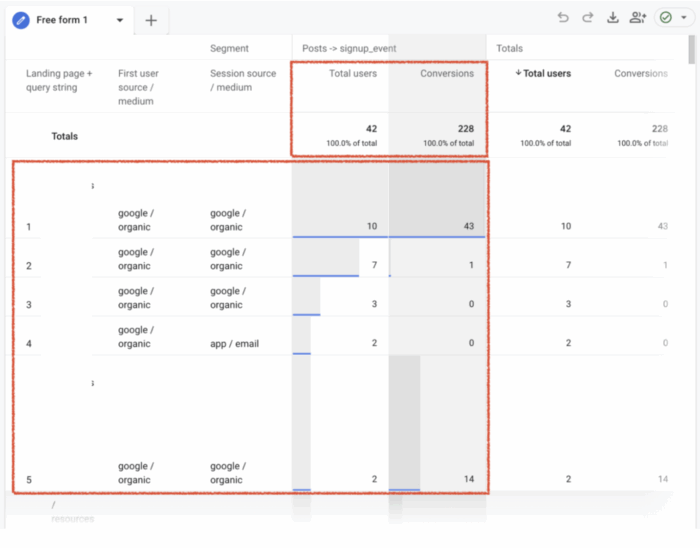
SEO Blog Content: Large spikes in general web traffic rarely guarantee bottom-line growth. For instance, an enterprise cybersecurity company publishing career advice for students may see elevated traffic figures without generating pipeline revenue. High-converting content systems use custom event tracking within Google Analytics 4 (GA4) to tie specific articles directly to lead submissions, free trial signups, and booked consultations.
AI Augmentation as a Tactical Force Multiplier
Rather than delegating narrative strategy entirely to artificial intelligence, direct-response copywriters use LLMs as analytical tools within their research workflows.
+-----------------------------------------------------------------------+
|                      AI Augmentation Matrix                           |
+-----------------------------------------------------------------------+
|  USE CASE              PROMPT OBJECTIVE       MARKETING OUTPUT        |
|  -------------------------------------------------------------------  |
|  Pain Point Mining     Synthesize sentiment   Identifies specific     |
|                        from unstructured text buyer friction points   |
|                        or customer threads.   and objections.         |
|                                                                       |
|  Sentence Clarity      Request structural     Removes wordiness and   |
|                        rephrasing for flow.   enhances readability.   |
|                                                                       |
|  Expert Source         Search social feeds    Gathers authentic,      |
|  Discovery             for subject quotes and contextual quotes and   |
|                        field insights.        real-world examples.    |
+-----------------------------------------------------------------------+
Extracting Latent Friction Points: Prompts designed to analyze unstructured text identify key customer fears, hesitation triggers, and objections across niche demographics.
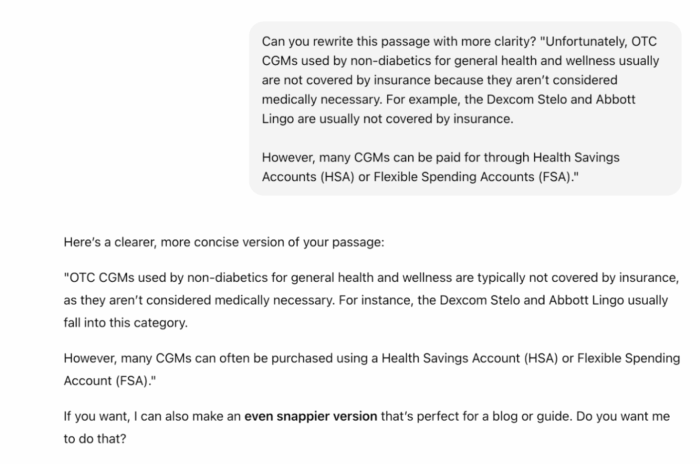
Improving Sentence Clarity: When refining a complex point, writers use targeted prompts like "Rewrite this passage for maximum clarity and concise structure" to discover fresh phrasing options while keeping the core message intact.
Uncovering Field Insights: Instead of relying on generic statements, writers leverage AI search routines to source expert commentary across professional networks like LinkedIn, weaving real-world perspective directly into the narrative.
Official Statements and Industry Insights
Direct-response copywriters, agency executives, and digital investors agree that clarity, audience alignment, and disciplined execution form the backbone of high-converting content strategy.
On the Strategic Intent of Copywriting: "Becoming a better copywriter doesn’t mean you write more eloquently. In fact, the opposite is often true. Great copywriters are clear, concise, and ultimately convert readers into customers. So instead of focusing on improving the craft of writing more eloquently, focus on how to generate more revenue from your words."
— Copyblogger Leadership
On Customer Alignment and Pain Point Mapping: "The more precisely you can paint the picture of your prospect’s reality, the more effective you’ll be at converting them because you’re illustrating that this product is specifically designed for them."
— Ramit Sethi, Author and Founder of I Will Teach You To Be Rich
On Long-Term Execution and Persistence: "Be impatient with action, and patient with results."
— Naval Ravikant, Entrepreneur and Investor
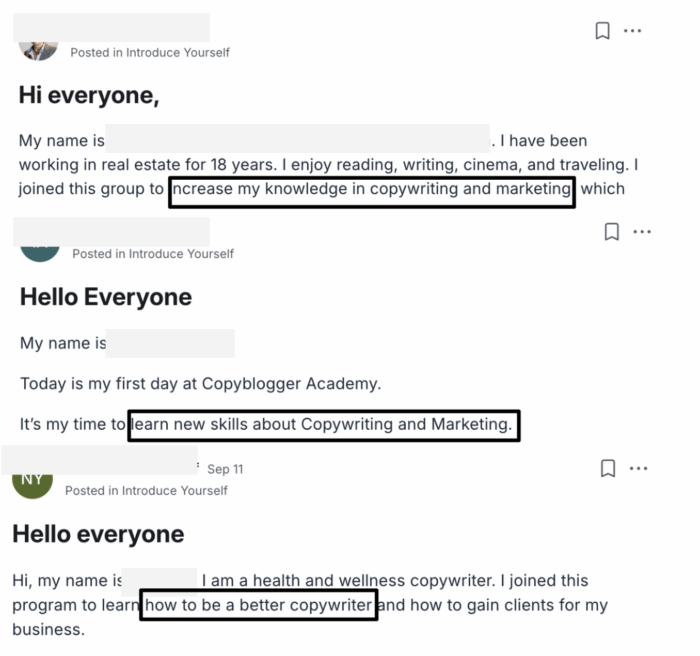
On Peer Community and Feedback Loops: "Learning from other people’s mistakes is much less painful and speeds up your growth tremendously… You need to leverage a community to drop your copywriting in the chat and receive direct, experienced feedback."
— Charles Miller, Seven-Figure Brand Strategist and Copyblogger Academy Partner
Future Outlook: Trends Reshaping Digital Copywriting
As platform algorithms, AI toolsets, and consumer habits evolve, several emerging trends will shape the next generation of text-based customer acquisition:
+-----------------------------------------------------------------------+
|                     Emerging Industry Trends                          |
+-----------------------------------------------------------------------+
|  1. Platform Specialization                                           |
|     - Deep technical expertise tailored to individual algorithms      |
|       (e.g., LinkedIn thought leadership vs. Google SEO).             |
|                                                                       |
|  2. Technical Hybrid Capabilities                                     |
|     - Combining persuasive writing with rapid prototyping tools       |
|       (e.g., vibe coding micro-tools with platform like Lovable).     |
|                                                                       |
|  3. Verified Performance Attribution                                  |
|     - Shift from tracking impressions/traffic to measuring full-funnel  |
|       pipeline revenue using advanced GA4 event setups.               |
|                                                                       |
|  4. Elite Peer Feedback Networks                                      |
|     - Human verification communities safeguarding brands against       |
|       generic, low-quality automated AI output.                       |
+-----------------------------------------------------------------------+
1. Specialization Over Generalization
The era of the generalist writer is declining. Modern brands require deep technical expertise tailored to specific distribution engines. Ghostwriters specializing in B2B platforms like LinkedIn must understand algorithmic engagement dynamics, whereas SEO strategists must master technical search intent, semantic indexing, and conversion tracking.
2. Hybrid Technical Capabilities
The modern copywriter’s toolkit is expanding beyond simple word processors. With the rise of "vibe coding" and accessible development environments, writers can rapidly prototype tools, interactive quizzes, and micro-applications to capture high-intent leads. Combining persuasive writing with software creation creates significant marketplace leverage.
3. Demand for Verified Attribution
As client budgets tighten, copywriters will face increasing pressure to prove the financial impact of their work. Agencies that construct end-to-end analytics pipelines—linking initial text touchpoints directly to pipeline value—will command higher retainers than those selling content based on volume alone.
4. Human Curation and Collaborative Feedback
As automated tools generate vast amounts of low-quality generic content, authentic voice, expert commentary, and sharp research become key differentiators. Educational programs and peer review networks like Copyblogger Academy serve an important validating role: offering human feedback, qualitative critique, and real-world testing to ensure written copy continues to drive measurable sales growth.