In the fast-evolving ecosystem of digital marketing, organic search visibility remains a critical pillar for sustainable business growth. As search engine algorithms become increasingly sophisticated, relying on intuition or rudimentary keyword tools is no longer a viable strategy for marketers, enterprises, or digital agencies. Precision, scale, and strategic depth are required to capture high-intent traffic.
At the forefront of this capability is Semrush, an industry-standard platform equipped with robust, integrated suites designed to demystify organic search performance. From uncovering low-hanging fruit within existing site architectures to executing sophisticated competitor gap analyses and automated topical clustering, Semrush offers a complete end-to-end framework.
This comprehensive masterclass explores advanced methodologies for leveraging Semrush’s core keyword research modules—specifically the SEO Toolkit, Keyword Magic Tool, Keyword Gap Tool, and Keyword Manager. By utilizing these powerful systems alongside structured operational templates, digital marketers can systematically scale their search footprint, identify immediate revenue opportunities, and build cohesive content strategies that resonate with search engine algorithms and human buyers alike.
Detailed Chronology: The Evolution of Keyword Research and Semrush’s Toolset
To understand the mechanics of modern keyword research, it is helpful to trace how discovery processes have shifted over the past decade.
The Early Era of Keyword Density (Pre-2012): Search engine optimization historically focused on exact-match keywords, heavy keyword stuffing, and superficial volume metrics. Marketers targeted broad head terms with little regard for search intent or user context.
The Rise of Semantic Search (2013–2018): Following core search engine updates (such as Google’s Hummingbird and RankBrain), search engines shifted toward natural language processing and intent matching. Tools like Semrush evolved rapidly, expanding their databases to capture long-tail variations, question-based queries, and semantic relationships.
The Age of Strategic Intelligence and Integration (2019–Present): Today, keyword research is inextricably linked with content architecture, topical authority, and competitive intelligence. Semrush integrated its disparate features into unified ecosystems, allowing users to move seamlessly from raw data extraction to keyword management, rank tracking, and on-page optimization within a single workspace.
Core Modules of the Semrush Ecosystem
Modern Semrush infrastructure relies on several interconnected pillars:
Organic Research (Positions & Pages Reports): Analyzes domain visibility, identifying exact positions, historical ranking shifts, and URL-specific performance metrics.
Keyword Magic Tool: Accesses a massive multi-billion-keyword database, using advanced filtering modifiers, grouping capabilities, and search intent categorizations.
Keyword Gap Tool: Compares multiple competitor domains against a target site to expose missing, weak, shared, and unexploited keyword opportunities.
Keyword Manager: Automates the topical clustering process, organizing raw datasets into structured content hubs complete with volume, difficulty, and content reference data.
Supporting Context & Metrics: Methodologies and Practical Workflows
Executing high-level keyword research requires structured workflows tailored to specific business models—whether managing an established e-commerce brand, a local service-based firm, or an affiliate content site. Below is a detailed breakdown of core operational strategies.
When working with an established domain, the most efficient starting point is not finding new keywords, but capturing immediate upside from terms where the site already has a footprint.
Targeting Positions 4–15: Google’s first page (positions 1–10) captures the vast majority of organic traffic. Pages ranking between positions 4 and 15 are on the cusp of first-page dominance or high-impact upward movement.
Execution via Organic Research:
Navigate to the Semrush SEO Toolkit and open Organic Research >> Positions.
Apply advanced filters for Position (e.g., 4 to 15), Search Volume (e.g., min. 100 searches/month), and Keyword Difficulty (KD) to weed out hyper-competitive terms.
Save relevant terms into a dedicated segment labeled Existing to isolate them from new keyword targets.
Leveraging the External Spreadsheet Template
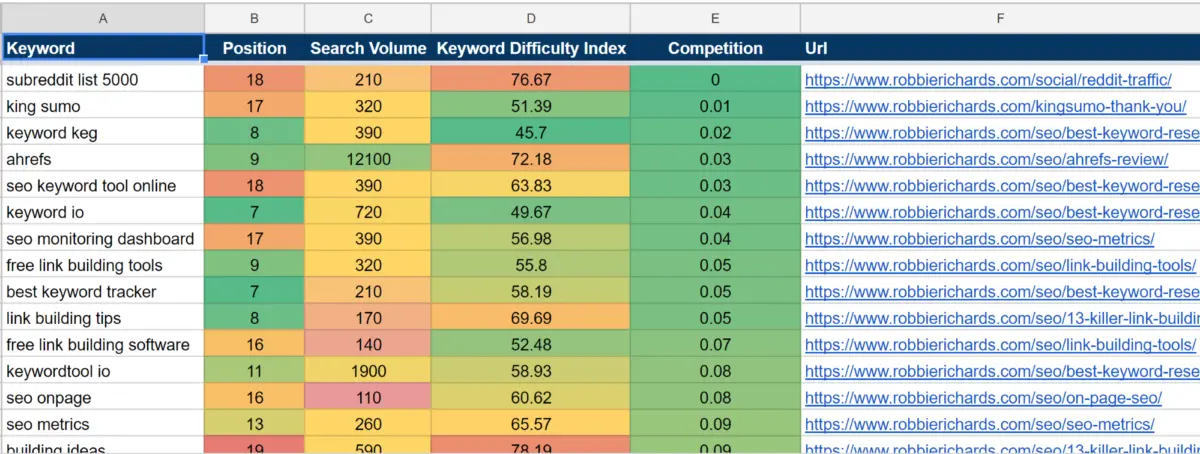
For teams preferring external analysis, exported CSV data can be integrated into an automated Google Sheets template. By pasting data for positions 4–15 into the template, conditional formatting automatically highlights high-volume, low-competition keywords, drastically reducing manual sorting time.
2. Advanced Competitor Keyword Research
Analyzing competitors uncovers proven, high-intent targets without requiring speculative brainstorming. Depending on the competitor’s site structure, several tactics can be deployed:
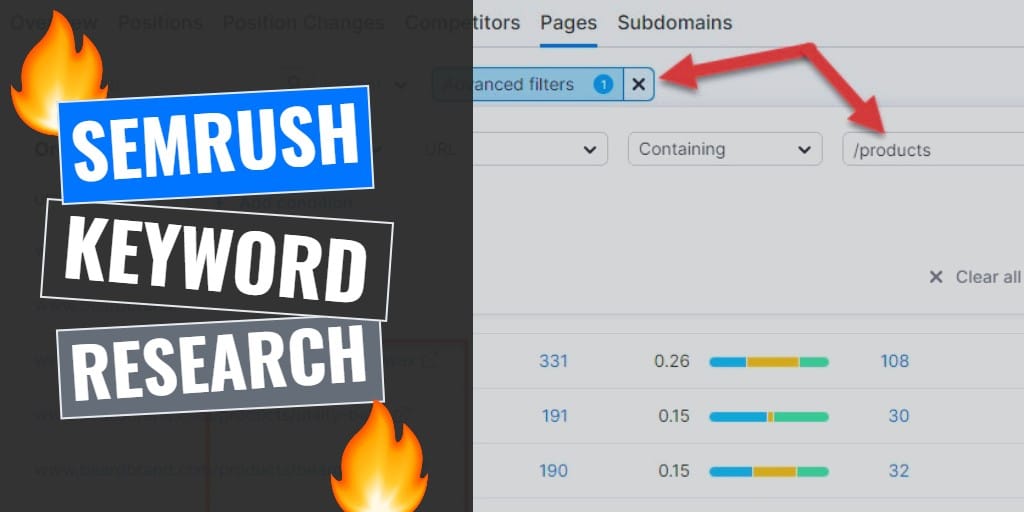
Subfolder and Subdirectory Analysis: E-commerce sites and service businesses often silo content. For example, analyzing an e-commerce competitor’s /products subfolder or a legal firm’s /legal-services subfolder isolates transactional pages directly tied to monetization. Filtering the Top Pages report by specific URL subfolders reveals the exact revenue-driving engines of competitor sites.
Keyword Modifiers for Affiliate and Service Monetization: When competitor sites lack clean subfolder structures, advanced text filters act as a scalpel. By applying modifiers like "best", "software", "review", or "vs" in organic research reports, marketers can extract mid-funnel buyer intent terms optimized for affiliate commissions or direct client acquisition.
3. Exhaustive Keyword Gap Analysis
The Semrush Keyword Gap Tool allows users to compare up to five competitor domains simultaneously against their own web property.
Missing Keywords: Exposes terms where all selected competitors rank in the top 100, but the target domain has zero visibility.
Weak Keywords: Highlights queries where the target domain ranks, but sits below the positions of competing sites—indicating a need for content optimization or architectural reinforcement.
PPC-Organic Gap Integration: A unique capability of Semrush is evaluating paid search metrics alongside organic performance. By identifying keywords that competitors are actively bidding on in paid search (signaling high commercial intent) but where the target site lacks top organic rankings, marketers can purchase "paid air cover" while optimizing their long-term organic strategies.
4. Topical Keyword Generation via the Keyword Magic Tool
With a database exceeding billions of terms, the Keyword Magic Tool acts as a foundational idea generator. By inputting seed terms and layering Intent filters (Navigational, Informational, Commercial, Transactional) and Grouping folders, users can drill down into specific buyer journey stages.
Comparison Terms: Targeting mid-funnel queries like “[Competitor] vs [Your Brand]” or alternative software evaluations captures users at the point of active decision-making, driving high-converting referral traffic.
Question-Based Research: Filtering for interrogative modifiers (how, what, why, best, can) surfaces low-competition informational queries ideal for building comprehensive FAQ sections or supporting blog articles.
5. Automated Topical Clustering with Keyword Manager
Publishing disjointed, single-keyword articles damages topical authority. Semrush’s Keyword Manager solves this by automating topical clustering.
Clustering From Scratch vs. Uploading Lists: Users can input seed terms or upload an unorganized list of hundreds of raw keywords. Semrush’s clustering algorithm groups them based on SERP overlap.
Content References and Mapping: When opening a generated cluster, marketers can review the Content References panel to see how competitors rank. This reveals whether a cluster requires a brand-new dedicated landing page or the optimization of an existing URL. Furthermore, flagged "high ranking potential" badges help prioritize content production queues.
Official Statements and Industry Insights
Top-tier search engine optimization experts and platform developers consistently emphasize the necessity of integrated, data-driven workflows. Industry consensus points out that modern search engines reward depth, context, and topical comprehensiveness over isolated keyword optimization.
"When executing enterprise-level SEO or scaling a digital asset, efficiency is everything. Fragmented tool stacks create operational friction. The true power of platforms like Semrush lies in their seamless ecosystem integration—allowing you to transition fluidly from raw keyword discovery and gap analysis to automated clustering, rank tracking, and on-page content production without missing a beat."
— Leading Enterprise SEO Strategists
By consolidating research, tracking, and content optimization into a single interface, marketing teams minimize data loss between applications and drastically accelerate their operational velocity.
Future Outlook
As the digital marketing landscape continues to mature, several emerging trends will shape the future of keyword research:
AI-Driven Search and Conversational Queries: With the integration of generative AI search features in major search engines, user queries are becoming longer, more conversational, and heavily contextual. Keyword research strategies must pivot toward comprehensive topical clusters and natural language phrasing rather than rigid string matches.
Hyper-Personalized Intent Modeling: Search engines are increasingly serving results based on granular user intent and localization. Advanced filtering tools that categorize search intent at scale will become indispensable for distinguishing between purely informational traffic and transactional conversions.
Unified Workflow Automation: The boundary between keyword research, content drafting, and performance tracking will continue to dissolve. Platforms that offer deeply integrated ecosystems—where a keyword list flows instantly into a content brief writer and subsequently into automated rank trackers—will dominate the martech space.
Conclusion and Next Steps
Mastering Semrush for keyword research transforms organic search from a guessing game into a predictable, scalable revenue channel. By systematically executing quick-win optimizations on existing content, mining competitor subfolders and keyword gaps, generating targeted topical ideas, and building cohesive content clusters, businesses of any size can capture sustainable market share.
Marketers looking to elevate their search strategy should leverage full-access evaluation options—such as a 14-day free trial of Semrush—to implement these advanced tactics directly within their own digital ecosystems.