

Executive Overview
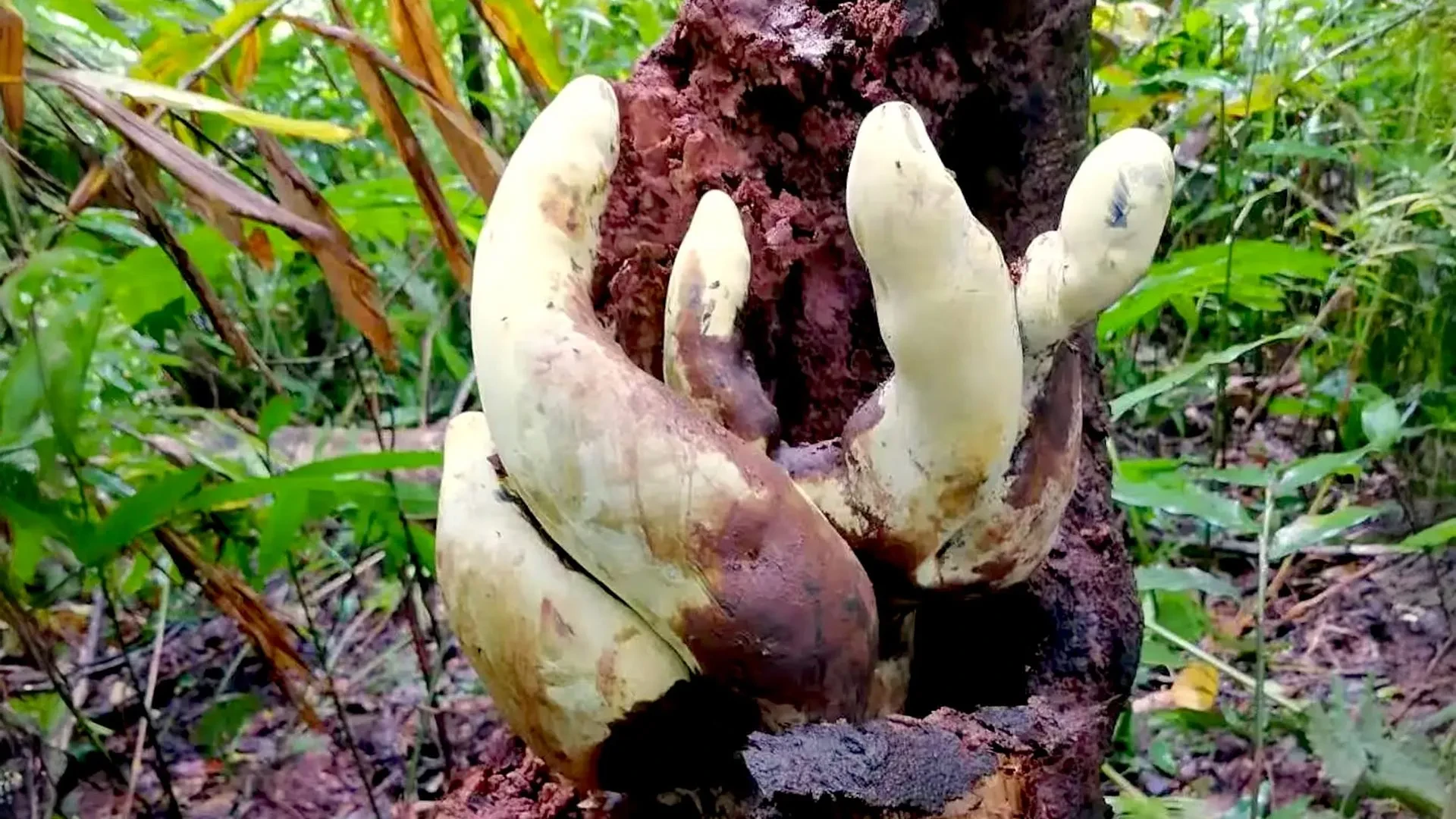
Deep within the biodiverse and mist-shrouded forests of China’s Yunnan province, an international team of mycologists has upended conventional botanical and ecological assumptions. Researchers from the Kunming Institute of Botany have formally identified and described an extraordinary new species of giant fungus that shatters existing records for its phylum. Named Dianjunus rex—and affectionately dubbed "D-rex" by its discoverers—this organism produces colossal, upright reproductive structures that tower up to 50 centimeters (20 inches) in height and tip the scales at an astonishing 2.2 kilograms (4.9 pounds).
To contextualize this discovery within the broader kingdom of fungi, D. rex belongs to the phylum Ascomycota, a massive and diverse lineage comprising over 64,000 recognized species. Unlike the familiar, umbrella-like basidiomycete mushrooms found sprouting from lawns and forest floors, ascomycetes typically produce microscopic, sac-like structures to house their spores. Prior to this finding, the tallest known fruiting bodies (known scientifically as stromata) within this phylum rarely exceeded 20 to 30 centimeters. By nearly doubling these measurements, Dianjunus rex stands alone as the undisputed heavyweight champion of the Ascomycota.
The implications of this discovery extend far beyond a mere entry into the record books. Comprehensive genetic sequencing, morphological analysis, and molecular clock dating have revealed that D. rex is so genetically distinct from all other known organisms that scientists had to establish an entirely new genus and a brand-new fungal family: Dianjunaceae (within the order Xylariales).
Most provocatively, evolutionary timelines place the genesis of the Dianjunaceae lineage at approximately 65 million years ago—right on the precipice of the Cretaceous-Paleogene mass extinction event that wiped out the non-avian dinosaurs. This temporal alignment suggests that the unprecedented ecological disruption and subsequent explosion of decaying organic matter following the asteroid impact may have acted as a crucible, driving the evolution of this colossal wood-decomposing titan. As scientists continue to comb the complex, rugged landscapes of East Asia, D. rex serves as a stark reminder of how little humanity truly understands about the hidden kingdoms operating beneath our feet.
Detailed Chronology
The journey to uncovering Dianjunus rex reads like a classic scientific expedition, unfolding across varied topographies, meticulous laboratory analyses, and rigorous phylogenetic comparisons.
Phase 1: Field Surveys in Yunnan Province
The discovery began during routine, wide-ranging ecological surveys conducted by researchers from the Kunming Institute of Botany. The team was exploring several distinct forest ecosystems across Yunnan province, a region celebrated globally for its rich biodiversity and complex microclimates. Their fieldwork spanned the temperate coniferous forests near Damaidi and Yipinglang, as well as the dense, humid tropical rainforests of Nanbang.
It was during these surveys that scientists noticed unusually large, pale, robust reproductive structures protruding directly from the woody roots and rhizosphere—the narrow region of soil directly influenced by root secretions—of Chinese cork oak trees (Quercus variabilis). Unlike typical forest floor mushrooms that appear overnight and vanish within days, these massive, whitish stromata possessed a woody, persistent architecture. Recognizing that these forms did not conform to any documented species, the field team carefully excavated reference specimens, preserved them according to archival standards for the Kunming Institute’s herbarium, and initiated living cultures from collected spores.
Phase 2: Laboratory Cultivation and Genetic Sequencing
Back in the laboratory, the researchers sought to unlock the biological secrets of the giant fungus. Cultivating spores under controlled conditions allowed them to study the organism’s physical characteristics, growth patterns, and metabolic behaviors. Simultaneously, the team extracted DNA to sequence the fungus’s genome, focusing heavily on protein-coding genes and conserved ribosomal regions essential for accurate phylogenetic placement.
When the genomic data was compared against global databases, the results were definitive. The physical and genetic divergence was too vast to classify the organism within any existing family or genus. It represented an entirely novel branch of the tree of life.
Phase 3: Phylogenetic Placement and the 65-Million-Year Milestone
To understand where this giant fit into the evolutionary tapestry, the team deployed a molecular clock analysis—a bioinformatic technique that cross-references genetic mutations with established fossil calibration points to estimate when lineages diverged. By comparing the DNA of D. rex with hundreds of other sequenced fungi, the researchers constructed a high-resolution evolutionary timeline.
The results stunned the research team. The molecular clock pointed to an evolutionary origin roughly 65 million years ago, placing the birth of the Dianjunaceae family in the immediate aftermath of the Cretaceous-Paleogene (K-Pg) extinction event. This catastrophic biotic crisis, triggered by a massive asteroid impact, decimated roughly 75% of all plant and animal species on Earth, including the non-avian dinosaurs.
The aftermath of this global catastrophe left behind unprecedented volumes of dead plant matter and utterly restructured terrestrial ecosystems. For wood-decaying saprotrophic fungi, this sudden bounty of dead wood represented an ecological goldmine. The scientists hypothesize that the ancestors of D. rex rapidly diversified and optimized their wood-decomposing machinery to exploit this radically altered world.
Supporting Context & Metrics
To fully appreciate the anomalous nature of Dianjunus rex, one must examine the biological metrics, ecological niches, and evolutionary trade-offs that govern the life of this fungal giant.
Morphological and Biological Metrics
- Kingdom: Fungi
- Phylum: Ascomycota (Sac fungi; largest major group of fungi, exceeding 64,000 species)
- Class: Sordariomycetes
- Order: Xylariales
- Family: Dianjunaceae (Newly established)
- Genus: Dianjunus (Newly established)
- Species: Dianjunus rex (Named in reference to its majestic size and the ancient Dian kingdom of Yunnan)
- Maximum Height: Up to 50 cm (20 inches) — nearly double the previous maximum for ascomycetes (20–30 cm).
- Maximum Weight: Up to 2.2 kg (4.9 pounds).
- Substrate: Woody roots and rhizosphere of Chinese cork oak trees (Quercus variabilis).
- Closest Known Relative: Graphostroma platystoma, a Northern Hemisphere hardwood-decaying fungus belonging to the monotypic family Graphostromataceae.
The Physics and Economics of Fungal Gigantism
Why would a fungus evolve to build a reproductive structure weighing nearly five kilograms and stretching half a meter into the air? In the biological world, every structural investment requires a strict cost-benefit analysis.
For D. rex, the primary driver of this colossal architecture appears to be spore dispersal optimization. Fungi rely on air currents, water droplets, or animal vectors to carry their microscopic spores to fresh, uncolonized substrates. In dense, multi-layered subtropical forests, air stagnation near the soil surface can trap spores, severely limiting their geographic spread.
By constructing a towering stroma that extends far above the immediate understory vegetation and forest debris, D. rex elevates its spore-releasing surfaces into faster-moving atmospheric boundary layers. Wind currents at this height can transport spores across much greater distances, vastly increasing the likelihood of colonizing new host trees.
However, this strategy carries immense energetic costs. Building and maintaining a dense, woody structure weighing over two kilograms demands a continuous, highly efficient supply of nutrients and energy. The researchers believe that D. rex can sustain this metabolic burden thanks to specialized enzymes inherited by members of the order Xylariales. These enzymes are capable of breaking down complex plant polymers—such as cellulose, hemicellulose, and lignin—allowing the fungus to efficiently mine dead and living wood for the caloric wealth required to build its towering monuments.
Official Statements
The formal description of Dianjunus rex and the establishment of the Dianjunaceae family have generated significant excitement within the global mycological community. Dr. Indunil C Senanayake, an associate professor at the Germplasm Bank of Wild Species of the Kunming Institute of Botany in China and the corresponding author of the study, emphasized both the evolutionary significance of the find and the immense untapped potential of East Asian ecosystems.
In a statement published alongside the study in Frontiers in Fungal Biology, Dr. Senanayake reflected on the rarity of the discovery:
"This remarkable species represents a new fungal family, Dianjunaceae, and provides a rare window into the evolution of extreme fungal body forms. The discovery illustrates how much fungus biodiversity remains to be discovered in East Asian forests."
Addressing the temporal coincidence between the origin of the Dianjunaceae lineage and the cataclysmic events of the late Cretaceous, Dr. Senanayake noted how global environmental disruption can serve as a catalyst for evolutionary innovation:
"This timing raises an intriguing possibility. After the mass extinction, forests experienced dramatic changes, including the sudden availability of large amounts of dead plant material. For wood-associated decomposing fungi, such environmental disruption may have created new ecological opportunities."
Expounding upon the physical mechanics of the fungus’s record-breaking stature, Dr. Senanayake highlighted the delicate balance between ecological reward and energetic expenditure:
"A fruiting body which towers above surrounding vegetation and debris could have better dispersal of spores by wind in dense forests. However, such a large structure requires substantial energy investment, suggesting that this strategy likely evolved only where the ecological benefits outweighed the costs."
Finally, commenting on why such astonishing biodiversity has managed to remain hidden in plain sight, Dr. Senanayake pointed to a combination of geographical complexity and historical research biases:
"This region combines exceptional habitat heterogeneity, climatic stability, and complex biotic interactions that promote fungal diversification. Historically, however, fungal diversity in these ecosystems has been underestimated due to logistical difficulties in field sampling, the seasonal and cryptic nature of fungal fruiting, and a historical emphasis on economically important fungi."
Future Outlook
The introduction of Dianjunus rex to the scientific record is not merely the closing chapter of a successful expedition; it is the opening salvo in a renewed effort to map the hidden dimensions of Earth’s fungal kingdom. Mycology has historically suffered from what scientists term "plant blindness" and "animal bias"—a cultural and academic tendency to prioritize charismatic megafauna and vascular flora while treating fungi as an observational afterthought.
Yet, as D. rex demonstrates, fungi orchestrate the fundamental biochemistry of terrestrial ecosystems, serving as the ultimate recyclers of organic matter and the silent architects of forest health.
The Road Ahead: Unanswered Questions and Future Research
- Genomic and Enzymatic Prospecting: Now that the genome of D. rex has been sequenced, researchers are eager to mine its genetic code for novel enzymes. Given its ability to thrive on oak roots and construct massive woody structures, the fungus may harbor specialized lignin-degrading enzymes with immense potential for industrial applications, such as sustainable biofuel production, bioremediation, and bioplastics manufacturing.
- Ecological Mapping: Field researchers plan to return to Yunnan and surrounding provinces to determine the exact geographic distribution of D. rex. Is it an endemic specialist restricted to specific microclimates within Yunnan, or does its range extend across the broader subtropical expanses of Southeast Asia? Furthermore, scientists aim to clarify the precise nature of its relationship with Chinese cork oaks—determining whether it acts strictly as a saprotroph feeding on dead tissue, or if it maintains a more complex pathogenic or endophytic relationship with living trees.
- Climate and Conservation Implications: As subtropical forests face escalating pressures from habitat fragmentation, shifting monsoonal patterns, and climate change, understanding the ecological tolerances of foundational organisms like D. rex becomes critical. Fungal networks are deeply sensitive to shifts in soil moisture and temperature; protecting these ecosystems requires a comprehensive inventory of the subterranean life that keeps them functioning.
Ultimately, Dianjunus rex stands as a testament to the enduring mysteries of the natural world. Rising from the ancient roots of the Yunnan forests, this fungal titan bridges a 65-million-year evolutionary gap, reminding modern science that the most profound discoveries often lie just beneath the surface, waiting for those patient enough to look.