

Executive Overview
For generations, the prospect of treating a cavity has conjured an unmistakable sense of dread: the sterile hum of the high-speed drill, the sting of local anesthetic injections, the claustrophobia of dental rubber dams, and the high financial and emotional costs of invasive procedures. For young children, these clinical realities frequently transform routine dental visits into harrowing experiences, often resulting in widespread dental anxiety that persists well into adulthood.
However, a landmark Phase III clinical trial has definitively confirmed what public health advocates have long suspected: a simple, inexpensive, and entirely non-invasive liquid can halt tooth decay in its tracks. The treatment, known as silver diamine fluoride (SDF), requires no drilling, no needles, and no sedation. Applied with a tiny sponge-tipped applicator in a matter of seconds, the colorless liquid paints directly onto the affected tooth, chemically arresting the decay and sparing young patients from agonizing toothaches, emergency room visits, and traumatic surgical interventions under general anesthesia.
Published in JAMA Pediatrics, the multi-site clinical investigation followed 830 children under the age of six across Michigan, New York, and Iowa. Led by researchers at the University of Michigan School of Dentistry in collaboration with prominent academic institutions, the study provides the rigorous, large-scale U.S. population data long required by medical and dental communities. With tooth decay reigning as the most common chronic childhood disease—affecting more than 40 percent of American children—this breakthrough promises to fundamentally reshape pediatric dental care, opening doors for broader implementation in pediatric medical offices, community clinics, and underserved regions worldwide.
Detailed Chronology of the Breakthrough
The journey of silver diamine fluoride from an obscure, off-label substance to the vanguard of modern preventative dentistry is a story of meticulous scientific inquiry, institutional collaboration, and dogged persistence against pandemic-era disruptions.
Roots and International Precedent
While SDF is relatively new to widespread clinical prominence in the United States, its chemical foundations are well-established. Dentists in various countries around the globe have successfully utilized silver diamine fluoride to manage and arrest dental caries for decades, amassing a significant track record of safety and clinical efficacy abroad.
In 2014, the U.S. Food and Drug Administration (FDA) cleared SDF as a medical device specifically indicated for treating dental hypersensitivity. Recognizing its potent ability to stop cavities from progressing, American dentists began employing it "off-label"—meaning they used an authorized product for a purpose outside of its explicit, original FDA clearance. While off-label usage is legal and medically accepted, it creates systemic barriers: insurers often hesitate to reimburse off-label treatments, manufacturers face regulatory hurdles in marketing them for specific indications, and risk-averse medical and dental professionals often wait for gold-standard, randomized controlled trials before altering standard practice.
Launching the Trial (2018)
To bridge this evidentiary gap, a coalition of leading academic dental institutions—including the University of Michigan, New York University, the University of Iowa, and Indiana University—embarked on a massive, federally funded undertaking. Backed by more than $12 million from the National Institute of Dental and Craniofacial Research (NIDCR), part of the National Institutes of Health (NIH), the research team set out in 2018 to evaluate the safety and efficacy of Advantage Arrest 38% SDF, manufactured by Elevate Oral Care.
The goal was ambitious: recruit a diverse cohort of 830 children younger than six years old from dental clinics, pediatric medical practices, and federally supported Head Start and Early Head Start programs across Michigan, New York, and Iowa. These early childhood education programs proved vital in reaching vulnerable and low-income populations who frequently bear the heaviest burden of untreated dental disease.
Navigating the COVID-19 Pandemic
Just as the clinical trial gained momentum, the global COVID-19 pandemic struck in early 2020, paralyzing routine healthcare services and presenting unprecedented logistical nightmares for clinical researchers. Dental clinics shuttered, schools closed, and vulnerable families sheltered in place.
Despite these monumental disruptions, the research team adapted. Working under stringent safety protocols, the investigators preserved the integrity of the multi-site trial, ensuring that participants received their scheduled treatments and follow-up evaluations. The ability to complete the study amidst a global health crisis underscores the robustness of the methodology and the sheer urgency of finding scalable solutions for childhood tooth decay.
The Findings and Publication
Upon completion of the trial phases and data analysis, the results were compiled and submitted to JAMA Pediatrics. The publication of the Phase III trial data marked a watershed moment. By confirming that a 38% SDF solution successfully arrested decay in more than half of affected baby teeth when reapplied at six-month intervals, the study delivered the definitive American population data the medical and regulatory ecosystems demanded.
Supporting Context & Metrics
To fully appreciate the magnitude of this clinical trial, one must examine the staggering statistics surrounding pediatric dental health, the mechanics of the treatment, and the socioeconomic impact of untreated tooth decay.
The Scope of the Crisis
- 40%+: The percentage of American children affected by dental caries (tooth decay), making it the single most common chronic childhood disease.
- Thousands: The number of young children in the United States who visit emergency departments every year specifically due to untreated cavities and severe oral infections.
- The ER Dilemma: Emergency physicians are rarely equipped to perform definitive dental procedures. Consequently, emergency visits often culminate in palliative measures (antibiotics and pain relievers) while leaving the underlying structural decay unaddressed. This frequently leads to agonizing repeat visits and, in severe cases, costly dental surgery performed under general anesthesia—a procedure that carries inherent medical risks and requires children to be rendered completely unconscious.
How Silver Diamine Fluoride Works
Unlike conventional restorative treatments that physically remove decayed tissue with a drill and replace it with composite or amalgam fillings, SDF operates via a chemical defense mechanism:
- The Silver Component: Acts as a powerful antimicrobial agent, effectively killing the pathogenic bacteria responsible for breaking down tooth structure and driving the decay process.
- The Fluoride Component: Infuses the compromised mineral structure of the tooth with high concentrations of fluoride ions, significantly strengthening the remaining enamel and dentin to resist future acid attacks.
Applied via a tiny sponge-tipped applicator every six months, the 38% SDF liquid penetrates the porous, decayed regions of the tooth. Dentists refer to this process as "arresting" tooth decay: the lesion stops deteriorating, the active infection is neutralized, and the tooth remains stable until it naturally exfoliates to make way for permanent adult dentition.
The Aesthetic Trade-Off
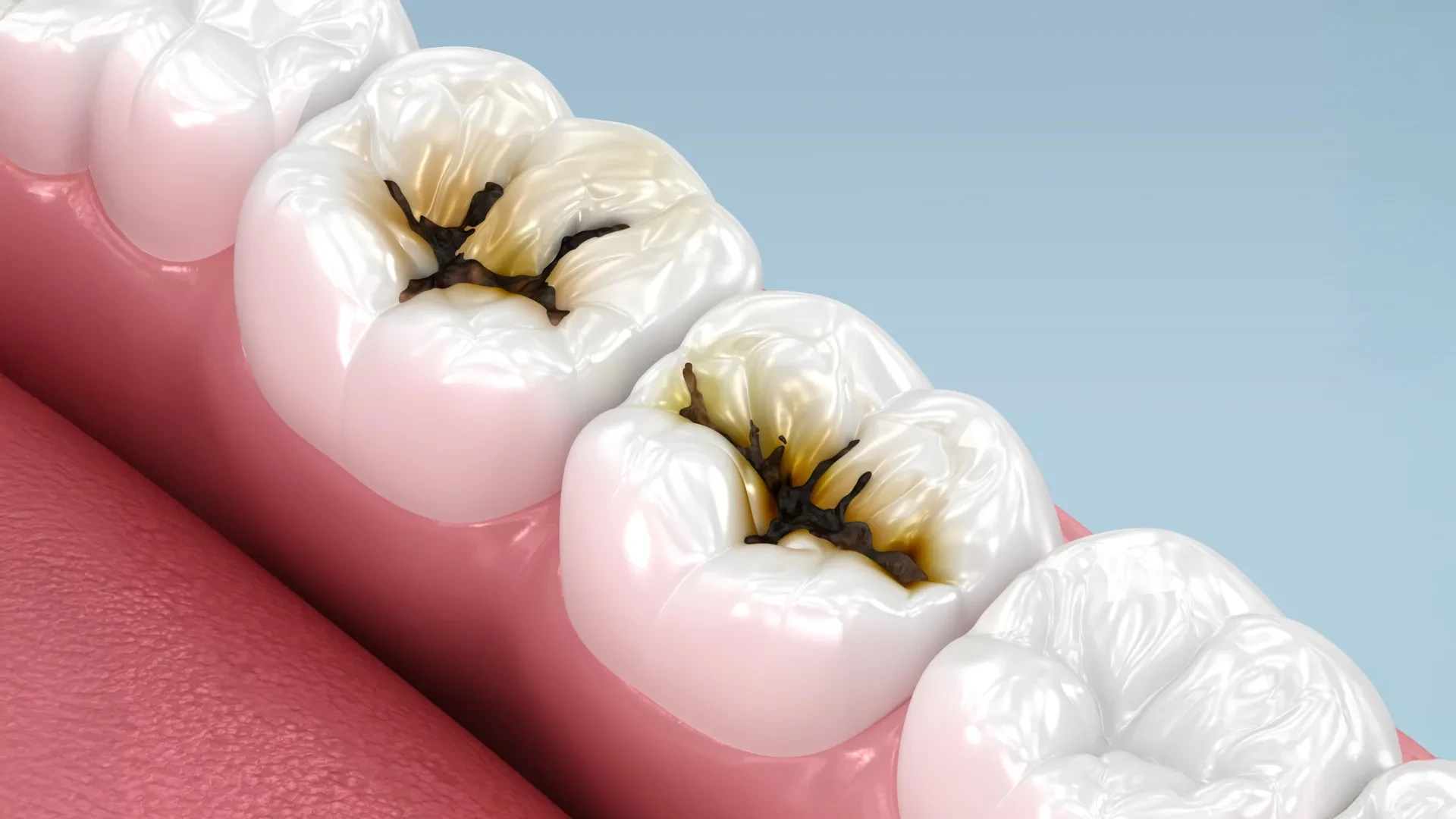
For all its clinical advantages, SDF is not without a distinct visual side effect: it permanently stains the decayed portion of a treated tooth a dark black or brown color.
- Healthy, intact enamel is generally unaffected by the dye. However, any active carious lesion treated with SDF will turn dark.
- While this discoloration is purely cosmetic and poses no biological harm, it can be aesthetically jarring, particularly when applied to the visible front teeth of young children.
- Despite this visual drawback, clinical feedback indicates that for the vast majority of parents and patients, the prospect of avoiding invasive drilling, local anesthesia, severe pain, and expensive surgical procedures vastly outweighs the cosmetic consequences.
Official Statements & Expert Perspectives
The publication of the University of Michigan-led trial has galvanized leaders in pediatric dentistry and public health, who see the findings as a catalyst for systemic change in how dental and medical care intersect.
"This is a very effective and safe treatment—even in children as young as 1."
— Dr. Margherita Fontana, Professor of Dentistry at the University of Michigan School of Dentistry and Lead Investigator of the Study.
Dr. Fontana emphasizes that the implications extend far beyond the immediate dental chair, highlighting the potential for cross-disciplinary care:
"In medicine, clinicians want high-quality evidence before changing practice. It is important to have data they can refer to because young children often see pediatricians years before they ever visit a dentist. Broader acceptance could allow many more cavities to be treated while a referral to a dental home is successful, and before they become painful, infected, or require surgery."
Co-principal investigator Dr. Amr Moursi, Professor of Pediatric Dentistry at the New York University College of Dentistry, underscored the regulatory significance of the trial data in positioning SDF for full FDA drug approval:
"Our results support FDA approval of SDF for managing arrest of tooth decay in young children. Removing SDF from off-label status would be an important innovation which could lead to increased utilization by providers, enhanced payments by insurers, and more consistent product quality."
Public health experts note that moving away from off-label status will dismantle administrative roadblocks. When a therapeutic agent possesses clear, FDA-approved drug labeling for a specific condition, commercial and public health insurance programs (such as Medicaid) are far more likely to establish standardized billing codes and reimbursement schedules, incentivizing primary care physicians, pediatricians, and community health workers to integrate SDF application into routine wellness checks.
Future Outlook: Reimagining Pediatric and Vulnerable Care
The successful conclusion of this major clinical trial opens a transformative chapter in preventative healthcare, with ripple effects spanning pediatric medicine, geriatric care, and public health policy.
Expanding into Medical Settings
Historically, oral health and systemic medicine have operated in rigid silos. Children typically do not see a dentist until their first birthday—or often much later, when a painful cavity prompts an urgent care visit. Conversely, infants and toddlers visit pediatricians multiple times during their first few years for routine vaccinations and developmental checkups.
With robust clinical trial data confirming the safety and efficacy of SDF in children as young as one year old, the stage is set for pediatricians and primary care nurses to apply the quick-drying liquid during standard wellness exams. By catching early carious lesions during pediatric visits, clinicians can arrest decay immediately. This buys valuable time for families to establish a "dental home"—an ongoing, continuous relationship with a dental care provider who can manage long-term preventive and restorative needs.
Beyond Early Childhood: Broadening Demographics
While the trial focused on children under six, the underlying utility of silver diamine fluoride extends to numerous other vulnerable populations who struggle with conventional dental procedures:
- Older Adults: As populations age, root caries (decay on the exposed roots of teeth) become increasingly common due to receding gums and dry mouth (xerostomia). SDF offers a non-invasive way for seniors to manage decay without enduring stressful dental chair sessions.
- Individuals with Disabilities: Patients with developmental, cognitive, or physical disabilities often cannot tolerate the sights, sounds, and physical positioning required for traditional drilling and fillings. SDF provides a swift, painless alternative.
- Severe Dental Anxiety: Millions of adults and children suffer from debilitating dental phobias. SDF can serve as a vital bridge, halting decay and building trust between the patient and the dental team.
- Underserved and Rural Communities: In geographic regions facing acute shortages of dental professionals, primary healthcare clinics equipped with SDF can deliver critical, sight-saving interventions where comprehensive restorative dentistry is unavailable.
Regulatory Horizons and Next Steps
Armed with the Phase III trial data funded by the NIH and conducted by premier academic centers, the manufacturer of Advantage Arrest can now submit comprehensive dossiers to the FDA seeking formal drug approval for arresting dental caries.
If granted, this regulatory milestone will effectively transition SDF from an off-label dental specialty tool into a universally recognized pharmaceutical staple of primary healthcare. Insurance reform, standardized provider training, and elevated public awareness will likely follow suit, democratizing access to conservative, compassionate dental care.
Ultimately, while silver diamine fluoride may not completely eliminate the need for traditional restorative dentistry—particularly for advanced structural damage—it fundamentally shifts the philosophy of oral healthcare. By prioritizing rapid, non-invasive intervention over the drill-and-fill paradigm, medicine and dentistry are moving toward a future where a cavity no longer signals pain, fear, and trauma, but rather a minor hurdle easily cleared with a drop of liquid and a sponge.