

Executive Overview
As the nation hurtles toward high-stakes midterm elections, a fierce constitutional and political confrontation has erupted between the Biden-Trump administration and the American press. U.S. Attorney General Todd Blanche found himself on the defensive during a high-voltage appearance on CNN’s State of the Union, engaging in a furious shouting match with anchor Dana Bash. The flashpoint: an unprecedented Department of Justice (DOJ) lawsuit aimed at blocking the certification of Alaska’s upcoming Senate election results.
The federal legal maneuver—which President Donald Trump openly took credit for directing—has ignited alarm bells among legal scholars, voting rights advocates, and even members of the president’s own party. Critics argue that the administration is laying the groundwork to contest unfavorable outcomes, subvert state-level sovereignty, and undermine faith in American democratic institutions. Blanche’s explosive interview, characterized by visible frustration and personal rebukes of the journalism, underscores the deep volatility surrounding federal oversight of state-run elections. With bipartisan blowback mounting and legal experts questioning the constitutional validity of the DOJ’s actions, the Alaska Senate race has transformed into a national litmus test for executive overreach and election integrity.
Detailed Chronology of a Constitutional Showdown
The Spark: Trump’s Direct Admission
The controversy began to crystallize late in the week when President Donald Trump publicly confirmed what many legal observers had suspected: the White House was actively driving the Justice Department’s legal crusade in the Last Frontier. Speaking to reporters on Friday, Trump made no effort to distance the executive branch from the litigation, stating flatly: "I’m the one that said do it."
The admission immediately shattered the traditional norms of independence expected between the White House and the Department of Justice. The administration’s lawsuit targets Alaska’s unique electoral landscape, specifically taking aim at a ballot complication involving two candidates sharing remarkably similar names: incumbent Republican Senator Dan Sullivan and a challenger named Daniel J. Sullivan Jr.
The DOJ’s legal filing argues that the presence of the similarly named candidate poses a severe risk of voter confusion, potentially siphoning critical conservative support away from the incumbent and throwing the election to the Democratic challenger, Mary Peltola. However, the crux of the controversy lies not in the ballot design itself—which has already been thoroughly vetted and upheld by Alaska’s state courts—but in the federal government’s decision to insert itself into a process historically reserved for state election boards and local jurisdictions.
The Clash on State of the Union
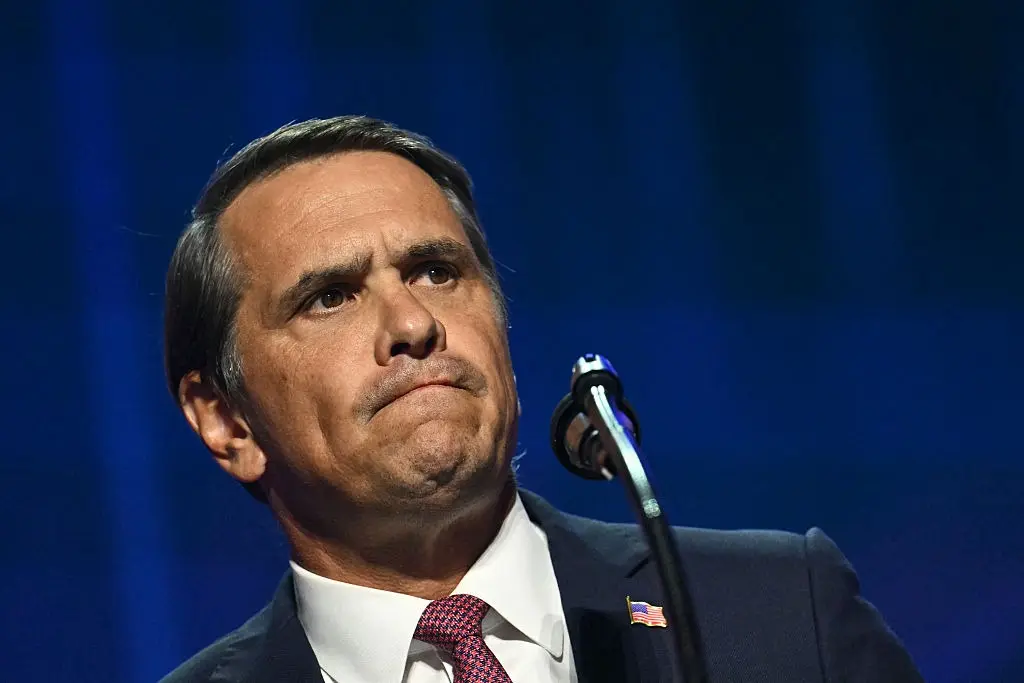
The escalating tension culminated on Sunday morning during Blanche’s appearance on CNN. When pressed by Dana Bash on whether the DOJ’s intervention was designed to establish a legal precedent enabling the president to overturn election outcomes he dislikes, Blanche lost his composure.
"Oh, stop it!" Blanche shouted, visibly agitated. "You’ve gotta stop it with that! You are not being a real person! Come on man, that is crazy!"
Refusing to back down, Bash countered sharply, "It is not crazy!" She pressed the nation’s top law enforcement officer to explain the precise legal justification for federal meddling in a state-level race.
Cornered on the specifics, Blanche struggled to articulate a definitive legal statute or criminal violation underpinning the federal lawsuit. "What’s the crime? Well, it depends. There could be a crime," he stammered, quickly pivoting away from criminal statutes to argue that the administration’s primary motivation was safeguarding voters from confusion and ensuring their voices were not inadvertently silenced.
When Bash pushed further, invoking a "doomsday scenario" reminiscent of the post-2020 election turmoil and the events of January 6, 2021—where executive pressure was applied to disrupt the peaceful transfer of power—Blanche dug in his heels.
"That is not a real question!" Blanche protested, vehemently denying any nefarious intent. "We’re not laying any groundwork for the president to do that!" He maintained that the DOJ was merely protecting the integrity of the ballot, rejecting assertions that the administration was attempting a de facto federal takeover of a state election.
Supporting Context & Metrics: The Battle Over State Sovereignty
The Legal Quagmire in Alaska
To understand the gravity of the DOJ’s lawsuit, one must examine the legal and political topography of Alaska. The state utilizes a ranked-choice voting system and a blanket primary framework, which has frequently produced unique political dynamics. The inclusion of Daniel J. Sullivan Jr. on the ballot has been a point of contention for months, but Alaska’s state court system repeatedly rejected attempts by the state Republican Party and affiliated groups to have him disqualified or removed.
By stepping in after state courts have already ruled, the Justice Department is treading on deeply sensitive Tenth Amendment territory. Election administration in the United States is fundamentally decentralized, managed by county clerks, secretaries of state, and state judicial systems. Federal intervention has historically been restricted to enforcing federal civil rights statutes, such as the Voting Rights Act, rather than dictating how a state manages candidate eligibility or ballot layout.
Bipartisan Backlash and Legislative Pushback
The administration’s gambit has not only united Democrats in opposition but has also fractured the Republican caucus. On NBC’s Meet the Press, Senator Adam Schiff (D-Calif.) delivered a scathing critique of the DOJ’s actions, framing the lawsuit as an unprecedented power grab.
"It’s not the federal government’s business to run Alaskan elections," Schiff declared. "It’s Alaska’s business to do that."
Schiff emphasized that Alaska’s state courts had already resolved the ballot dispute, questioning how the Justice Department could manufacture legal standing out of a settled state matter.
Perhaps more damaging to the administration’s narrative is the opposition emanating from its own side of the aisle. Alaska’s senior senator, Republican Lisa Murkowski, has openly criticized the federal lawsuit, viewing it as an affront to Alaskan self-determination. Murkowski’s dissent highlights a growing discomfort among traditional conservatives regarding the weaponization or overextension of federal executive power into local electoral administration.
Official Statements and Reactions
The fallout from Blanche’s contentious Sunday media tour reverberated across the political spectrum, drawing sharp commentary from institutional watchdogs, legal scholars, and lawmakers alike.
- Attorney General Todd Blanche: Defending the DOJ’s actions on CNN, Blanche insisted, "We’re not laying any groundwork for the president to do that! … We want to make sure that voters are not confused and that their votes actually count." When questioned about the specific criminal violations prompting the lawsuit, he conceded, "It depends. There could be a crime," before shifting the focus entirely to voter intent.
- CNN Anchor Dana Bash: Pushing back against Blanche’s accusations of unfair questioning, Bash maintained her journalistic stance: "It is not crazy! … When the president says ‘I’m the one that said do it,’ and you are intervening to block certification, questions about precedent and the 2020 aftermath are entirely valid."
- Senator Adam Schiff (D-Calif.): Speaking on Meet the Press, Schiff dismantled the DOJ’s legal justification: "The federal government has no business inserting itself into the certification of a state election simply because the executive branch dislikes the potential political outcome or the mechanics of a state-approved ballot."
- President Donald Trump: Speaking to White House reporters on Friday, the president offered a blunt defense of the executive branch’s involvement, removing any doubt regarding the political origin of the litigation: "I’m the one that said do it."
Future Outlook: Implications for the Midterms and Beyond
As the midterm elections rapidly approach, the Justice Department’s intervention in Alaska serves as a terrifying preview of potential legal battles to come. Legal scholars and constitutional experts warn that if the DOJ successfully establishes a precedent to block state election certifications based on administrative or ballot disputes, it could fundamentally alter the American electoral landscape.
The immediate outlook points to an intense courtroom showdown in federal district court, where attorneys for the state of Alaska, alongside voting rights organizations, are expected to file emergency motions to dismiss the DOJ’s lawsuit for lack of standing. They will argue that the federal government is overstepping its constitutional boundaries and violating the core principles of federalism.
Politically, Blanche’s explosive performance on Sunday morning has amplified scrutiny over the Department of Justice’s neutrality. By reacting with hostility to standard journalistic inquiries regarding the administration’s past election interference controversies, the Attorney General has inadvertently cast a harsher spotlight on the White House’s long-term strategic intentions.
Whether the federal lawsuit succeeds in Alaska or collapses under judicial scrutiny, the psychological and political damage has already been dealt. Trust in the integrity of election administration faces yet another severe stress test, and the boundary separating independent law enforcement from executive political maneuvering has grown perilously thin. As Americans prepare to cast their ballots, the events in Alaska make one thing abundantly clear: the battle for the ballot box is no longer confined to local polling places—it is now being waged in the highest corridors of federal power.