

Executive Overview
In the world of pomology—the scientific study and cultivation of fruit—perfection is a fleeting and subjective target. Taste is mediated by terroir, weather patterns, harvest timing, and post-harvest storage. Yet, on an ordinary afternoon in a Pennsylvania kitchen, author and dedicated apple enthusiast Chuck Wendig encountered an anomaly that upended conventional horticultural expectations.
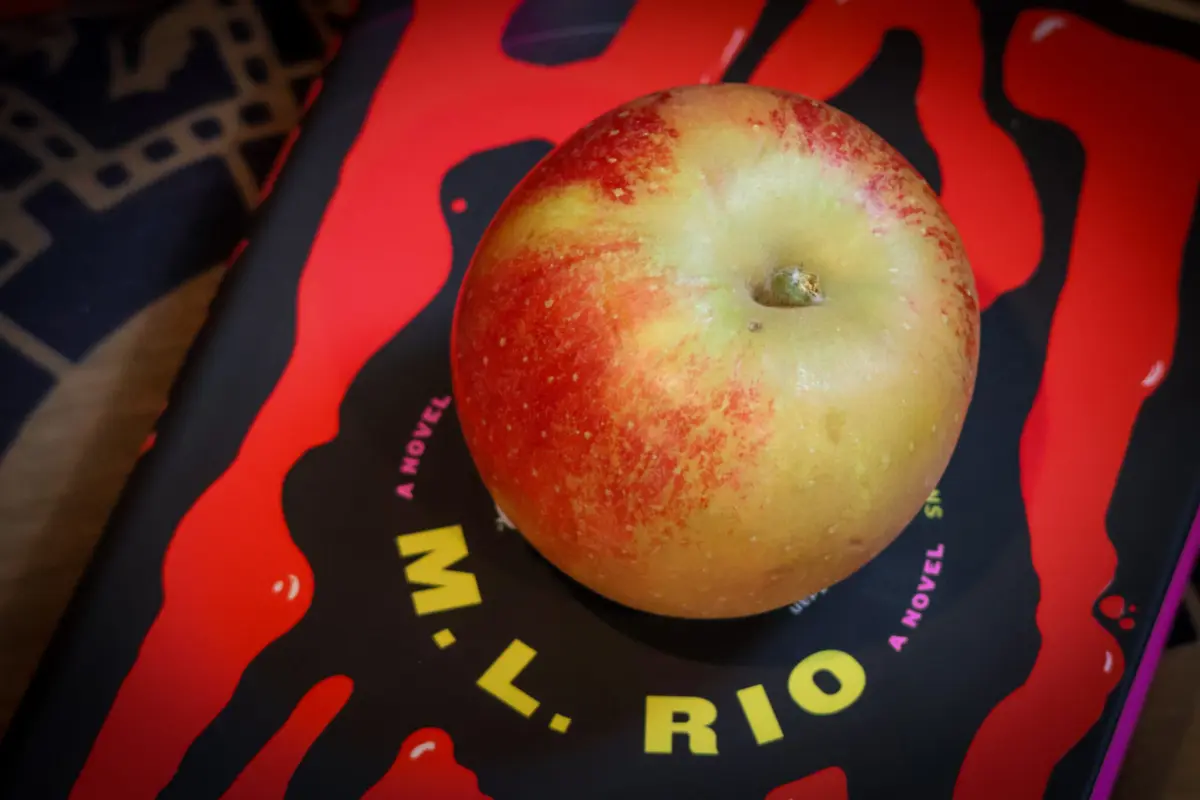
A single Reine des Reinettes—an ancient European cultivar also known as the King of the Pippins, Queen of the Pippins, or Golden Winter Pearmain—delivered an unprecedented sensory experience. Evaluated against rigorous pomological standards, this specific specimen earned a flawless 10 out of 10 rating.
What makes this achievement remarkable is not merely the cultivar’s storied lineage, but its improbable journey. Subjected to the grueling conditions of a multi-state literary book tour, vehicular transit, variable hotel room temperatures, and a distinct lack of professional cold storage, the apple defied every rule of post-harvest preservation. Instead of degrading into mealy mush or developing bitter phenolic off-notes, the fruit underwent an internal flavor concentration that yielded an extraordinary gastronomic triumph.
This report examines the chronological journey of the specimen, the structural and chemical makeup of the Reine des Reinettes cultivar, the logistical hurdles of the Calamities book tour, and the broader implications of year-over-year variability in orchard harvests.
Detailed Chronology: From Vermont Orchards to a Pennsylvania Kitchen
The saga of the 10/10 apple spans hundreds of miles, multiple international borders, and a grueling schedule of public appearances. To understand how a piece of fresh produce survived such mistreatment to achieve culinary greatness, one must trace its exact timeline.
Phase 1: The Scott Farm Expedition
The journey began during the final leg of the promotional tour for Wendig’s latest release, Calamities. Accompanied by fellow author Delilah S. Dawson, the tour made an early pilgrimage to the renowned Scott Farm in Dummerston, Vermont—a historic agricultural landmark celebrated for its preservation of heirloom apple varieties.
True to his reputation as an impassioned pomological field researcher, Wendig scoured the grounds for exceptional specimens. However, the definitive fruit was not acquired directly off the branch at Scott Farm. Instead, it entered the inventory days later in Burlington, Vermont.
Phase 2: Acquisition and Integration into the Tour
During a packed event at Phoenix Books in Burlington, local readers and bookstore staff—well-aware of the author’s public obsession with heirloom apples—presented him with a curated selection of fresh fruit sourced directly from Scott Farm. Among these offerings was a pristine Reine des Reinettes.
At this juncture, standard horticultural protocol would dictate immediate refrigeration at temperatures between 32°F and 35°F with high relative humidity to arrest respiration and prevent moisture loss. Instead, the apple embarked on an impromptu, high-mileage road trip.
Phase 3: The Transnational Itinerary
Rather than resting in climate-controlled bliss, the Reine des Reinettes became an itinerant passenger in a literary caravan. Its itinerary included:
- Burlington, Vermont: Initial presentation and packaging into transit bags.
- The International Border: Transport north into Canada, featuring an appearance at Bakka-Phoenix Books in Toronto.
- The Hudson Valley: Southward transit through New York, including stops at Oblong Books in Rhinebeck.
- Northern New England Echoes: Connecting through legendary regional hubs like Gibsons Bookstore in Concord, New Hampshire.
- The Final Leg: Transport into private residential spaces, including extended stays in hotel rooms, the home of fellow author Kevin Hearne, and the console of a touring automobile over a period spanning several days.
Throughout this transit, the apple experienced fluctuating thermal baselines, mechanical vibration from vehicular travel, and continuous exposure to ambient oxygen.
Phase 4: Arrival and Domestic Storage
Upon returning home to Pennsylvania, the apple was finally deposited into a domestic environment. Eschewing a dedicated secondary apple refrigeration unit in favor of a standard household crisper drawer, the fruit sat forgotten as mundane domestic chores took precedence.
Phase 5: The Kitchen Encounter and Culinary Divergence
The culmination of the apple’s journey occurred during a routine food-prep session: the production of homemade applesauce. Rummaging through the crisper drawer to harvest bulk material for the pot, Wendig isolated the travel-worn Reine des Reinettes.
Originally earmarked as anonymous grist for the applesauce mill, the apple was subjected to a preliminary quality-control slice. Upon consumption of the first bite, the process halted entirely. The intended mass-processing of fruit was immediately abandoned. Every subsequent slice of the Reine des Reinettes bypassed the cooking pot and was consumed directly.
Supporting Context & Metrics: Decoding the Reine des Reinettes
To fully contextualize this culinary event, one must evaluate the biological and historical baseline of the cultivar itself, alongside the comparative metrics of previous tastings.
Horticultural Profile of Reine des Reinettes
The Reine des Reinettes (translated from French as "Queen of the Reinettes") is a classic European heritage apple with documentation stretching back centuries. It is widely considered by European pomologists to be a benchmark of fine-flavored dessert apples.
- Aromatics and Flavor Profile: The variety is naturally endowed with a complex chemical makeup comprising high levels of natural sugars balanced by robust malic acidity. Secondary volatile organic compounds frequently impart notes of nuttiness, subtle spice, and pear-like esters.
- Textural Evolution: Typically, the cultivar exhibits a firm, fine-grained, and crisp flesh when harvested at peak maturity. However, as starches convert to sugars and pectin breaks down during post-harvest storage, many apples of this lineage risk turning soft, dry, or leathery—particularly when exposed to subpar storage conditions.
Comparative Tasting Metrics
In the author’s ongoing systematic evaluation of heirloom cultivars—documented publicly across various literary and culinary forums—apples are scored on a strict 10-point scale based on balance of sugars, acidity, aromatic complexity, and mouthfeel (crispness versus astringency).
| Metric / Parameter | Previous Specimen (2025 Tasting) | The 10/10 Specimen (2026 Tasting) |
|---|---|---|
| Source Orchard | Scott Farm, Vermont | Scott Farm, Vermont |
| Storage History | Immediate professional/controlled cold storage | Multi-state tour transport, variable heat/ambient conditions |
| Sugar-Acid Balance | High sugar, moderate acid | Mega-sweet, ultra-tart |
| Secondary Notes | Traditional orchard apple aromatics | Lavender, almond extract, citrus, anise, pear, pineapple |
| Mouthfeel / Tannins | Crisp, slight astringent drag | Big juice, zero vampiric tannin suck |
| Final Score | 8 / 10 | 10 / 10 |
The striking divergence between the 2025 evaluation (an honorable 8/10) and the 2026 anomaly underscores a fundamental truth of agriculture: fruit is not a manufactured consumer packaged good. Every harvest season introduces unique climatic variables—sunlight hours, rainfall distributions, and soil microbiology—that dictate the baseline potential of a cultivar.
Official Statements and Authorial Reflections
Reflecting on the sensory explosion of the experience, the author shared intimate observations regarding the convergence of mindful consumption, literary exhaustion, and agricultural serendipity.
"This apple, you see, had been on a journey. It did not get a proper cold storage treatment. It went on quite a journey and was not treated like royalty whilst traveling so… And I thought, sure, it’ll go fine in the applesauce. I cut it up. And I took a bite. Ah! AHH. Whoa. Whoa."
Describing the sensory architecture of the bite, the author emphasized the absence of structural defects typically associated with travel-weary fruit:
"It was an absolute firework finale of flavor. It was mega sweet, it was ultra tart, there was a touch of lavender, of almond extract, of citrus, of anise, pear and pineapple — but no textural issues, none of the vampiric suck of high tannins. Just big juice and big flavor."
Furthermore, the experience shifted from a mindless kitchen chore into an exercise in deep, unintentional mindfulness, anchored by the immediate domestic environment—a quiet Pennsylvania kitchen accompanied only by a slumbering rescue puppy named Cooper.
"I stood there, alone in my kitchen but for the dog… I just took slice after slice and ate it. Slowly and methodically. Not being wilful about what I was tasting, but being mindful — and not really even choosing mindfulness so much as being drawn into it by the wonders of this apple. None of it went into the sauce. All of it went into my face."
Future Outlook: The Endless Pursuit of Pomological Perfection
The discovery of a 10/10 heirloom specimen under unorthodox conditions offers both a triumph and a cautionary tale for fruit enthusiasts, orchardists, and literary travelers alike.
1. The Impossibility of Replication
Because the exceptional flavor profile of this specific Reine des Reinettes relied on a precise, unrepeatable alignment of micro-climate, tree maturity, and accidental post-harvest conditioning, replicating the exact experience will prove nearly impossible. As the author noted, it has created a culinary high-water mark—an ephemeral ghost whose flavor profile will be chased through future seasons, orchards, and farm stands.
2. The Value of Year-Over-Year Experimentation
A vital takeaway for consumers and culinary tourists is the danger of writing off a cultivar based on a single lackluster tasting. Because annual environmental shifts dramatically alter fruit development, an 8/10 apple in one year can mutate into a life-changing 10/10 masterpiece the next. Agricultural resilience and climatic variance guarantee that nature always holds hidden variables in reserve.
3. Bookstore Tourism and Agricultural Cross-Pollination
The intersection of literary culture and agricultural tourism—exemplified by book tours routing through historic cultural epicenters like Scott Farm, Phoenix Books, Gibsons, Oblong, and Bakka-Phoenix—highlights a thriving symbiotic relationship. Readers and independent booksellers serve as logistical conduits not just for ideas and literature, but for regional agricultural heritage.
As the literary community looks toward future publication cycles, one certainty remains: wherever the road leads next, the hunt for the ultimate apple will continue unabated.