


Executive Overview
The landscape of freelance writing has undergone a radical transformation. Artificial intelligence tools are no longer speculative novelties or futuristic curiosities; they are deeply embedded operational fixtures of the modern digital economy. For the independent writer, consultant, or content creator, refusing to utilize AI is no longer a badge of artisanal honor—it is a self-imposed handicap that guarantees excessive toil and diminished returns.
However, the modern digital marketplace is plagued by a false dichotomy. On one side are the techno-skeptics who view AI as an existential threat to human creativity, rejecting it entirely in favor of inefficient, legacy workflows. On the other side are the low-effort opportunists who treat large language models as automated ghostwriters, flooding the web with derivative, hallucination-prone, and easily detectable fluff.
The freelancers who are thriving in the current ecosystem belong to neither extreme. Instead, they occupy a pragmatic middle ground: they use AI to ruthlessly automate administrative friction and cognitive bottlenecks, freeing up maximum bandwidth for human differentiation. Deep thinking, original reporting, strategic client relationships, and nuanced expertise are the irreplaceable pillars of high-value writing. AI handles the heavy lifting of the periphery; the human writer retains total dominion over the core.

This comprehensive guide explores ten tactical, high-leverage workflows designed to elevate your freelance writing business. By implementing these methodologies, you can compress your research timelines, shatter writer’s block, optimize client acquisition, and significantly scale your output without sacrificing quality or succumbing to professional burnout.
Detailed Chronology & Evolution: From Novelty to Necessity
To understand how artificial intelligence successfully infiltrated the modern writing workflow, one must examine its evolutionary trajectory over the past several years.
Phase 1: The Novelty and Fear Era (2022–2023)
When generative text models first burst into mainstream consciousness, the freelance writing community reacted with a mixture of terror and hostility. Initial interactions with early iterations of AI tools often produced rigid, formulaic prose characterized by a distinct lexicon (words like delve, tapestry, and testament became immediate red flags). Many writers feared imminent obsolescence, while others dismissed the technology as a fleeting gimmick that produced low-grade drivel.
Phase 2: The Crutch and Commodity Era (2023–2024)
As models grew more sophisticated, a rush of low-cost content mills and inexperienced operators attempted to completely outsource content generation to algorithms. This period saw an explosion of generic blog posts, uninspired thought-leadership articles, and unpersonalized cold pitches. Clients quickly caught on. Search engine algorithms adjusted to penalize unedited, low-value synthetic text, and the market became saturated with mediocre, commoditized content. Writers who relied on AI as a complete crutch saw their rates plummet and their client rosters vanish.
Phase 3: The Hybrid Professional Era (Present)
Today, the most successful independent creators treat AI not as a writer, but as a tireless, multi-disciplinary assistant. The workflow has evolved from "ask AI to write an article" to "collaborate with AI across ten distinct operational milestones." By integrating tools like ChatGPT, Claude, Perplexity, and Otter.ai into specific junctures of the content pipeline, modern freelancers are producing higher-volume, higher-integrity work in a fraction of the time.
The 10 High-Leverage AI Workflows for Freelance Writers
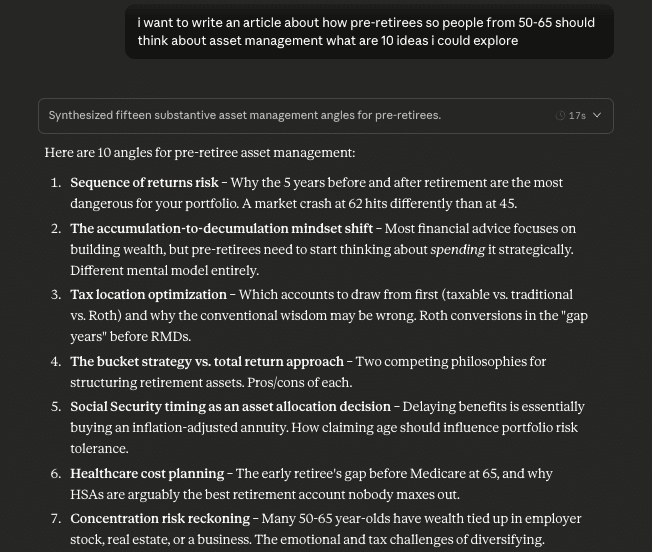
1. Beating the Blank Page Syndrome
The psychological barrier of the blank document is the silent killer of productivity. Staring at a white screen while knowing your subject matter inside and out, yet failing to locate the proper access point, drains cognitive energy before a single word is typed.

AI excels at breaking this paralysis—not by writing the piece for you, but by acting as an instant sounding board.
- The Workflow: Feed your core topic into Claude or ChatGPT. Prompt the model to generate ten distinct angles, five unconventional opening hooks, and a list of burning questions a sophisticated reader might ask.
- The Execution: Recognize that 80% of what the AI outputs will be generic or unusable. That is entirely acceptable. The goal is not to copy and paste, but to trigger cognitive momentum. By reacting against subpar suggestions, your brain quickly identifies the direction you actually want to pursue.
2. Streamlining Structural Outlines
An outline is the architectural blueprint of any successful piece of content. Skipping this step leads to meandering prose, disjointed arguments, and excessive rewriting during the editing phase.
- The Workflow: Provide your AI partner with your topic, target audience, primary goal, and any raw research notes or expert quotes you have gathered. Ask the model to propose a comprehensive outline complete with logical subheadings and structural flow.
- The Advanced Setup: Power users can establish customized intake prompts within platforms like Claude. For example, build a standard template that forces the AI to prompt you for audience parameters, core objectives, and data points before generating structured layout ideas. This transforms a messy brain-dump of notes into a clean, organized roadmap in seconds.
3. Accelerated Research & Source Triage
Freelance writing demands rigorous investigation—reading academic studies, industry reports, and competitor articles to extract relevant data points. This research phase can easily consume hours of billable time.
- The Workflow: Use advanced search-backed AI engines like Perplexity Pro to bypass hours of manual web hunting. Perplexity retrieves verified statistics and provides inline citations, acting as a tireless research assistant.
- The Triage Process: When reviewing lengthy whitepapers or source articles, paste the text into an AI model to generate executive summaries, pull key statistics, and highlight the main arguments. This allows you to triage material in seconds, ensuring an article actually contains the data you need before you invest twenty minutes reading it cover-to-cover. (Always verify citations to ensure data is current—discovering a brilliant stat is worthless if it dates back to 2014).
4. Crafting High-Response Letters of Introduction (LOIs)
Cold outreach is the lifeblood of freelance growth, yet writing customized letters of introduction day after day causes profound outreach fatigue.
- The Workflow: Use AI to generate foundational templates for cold emails directed at marketing agencies or prospective corporate clients. Ask the model for five distinct variations, ranging from concise pitches to value-driven proposals.
- The Crucial Human Step: Never send raw AI-generated outreach. The secret to landing clients via cold email is hyper-personalization in the opening sentence—referencing a company’s recent award, a newly released study, or a positive press mention. AI cannot perform this bespoke research natively, but it can supply 80% of the structural framework so you never have to start an email from absolute zero.
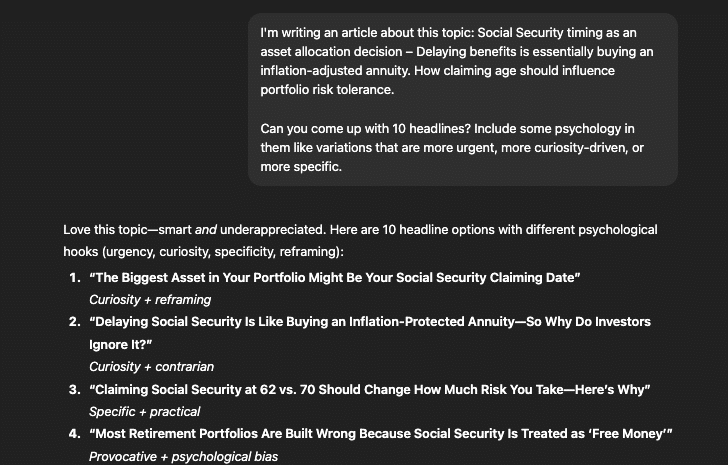
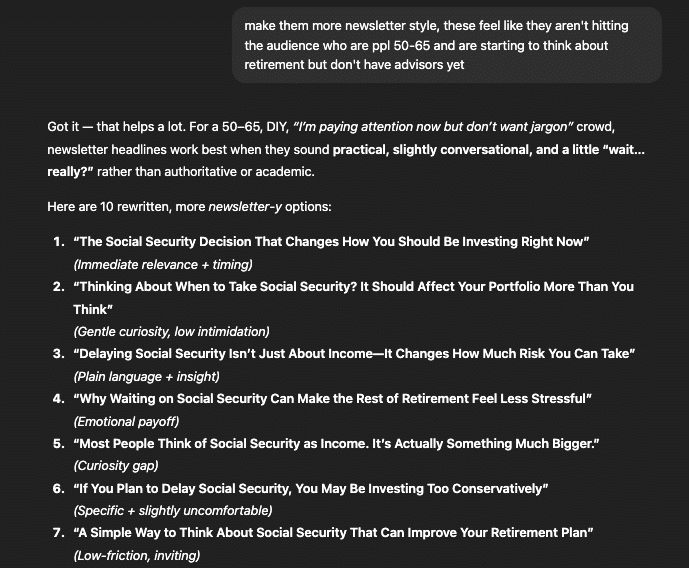
5. Engineering Click-Worthy Headlines and Hooks
An exceptional article is commercially worthless if nobody clicks the headline. Yet, writing compelling, non-clickbait titles that balance curiosity with specificity remains one of the hardest tasks in publishing.
- The Workflow: Request ten headline variations for your finished article, specifying emotional triggers such as urgency, curiosity, or targeted specificity.
- The Editing Process: Often, the magic happens when you mix and match fragments from two or three different AI suggestions. Furthermore, if your introduction feels sluggish, prompt the AI to supply five alternative narrative openings to anchor your reader immediately.
6. Advanced Editing and Proofreading Roles
Human eyes are notoriously unreliable when editing self-authored work. After reading your own paragraphs five times, your brain automatically fills in missing words and glosses over awkward syntax.
- The Workflow: Paste your draft into an AI model, but assign it a specific persona. Instead of a generic "edit this," instruct the model: "Act as an aggressive developmental editor. Flag wordiness, unclear sentence structures, and logical leaps." Alternatively, have it role-play as your exact target audience, pointing out what confuses them or what sections require more depth.
- Complementary Tools: Combine these generative review steps with specialized grammar engines like Grammarly to catch mechanical errors and streamline overly dense sentences while maintaining absolute control over your final creative decisions.
7. Automated Content Repurposing
Writing a 1,500-word authoritative blog post is only half the battle; promoting it across social channels, newsletters, and community forums is where true audience growth happens. Creating fresh promotional copy from scratch is exhausting.
- The Workflow: Input your published article into Claude or ChatGPT with highly specific prompts for repurposing.
- The Output Strategy: Ask the model to extract five distinct data points to form short-form LinkedIn hooks, three detailed newsletter summaries, and a comprehensive Twitter/X thread. By leveraging AI to mine multiple angles from a single piece of long-form work, you can sustain a robust multi-channel marketing presence without exponential labor.
8. Strategic Subject Matter Expert (SME) Interview Prep
The quality of an interview dictates the quality of the quotes, which ultimately determines the caliber of the final article. Walking into an interview unprepared wastes the expert’s time and yields generic insights.
- The Workflow: Provide your AI assistant with the background of your interviewee, the overarching topic, and the specific angle of your piece. Ask it to generate ten probing, non-obvious questions designed to extract unique anecdotes and proprietary data.
- Industry Acceleration: If you are parachuting into a brand-new industry (e.g., supply chain compliance or fintech SaaS), use AI to quickly brief you on industry terminology and recent controversies so you can skip the basic definitions and jump straight to advanced dialogue.
9. Managing and Mining Interview Transcripts
Recording expert interviews via platforms like Otter.ai generates massive walls of raw transcription text. Sifting through a 60-minute transcript to find a single crucial quote about regulatory compliance can derail your writing schedule.

- The Workflow: Utilize native AI chat functionalities within transcription tools or paste transcripts into Claude. Prompt the AI to summarize the expert’s core arguments, organize the conversation by thematic clusters, or instantly retrieve specific quotes on demand.
- The Verification Standard: While AI drastically accelerates transcript navigation, you must always cross-reference extracted quotes against the original audio file prior to publication to guarantee absolute contextual and factual accuracy.
10. Intelligent Marketing Tracking & Gamification
Maintaining a CRM or a manual spreadsheet to track cold outreach, follow-ups, and response rates is a tedious administrative chore that most freelancers abandon within weeks.
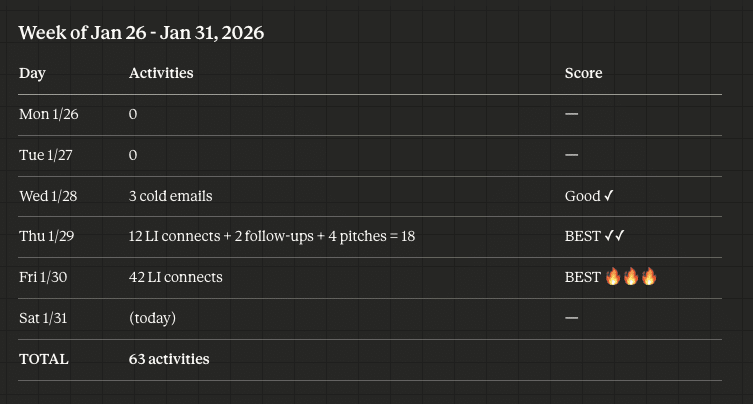
- The Workflow: Use advanced conversational tracking workflows (such as Claude Cowork) to log your outreach activities in natural language. At the end of a marketing session, simply type: "Today I sent five LOIs to digital agencies in Austin, received one positive reply, and scheduled a discovery call."
- Analytics and Motivation: At month-end, prompt the AI to synthesize your data: How many total pitches were sent? What is my conversion rate from email to discovery call? Which niche subset yields the highest response? By gamifying your metrics—such as establishing weekly "scorecards"—you can maintain outreach momentum and identify conversion bottlenecks without staring at a stagnant spreadsheet.
Supporting Context & Metrics: The Freelance Landscape
| Metric / Indicator | Legacy Workflow (Pre-AI) | Modern Hybrid Workflow (AI-Assisted) | Efficiency Gain |
|---|---|---|---|
| Outline Generation | 45 – 60 Minutes | 5 – 10 Minutes | ~80% Faster |
| Initial Research & Triage | 2 – 3 Hours | 30 – 45 Minutes | ~75% Faster |
| Content Repurposing (Socials) | 90 Minutes | 15 Minutes | ~83% Faster |
| Outreach Tracking Admin | 2 Hours / Week | Automated / 10 Mins | ~90% Reduction |
Industry analysis indicates that independent writers who successfully integrate AI assistants into non-creative administrative and structural workflows increase their weekly output capacity by 40% to 60%. Crucially, this surplus time is not spent working longer hours; it is reinvested into high-touch client communication, strategic pitching, and creative ideation.
What NOT to Do With AI: Avoiding the Pitfalls
While the upside of artificial intelligence is immense, misusing these tools introduces severe professional hazards. To protect your reputation and retain high-paying clients, adhere strictly to these negative constraints:

- DO NOT Outsource Core Thinking and Voice: If you ask an AI to write an entire article from a generic prompt, you are producing commodity content that lacks authentic perspective, firsthand reporting, and distinctive voice. Clients can spot unedited AI prose instantly.
- DO NOT Ignore Fact-Checking: Large language models hallucinate statistics, misattribute quotes, and reference outdated information with absolute confidence. Publishing unverified AI claims destroys your journalistic credibility.
- DO NOT Abandon Personalization: Automated, mass-blasted AI cold pitches are easily recognized and summarily deleted by decision-makers. The human element—showing genuine familiarity with a brand’s mission—is non-negotiable.
Future Outlook
The trajectory of generative technology in freelance writing points toward even deeper integration and specialization. As multimodal models evolve, the friction between raw research, data visualization, audio processing, and written output will continue to dissolve.
However, the core paradox of the AI revolution remains steadfast: As AI makes the generation of average content cheaper and faster, truly exceptional human work becomes more valuable than ever.
Clients are not paying freelancers for the mechanical act of arranging pixels on a screen or typing words into a CMS. They are paying for perspective, rigorous investigation, empathy, strategic problem-solving, and reliable execution.
By mastering the ten operational workflows outlined in this guide, you can eliminate the administrative drag that bogs down your business. Let artificial intelligence handle the tedious mechanics, allowing you to focus entirely on the high-level expertise that defines a world-class freelance writer.
Take the Next Step in Your Freelance Journey
Ready to transform your writing hobby into a thriving, scalable business? Join over 40,000 aspiring and established professionals who have enrolled in our foundational freelance writing curriculum. Learn the exact frameworks to secure your first high-paying clients, master professional pitching, and build a sustainable digital career.
Start building your freedom today.