

Executive Overview
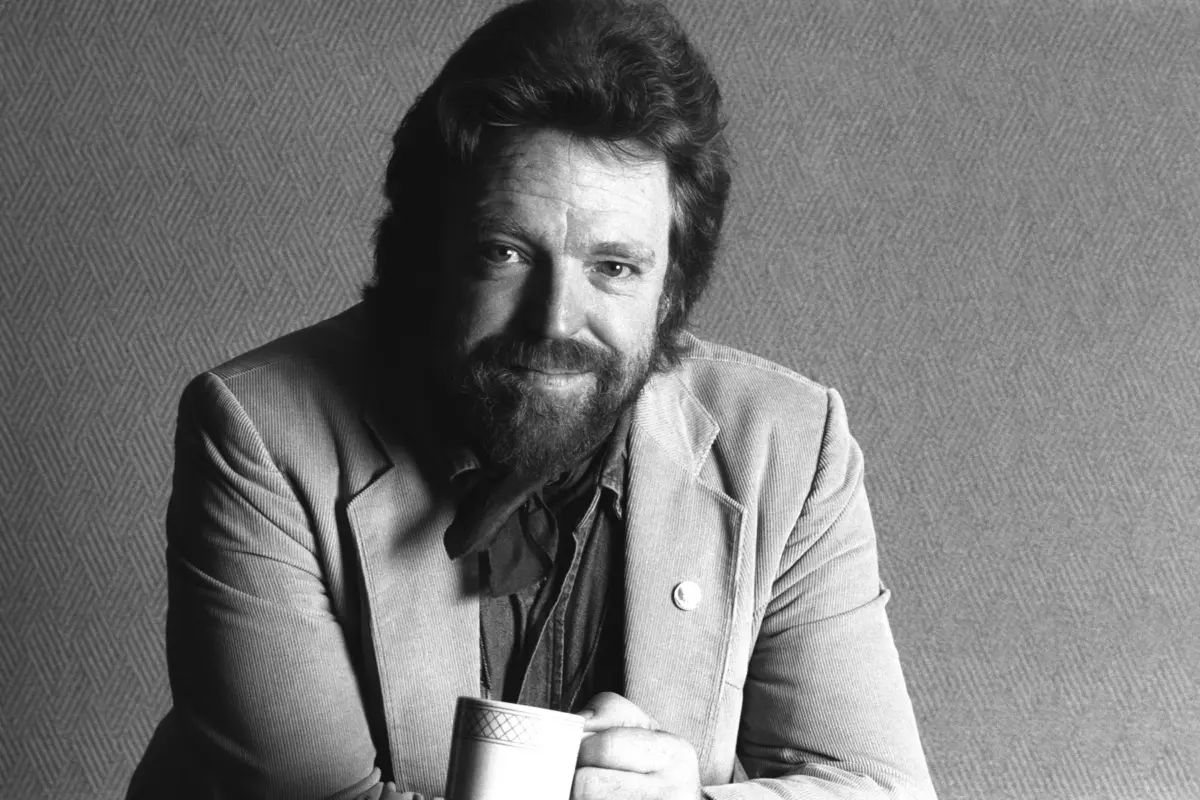
Thirty years after Grateful Dead lyricist and cyberlibertarian pioneer John Perry Barlow penned “A Declaration of the Independence of Cyberspace,” humanity stands at an even more formidable technological precipice. In 1996, Barlow’s manifesto gave digital builders, early netizens, and the nascent tech industry permission to envision a borderless frontier free from the heavy hand of government censorship and traditional geopolitical control. It was an ideological anchor for the youth of the internet—a proclamation that digital spaces belonged to a distinct, self-governing realm of the mind.
Today, however, that utopian separation of “bits from atoms” has fractured under the weight of commercial consolidation, algorithmically driven political polarization, and the planetary toll of data infrastructure. As artificial intelligence (AI) rapidly accelerates past the boundaries of human comprehension and legislative oversight, the framework of raw independence is no longer sufficient.
Authored by Amelia Rose Barlow—daughter of John Perry Barlow and an advocate for interdependent systems across technology, climate, and democracy—a profound recalibration is underway. This analysis explores the transition from the digital separatism of the 1990s to a necessary paradigm of technological interdependence. Drawing on historical chronologies, ecological realities, Indigenous governance models, and proposals for a national citizens’ assembly, this article examines how society must consciously steward the AI era before its consequences become our permanent inheritance.
Detailed Chronology: From the Glow of Silicon Valley to the Planetary Cloud
1994: The Arrival of the Future
The journey of modern connectivity began long before the average household understood what a browser was. In a vast Silicon Valley conference hall in 1994, an eight-year-old Amelia Rose Barlow sat alongside approximately 150 select advisers and early adopters for the off-the-record unveiling of Netscape. Navigating early hyperlinks to research white rabbits, she experienced a profound cognitive dissonance—a split between the hyper-accelerated digital realm and the grounded, physical wilderness of Wyoming that had forged four generations of her family.
1996: The Manifesto of Cyberspace
Sensing the tectonic shifts of the digital age, John Perry Barlow—who balanced a dual identity as a Wyoming cattleman and a lyricist for the Grateful Dead—recognized a third cultural frontier. In February 1996, the United States Congress passed the Communications Decency Act, a landmark legislative effort designed to bring federal censorship to the internet.
In direct defiance, Barlow published “A Declaration of the Independence of Cyberspace,” famously writing:
“We are creating a world that all may enter without privilege or prejudice accorded by race, economic power, military force, or station of birth.”
The document functioned as a social technology designed for a specific historical threshold. It declared cyberspace entirely independent of governments, which Barlow famously characterized as weary giants of flesh and steel seeking to control a realm they had no moral right to govern.

2010–Present: The Ecological Awakening and Corporate Capture
As the decades rolled on, the promises of a decentralized, democratic web met the harsh realities of corporate capture. The internet fragmented into walled gardens, targeted surveillance economies, and polarized echo chambers.
Simultaneously, Amelia Barlow’s path crossed with Indigenous history. Sixteen years after her first encounter with hyperlinks, academic and political pursuits brought her to the Pine Ridge Reservation. There, studying natural law and constitutional frameworks, she discovered a historical blind spot in traditional American education: the foundational influence of the centuries-old Haudenosaunee Confederacy on the democratic governance model of the United States. This revelation shattered the illusion of digital weightlessness and technological exceptionalism.
Supporting Context & Metrics: The Myth of the Weightless Cloud
The foundational error of the 1990s cyber-renaissance was the philosophical separation of virtual life from physical reality. Barlow’s declaration asserted that “identities have no bodies,” creating an illusion that digital data floats freely through an ethereal ether.
The Material Reality of Bits
In the 21st century, this separation is untenable. Bits are fundamentally inseparable from the atoms that constitute them:
- Resource Extraction: Data centers, microchip fabrication plants, and server farms demand vast quantities of land, fresh water, and rare-earth minerals.
- Energy Grids: The computational power required to train, refine, and deploy Large Language Models (LLMs) places unprecedented stress on national power grids, driving up carbon emissions.
- Global Labor: The invisible workforce powering content moderation, data labeling, and mineral mining spans marginalized communities worldwide, bearing the human cost of digital convenience.
The "cloud" is not weightless; it carries a massive physical footprint. When human attention migrates entirely into screens, algorithms warp reality via fabricated images, deepfakes, and hyper-targeted false narratives. This creates a dangerous cultural amnesia wherein humanity mistakes its own computational tools for omnipotence, forgetting its fundamental reliance on the natural world—blood, bone, water, weather, and soil.
Official Statements and Philosophical Shifts: The Wisdom of Interdependence
The transition from independence to interdependence requires looking backward to move forward constructively. Indigenous scholarship provides the necessary vocabulary and structural blueprint for this evolution.
In the publication American Indigenous Democracy: A Call for Interdependence, Haudenosaunee leaders and scholars articulate core principles of governance that starkly contrast with Western tech-monopoly mentalities:
- Peace as the Highest Calling: Governance structured around human wellbeing, with women and care placed at the center of civic life.
- Ecological Reciprocity: Maintaining an active, respectful relationship with the natural world rather than treating it merely as a reservoir for resource extraction.
- The Principle of the Seventh Generation: Evaluating every current decision based on its anticipated impact on the next seven generations of life.
Amelia Rose Barlow notes the urgency of this pivot:

“Independence gave us the courage to cross the last threshold. The wisdom of interdependence must guide what comes next… Adulthood demands more than independence. It asks not only what we want to be free from, but what we are responsible for. Whom our choices affect. What we are prepared to protect.”
Future Outlook: A Call for a National Citizens’ Assembly on AI
As humanity stands at the threshold of the artificial intelligence era, the stakes are orders of magnitude higher than they were during the dawn of the World Wide Web. AI touches every facet of modern existence—labor markets, national security, education, healthcare, interpersonal relationships, and democratic integrity—developing at a velocity entirely unprecedented in human history.
To prevent AI from defaulting to corporate monopolization and extractive surveillance, public policy must evolve through deliberate, collective engagement.
The Proposal: A National Citizens’ Assembly
Proponents of the Declaring Our Tech Futures campaign are calling for a concrete democratic intervention: a national citizens’ assembly on our technological future with artificial intelligence, to be convened prior to the next major presidential election cycle.
This public deliberation process is designed to:
- Bridge Divides: Bring together everyday citizens across geographic, political, and socioeconomic differences.
- Reclaim Civic Imagination: Allow communities to articulate what they want from emerging technologies, rather than passively accepting corporate defaults.
- Establish Accountability: Deliver clear, binding demands from the public directly to political and business leaders, ensuring that technology built for everyone remains accountable to everyone.
Conclusion
Thirty years ago, John Perry Barlow declared cyberspace to be the “new home of Mind.” While that declaration served its purpose by granting early digital pioneers the space to experiment, build, and connect, it left a legacy of fragmentation, ecological degradation, and unchecked corporate power.
Today, we must remember that our true "home of Mind" is inextricably rooted in physical bodies, local communities, shared histories, and a living Earth. The age of artificial intelligence requires us to outgrow the rugged individualism of the early web. By replacing the myth of total independence with the pragmatic wisdom of interdependence, we can consciously steward the next technological revolution—ensuring that our digital creations honor the living world and protect the generations yet to be born.