

Executive Overview
In the modern digital economy, the landscape of freelance writing client acquisition has undergone a fundamental structural shift. While traditional job boards and cold-emailing strategies once dominated the freelancer’s prospecting toolkit, industry data indicates that inbound lead generation has firmly taken the crown. At the epicenter of this shift is LinkedIn.
No longer merely a digital resume repository, LinkedIn has evolved into a powerhouse B2B networking hub. It is a dynamic ecosystem where decision-makers—including marketing directors, content managers, and startup founders—actively search for thought leadership, industry insights, and specialized talent. For the modern freelance writer, maintaining an active, highly optimized presence on this platform is no longer optional; it is a critical baseline requirement for business survival and growth.
Despite this reality, many talented writers struggle to secure a consistent stream of clients through the platform. They fall into common traps: posting exclusively for an audience of peer writers, suffering from severe posting anxiety, or treating their profiles like static resumes rather than high-converting sales pages.
To help freelance writers cut through the digital noise, this comprehensive guide outlines five updated, highly actionable strategies. Designed to maximize time efficiency and leverage the nuances of the platform’s algorithm, these tactics provide a reliable roadmap for transforming LinkedIn into your most lucrative source of inbound freelance writing clients.
Detailed Chronology: The Evolution of Freelance Client Acquisition
To understand why LinkedIn has become the premier destination for freelance writers, it is helpful to examine how client acquisition strategies have evolved over the past decade.
Phase 1: The Wild West of Job Boards (Early 2010s)
In the early days of the digital content boom, freelance writers relied heavily on public job boards, classified sites, and content mills. These platforms provided a direct line to clients, but they suffered from severe drawbacks. Competition was fierce, rates were often driven down to pennies per word, and the relationship was transactional rather than strategic. Writers spent hours refreshing boards, racing to submit applications, and competing in a literal race to the bottom on price.
Phase 2: The Rise of Cold Pitching and Personal Websites (Mid to Late 2010s)
As the market matured, savvy freelancers realized that relying on public boards limited their earning potential. This era gave rise to the art of cold pitching. Writers built dedicated portfolio websites, researched target companies, and sent personalized cold emails to editors and marketing managers. While this approach yielded higher-paying clients, it was intensely time-consuming. Response rates were often low, requiring dozens of pitches a day just to land a single discovery call.
Phase 3: The Social Selling Era and LinkedIn Dominance (Present Day)
Today, the paradigm has shifted from outbound disruption to inbound attraction. Decision-makers are inundated with cold emails and generic pitches; consequently, they prefer to hire writers whose expertise they have already observed in the wild. LinkedIn has emerged as the definitive platform for this "social selling" model. By consistently sharing industry insights, optimizing profiles for searchability, and engaging thoughtfully with prospective clients, modern freelancers can bypass the cold-pitch grind entirely. Clients now come directly to the writer’s inbox, having already been pre-sold on their authority and expertise.
Supporting Context & Metrics: Decoding the LinkedIn Algorithm
Before diving into specific tactics, writers must understand the underlying mechanics of the platform. LinkedIn’s algorithm has evolved significantly over the years, discarding old tactics in favor of those that foster genuine professional engagement.
What the Algorithm Rewards:
- Niche Authority and Relevance: The platform prioritizes content that consistently speaks to a clearly defined audience within a specific industry. If you repeatedly post about fintech trends or medical content challenges, the algorithm learns to recognize your authority and pushes your content to users operating in those exact spaces.
- Thoughtful Engagement: Comments that spark extended conversations carry more weight than simple "likes."
- Native Formatting: Cleanly formatted text posts utilizing strong hooks and white space consistently outperform overly complex media attachments.
What the Algorithm Penalizes:
- Outbound Link Dumping: Dropping external links directly into the body of a post severely limits its reach, as LinkedIn aims to keep users on its platform. (Savvy creators now place links in the comments or edit posts to add them later).
- Engagement Bait: Asking users to comment "ME" or "INFO" to receive a free resource has faced algorithmic throttling as LinkedIn cracks down on low-effort manipulation tactics.
- Broad, Undifferentiated Content: Posting generic motivational quotes or generic writing tips that appeal only to other freelancers signals low professional value to the algorithm.
According to prominent B2B content strategists, the shift toward relevance over raw reach means that a writer with 2,000 highly targeted connections in a specific vertical will consistently outperform a generalist with 20,000 unengaged followers.
Five Proven Strategies to Master LinkedIn as a Freelance Writer
Implementing a successful LinkedIn strategy does not require spending eight hours a day scrolling through the feed. In fact, doing so is often counterproductive. By dedicating just 20 to 30 minutes a day to focused actions, you can build a sustainable, high-converting pipeline. Here are five core strategies to get you there.
1. Write to Potential Clients, Not Other Freelancers
One of the most common pitfalls for new users is building an echo chamber. It is easy to gravitate toward freelance writing communities on LinkedIn, sharing tips on rate negotiation and portfolio building with fellow writers. While this fosters a sense of community, it will not pay your bills.
How to Execute This Strategy:
- Audit Your Recent Content: Review your last ten posts. Count how many are targeted at other writers versus your ideal clients. If the balance leans toward peers, it is time to pivot.
- Identify Core Client Topics: Choose three to five pain points that keep your ideal clients awake at night. If you write for B2B SaaS companies, focus on user acquisition, churn reduction, or product marketing strategies. If you write in the medical niche, focus on regulatory shifts, clinical trial results, or compliance challenges.
- Demonstrate Domain Expertise: Write posts that break down why a specific company’s content strategy is succeeding, or offer a unique perspective on a recent industry trend. When a marketing director visits your profile, they should immediately recognize that you speak their language.
2. Overcome Posting Anxiety Through Systematic Consistency
Conventional marketing advice often insists that you must post multiple times a day to succeed. For a busy freelancer juggling client work, this advice is not only unrealistic—it is paralyzing. Overwhelmed by the pressure to perform, many writers post nothing at all.
How to Execute This Strategy:

- Establish a Sustainable Cadence: You do not need to post daily. Posting consistently once or twice a week (for example, every Tuesday and Thursday) over several months yields exponentially better results than sporadic daily binges followed by silence.
- Batch Your Content Creation: Block out 30 minutes every Sunday to outline and draft your posts for the week. Use LinkedIn’s native scheduler to queue them up, allowing you to step away from the platform with peace of mind.
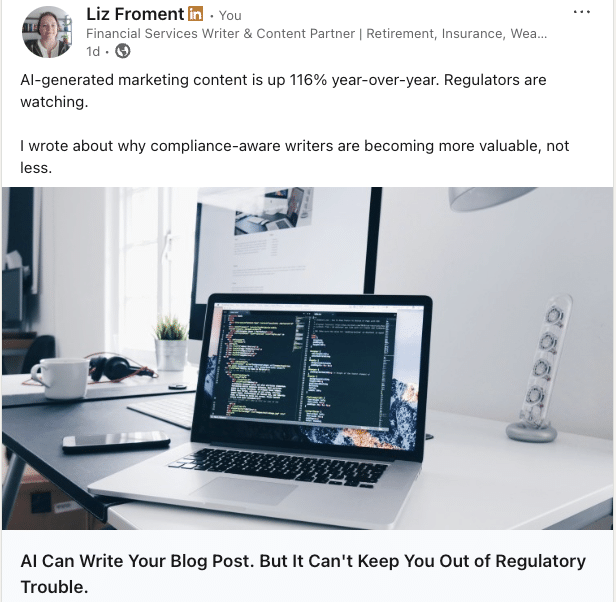
- Utilize Proven Frameworks: Rely on high-converting post formats such as contrarian industry takes, step-by-step framework breakdowns, curated resource lists, or lessons learned from recent professional projects. Keep text formatted cleanly with strong, compelling hooks.
3. Focus on Intentional Engagement (The "Marketing Dog" Method)
Publishing posts is only half the battle. Because LinkedIn is fundamentally a networking platform, proactive engagement often yields faster results than passive publishing.
B2B content strategist Sarah Greesonbach famously refers to this daily maintenance as "walking the marketing dog"—a non-negotiable daily stroll that keeps your business healthy. Similarly, B2B expert Ed Gandia advocates for the "3-2-1 method": sending 3 connection requests, leaving 2 thoughtful comments, and publishing 1 post every single day.
How to Execute This Strategy:
- Curate a Prospect List: Compile a targeted list of 20 to 30 marketing directors, content managers, and founders at companies you would love to write for. Follow their profiles.
- Leave Thoughtful Comments: Dedicate 15 minutes a day to scrolling through their recent updates. Avoid generic responses like "Great post!" Instead, add value by sharing an opposing data point, asking an insightful follow-up question, or expanding upon their thesis with your own professional experience.
- Build Name Recognition: When you consistently leave high-value comments, your name becomes familiar. Decision-makers will notice your insights, click through to your profile, and keep you top-of-mind when a writing need arises.
4. Optimize Your Profile to Function as a Sales Page
Your content attracts attention, but your profile closes the deal. When a potential client clicks on your name after reading a comment or post, your profile must instantly convert them from a curious reader into an eager lead.
How to Execute This Strategy:

- Craft a Benefit-Driven Headline: Ditch the generic "Freelance Writer" title. Instead, state clearly what you do and who you do it for. For example: "I write high-converting case studies and blog posts for B2B cybersecurity SaaS companies."
- Rewrite Your About Section: Address your ideal reader directly in the second person. Outline the specific business problems you solve, highlight quantifiable results you have achieved for past clients, and end with a clear, frictionless call to action.
- Leverage the Featured Section: Pin your two or three highest-quality writing samples, a compelling client case study, or a glowing testimonial to the top of your profile.
- Detail Your Experience: Treat your Experience section like a resume for hired guns. Instead of writing "Wrote articles for various clients," specify: "Authored 45+ in-depth technical guides on cloud infrastructure for enterprise B2B clients, resulting in a 30% increase in organic search traffic."
5. Build an "Idea Brain" to Eliminate Writer’s Block
The fear of running out of things to say keeps many writers from ever starting. The secret to never facing a blank screen is decoupling the act of brainstorming from the act of writing.
How to Execute This Strategy:
- Maintain a Daily Idea Log: Set a daily calendar reminder to open the notes app on your phone. Jot down 10 quick ideas every day—these can be client questions, industry frustrations, interesting podcast soundbites, or recent project breakthroughs.
- Review and Curate Weekly: At the end of the week, review your list of 70 ideas. Select the 5 to 10 strongest concepts and flesh them out into full LinkedIn posts.
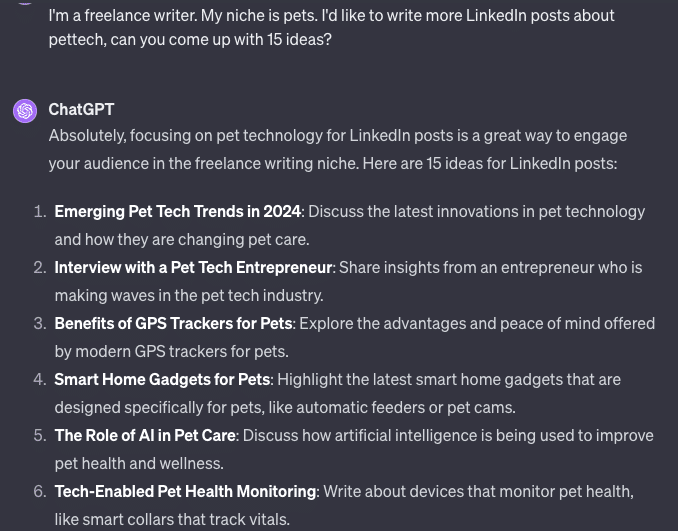
- Partner with AI Tools: If you ever find yourself truly stuck, leverage AI writing assistants like ChatGPT to break the ice. Prompt the tool to generate 10 unique LinkedIn post angles for your specific niche, then use those outputs as a springboard to inject your unique voice, stories, and professional insights.
Official Statements and Industry Insights
Top freelance educators and industry leaders emphasize that the shift toward platform-based inbound marketing represents a permanent evolution in how professional services are bought and sold.
Industry veterans note that while cold pitching and job boards will always have a marginal place in a diversified freelance business, relying on them exclusively is becoming obsolete. As companies increasingly value verified expertise, transparent thought leadership, and peer recommendations, a robust LinkedIn presence serves as the ultimate digital trust signal.
Furthermore, platforms like LinkedIn offer an ancillary benefit that traditional job boards cannot match: professional resilience. By building a sprawling network of peers, editors, and industry leaders, freelancers create a resilient safety net of referrals and recurring opportunities that insulate them against economic downturns and shifting platform algorithms.
Future Outlook
Looking ahead, the role of LinkedIn in the freelance economy is set to expand even further. As artificial intelligence continues to saturate the web with baseline content, the demand for authentic, human-centric thought leadership, original case studies, and specialized industry insights will skyrocket.
Clients are no longer looking for generic writers who can string words together; they are looking for strategic partners who deeply understand their market, hold strong points of view, and can communicate complex ideas with clarity and authority.
For freelance writers willing to invest 20 to 30 minutes a day into executing a disciplined LinkedIn strategy, the future has never looked brighter. By treating the platform not as a social media distraction, but as a sophisticated, high-leverage business development engine, you can unlock a predictable, steady stream of high-paying clients—and build a freelance writing business that stands the test of time.