

Executive Overview
The unfolding disaster aboard the USS Abraham Lincoln serves as a stark, chilling window into the priorities of the modern American national security apparatus under Secretary of War Pete Hegseth and President Donald Trump. As the carrier completes a grueling, unprecedented deployment exceeding 260 days in the Middle East amidst an active, undeclared war with Iran, reports of catastrophic morale declines, severe operational exhaustion, and service members attempting to jump overboard have exposed a profound systemic rot.
Rather than addressing the humanitarian and operational emergencies facing the fleet, the civilian leadership at the Pentagon and the White House have deflected, dismissed, and minimized the suffering of the troops. Defense Secretary Pete Hegseth—whose tenure has been defined by culture-war grievances and unwavering personal loyalty to the president rather than strategic competence—has shielded the administration from accountability.
This crisis does not exist in a vacuum. It is directly tied to a broader political strategy: maintaining the illusion of a swift, victorious campaign against Iran to prop up financial markets and protect political capital ahead of midterm elections. The inner circle revealed by recent security scares—where policy experts and Cabinet heavyweights are left behind while personal courtiers and media flatterers are prioritized—demonstrates that absolute fealty to the executive is the sole metric for survival in this administration. Hegseth has mastered this craft, cementing his status as one of the most unpopular figures in Washington while remaining entirely untouchable by his commander-in-chief.
Detailed Chronology: The USS Lincoln Ordeal and the Anatomy of a Deployment
The crisis aboard the USS Abraham Lincoln represents a catastrophic failure of military personnel management and strategic endurance. For over eight months, the nuclear-powered aircraft carrier and its strike group have operated in the Northern Arabian Sea, enduring an relentless operational tempo without standard rotations or meaningful rest breaks.
The Human Cost of an Endless Deployment
By August 2026, the cumulative toll of the mission pushed the crew past its psychological and physical breaking point. Reports verified by outlets including Stars and Stripes and the Military Times revealed that multiple sailors had attempted to jump overboard—a desperate manifestation of systemic exhaustion, profound isolation, and untreated psychological trauma. Among those impacted was a 19-year-old sailor, a young service member facing the brutal realities of combat operations far from home with virtually no institutional safety net.
Families back home, increasingly desperate as text messages detailing horrific conditions leaked ashore, began organizing and speaking out. In interviews with independent networks and military family advocates, relatives painted a picture of administrative neglect:
- Exhaustion and Overwork: Flight deck crews and support personnel were routinely forced into 12- to 14-hour shifts under punishing environmental conditions, severely degrading cognitive and physical performance.
- Compromised Safety: In one widely cited case, a sailor’s chain of command ignored explicit warnings that his prescription contact lenses had expired to the point where he could no longer clearly see flight deck operations, raising immediate, terrifying safety risks for the entire crew.
- Nutritional Deficits: Sailors reported subsisting on inadequate rations, with numerous complaints regarding "rotten" or spoiled food served during extended stretches at sea without resupply replenishment windows.
The Air Force One Decoy Incident
The institutional callousness demonstrated toward the crew of the USS Lincoln mirrors the operational self-absorption witnessed at the highest levels of the executive branch. In mid-August 2026, investigative reporting from the Washington Post revealed that President Trump executed a clandestine departure from Air Force One utilizing a catering truck as a decoy amid a credible, high-level Iranian assassination threat.
While the theatrical escape captured public attention for its sheer absurdity, political scientists and national security observers immediately zeroed in on the passenger manifest. Left behind on the vulnerable decoy aircraft were senior Cabinet officials, including Secretary of State Marco Rubio, Treasury Secretary Scott Bessent, and White House Deputy Chief of Staff Stephen Miller.
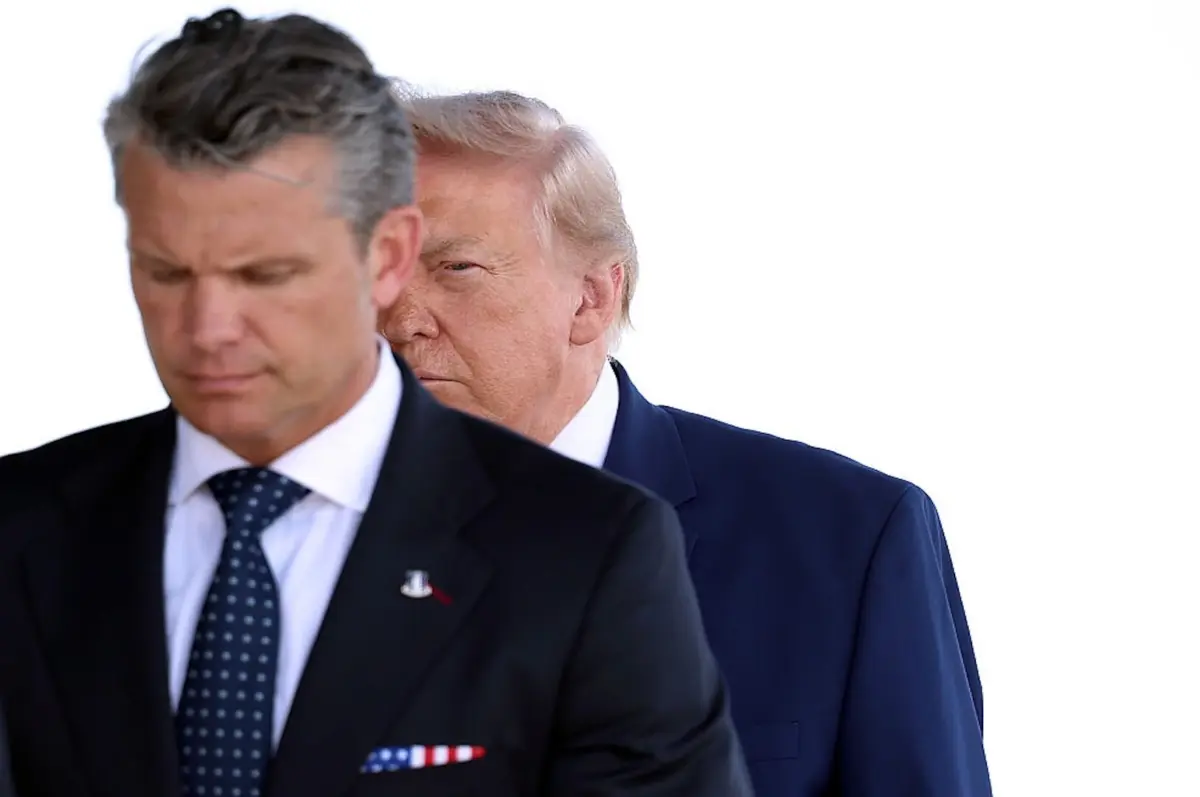
The individuals permitted to board the secure transport alongside the president were exclusively those tasked with managing his public image and daily routine: digital aides writing flattering summaries, personal valets, former golf caddies, and Defense Secretary Pete Hegseth. The exclusion of core national security principals in favor of personal courtiers laid bare an administration whose internal hierarchy prioritizes ego preservation over institutional governance.
Supporting Context & Metrics: Hegseth’s Standing, Metrics, and Strategic Blunders
To understand why Pete Hegseth remains immune to the fallout of the USS Lincoln disaster, one must examine his standing across the American public, Capitol Hill, and the executive suite. His tenure has been marked by a staggering disconnect between institutional responsibilities and personal ambitions.
Public Disapproval and Congressional Friction
Hegseth’s reputation among the American electorate is uniquely toxic. Polling data analyzed by CNN analyst Harry Enten placed Hegseth’s public approval rating at 22 points underwater—statistically positioning him as one of the most widely loathed Cabinet secretaries in modern history.
This animosity is mirrored within the halls of Congress. Despite nominal Republican majorities, GOP lawmakers on Capitol Hill have grown increasingly hostile toward the defense chief. Reports from POLITICO detailed Hegseth’s frequent, friction-laden trips to Capitol Hill, where he attempted to lobby lawmakers to pass the largest defense spending bill in American history. However, Republican legislators facing tight midterm elections have balked at tying their electoral futures to an deeply unpopular war with Iran and a defense secretary viewed as both erratic and incompetent.
Lawmakers remember the chaotic confirmation process, which required intense partisan pressure to push through over bipartisan objections regarding his lack of administrative experience. Rather than building a coalition based on strategic competence, Hegseth has relied on ideological gatekeeping.
Ideological Purges and Personnel Mismanagement
While operational readiness across the fleet deteriorates, Hegseth has dedicated significant institutional bandwidth to reshaping the military’s internal culture. Rather than focusing on logistics, recruitment, and sailor welfare, the defense secretary has systematically blocked the promotions of qualified officers and enlisted leaders whose profiles do not align with administration orthodoxy—specifically targeting women and minority leaders under the banner of eradicating Diversity, Equity, and Inclusion (DEI) initiatives.
Publicly, Hegseth has doubled down on personal attacks against service members, previously using media appearances and digital video platforms to berate troops over physical fitness standards, personal grooming ("beardos"), and speculative critiques of physical wellness, all while the actual forces under his command face starvation-level rations and sleep deprivation at sea.
Official Statements and Administration Spin
The response from the Trump administration to the unfolding humanitarian crisis aboard the USS Abraham Lincoln has been characterized by aggressive denial and political posturing.
Pentagon Deflection
Confronted with mounting evidence of sailor distress, suicide attempts, and plummeting morale, Defense Secretary Hegseth flatly rejected the reports during a press briefing. He asserted that the situation on the carrier had been "completely misrepresented" by media outlets and families, insisting that the deployed service members possessed "everything we can provide them at every single moment."
This defensive posture ignored direct communications from sailors and frantic appeals submitted to Navy leadership by military spouses and advocacy groups.
Presidential Dismissal
President Trump adopted an even more callous tone regarding the record-breaking deployment. Speaking publicly on the duration of the mission—which surpassed 260 days at sea—Trump dismissed concerns by asserting that the deployment was "not nearly long enough."
The cognitive dissonance of the administration’s messaging was laid bare when, under immense pressure and facing the threat of operational collapse, the acting Navy secretary abruptly announced that the USS Lincoln would finally be ordered home to the United States, to be relieved in the region by the USS George Washington.
Future Outlook: The Geopolitical and Domestic Fallout
The convergence of the USS Lincoln crisis, the broader military stalemate with Iran, and the shifting economic landscape presents severe risks for the administration as the nation moves closer to the midterms.
The Illusion of a "Quick Deal"
For months, the White House has sustained an economic and political narrative hinged on imminent victory or a diplomatic breakthrough with Tehran. Frequently timed to coincide with the opening bell of the stock market, administration announcements regarding a pending "deal" have served as temporary props to stabilize equities and reassure MAGA voters.
However, reality is rapidly eroding these illusions. The decision to rotate out the USS Lincoln acts as a tacit admission to financial markets and international observers that the conflict in the Middle East is protracted, escalating, and far from resolved. This reality was punctuated by intelligence reports indicating that Tehran is actively planning to escalate military operations against U.S. regional assets.
Institutional Survival in an Echo Chamber
As long as Pete Hegseth continues to fulfill his primary function—reinforcing the president’s worldview, attacking the independent press, and executing culture-war directives within the Pentagon—his position appears secure. Trump’s public declaration on social media that he is "extremely happy with the job that Pete Hegseth is doing" underscores a terrifying reality: in the current political ecosystem, institutional competence, troop welfare, and strategic victory are entirely secondary to personal sycophancy.
For the 19-year-old sailors on flight decks in the Arabian Sea, this dynamic translates into a Kafkaesque nightmare where survival is weighed against the political convenience of Washington elites. The disaster aboard the USS Lincoln will undoubtedly be studied for generations as a textbook case of leadership failure—where a secretary of war traded the lives and mental health of America’s fighting forces for proximity to power and the preservation of an administration’s fragile illusion.