

Executive Overview
In the sprawling, hyper-accelerated ecosystem of modern internet culture, viral sensations often arrive with meticulously engineered marketing strategies, algorithmic optimization, and high-production budgets. Yet, every so often, a phenomenon emerges from the opposite end of the spectrum—born of sheer exhaustion, late-night absurdity, and pure improvisational lightning. Enter Chanty Beluga, a fictional, deeply ambiguous internet persona who has quietly—and then all at once—colonized social media feeds across TikTok, Instagram, and X.
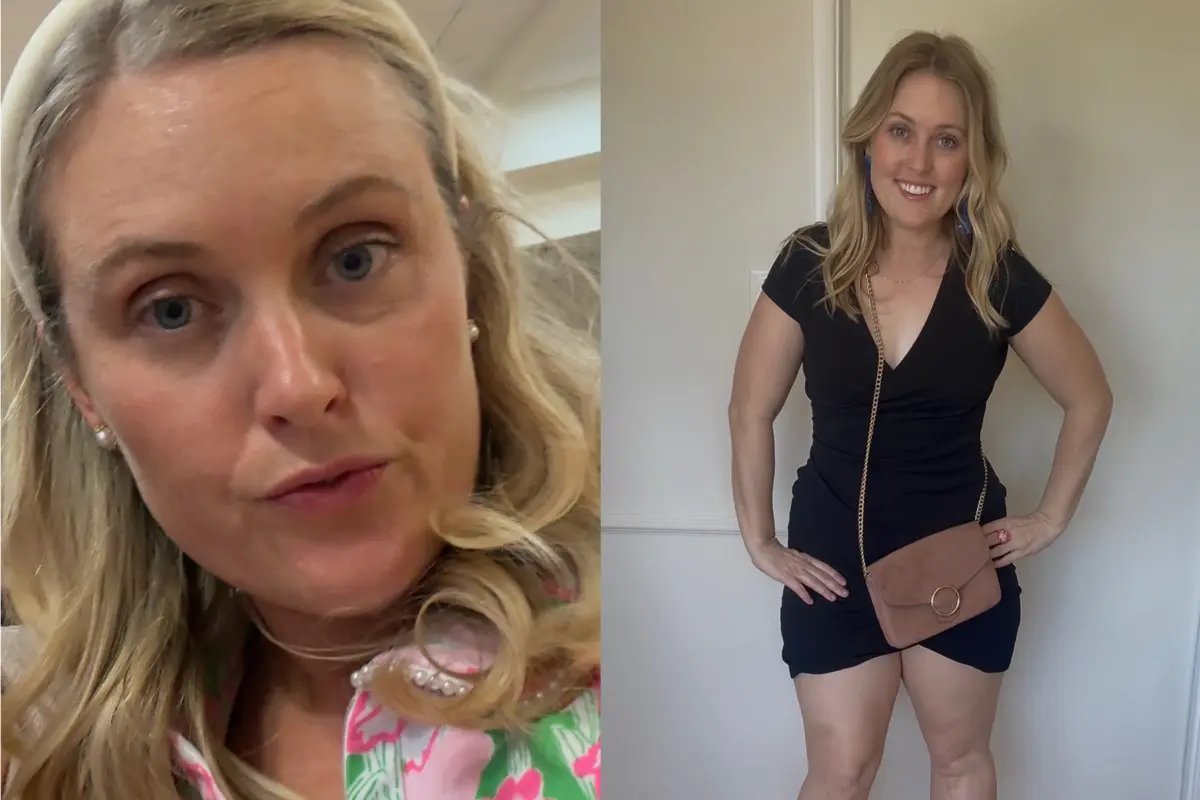
To the uninitiated scrolling through their feeds, Chanty Beluga looks like a real person experiencing a bizarrely specific brand of main-character syndrome. Videos show a young woman stepping into an Uber and casually asking the driver if the ride is for "Chanty Beluga," or striding up to a crowded restaurant hostess stand to claim a reservation for two under the exact same name. Elsewhere, internet users are treated to delicate, deadpan acoustic covers of the Plain White T’s classic “Hey There Delilah” with the name seamlessly swapped out for Chanty’s. Fan accounts have sprouted overnight, posting wild, unsubstantiated rumors: that Chanty owes thousands of dollars, that she was recently spotted ordering a chaotic concoction at Smoothie King, or that she famously hit someone with a car.
The woman behind the digital storm is 31-year-old comedian, writer, and actress Courtney O’Donnell. In her first-ever interview regarding the character, O’Donnell spoke candidly about how a throwaway joke meant for a tiny circle of exhausted castmates morphed into an uncontrollable digital wildfire. What started as an inside joke among ten people on a Brooklyn film set has transformed into a blank-slate digital phenomenon—a modern paper doll onto which the collective internet is projecting its most absurd, highly specific lore.
As O’Donnell’s broader comedic footprint continues to expand—spanning upcoming film roles, satirical podcasts, and theatrical one-woman shows—Chanty Beluga stands as a testament to the unpredictable nature of internet virality: a collective hallucination driven by linguistic satisfaction, anti-establishment content fatigue, and the sheer joy of collaborative storytelling.
Detailed Chronology: From a 4 A.M. Brooklyn Set to Global Virality
The genesis of Chanty Beluga is deeply rooted in the grueling, surreal reality of indie filmmaking. The character was born around 4:00 a.m. on the set of the upcoming comedy film Stephanie Bride to Be. The production was nearing the end of a punishing 10-day improvised shoot in Brooklyn—a project executive produced by John Wilson and featuring an ensemble cast that includes Michael Imperioli, Amy Sedaris, Saturday Night Live breakout Veronika Slowikowska, and O’Donnell herself.
As the nocturnal hours stretched on, a tight-knit group of actors, writers, and crew members found themselves fighting off exhaustion by engaging in bouts of pure, unstructured silliness.
"We were just totally dicking around, being silly," O’Donnell recalls. "And I said, ‘Hi, my name’s Chanty,’ and we thought that was funny."
The name arrived entirely apropos of nothing, floating into the conversation without context or premeditation. Minutes later, the bit evolved. "Then later, I was like, ‘Actually, my name is Chanty Beluga.’ We said the full name, and it seriously went viral in the room. We just could not stop saying Chanty Beluga."
Recognizing the hypnotic cadence of the moniker, O’Donnell decided to test the waters outside the closed ecosystem of the film set. Upon returning home, she recorded a quick, unpretentious self-tape of Chanty introducing herself to the camera and uploaded it. The response was immediate. Viewers intuitively understood the deadpan premise and latched onto its dead-eyed sincerity. Buoyed by the initial reception, O’Donnell established a dedicated Instagram account under the character’s name and uploaded a sparse handful of follow-up clips.
Within days, reality began to warp around the digital creation.
"I had posted maybe two or three videos, with, like, A woman named Chanty Beluga does this, and there started to be these little fan accounts popping up," O’Donnell says.
The speed of the character’s autonomization was so rapid that even O’Donnell’s close friends grew suspicious, accusing her of manufacturing the fan accounts herself as part of a viral marketing stunt. "I swear these are random people on the internet," she protested to her inner circle. "I’m not a psychopath!"
Yet, the internet had taken the wheel. Rather than attempting to control the narrative or construct an elaborate backstory, O’Donnell made a crucial creative choice: she stepped back and let the public write the lore. Today, the Chanty-verse includes elaborate cross-overs with other micro-celebrities of the comedy world—such as rumors that Chanty Beluga and Maddie Ralph (the central figure of John Early’s critically acclaimed directorial debut Maddie’s Secret) have never been seen in the same room together—alongside an escalating catalog of urban legends detailing her financial ruin, traffic violations, and general public disturbances.
Supporting Context & Metrics: Why Chanty Beluga Resonates
To understand why a fictional woman named Chanty Beluga has captured the digital zeitgeist so effectively requires examining the current structural fatigue of social media content. According to O’Donnell, the character’s massive appeal boils down to a combination of linguistic mechanics and a broader rebellion against conventional influencer culture.
The Phonaesthetics of "Chanty Beluga"
First and foremost is the intrinsic satisfaction of the name itself. "Something about the intonation of the words feels like crack to say," O’Donnell notes with a laugh. The rhythm of the syllables offers a bouncy, absurd cadence that practically demands to be repeated aloud, making it an ideal vehicle for viral repetition.
A Cure for "Main Character" Fatigue
Furthermore, Chanty represents a direct satirical counterweight to contemporary social media feeds. In an era where platforms are saturated with lifestyle influencers, curated "day-in-the-life" vlogs, and hyper-relatable content designed to hold up a flattering mirror to the viewer’s everyday experiences, Chanty Beluga offers a refreshing alternative.
"Everyone feels like they have to create this content that holds up a mirror to everyone else’s experience," O’Donnell explains. "And with Chanty, no one else is named Chanty."
The Ultimate Blank Slate
Unlike heavily scripted comedy characters with rigid narrative arcs, Chanty functions as a digital paper doll. She possesses blond hair, a flat affect, and zero defined backstory, transforming her into a universal vessel.
"She’s a Barbie doll. She’s a paper doll. You can put her in any situation. She can do anything," O’Donnell remarks. "I had this instinct to really build her up and create this crazy backstory, but I thought it was more interesting to allow the internet to create its own."
The strategy has paid massive dividends. The community-generated lore has expanded exponentially, with users spinning intricate webs of fictional misconduct:
- Financial Instability: Widespread claims that Chanty owes various internet users sums ranging from $5,000 to unspecified amounts.
- Reckless Endangerment: Persistent, baseless online accusations that she has struck pedestrians with her vehicle.
- Public Eccentricity: Detailed fan fiction placing Chanty in mundane public locations—such as Smoothie King or local bodega lines—engaging in completely unhinged behavior.
- Imminent Downfall: Anticipation threads predicting her inevitable "cancelation" over fictional scandals.
This decentralized world-building has turned Chanty Beluga into a living, breathing digital folk hero—one whose mythology is written by the very audience consuming her.
Official Statements & Creative Ecosystem: Beyond the Meme
While Chanty Beluga is currently dominating O’Donnell’s public profile, she is far from a one-trick pony. O’Donnell’s broader comedic output is characterized by a sharp, incisive critique of modern wellness culture, millennial corporate aesthetics, and the performative nature of digital fame.
Satirizing the Podcast Industrial Complex
O’Donnell co-hosts the satirical fake podcast Yup, She Went There alongside fellow comedian Chelsea Morgan. The show mercilessly lampoons the saturated "podcast-clip-farm world" that defines modern internet entertainment.
"It is just about saying the craziest thing, or hawking the craziest thing, like Ozempic water or placenta chips," O’Donnell notes of the cultural landscape she and Morgan target.
Bringing Planet Courtney to the Stage
On August 26, O’Donnell brought her acclaimed one-woman show, Planet Courtney, to the legendary La MaMa Experimental Theatre Club in New York City. The production features an exaggerated, deeply chaotic iteration of herself tasked with saving her home planet from financial ruin and private equity takeovers.
To achieve this, the protagonist cycles through a series of soul-crushing service industry jobs—including therapist, waitress, and flight attendant—frequently pulling unsuspecting audience members onto the stage to serve as her clients.
"Yes, I do tableside guac," O’Donnell quips, describing the show’s aesthetic as "a fun, crazy, zany, out-there world, [with] a very millennial girl-boss culture backdrop."
Going Pop and the Anatomy of the Canceled Pop Star
O’Donnell’s creative ambitions extend into narrative filmmaking. Last year, she released the short film Going Pop, which follows a fictional, canceled pop star named Courtney attempting a desperate comeback.
The project was born out of a sharp observation of contemporary pop music trends. "At the time we filmed that in 2024, Katy Perry, Meghan Trainor, [all these pop stars] were trying to hop on the success of Charli XCX and Chappell Roan, who were these artists doing this very interesting thing and celebrating queer culture," O’Donnell explains. "So I was like, I want to write a character who’s trying to jump on that moment and step into something that might feel inauthentic in order to gain fame."
The film allowed O’Donnell to lean into her lifelong ambitions of musical performance. Writing an original pop song for the project, she fulfilled a childhood dream—though she jokes that her musical roots trace back to embarrassing teenage YouTube covers.
"I’m doing this [in] a really sensual way," she laughs, recalling her past cover of Rihanna’s "What’s My Name?". "It’s funny because I’m 14 and never kissed a boy."
Having started her stand-up career in Brooklyn in 2019 before relocating to Los Angeles three years ago, O’Donnell credits the West Coast creative energy with broadening her artistic scope.
"There was just an energy in L.A. of people making things that really excited me," she reflects. "It really opened up my aperture to being like, I don’t want to just be a stand-up. I want to write, I want to act, I want to do it all."
Future Outlook: The Evolution of Chanty and Beyond
As O’Donnell navigates her sudden surge in digital visibility, she has also experienced the darker, more literal-minded side of internet culture. Her satirical sketches—such as a video deadpan-announcing, "I just invested $15,000 in Palantir, and I’m going to get mochi pancakes with my sister-in-law. Life is good"—frequently attract fierce backlash and even death threats from viewers entirely missing the satirical subtext.
"I’m just satirizing that there are people out there that do say and do those crazy things in 2026," she notes.
Despite the occasional confusion of literalists, the momentum behind her career is undeniable. Going Pop is currently in active development talks for adaptation into a longer-form comedy series, and her cinematic footprint will expand significantly when Stephanie Bride to Be hits screens next year.
While viewers should not expect Chanty Beluga to make a traditional narrative cameo in the film, O’Donnell promises that her spirit looms large over the production’s final hours.
"You won’t see Chanty in it, but you will know she was born somewhere toward the end of the movie," she teases.
As for the future of Chanty Beluga herself? O’Donnell is content to let the internet steer the vessel, maintaining an open-ended trajectory fueled by absurdity and corporate satire.
"[We’ll] see where Chanty takes us on this journey," she concludes with a grin. "I’m not going to stop until I get a brand deal with Raytheon."