


Executive Overview
The landscape of freelance writing has shifted irrevocably. Artificial intelligence tools are no longer experimental novelties or futuristic concepts up for debate; they are foundational infrastructure. For contemporary freelance writers, resisting these technologies is no longer a badge of honor—it is a self-imposed operational handicap.
However, a dangerous dichotomy has emerged within the digital economy. On one side are the thriving professionals who leverage AI as a force multiplier, offloading administrative friction and cognitive fatigue to focus heavily on original thought, investigative reporting, subject matter expert (SME) interviews, and client relationships. On the other side are those caught in a downward spiral: either ignoring technological advancements entirely or using them as a clumsy crutch to mass-produce hollow, homogenized content that discerning clients can spot within seconds.
This comprehensive guide breaks down ten strategic workflows that elevate a freelance writing career. Rather than replacing human ingenuity, these methods automate the mechanical friction of the craft, allowing writers to operate at maximum efficiency, eliminate burnout, and deliver exceptional value to the market.

Detailed Chronology: The Evolution of the AI Writing Workflow
To understand how artificial intelligence fits into the modern freelance ecosystem, it helps to examine how the relationship between writers and machines has evolved over recent years:
- Phase 1: The Novelty Wave (Early Generative AI Era). Writers viewed large language models primarily as automated ghostwriters. The goal was to prompt the AI to write entire blog posts or articles from scratch, resulting in a flood of robotic, derivative content that quickly saturated the web and turned clients off.
- Phase 2: The Backlash and the Crutch. As clients grew wise to unedited AI output, a strong counter-movement emerged. Many writers panicked, rejecting AI entirely, while others leaned harder into deceptive practices, leading to a race to the bottom characterized by declining rates and poor-quality deliverables.
- Phase 3: The Augmentation Era (Current State). Successful independent professionals realized that AI is fundamentally a process tool rather than a creative replacement. The workflow shifted from generation to collaboration—using AI to shatter writer’s block, synthesize complex research, streamline editing, and gamify business administration.
Supporting Context & Metrics: The 10 Essential AI Workflows for Freelancers
If you want to scale your freelance writing business efficiently, you must integrate AI where it excels and maintain strict human oversight where it matters most. Here are ten ways to transform your daily operations.
1. Beating the Blank Page
The psychological dread of the blank document is responsible for more lost productivity than any other factor in writing. You understand the topic, you possess the raw expertise, but bridging the gap between an empty screen and a functioning sentence feels agonizing.
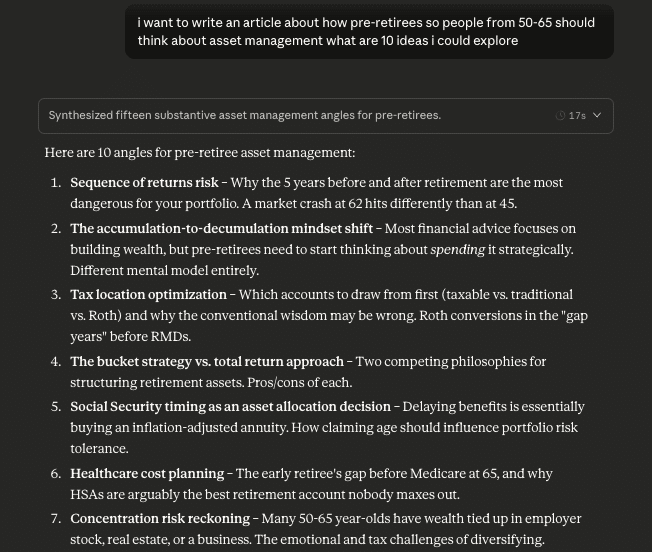
AI acts as a cognitive springboard. Do not ask ChatGPT or Claude to write the piece for you; instead, demand momentum. Ask the model to generate ten distinct structural angles, alternative opening paragraphs, or a list of burning questions a critical reader might ask. Most outputs will require refinement, but that is irrelevant—the paralysis is broken. You are no longer staring at nothing; you are reacting to something.
2. Systematic Outlining and Content Structuring
Professional writing requires rigorous organization. Before drafting a single word of a blog post, article, or pitch, a clear roadmap is essential.
AI excels at structural planning. By feeding a topic into your preferred LLM and requesting a hierarchical framework, you receive a logical progression of subheadings and thematic sections. Advanced users can establish repeatable intake prompts—specifying target demographics, overarching goals, primary data points, and key quotes—allowing the AI to rapidly assemble customized outlines that organize messy, raw thoughts into a coherent blueprint.

3. Accelerated Research and Triage
Freelance writing demands deep, time-consuming research. Reviewing lengthy studies, white papers, and industry reports can easily consume hours before a single sentence is drafted.
AI dramatically accelerates the triage phase. Tools like Perplexity Pro serve as dedicated research assistants, scanning the live web to deliver verified data points complete with primary source citations. Similarly, pasting lengthy reports into Claude or ChatGPT allows you to instantly extract executive summaries, flag core arguments, and isolate vital statistics. This initial legwork ensures you never waste twenty minutes reading a massive document only to discover the core data is outdated.
4. Drafting Cold Outreach and Letters of Introduction (LOIs)
Consistent prospecting is the lifeblood of a sustainable freelance business, yet writing repetitive letters of introduction (LOIs) drains creative energy.
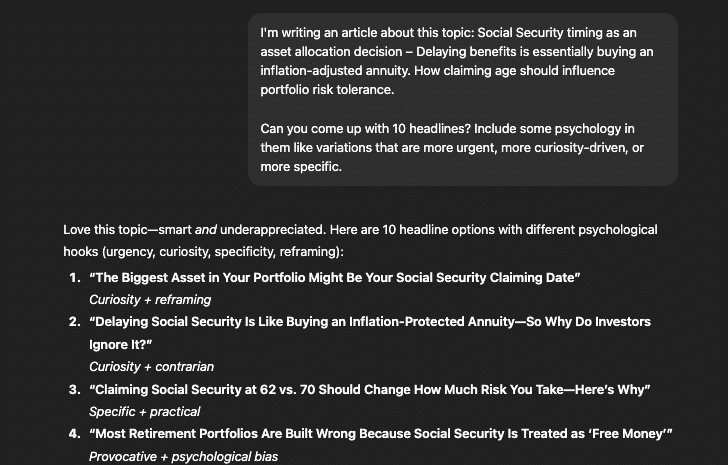
While AI can quickly draft baseline templates and alternative phrasing variations, the human element remains non-negotiable. To stand out from peers who copy-paste raw chat outputs, you must inject hyper-personalized context. Use AI to surface recent milestones—such as a company winning an industry award or publishing a groundbreaking study—and use that data to craft a tailored opening hook. The machine builds the structural foundation; your human insight closes the gap.
5. High-Impact Headlines and Hooks
An article’s headline and opening line dictate its commercial viability. If the hook fails to capture attention, the underlying quality of the research becomes irrelevant.
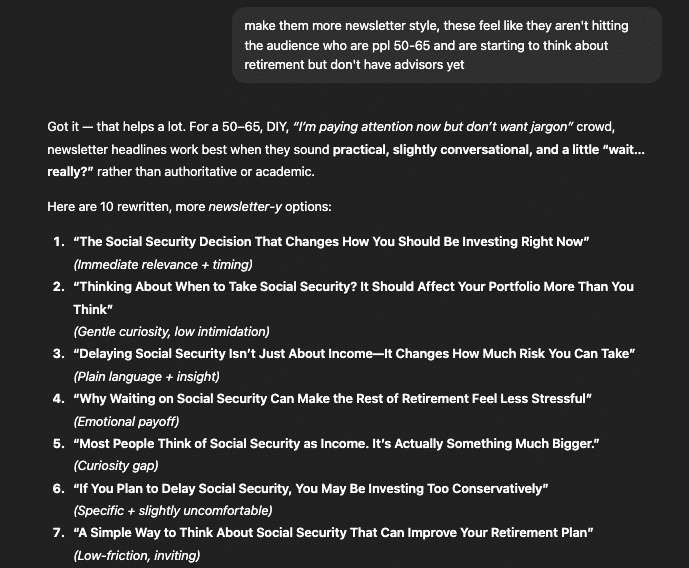
Because crafting compelling, non-clickbait titles is notoriously difficult, AI serves as an exceptional brainstorming engine. Prompting an LLM for ten headline variations driven by varying psychological triggers—urgency, curiosity, or hyper-specificity—provides a rich menu of options. Even if you discard every generated title, the process sparks lateral thinking, allowing you to mix and match fragments to construct the ideal hook.
6. Advanced Editing and Proofreading
Human eyes are notoriously poor editors of their own work. After reading a paragraph five times, the brain naturally fills in missing words and glosses over awkward syntax.
AI introduces a truly fresh perspective. Pasting your draft into an LLM and explicitly asking it to flag wordiness, convoluted phrasing, or logical gaps transforms the tool into a rigorous developmental editor. Furthermore, you can instruct the model to role-play as your exact target audience, querying it about which sections feel confusing or unconvincing. Combined with dedicated proofreading tools like Grammarly, this multi-layered review process ensures your voice remains intact while eliminating structural flaws.
7. Strategic Content Repurposing
Producing a 1,500-word authoritative article represents significant cognitive investment. Stopping there leaves massive value on the table.

Modern content distribution requires multi-channel promotion. By feeding your completed article into an AI assistant, you can systematically extract and reformat content for alternative platforms. Request a series of LinkedIn post hooks, Twitter threads, newsletter snippets, or promotional blurbs. This workflow transforms a single piece of core writing into five to ten distinct distribution assets, multiplying your market reach without demanding exponential effort.
8. Intelligent Interview Preparation
Securing interviews with Subject Matter Experts (SMEs) is a privilege that should never be wasted on basic questions easily answered via a simple web search.
Prior to an interview, leverage AI to analyze your subject’s background, review current industry trends, and generate a robust list of probing, highly specific questions. This preparation ensures you command the expert’s respect, guiding the conversation toward unique insights, fresh anecdotes, and quotable commentary that elevate your final piece.

9. Managing and Mining Transcripts
Conducting recorded SME interviews generates massive walls of raw transcription text. Sifting through hours of audio logs to locate a specific data point regarding regulatory compliance or technical specifications can derail a writing schedule.
Modern transcription tools equipped with native chat functionalities—such as Otter.ai—allow you to query your interview transcripts directly. You can instantly command the system to extract the strongest quotes, summarize thematic clusters, or locate precise conversational moments. Crucially, every extracted quote must be cross-verified against the original audio file prior to publication to guarantee absolute accuracy.
10. Gamified Marketing and Pipeline Tracking
Freelancers historically despise administrative spreadsheets, leading to abandoned pipelines and inconsistent client acquisition metrics.
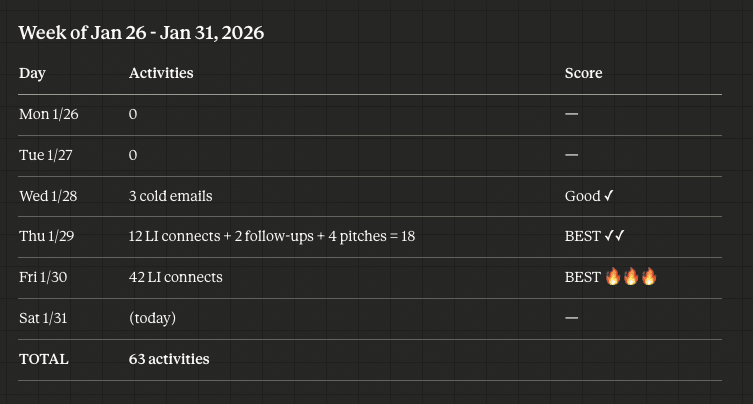
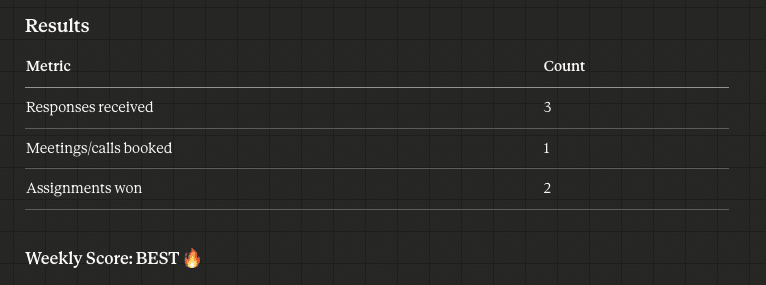
Advanced AI interfaces—such as Claude Cowork—can function as a personalized, conversational CRM. By logging your daily outreach activities (dates, contacts, pitch variations, and response rates) into an ongoing chat session, you create an intelligent assistant that remembers every detail. At month-end, you can request comprehensive performance summaries, conversion analytics, and motivational scorecards. This visibility allows you to diagnose pipeline bottlenecks—such as identifying whether low conversion rates stem from flawed cold email copy or insufficient follow-up volume.
Official Industry Standards: What NOT to Do with AI
To maintain professional integrity and client trust, every freelance writer must establish strict operational boundaries regarding artificial intelligence:
- Never outsource original thought. If your entire value proposition consists of stringing together generic AI prompts, you are directly competing with automated algorithms and low-cost competitors. Your unique perspective, lived experience, and investigative reporting are your true economic moats.
- Never skip the fact-checking phase. Hallucinations and false attributions remain inherent risks in generative models. Publishing unverified statistics or misquoted experts destroys professional credibility.
- Never ignore client guidelines. Always respect client transparency policies regarding the use of generative tools in their contracted deliverables.
Future Outlook
The commercial integration of artificial intelligence within the freelance writing sector is accelerating. Over the coming years, writers who master these operational workflows will not only outpace their peers in sheer output and speed, but they will also insulate themselves against burnout.
The future does not belong to writers who ignore technology, nor does it belong to algorithms masquerading as humans. It belongs to the hybrid professional: the augmented writer who uses machines to handle the tedious mechanics of the craft, preserving their energy for the deep thinking, strategic empathy, and authentic relationships that define true expertise. Start by integrating one or two of these workflows into your daily routine today, and scale your business sustainably into the future.