

By Patricia J. Murphy
Executive Overview
Across the United States, elementary and secondary school media centers are undergoing a quiet yet transformative reorganization. As educators, media specialists, and district administrators prepare their cataloging systems for modern cohorts of digital-native students, a fundamental question has emerged at the center of school library science: Should school collections remain strictly organized by traditional cataloging systems—such as the Dewey Decimal System and author surname alphabetization—or should they be reorganized by genre?
Known within educational circles as "genrefication," the practice involves physically restructuring library collections into distinct, interest-based categories such as mystery, graphic novels, survival, horror, science fiction, and historical fiction. While traditionalists argue that rigid adherence to legacy systems teaches institutional research skills, a growing coalition of teacher-librarians asserts that genrefication dramatically reduces friction in book selection, aligns physical stacks with contemporary retail and streaming navigation models, and directly increases library circulation rates.
This report investigates the operational strategies, pedagogical rationale, and systemic impacts of library genrefication through the firsthand accounts of three educators across Georgia, New Hampshire, and Indiana. Their experiences reveal that while the physical re-cataloging process demands substantial labor, the resulting dividends in student autonomy, reading engagement, and peer-to-peer literary communities mark a significant evolution in K-12 media commons management.
Detailed Chronology and Operational Methodologies
Transitioning a school library from a standardized cataloging system to a genrefied commons is a complex infrastructural undertaking. It requires strategic collection auditing, software updates, physical re-labeling, and instructional redesign. The implementation trajectories of educators in three distinct school districts illustrate how this transition unfolds across primary and secondary environments.
GENREFICATION IMPLEMENTATION TIMELINE
========================================================================================
[ PHASE 1: PREPARATION ] ──► [ PHASE 2: AUDITING & WEEDING ] ──► [ PHASE 3: METADATA & LABELS ]
 • District Policy Alignment   • Collection Diversity Audit     • System Sub-location Mapping
 • Student Interest Survey     • Removal of Outdated Titles     • Color-coded Genre Sticker Application
                                                                           │
[ SUSTAINED USAGE ] ◄─────── [ STUDENT FEEDBACK & REFINEMENT ] ◄──────────┘
 • Self-directed Browsing     • Peer Debates on Ambiguous Titles
 • Cross-curricular Access    • Dynamic Genre Wheel Integration
========================================================================================
Phase 1: Architectural Planning and District-Level Initiatives (Georgia)
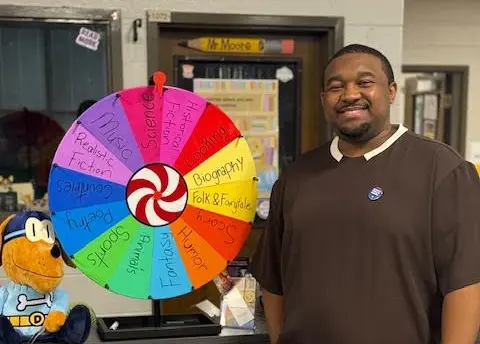
At Powder Springs Elementary School in Georgia, school librarian Nicholas Moore initiated the conversion of his facility’s Library Learning Commons as part of his district’s library media certification requirements. Recognizing that institutional adoption required evidence-based planning, Moore aligned his efforts with a district-wide initiative premised on a core metric: intuitive cataloging directly correlates with increased student reading stamina and circulation volume.
Moore’s process began with a comprehensive mapping of potential genres tailored to the reading levels and demographic profiles of his student body. Rather than relying solely on high-level commercial categories, Moore audited existing holdings to identify both fiction and non-fiction niches:
- Fiction Refinement: Expanding baseline categories (e.g., scary stories, sports, science fiction) into broader experiential themes.
- Non-Fiction Restructuring: Reorganizing non-fiction away from pure numerical classification into curated subjects such as cooking, fine arts, music, and craft-based learning designed to foster independent, home-based skill development.
- Curriculum Mapping: Subdividing non-fiction holdings directly into English Language Arts (ELA) and Mathematics thematic modules to facilitate cross-disciplinary co-teaching with classroom educators.
The physical execution required a systematic audit: pulling thousands of volumes, adjusting physical shelving units, applying color-coded genre labels to book spines, updating localized metadata in the library database, and placing clear directional signage throughout the facility.
TRADITIONAL DEWEY SYSTEM vs. HYBRID GENREFIED MODEL
----------------------------------------------------------------------------------------
Traditional Non-Fiction (Dewey)          Genrefied Integrated Non-Fiction
--------------------------------         ------------------------------------------------
500–599: Natural Sciences                [ Mathematics Core ] ──► Aligned to Curriculum
600–699: Applied Sciences & Tech         [ Life Sciences ]    ──► Categorized by Animal/Eco-system
700–799: Arts & Recreation               [ Creative Arts ]    ──► Cooking, Painting, Music Focus
----------------------------------------------------------------------------------------
Phase 2: Organic Integration and Classroom-Level Adaptation (New Hampshire)
For middle-grade educators operating outside formal district mandates, genrefication often emerges organically from classroom instruction. At Cornish Elementary School in central New Hampshire, Kelsey Dangelo-Worth—who teaches sixth- through eighth-grade ELA and eighth-grade social studies—began genrefying her instructional and classroom collections to mirror the natural conversational flow of student book recommendations.
Dangelo-Worth’s process was iterative:
- Instructional Anchors: First, she segmented core classroom novel sets, independent reading materials, and specific historical fiction and non-fiction texts utilized in her social studies curriculum.
- Targeted Separation: Transitioning materials from her previous teaching roles across grades 5–7, she intentionally split standard middle-grade realistic fiction from Young Adult (YA) inventory.
- Genre Isolation: Materials were subsequently divided into high-yield browsing zones: Science Fiction, Fantasy, Mystery, and Humor.
By organizing books around thematic intent rather than author surname, Dangelo-Worth created a localized ecosystem where students could transfer enthusiasm from a completed text directly to neighboring volumes on the same shelf.
Phase 3: Student-Centric Classification and Systemic Scaling (Indiana)
In South Bend, Indiana, Jennifer Sniadecki—a middle school librarian and District Library Facilitator for the South Bend Community School Corporation—began her multi-year genrefication initiative by targeting a high-demand point of friction: the horror genre. Responding to daily inquiries from students seeking "scary books," Sniadecki audited author holdings (such as titles by R.L. Stine and Lindsay Currie) and consolidated them into a unified section.
Now in her fifth year of full-scale genrefication, Sniadecki’s methodology combines automated collection management with direct student participation:
- Integrated Library System (ILS) Automation: Utilizing the Alexandria library management software, Sniadecki systematically updates MARC (Machine-Readable Cataloging) records to reflect physical genre locations.
- Student-Led Categorization: When cataloging metadata fails to assign a clear genre, student library volunteers participate in selection committees. Students analyze back-cover copy, review preliminary chapters, and deliberate on the primary appeal of ambiguous titles.
- Modified Dewey Non-Fiction: For non-fiction collections, Sniadecki implemented a hybrid model. She retains core Dewey Decimal classifications (such as the 599 series for mammals) but physically clusters related volumes into intuitive subject groups—separating titles into dedicated sub-sections like apex predators, marine life, and domesticated animals.
Supporting Context and Quantitative Metrics
The nationwide shift toward genrefication highlights a broader evolution in educational media theory: balancing traditional information literacy with low-barrier access models modeled after modern information consumption patterns.
The Shift from Traditional Cataloging to Commercial Discoverability
Historically, library media centers were structured around rigid classification standards created in the 19th century. While effective for standardized research, traditional cataloging creates cognitive barriers for young learners who browse by interest rather than by metadata identifiers like author names or call numbers.
┌─────────────────────────────────────────────────────────────────────────┐
│                     CATALOGING MODEL COMPARISON                         │
├───────────────────────────────┬─────────────────────────────────────────┤
│ Traditional Dewey/Author      │ Genrefied Layout                        │
├───────────────────────────────┼─────────────────────────────────────────┤
│ • System-centric design       │ • User-centric design                   │
│ • Requires catalog lookup     │ • Enables direct visual discovery       │
│ • Alphabetical/Numeric focus  │ • Subject/Interest-based clustering     │
│ • High reliance on staff      │ • Encourages self-directed autonomy     │
└───────────────────────────────┴─────────────────────────────────────────┘
Educational researchers note that contemporary students navigate media platforms (such as streaming video services, digital storefronts, and audio applications) that rely heavily on hyper-specific genre tagging and algorithmic curation. When faced with uniform rows of alphabetically arranged books, casual or struggling readers often experience choice overload. Genrefication translates modern digital discovery patterns into physical space.
Literacy Outcomes and Behavioral Analytics
Data from media centers adopting genre-based shelving consistently indicate improvements across key performance indicators:
- Circulation Velocity: Media specialists report immediate spikes in overall circulation following genrefication, particularly among reluctant readers who can locate target interests without querying an online catalog.
- Browsing Autonomy: By replacing abstract numeric systems with contextual categories, libraries observe a reduction in basic location inquiries, allowing media staff to pivot from mechanical direction to deep reader advisory.
- Cross-Curriculum Efficiency: Educators leveraging non-fiction collections organized by subject-area modules (such as STEM, Environmental Science, or American History) spend significantly less time compiling supplemental resources for classroom units.
Official Statements and Expert Insights
The educators leading these transformation efforts emphasize that genrefication is fundamentally an equity and access initiative designed to foster lifelong literacy habits.
Nicholas Moore underscores the operational dividends observed at Powder Springs Elementary School:
"The district’s belief is that with genrefying, kids want to read more. They’re more into books, and circulation goes up. They’re going to shelves more than they have before. At first, many kids didn’t know what genres were, but now they get it, and they can find books more quickly."
Addressing the broader mission of the media commons, Moore added:
"I’m here to promote reading and learning. Genrefying won’t look the same in every library, but it’ll help kids develop a passion for books."
                                  "As an ELA teacher, I want
                                  to teach kids how to read,
                                  but I also want to make readers!"
                                  — KELSEY DANGELO-WORTH
From a secondary classroom perspective, Kelsey Dangelo-Worth highlights the social and psychological impact of interest-based physical spaces:
"When I ask, ‘What do you feel like reading right now?’ they can browse our shelves on their own and choose exactly what they want. As an ELA teacher, I want to teach kids how to read, but I also want to make readers!
It’s being able to hook a kid on one book, and then have them look on the shelf and say, ‘Hey, I like this one in this genre. I can read that one, too!’ And then, there are the connections made between readers. It’s about who they’re going to meet at the shelves and ask, ‘You like that book, too?’ It allows them to be a part of the literary space—and the world."
Jennifer Sniadecki stresses the importance of involving students in the administrative design of their own media centers, pointing to recent student debates over complex titles such as the Misfits series by Lisa Yee and Dan Santat:
"Before genrefying, I had kids coming in daily asking where the scary stories were… And I thought, ‘Why don’t I pull all of them together?’
[When classifying ambiguous titles,] it’s really a mystery series, but the kids think the characters are more adventurous. So, we put the copies in adventure. The true purpose of genrefying is to find books in the library. And, because it’s their library, they need to use it the way that makes sense to them."
Sniadecki views independent navigation as essential preparation for post-secondary transitions:
"There isn’t always going to be someone there to help. Being a librarian, I’ve taken an oath to find the perfect books and genres for every student so they can grow in their love of reading and knowledge of the world."
Future Outlook: The Evolution of School Media Commons
As genrefication expands from an experimental alternative into an established standard within K-12 library media science, several operational trends are shaping its future trajectory:
                  FUTURE TRENDS IN LIBRARY GENREFICATION
                                     │
      ┌──────────────────────────────┼──────────────────────────────┐
      ▼                              ▼                              ▼
[ Dynamic Cataloging ]     [ Metadata Integration ]    [ Collaborative Curation ]
  Flexible shelving that     ILS systems updating        Student committees driving
  adapts to shifting         MARC records to track       tagging, acquisitions, and
  pop-culture interest.      localized genres.           inter-disciplinary units.
1. Hybrid Dewey-Genre Frameworks
Rather than completely discarding traditional systems, modern school media centers are increasingly adopting hybrid models. Fiction sections are frequently genrefied to maximize casual discovery, while non-fiction sections maintain modified Dewey numbers within broad, subject-themed visual zones. This approach ensures students learn institutional research mechanics while benefiting from intuitive browsing.
2. Next-Generation Integrated Library Systems (ILS)
Software vendors are updating ILS platforms to support multi-layered genre metadata. Tools like Alexandria and other leading media databases are building native support for custom genre sub-locations, allowing librarians to re-catalog items digitally without breaking standardization within district-wide networks.
3. Student-Led Catalog Maintenance
Following the model refined by Sniadecki in Indiana, school media centers are increasingly converting cataloging into a student-led learning project. Involving students in book auditing, genre tagging, and spatial layout transforms the library from a static warehouse into a dynamic, user-curated commons.
Summary Analysis
The experience of school media leaders demonstrates that genrefication is far more than a spatial rearrangement of books. By dismantling traditional classification barriers, educators are reshaping school libraries into accessible, student-centered learning hubs designed to foster long-term reading engagement.
Educational media specialists, librarians, and literacy coaches interested in contributing strategies or inquiries regarding library genrefication are invited to submit their insights to the editorial team via [email protected].