

Executive Overview
In a bold strategic departure from traditional seasonal campaigns, Coca-Cola-owned beverage brand Fanta is rewriting the playbook for holiday-driven consumer marketing. Historically, brands relying on calendar-driven spikes—such as the Halloween season—have utilized limited-edition packaging, localized experiential activations, and transient, thematic ad placements that vanish the moment November 1 arrives. Fanta, however, is scaling its ambitions beyond the traditional boundaries of transitory commercialism.
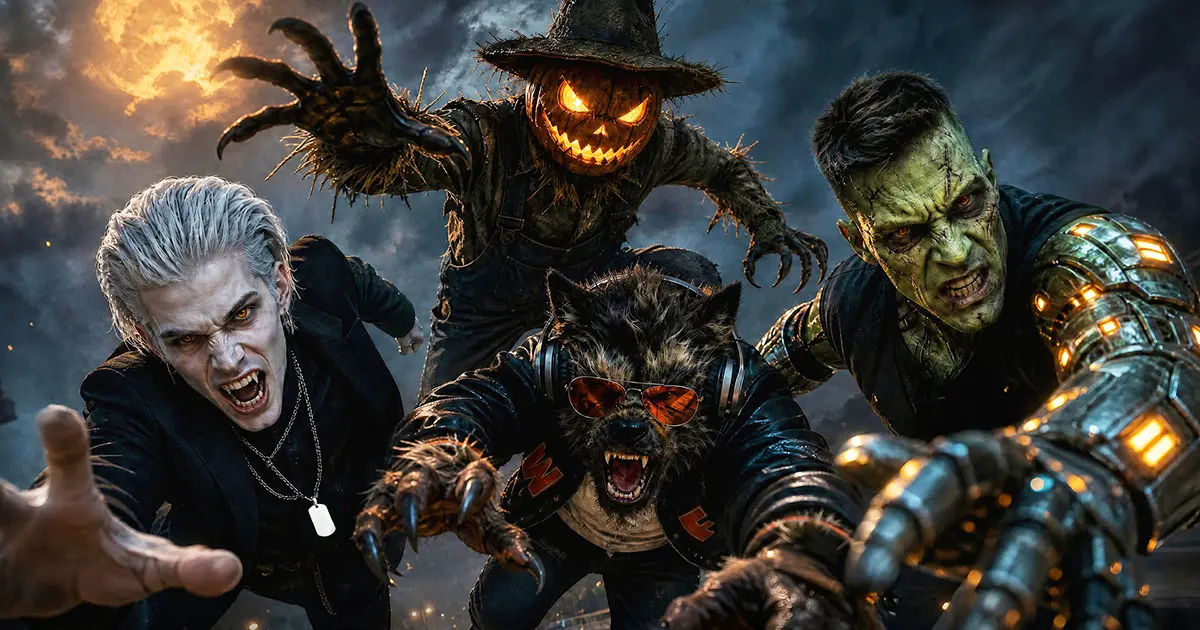
With the official unveiling of Fanta’s Haunted Universe, the brand is pivoting from a seasonal marketer into an original entertainment intellectual property (IP) creator. Launched globally today, August 24, this expansive new multimedia universe introduces four distinct, original characters, deep narrative lore, and an integrated matrix of live and digital experiences designed to captivate audiences not just for weeks, but for years to come.
At its core, the initiative represents a fundamental shift in how fast-moving consumer goods (FMCG) companies can capture consumer mindshare. Rather than renting cultural relevance during October, Fanta is attempting to build, own, and monetize an evergreen entertainment franchise. Spearheaded by a cinematic trailer that establishes a rich, supernatural narrative mythos, Fanta’s Haunted Universe merges narrative storytelling with digital interactivity, positioning the brand at the bleeding edge of content-driven commerce.
This deep-dive report explores the anatomy of Fanta’s strategic evolution, examining the chronology of its launch, the broader market metrics driving original IP investment in the beverage sector, the official leadership perspectives guiding the campaign, and a forward-looking analysis of what this means for the future of experiential brand storytelling.
Detailed Chronology: The Evolution to Fanta’s Haunted Universe
To understand the magnitude of Fanta’s August 24 rollout, it is necessary to examine the systematic evolution of the brand’s marketing posture over the preceding half-decade. Fanta has long enjoyed a symbiotic relationship with Halloween, leveraging its vibrant orange color palette, fruit-forward flavors, and playful brand personality to position itself as the official beverage of the spooky season.
Phase One: The Traditional Seasonal Play (2018–2021)
During this foundational period, Fanta’s Halloween strategy relied primarily on tactical, packaging-led activations. The brand routinely rolled out limited-edition, graphically redesigned cans featuring ghoulish illustrations, accompanied by television commercials that leaned into lighthearted, family-friendly scares. While successful in driving fourth-quarter retail velocity and securing prime grocery end-cap displays, these campaigns lacked long-term narrative continuity. Each year required a rebooted creative concept, making it difficult to build compounding brand equity around the holiday.
Phase Two: The Experiential Pivot (2022–2024)
Recognizing that modern consumers—particularly Gen Z and Millennials—demand deeper immersion and interactive experiences, Fanta began experimenting with experiential marketing and digital integrations. The brand introduced augmented reality (AR) scavenger hunts on packaging, allowing consumers to unlock digital monsters via QR codes. Simultaneously, Fanta increased its investment in influencer partnerships, collaborating with digital creators in the gaming, cosplay, and horror-comedy spaces. These initiatives proved that Fanta’s audience craved lore, but the brand’s storytelling remained fragmented across disparate activations.
Phase Three: The Genesis of Original IP (Late 2024–August 2025)
The conceptual groundwork for Fanta’s Haunted Universe began behind closed doors as global marketing leadership recognized a glaring white space in the market: no major beverage brand owned a definitive, proprietary Halloween entertainment universe. Fanta’s creative agencies and internal brand teams spent over a year developing a cohesive narrative ecosystem. They designed four original characters equipped with distinct backstories, aesthetic signatures, and emotional profiles, ensuring they resonated with contemporary pop-culture sensibilities without relying on third-party licensing deals or borrowed equity.
Phase Four: The Global Reveal (August 24, 2026)
Marking a definitive milestone in the brand’s history, August 24 serves as the official launch date for Fanta’s Haunted Universe. The rollout commenced with the global release of a high-production-value cinematic trailer that establishes the tone, lore, and visual fidelity of the newly minted universe. This launch serves as the starting gun for a multi-month campaign spanning digital platforms, immersive physical activations, and retail environments, laying the groundwork for a sustained, multi-year entertainment franchise.
Supporting Context & Metrics: The Economics of Brand-Led Entertainment
Fanta’s transition from advertiser to content creator does not occur in a vacuum. It is a calculated response to shifting media consumption habits, ad-fatigue among younger demographics, and the proven financial efficacy of brand-owned intellectual property.
The Death of Passive Advertising and the Rise of Immersive Media
According to recent industry data compiled by marketing research firms, younger consumers—specifically Gen Z and Generation Alpha—exhibit high degrees of skepticism toward traditional interruption-based advertising. Ad-blocker usage, subscription-based streaming adoption, and the proliferation of short-form, algorithm-driven video platforms mean that brands can no longer rely on standard thirty-second television spots to capture and hold attention.
Instead, modern consumers reward brands that act as entertainment companies. When a brand provides genuine narrative value, utility, or aesthetic pleasure, consumer engagement metrics shift dramatically:
- Brand Recall: Narrative-driven campaigns exhibit up to a 40% higher long-term brand recall compared to product-centric banner ads.
- Earned Media Value (EMV): Complex fictional universes naturally inspire user-generated content, fan theories, cosplay, and digital fan art, significantly amplifying a brand’s organic reach without proportionate ad spend increases.
- Dwell Time: Immersive digital and experiential activations boast average user dwell times exceeding three minutes—an eternity in modern digital marketing.
The Financials of Evergreen IP vs. Seasonal Spends
Historically, pouring millions of dollars into a temporary, three-week Halloween campaign meant starting from scratch every fiscal year. The creative agency fees, production costs, and media buys were effectively "rented" for a brief seasonal window.
By building an owned entertainment universe, Fanta is shifting its capital expenditure from an annual expense to a compounding asset. The characters, lore, visual assets, and digital environments developed for Fanta’s Haunted Universe can be monetized, expanded, and redeployed year after year. This creates a flywheel effect: as the universe expands with new chapters, merchandise partnerships, gaming integrations, and live events, the baseline cost of annual campaign production decreases while consumer affinity and engagement increase.
Navigating the Competitive Beverage Landscape
In the global carbonated soft drink market, differentiation is paramount. While competitors often rely on sports partnerships, music sponsorships, or straightforward lifestyle marketing, Fanta’s historical association with fun, vibrant, and slightly eccentric playfulness provides a natural springboard into the realm of fantasy and the supernatural. By cementing itself as the architect of its own spooky entertainment ecosystem, Fanta creates a formidable moat against rival beverage brands attempting to capture the lucrative Halloween retail window.
Official Statements and Strategic Vision
The architecture of Fanta’s Haunted Universe reflects a sophisticated alignment between global brand vision and creative execution. Leadership at The Coca-Cola Company view this initiative not merely as a marketing campaign, but as a structural evolution of how Fanta communicates with its global consumer base.
Ibrahim Khan, Global Vice President of Marketing at Fanta, encapsulated the overarching strategic ambition during the global rollout:
"The debut of Fanta’s Haunted Universe marks a major shift for the brand as it evolves from a seasonal Halloween marketer to an original content creator. Our aim is for Fanta’s Haunted Universe to be a platform that entertains fans for many years to come."
Khan’s commentary underscores a vital industry truth: modern brand equity is built through sustained emotional connection rather than periodic promotional noise. By elevating Fanta to the status of an original content creator, marketing leadership is acknowledging that consumers do not simply want to buy a flavored soda during October—they want to participate in a cultural moment, immerse themselves in a narrative, and belong to a community of fans who share common interests.
Behind the scenes, the development of the four new characters required meticulous calibration. The creative teams were tasked with avoiding tired horror tropes in favor of characters that embody Fanta’s signature energy: bold, colorful, slightly irreverent, and endlessly engaging. These characters serve as the emotional anchors for the campaign, bridging the gap between passive viewing and active, participatory fandom. Whether through interactive digital touchpoints, limited-edition packaging featuring the new characters, or live experiential activations designed to bring the universe into the physical world, every element of the campaign is engineered to invite consumers deeper into the fold.
Future Outlook: What’s Next for Fanta’s Haunted Universe?
As the rollout of Fanta’s Haunted Universe gains momentum through the autumn months, industry analysts are closely monitoring how Coca-Cola plans to scale and sustain the initiative beyond its initial launch phase.
1. Expansion into Gaming and the Metaverse
With digital immersion serving as a cornerstone of modern youth culture, the natural next frontier for Fanta’s newly minted characters is interactive gaming environments. Industry insiders anticipate potential integrations within popular gaming platforms such as Roblox, Fortnite Creative, or custom AR mobile experiences. Allowing fans to interact directly with the characters, explore virtual iterations of the Haunted Universe, and unlock exclusive digital wearables could transform Fanta from a beverage brand into an active participant in virtual economies.
2. Retail Innovation and Experiential Merchandise
While the digital landscape offers infinite narrative scalability, the physical point of sale remains critical for an FMCG giant. Future iterations of the campaign are expected to feature advanced packaging innovations—such as interactive smart-cans utilizing near-field communication (NFC) chips or dynamic augmented reality triggers—that unlock new chapters of the storyline directly on consumer smartphones. Furthermore, the strong visual identity of the four original characters opens lucrative avenues for licensed consumer products, ranging from collectible apparel to physical art toys.
3. Setting a New Industry Benchmark
Ultimately, the success or failure of Fanta’s Haunted Universe will serve as a bellwether for the consumer packaged goods industry. If Fanta successfully proves that an ephemeral seasonal holiday can be converted into a permanent, year-round entertainment franchise powered by original IP, expect a massive wave of copycat initiatives across the global food and beverage sector.
For now, Fanta sits comfortably in the vanguard of this marketing evolution. By trading temporary seasonal noise for permanent narrative real estate, the brand has proven that even a simple can of soda can contain multitudes—provided you have the imagination to unlock them.