The promise of artificial intelligence in design and prototyping has always been intoxicating: type a prompt, press a button, and watch as a fully realized, responsive user interface materializes on screen. Yet, anyone who has actively deployed AI-generated prototypes in production environments knows the underlying reality. The output is rarely production-ready. Instead, it is plagued by microscopic inconsistencies scattered across the layout—undocumented design decisions, stray hard-coded padding values, missing interactive states, and a general disregard for robust accessibility standards.
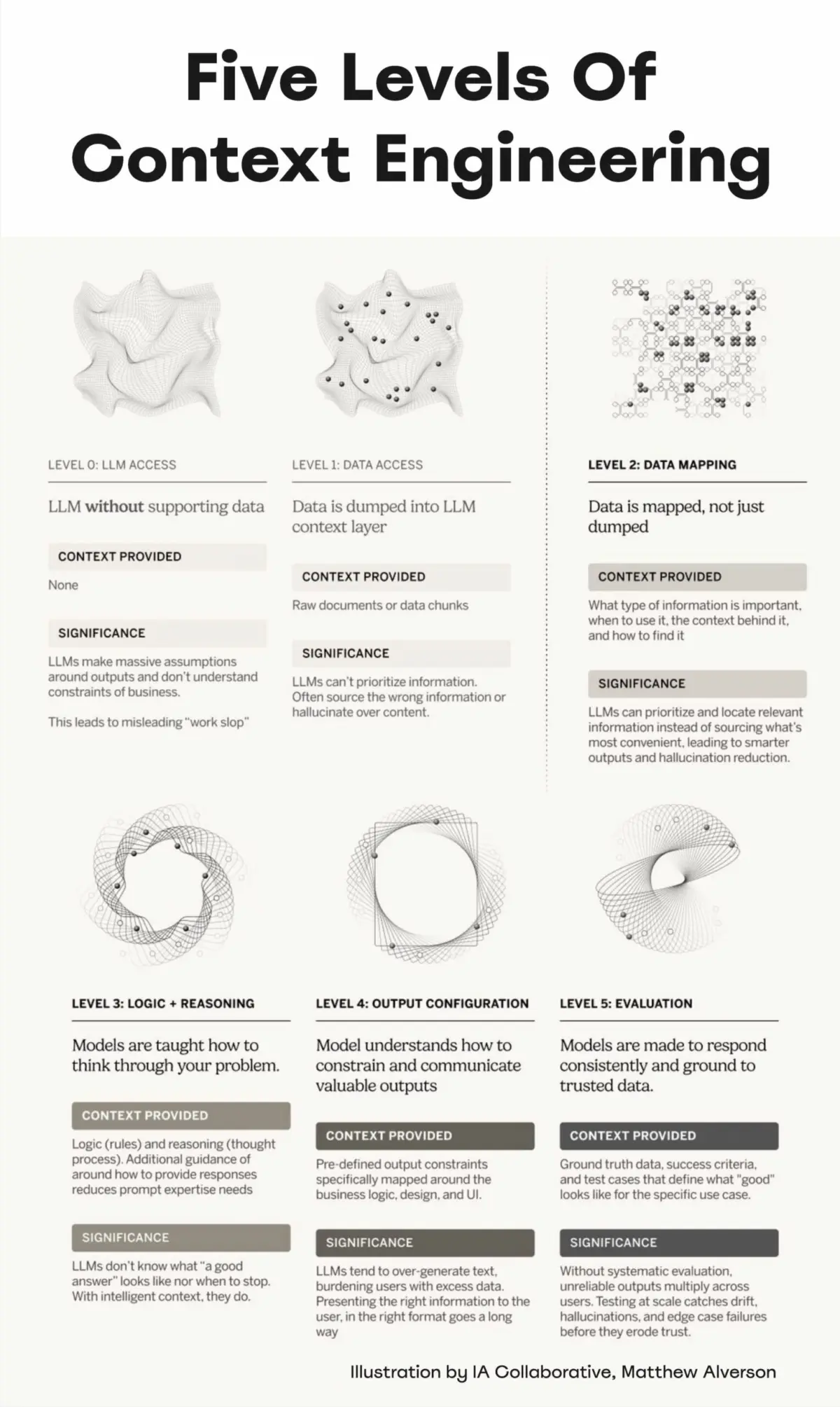
The bottleneck is not a lack of computational power or model intelligence; it is a fundamental deficit in context. Without a structured, unambiguous framework to guide them, large language models (LLMs) and generative tools are forced to guess. They invent plausible values ad hoc, misinterpret flat mock-ups, and drift dangerously away from established organizational design systems.
A paradigm shift is currently underway. Spearheaded by industry practitioners like Hardik Pandya of Atlassian, engineering and design teams are rethinking how design systems are structured. Rather than treating design systems merely as static libraries for human consumption, forward-thinking organizations are transforming them into LLM-readable infrastructure. By combining structured Markdown spec files, rigid token layers, automated auditing scripts, and rigorous context engineering, teams can radically reduce drift, eliminate mistakes, and dramatically elevate the quality of AI-generated prototypes.
Detailed Chronology: The Evolution Toward AI-Ready Design
To understand how we arrived at the current methodology for LLM-readable design systems, it is vital to trace the evolution of UI design tooling and its intersection with machine learning over the past several years.
Phase 1: The Era of Static Component Libraries (Pre-2023)
For the better part of a decade, design systems lived primarily in design tools like Figma or Sketch, accompanied by complementary documentation sites hosted on platforms like Zeroheight or Storybook. These systems were built exclusively for human designers and developers. Guidelines were communicated via rich-text blocks, visual examples, and human-to-human collaboration. While effective for manual workflows, these libraries possessed zero machine-readable semantics that a generative AI model could systematically parse without human translation.
Phase 2: The Generative Boom and the "Guesswork" Problem (2023–2024)
As code-generation LLMs and multimodal AI models matured, designers began feeding UI mock-ups and component libraries directly into AI tools. The initial reaction was euphoria, quickly followed by disillusionment. Because the AI lacked context regarding the intent behind a component—why a specific spacing scale was chosen, or how a disabled state should handle focus rings—it hallucinated design tokens. Prototypes looked passable at first glance, but underlying codebases were littered with technical debt, accessibility violations, and fragmented styling rules.
Phase 3: The Infrastructure Turn (Late 2024–Present)
The industry realized that expecting AI to reverse-engineer design logic purely from visual mock-ups was a flawed premise. Practitioners began advocating for a structural overhaul. Pioneered by workflow optimization guides from engineers at companies like Atlassian, the focus shifted toward treating design decisions as literal infrastructure. Documentation was rewritten into lightweight, structured text files designed specifically for token consumption by LLMs, creating a deterministic loop between human design principles and AI execution.
Core Pillars of an AI-Ready Design System
Achieving consistency in AI-generated prototypes requires moving away from implicit knowledge and toward explicit, machine-readable specifications. According to modern context engineering frameworks, this transformation relies on three foundational layers.
1. Design Decisions as Infrastructure
In traditional workflows, design decisions are often treated as ephemeral conversations—slack messages, fleeting comments on Figma nodes, or unwritten rules understood only by senior staff. In an AI-ready workflow, every design decision must be codified.
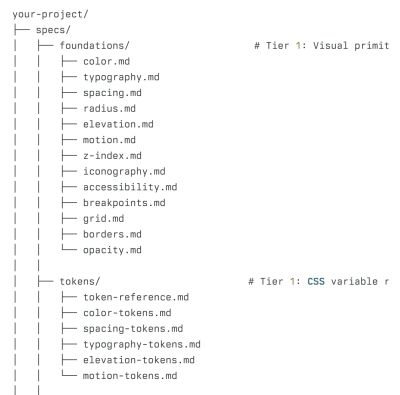
This means that priorities, spacing rules, accessibility mandates, typography hierarchies, and "do’s and don’ts" must find a permanent home in structured specification files. When an AI agent is tasked with building a prototype, it should not have to guess whether a button requires a 4px or an 8px margin; it should query a definitive, version-controlled markdown file that dictates the exact spacing scale. By treating design guidelines as infrastructure, organizations provide the LLM with a strict rulebook, transforming AI from an unpredictable guesser into a disciplined executor.
2. The Three-Layer Architecture: Spec Files, Token Layers, and Auditing Scripts
To maintain absolute control over generated assets, a robust AI-ready design system implements a three-tier defense and guidance mechanism:
The Spec File Layer: Composed of structured Markdown documents, these files outline component usage guidelines, layout priorities, and design principles. Because they are plain text, they are highly cost-effective for LLMs to ingest and parse while offering extreme precision compared to visual interpretation. Furthermore, extending existing code via spec guidelines is consistently more reliable than trying to generate complex applications entirely from scratch via flat images.
The Token Layer: A closed, strictly maintained set of named variables (design tokens). Instead of allowing an AI to invent color hex codes or arbitrary pixel dimensions, the token layer restricts the model to choosing exclusively from pre-approved variables. If a token changes upstream, the change instantly propagates through the system.
The Automated Audit Layer: Even with good prompts, LLMs will occasionally slip. Automated validation tools—such as FigmaLint, a popular free Figma plugin for auditing tokens, states, accessibility bindings, and layer naming conventions—act as an automated safety net. These tools scan prototypes, flag detached instances, highlight missing interactive states, and catch hard-coded values before they turn into technical debt.
Supporting Context & Metrics: The Cost of Ambiguity
The urgency behind adopting AI-ready design systems is underscored by mounting data regarding software maintenance costs and design drift.
Industry analyses indicate that up to 40% of frontend development time is routinely lost to refactoring UI inconsistencies—discrepancies between what was designed, what the AI generated, and what the design system actually permits. When teams rely on unguided generative AI, these discrepancies multiply exponentially. Each unmanaged hard-coded value introduces technical debt that compounds with every subsequent prompt iteration.
Traditional Design Systems
AI-Ready Design Systems
Documentation: Human-centric, scattered across wiki pages and design files.
Token Usage: Fluid; AI frequently generates ad-hoc hex codes and pixel values.
Token Usage: Strict; AI selects exclusively from a closed, named variable set.
Quality Control: Manual design QA and reactive code reviews.
Quality Control: Proactive auditing via automated scripts and tools like FigmaLint.
Context Retention: Low; high drift over long prompting sessions.
Context Retention: High; continuous grounding via structured system context.
By shifting from unstructured prompting to structured context engineering—a methodology championed by modern engineering leaders—teams report a dramatic reduction in iteration cycles. Prototypes generated against a well-maintained markdown spec file require significantly fewer manual overrides, allowing designers to focus on high-level user experience rather than cleaning up messy code.
Expert Insights and Official Perspectives
The transition toward machine-readable design systems is attracting attention from prominent figures across the UX and design engineering communities.
Hardik Pandya, whose practical framework at Atlassian catalyzed much of the current discourse, emphasizes that the relationship between human designers and AI must be contractual rather than conversational. "To get better results, AI needs better guidance that minimizes assumptions and reduces ambiguity," Pandya notes in his architectural guides. "You cannot expect an LLM to respect a design system it cannot systematically parse."
Similarly, Vitaly Friedman, editor of Smashing Magazine and creator of the upcoming video course Design Patterns For AI Interfaces, points out that the operational burden on designers is shifting rather than disappearing.
"Ultimately, AI cannot magically resolve technical debt or design debt without proper guidance," Friedman explains. "It relies heavily on clear decisions, established priorities, and well-defined principles. The more deliberate and precise designers are in guiding AI, the better the overall outcomes will be. This requires not just cleaning up and improving design systems, but also maintaining them over time as decisions trickle down into Markdown files. We’ll be busy for years to come."
Future Outlook: The Road Ahead for AI-Driven Design
As we look toward the future of digital product design, the line separating design systems from engineering infrastructure will continue to blur. Several key trends are expected to shape the landscape over the coming years:
Native LLM Compilers for Design Systems: We will likely see design tool ecosystems natively integrate LLM compilers that automatically convert visual component libraries into optimized Markdown specs and JSON token schemas without manual authoring.
Autonomous Compliance Agents: Automated auditing scripts will evolve into proactive background agents that sit inside development environments, correcting token drift and accessibility violations in real-time as developers and designers prompt their AI assistants.
Context-Aware Design Ops: Design Operations (DesignOps) teams will expand to include "Context Engineers"—specialists whose sole job is to maintain the semantic clarity and currency of the Markdown spec files feeding corporate AI pipelines.
The tools may change, but the core axiom remains unaltered: garbage in, garbage out. For artificial intelligence to become a true partner in product creation, the foundations must be meticulously engineered by humans first. By embracing structured spec files, strict token layers, and rigorous auditing, organizations can future-proof their workflows and build scalable, elegant digital products at unprecedented speeds.