

Executive Overview
In the realm of personal development, the chasm between theoretical knowledge and practical execution is often vast. Millions of readers purchase self-help literature every year, inspired by promises of transformation, only to find themselves slipping back into familiar patterns weeks later. However, the mechanics of behavioral psychology suggest that failure is rarely a reflection of weak willpower; rather, it is a failure of system design.
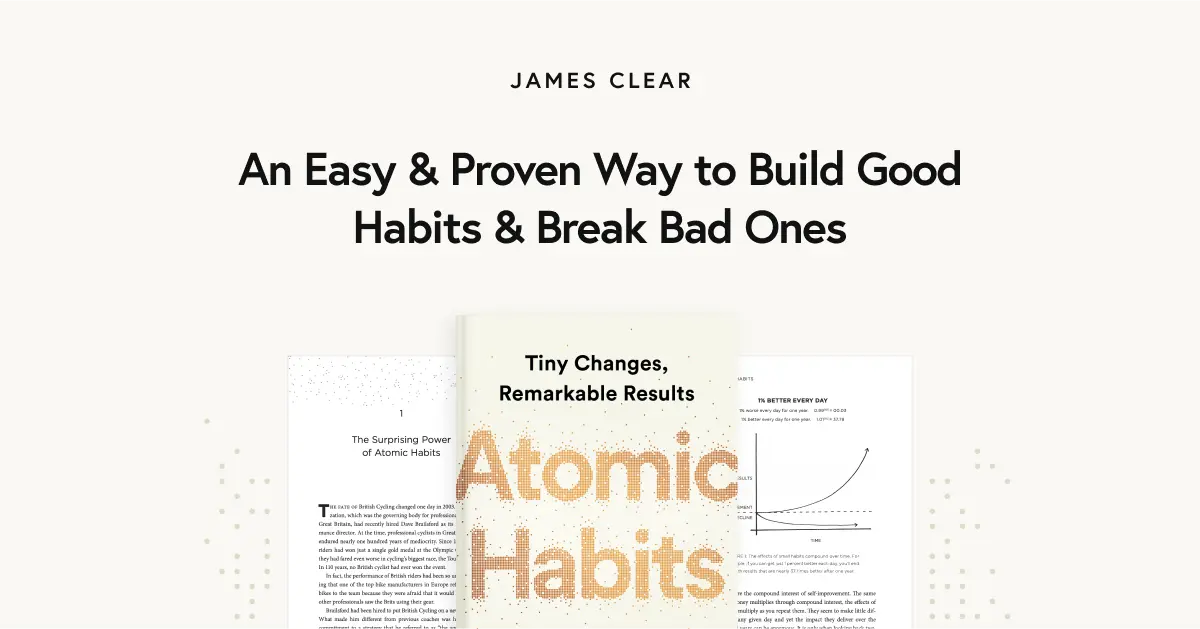
In his seminal work, Atomic Habits, author James Clear posits that lasting transformation is not achieved through monumental bursts of motivation, but through the accumulation of small, incremental adjustments—the aggregation of marginal gains. To illuminate this philosophy, Clear recently compiled a collection of thirty bite-sized, real-world case studies submitted directly by readers. These micro-narratives provide a rare, empirical look into how everyday individuals leverage behavioral science to construct positive routines and dismantle destructive ones.
This report examines these real-world applications through a journalistic lens, categorizing them into foundational psychological pillars: identity-based habits, cue modification, habit stacking, environment architecture, habit substitution, psychological reframing, and visual tracking. By analyzing the mechanics behind these thirty vignettes, we uncover a masterclass in applied behavioral engineering.
Detailed Chronology: The Evolution of Habit Formation Strategies
The journey from identifying a personal flaw to engineering a permanent lifestyle change rarely happens overnight. Historically, psychological approaches to habit modification have evolved from simplistic willpower-based models to sophisticated environmental and cognitive frameworks.
Phase 1: Identity and Mindset Shift (The Internal Architecture)
Long before external actions are taken, behavioral engineering begins in the mind. Traditional goal-setting focuses heavily on outcomes ("I want to lose ten pounds" or "I want to stop smoking"). Modern behavioral science, however, emphasizes identity-based habits—focusing on the type of person one wishes to become.
- The Paradigm Shift in Nutrition: A reader named Roland struggled for years with dietary changes until he abandoned outcome-based goals. By shifting his mantra from "I want to stop eating bad food" to "I am someone who eats healthy and lives a healthy life," the psychological friction of choosing a salad over fast food dissolved. The decision ceased to be a daily negotiation and became an expression of self-identity.
- Reframing Sacrifice: Similarly, Robert dismantled his smoking addiction by altering his internal monologue. Instead of telling himself, "I can’t smoke," which implies deprivation and victimhood, he adopted the phrase, "I don’t smoke." This subtle semantic shift reframed the cessation not as a sacrifice of pleasure, but as an active investment in his future well-being.
- Incentivizing the Persona: Identity can also be reinforced through immediate, tangible rewards. One reader combated alcoholism by declaring, "I am no longer a drinker." To reinforce this nascent identity, they allocated $10 for every sober day toward purchasing positive lifestyle items like clothing or household goods rather than poison. Today, six years sober, the external allowance is no longer necessary; the identity has solidified.
Phase 2: Altering Cues and Environmental Design (The External Architecture)
While mindset lays the foundation, human behavior is deeply reactive to physical and digital surroundings. By engineering cues and increasing or decreasing friction, individuals can make good behaviors inevitable and bad behaviors impossible.
- Manipulating Visual Cues: Lisa cultivated a voracious reading habit by maintaining twenty to thirty books on hold at her local library, ensuring an endless, frictionless supply of literature with built-in deadlines. Heather engineered her hydration habits by filling a bright aqua water bottle—her favorite color—and placing it directly on her nightstand to serve as an unmissable morning prompt.
- Increasing Friction for Vices: Environmental design is uniquely effective when weaponized against negative habits. Cyd curbed her household’s Pringles consumption by relocating the snack containers to a locked car parked out in the cold. In a similar vein, J. Money, a prominent personal finance blogger, instituted a strict rule: he brushes his teeth immediately after putting his children to bed at 8:00 PM. This simple act creates insurmountable friction against late-night snacking or alcohol consumption, as the deterrent of having to re-brush one’s teeth acts as a natural gatekeeper.
- Digital Minimalism: The principles of environmental design translate seamlessly into the digital sphere. Viet eradicated his compulsive Facebook browsing by deleting the mobile application, forcing himself to navigate to the web browser and log in manually every time. Rahul went a step further to curb a severe gaming addiction by physically removing the graphics card from his computer.
Phase 3: Habit Stacking and Substitution (Behavioral Momentum)
Once cues are managed, individuals must establish what to do with the reclaimed time and energy. This is where habit stacking—anchoring a new behavior to an existing one—and habit substitution come into play.
- Anchoring New Routines: David successfully integrated a daily meditation practice by establishing a strict rule: twenty minutes of mindfulness immediately following his morning tooth-brushing routine.
- Stair-Step Substitution: Eliminating a vice entirely often triggers severe withdrawal or psychological backlash. Successful practitioners frequently utilize a stair-step approach. Marc phased out a daily beer habit over nine months by progressively substituting fruit juice, then iced tea, and finally seltzer water, reducing his intake by one drink per week until cravings subsided entirely. Shawn utilized fun-sized Snickers bars as a temporary psychological substitute to weather the acute phases of quitting smoking.
Supporting Context & Metrics: The Science of Small Wins
To understand why these micro-stories yield such profound results, one must examine the quantitative and qualitative frameworks underpinning modern habit research.
- The 1% Rule: As outlined in behavioral literature, improving by 1 percent each day results in a roughly 37-fold improvement over the course of a single year. Conversely, compounding poor choices leads to regression. The readers highlighted in these case studies did not execute massive life overhauls on day one; they leveraged marginal gains.
- Friction Metrics: Behavioral economists note that human beings take the path of least resistance. By increasing the number of steps required to engage in a bad habit (e.g., removing a graphics card, walking to a cold car for snacks) or decreasing the steps required for a good habit (e.g., laying out running clothes the night before, placing a laundry basket directly beside the door), success rates soar exponentially.
- Visual Tracking Metrics: The psychological power of visual progress cannot be overstated. Cindy, a reader who utilized a large wall calendar to track her daily habits, accumulated six unbroken months of red "X" marks. This visual chain created a psychological aversion to breaking the streak, fueling sustained transformations across multiple domains: weight loss, increased physical strength, gardening, reading, small business development, and language acquisition.
Official Statements and Behavioral Insights
Examining the testimonials of those who have successfully navigated behavioral change offers invaluable guidance for anyone seeking similar transformations:
"I stopped eating unhealthy food via identity change… Instead of aiming for ‘I want to stop eating bad food,’ I tried changing the mindset to ‘I am someone that eats healthy and lives a healthy life.’ It changes how you approach things."
— Roland, Reader Case Study"When I first moved to China and started to learn Mandarin, I committed to strike up a conversation with the taxi driver whenever I went into a cab… I did it for 2 years no matter the time of day or how tired I was. I now speak fluent Chinese."
— Anonymous Reader, on Habit Stacking"For gaming addiction, I removed my graphic card. For excessive net surfing on mobile, I uninstalled apps and removed the Chrome browser."
— Rahul, Reader Case Study on Digital Friction
These reflections reinforce a core tenet of modern psychology: you do not rise to the level of your goals; you fall to the level of your systems. When individuals shift their focus from outcomes to systems, sustainable transformation follows naturally.
Future Outlook: The Ongoing Evolution of Personal Development
As society becomes increasingly digitized and hyper-connected, the battle for human attention and self-regulation will only intensify. The proliferation of digital distractions, algorithmic feeds, and convenience-driven consumerism poses a continuous threat to human agency.
However, the proliferation of applied behavioral science offers a counter-weight. The success stories documented across these thirty vignettes demonstrate that individuals are no longer passive recipients of their environments; they are active architects of their own psychology.
Looking forward, the integration of environment design, identity-based psychology, and visual tracking will likely become foundational pillars in both personal wellness and corporate productivity frameworks. As more people learn to engineer their physical and digital surroundings, the narrative surrounding habit formation will shift away from moral failings like "lack of willpower" and toward mechanical successes like "superior system design."
Ultimately, the path forward relies on consistency over intensity. By taking small, deliberate actions each day and designing systems that make good choices effortless, individuals can permanently reshape their behaviors, proving that monumental life changes are truly built one atomic habit at a time.
