

By Global Business & Retail Desk
Published: October 24, 2023
Executive Overview
In a strategic pivot that bridges the physical and digital worlds of consumerism, Simon Property Group—the largest real estate investment trust (REIT) in the United States and a titan of brick-and-mortar shopping—has officially announced the launch of its dedicated advertising enterprise: the Simon Media Network.
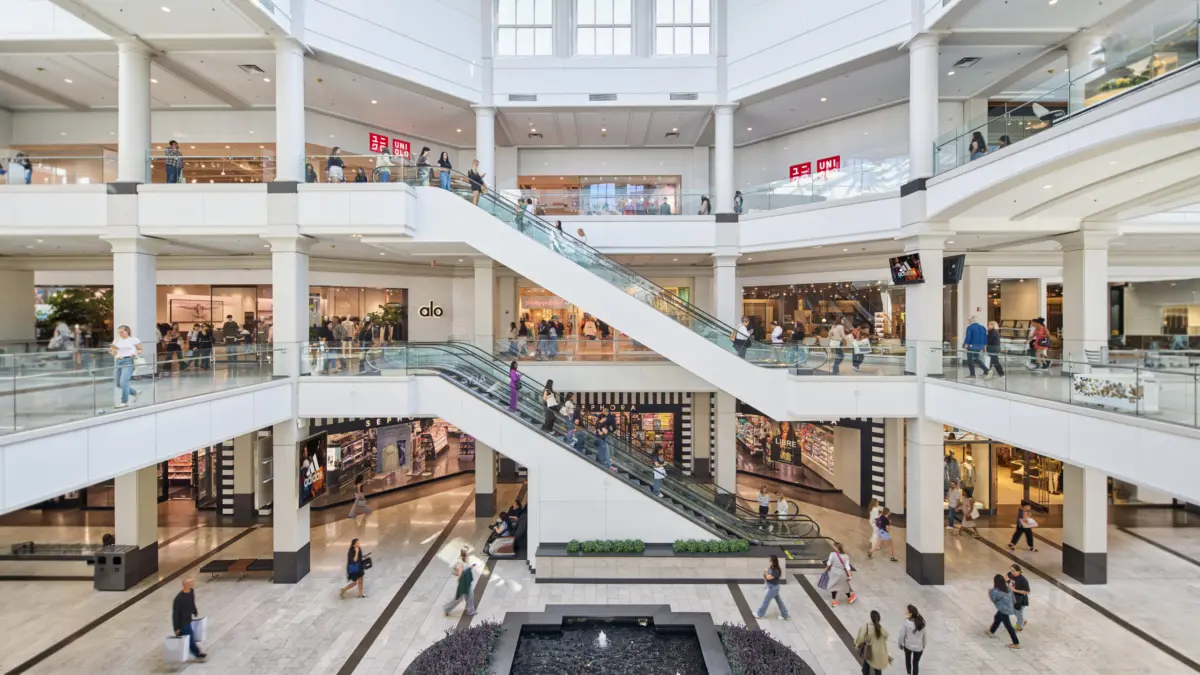
Boasting a massive portfolio that encompasses over 200 premier shopping, dining, and mixed-use destinations, Simon is positioning this new network not merely as a localized out-of-home (OOH) advertising play, but as a comprehensive "commerce media network." By capitalizing on foot traffic that exceeds one billion annual visitors across its iconic properties—including Houston’s sprawling Galleria, the historic King of Prussia Mall in Pennsylvania, and New York’s high-performing Roosevelt Field—the company is unlocking an unprecedented trove of consumer intent and real-world behavioral data.
For years, digital-native retailers and e-commerce giants have dominated the conversation surrounding retail media networks (RMNs), leveraging transaction data and website browsing histories to sell high-margin ad inventory. However, Simon Property Group’s entry signals a powerful counter-offensive by physical real estate. Armed with the staggering statistic that consumers spend an aggregate of $100 billion annually within its ecosystems, Simon is arguing that physical retail environments offer a level of sensory engagement, high-intent foot traffic, and holistic purchasing data that digital channels simply cannot replicate.
This expansive report investigates the structural mechanics of the Simon Media Network, analyzes its distinct positioning relative to traditional digital RMNs, contextualizes the broader macroeconomic shifts transforming commercial real estate, and evaluates what this bold venture means for brands, media buyers, and consumers alike.
Detailed Chronology: The Rise of Physical Retail Media
To understand the weight of Simon Property Group’s recent announcement, it is necessary to retrace the evolutionary steps that transformed traditional shopping malls from mere spaces of commerce into sophisticated, data-driven media ecosystems.
Phase I: The Traditional OOH and Static Signage Era (Pre-2015)
For decades, mall advertising was largely transactional and analog. Brands purchased static billboard space, backlit dioramas, and food court banners through third-party out-of-home media operators. These campaigns were evaluated on broad demographic assumptions and estimated foot traffic counts rather than precise audience measurement. Malls functioned as passive backdrops for advertisements, with little integration between the physical ad seen in a corridor and the ultimate point-of-sale inside an adjacent retail store.
Phase II: The Digital OOH (DOOH) Revolution (2015–2020)
As digital display technology matured, property owners began replacing static posters with dynamic digital screens. Simon Property Group invested heavily in upgrading its properties with high-definition digital kiosks, directory boards, and experiential media installations. This era introduced programmatic buying capabilities to physical real estate, allowing brands to purchase time-sensitive ad spots based on dayparting, weather conditions, and localized demographics. Yet, these efforts remained siloed, functioning primarily as brand-awareness tools rather than closed-loop performance marketing channels.
Phase III: The Rise of Retail Media Networks (2020–2022)
During the COVID-19 pandemic, retail media experienced an explosive boom. Supermarkets, big-box chains, and e-commerce platforms realized that their first-party data was an invaluable asset. Companies like Amazon, Walmart, and Target built multi-billion-dollar advertising networks, capturing high-intent ad dollars as third-party cookies began to crumble. Physical mall operators watched as digital platforms monetized consumer attention, realizing that their own physical footprints—which generate trillions of combined retail sales—were sitting on an untapped goldmine of consumer behavioral insights.
Phase IV: The Birth of Simon Media Network (Late 2023–Present)
Recognizing the limitations of single-retailer digital silos, Simon Property Group conceptualized the Simon Media Network. Rather than tracking users across a single website or app, Simon engineered a commerce media network designed to capture the entire consumer journey across massive, multi-store physical ecosystems. By integrating spatial analytics, high-impact experiential tech (such as newly introduced hologram media networks capable of beaming 3D ads and celebrities directly into malls), and comprehensive cross-tenant transaction visibility, Simon formally entered the competitive fray of modern media monetization.
Supporting Context & Metrics: The Scale of Simon’s Ecosystem
The viability of any media network rests entirely on scale, audience quality, and data fidelity. In these categories, the Simon Media Network launches with staggering enterprise credentials.
Key Performance Indicators & Network Scale
- Annual Foot Traffic: 1.2 billion U.S. visitors pass through Simon properties every year, representing a massive, recurring audience pool that rivals the monthly active users of major social media platforms.
- Economic Impact: An estimated $100 billion is spent annually across Simon’s expansive portfolio of shopping destinations.
- Asset Portfolio: Ownership and management of over 200 premier retail, dining, and mixed-use destinations across the United States.
- Flagship Properties: The network encompasses some of the nation’s most lucrative and high-volume retail hubs, including:
- The Galleria (Houston, Texas): A premier mixed-use destination featuring world-class luxury retail and millions of annual visitors.
- King of Prussia (King of Prussia, Pennsylvania): One of the largest shopping malls in the United States by retail space, serving the high-net-worth Philadelphia metropolitan area.
- Roosevelt Field (Garden City, New York): A dominant super-regional shopping center on Long Island, serving as a primary retail anchor for the New York media market.
The Commerce Media Advantage vs. Traditional Retail Media
To fully appreciate Simon’s strategic positioning, industry analysts emphasize the distinction between standard Retail Media Networks (RMNs) and Simon’s self-defined Commerce Media Network (CMN) model:
| Feature / Metric | Traditional Digital RMN (e.g., E-commerce / Single Retailer) | Simon Media Network (Physical Commerce Ecosystem) |
|---|---|---|
| Data Origin | Single website visits, app activity, and isolated online purchases. | Holistic physical movement, cross-tenant shopping behavior, and multi-category spending. |
| Consumer Intent | High digital intent, but often characterized by window shopping and cart abandonment. | High physical intent; consumers who visit malls are actively predisposed to purchase. |
| Engagement Type | Two-dimensional digital banners, sponsored product listings, and video ads. | Immersive, multi-sensory physical experiences, experiential pop-ups, DOOH, and 3D hologram displays. |
| Attribution | Direct digital attribution via cookies, device IDs, and customer accounts. | Blended attribution connecting physical foot traffic, in-mall dwell time, and aggregate point-of-sale data across hundreds of diverse tenants. |
Simon’s core argument is that while digital RMNs see what a consumer clicks on a single screen, Simon Media Network observes the total consumer lifestyle: where they dine, which luxury boutiques they enter, how long they browse department stores, and how they allocate disposable income across an entire day of shopping.
Official Statements & Industry Perspectives
The announcement of the Simon Media Network has sent ripples through both the retail and advertising sectors. Industry executives and media strategists have weighed in on what this development signals for the future of omnichannel marketing.
Industry analysts note that Simon Property Group’s timing is immaculate. As privacy regulations tighten and signal loss erodes the effectiveness of digital third-party tracking, brands are actively seeking deterministic, high-trust environments where consumer attention is guaranteed.
"For too long, physical real estate has been viewed by marketers as a passive billboard space rather than an active, intelligent data ecosystem," notes a senior retail media strategist. "By framing its operation as a commerce media network, Simon is shifting the conversation. They aren’t selling square footage anymore; they are selling verified consumer attention and multi-category spending behavior at a scale that few digital platforms can match."
Executives within Simon Property Group emphasize that the initiative is designed to empower brands with tools that bridge the gap between physical presence and digital performance metrics. By offering sophisticated audience targeting, retargeting capabilities through mobile location data, and immersive experiential formats—such as interactive digital displays and cutting-edge 3D holographic advertisements—the network provides advertisers with a dynamic canvas that commands consumer engagement.
Furthermore, luxury brands, automotive manufacturers, entertainment studios, and consumer packaged goods (CPG) giants—sectors that rely heavily on sensory branding and high-end consumer perception—have expressed strong early interest. For these brands, a 30-second digital banner cannot compete with the immersive impact of a physical activation inside a high-traffic luxury corridor at Roosevelt Field or The Galleria.
Future Outlook: What Lies Ahead for Physical Commerce Media
As the Simon Media Network scales its operations, several key trends and strategic questions will dictate its long-term trajectory and influence on the broader advertising landscape.
1. The Integration of Advanced Spatial Analytics and AI
To compete effectively with digital networks, Simon must continue refining its measurement capabilities. The future of the network will likely see deeper integration of artificial intelligence and computer vision to measure audience dwell times, demographic breakdowns, and emotional engagement with specific ad placements in real time. Providing media buyers with transparent, third-party-verified attribution metrics will be crucial for capturing enterprise-level ad budgets accustomed to the granular dashboards of Meta, Google, and Amazon.
2. Blending Physical and Digital Retailing (Omnichannel Synergy)
The most successful commerce media networks will be those that seamlessly connect the physical mall visit with subsequent digital actions—and vice versa. Expect to see Simon leverage mobile integration, geo-fenced push notifications, and cross-channel retargeting. A consumer who engages with a luxury brand’s digital kiosk inside a Simon property could receive tailored digital follow-up offers or be guided to the brand’s e-commerce store, creating a fluid, bidirectional loop of commerce.
3. Redefining the Role of the Shopping Mall
Ultimately, the launch of the Simon Media Network underscores a profound evolution in commercial real estate. Shopping malls are no longer defined solely as landlords collecting rent from apparel chains and food court operators. They are evolving into media platforms—high-margin ecosystems where the physical space itself generates revenue through consumer engagement and data monetization.
As physical retail continues its post-pandemic renaissance, properties that successfully transform into data-rich media powerhouses will command superior valuations, attract premier brand partnerships, and redefine the boundaries of modern advertising. Simon Property Group’s bold bet on the Simon Media Network suggests that the future of advertising is not confined to the screens in our pockets—it is alive, immersive, and thriving in the physical spaces where we live, shop, and gather.
