

Executive Overview
In the rapidly evolving digital economy, freelance writing has transitioned from a race-to-the-bottom game on low-tier job boards to a sophisticated, relationship-driven B2B service industry. For modern independent writers, securing a steady stream of high-paying clients no longer relies solely on cold pitching or scouring generic classified sites. Instead, a seismic shift has occurred across the professional web, crowning LinkedIn as the undisputed heavyweight champion for inbound freelance leads.
Yet, simply having a profile and occasionally posting a status update is no longer sufficient. LinkedIn’s underlying algorithm has matured, penalizing lazy copy-paste tactics and generic engagement bait while aggressively rewarding deep niche authority, thought leadership, and human-centric connection. For freelancers grappling with imposter syndrome, inconsistent income, or the paralyzing burden of writer’s block, mastering this platform is the single highest-leverage activity they can undertake.
This comprehensive guide breaks down the structural shifts in LinkedIn’s architecture and outlines five battle-tested strategies to help freelance writers reclaim their time, establish undeniable domain expertise, and build a resilient pipeline of inbound clients in just 20 to 30 minutes a day.
Detailed Chronology: The Evolution of Freelance Lead Generation
To understand why LinkedIn currently dominates the freelance landscape, it is helpful to look back at how independent writers historically sourced work and how the digital marketplace transformed over the past decade.
Phase 1: The Wild West of Job Boards and Content Mills (Early 2010s)
A decade ago, breaking into freelance writing meant navigating murky waters. Writers relied heavily on content mills, low-budget bidding sites, and message boards. Competition was fierce, margins were razor-thin, and the relationship between writer and client was entirely transactional. Writers were viewed as disposable cogs rather than strategic marketing partners.
Phase 2: The Cold-Pitch Era (Mid-to-Late 2010s)
As the web matured, thought leaders began teaching cold outreach strategies. Freelancers spent hours scouring company websites, hunting down personal email addresses of marketing managers, and sending out meticulously crafted cold pitches. While this approach yielded higher-paying clients than content mills, it was notoriously labor-intensive, suffered from dismal response rates, and left writers vulnerable to constant feast-or-famine cycles.
Phase 3: The Rise of Inbound Authority via LinkedIn (Present Day)
Today, the paradigm has flipped from outbound hunting to inbound attraction. Rather than chasing clients, successful modern freelancers build digital storefronts on professional social networks. Because decision-makers—such as Chief Marketing Officers, content directors, and startup founders—frequent LinkedIn specifically to discover business solutions, ideas, and talent, the platform functions as an organic search engine for expertise. Writers who position themselves as strategic partners rather than generic word-smiths are reaping the rewards, transforming the platform into a self-sustaining client acquisition machine.
Supporting Context & Metrics: What the Algorithm Demands Now
LinkedIn’s internal mechanics are designed to keep users engaged by serving them hyper-relevant, high-value professional content. Over the years, the platform has systematically adjusted its parameters to crack down on engagement pods, artificial reach-boosting hacks, and low-effort spam.
What the Algorithm Rewards:
- Niche Consistency: Profiles and content streams that laser-focus on specific industry verticals (e.g., B2B SaaS, fintech, medical compliance) signal clear subject-matter authority to the algorithm.
- Thoughtful Conversational Threads: Comments that spark back-and-forth dialogue hold significantly more weight than standard, one-word reactions.
- Dwell Time: Text posts with compelling hooks and clean, skimmable formatting that keep users reading longer receive algorithmic boosts.
- Direct Relevance: Content that directly addresses the pain points, regulatory challenges, and strategic goals of target decision-makers.
What the Algorithm Penalizes:
- Peer-Echo Chambers: Content heavily targeted at other freelancers rather than corporate buyers tells the algorithm your audience is peers, not paying clients.
- Generic Engagement Bait: Surface-level commentary like "Great post!" or "So true!" on target accounts offers zero substantive value and is routinely filtered out or ignored.
- External Links in the Initial Post Body: While nuanced, routing traffic away from the platform immediately can sometimes suppress initial organic distribution compared to native text and document formats.
Five Strategies to Master LinkedIn as a Freelance Writer
If you are ready to stop leaving money on the table and turn LinkedIn into your primary source of inbound revenue, implement these five actionable strategies.
1. Write to Potential Clients, Not Other Freelancers
A trap that ensnares countless independent writers is falling into the "peer-praise loop." It feels comfortable to connect, network, and exchange tips with other freelance writers. However, writing content about general writing tips, grammar rules, or invoice tracking does nothing to convince a marketing director that you understand their unique industry constraints.
How to Execute This:
- Audit Your Content: Look at your last ten posts. If the majority cater to other writers, pivot your messaging immediately.
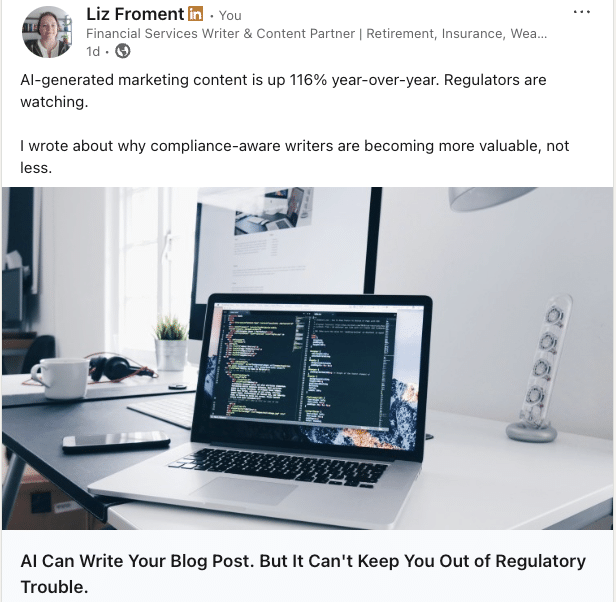
- Identify Client Pain Points: Select three to five core topics your ideal clients obsess over. For instance, if you write for financial services, lean into compliance frameworks, fintech trends, and customer friction points. If you specialize in medical writing, discuss regulatory hurdles, clinical trial communications, or emerging healthcare tech.
- Demonstrate Strategic Insight: Share behind-the-scenes takeaways from recent projects (maintaining client confidentiality), critique high-performing content strategies, or offer a contrarian take on a major industry trend. Show, don’t just tell, that you understand their world.
2. Overcome Posting Anxiety Through Sustainable Consistency
Conventional social media gurus often preach the gospel of daily posting—insisting that burnout is simply the price of admission. This toxic advice causes many talented writers to freeze up, succumb to imposter syndrome, and ultimately abandon their LinkedIn presence altogether.
The reality is far more forgiving: publishing one to two well-crafted posts a week consistently over several months yields exponentially better results than spamming the feed daily with low-effort noise.
How to Execute This:
- Establish a Realistic Cadence: Choose a frequency you can maintain indefinitely. Every Monday and Thursday, or simply every Wednesday, works wonders. Consistency trumps volume every single time.
- Batch Your Workflow: Block out 30 minutes on Sunday afternoon to outline and write your posts for the week. Utilize LinkedIn’s native scheduler to queue them up, freeing your mind for actual client work during the week.
- Stick to Proven Formats: Lean into strong, text-based hooks backed by clean formatting and short paragraphs. You do not need expensive graphic design software or video production teams; a sharp, insightful perspective presented clearly will always win.
3. Focus on Intentional Engagement ("Walking the Marketing Dog")
Building an inbound pipeline on LinkedIn is a marathon, not a sprint. While publishing your own content establishes authority, actively engaging with prospects accelerates the entire process. As B2B content expert Sarah Greesonbach describes it, this is akin to "walking the marketing dog"—a daily, non-negotiable habit that keeps your business healthy.

How to Execute This:
- Build a Prospect List: Compile a targeted list of 20 to 30 decision-makers—such as content managers, marketing directors, and startup founders at companies you dream of writing for. Follow all of them.
- Engage Thoughtfully: Dedicate 15 to 20 minutes daily to reading their updates. When they post something insightful, leave a substantive comment that adds genuine value, introduces a new data point, or asks an intelligent follow-up question.
- Adopt the 3-2-1 Method: Popularized by B2B strategist Ed Gandia, this framework simplifies your daily outreach: send 3 connection requests, leave 2 thoughtful comments, and publish 1 post. If that feels heavy, scale it down to three meaningful actions a day.
4. Optimize Your Profile to Function as a High-Converting Sales Page
If your LinkedIn profile simply reads like a digital resume ("Freelance Writer at Self-Employed"), you are treating a billboard like a business card. When a hiring manager clicks through from your comment or post, your profile must instantly convert them from a curious reader into an eager client.
How to Execute This:
- Craft a Benefit-Driven Headline: Ditch the generic titles. Instead, tell prospects precisely what tangible value you deliver: "I write conversion-focused content for B2B SaaS brands" or "Finance Content Writer helping fintech leaders build trust and drive sign-ups."
- Rewrite Your About Section: Speak directly to the reader in the second person. Address their specific pain points, outline the exact problems you solve, showcase your past results, and conclude with a clear call to action pointing to your portfolio.
- Leverage the Featured Section: Pin your two or three highest-quality writing samples, case studies, or glowing client testimonials right at the top of your profile.
- Detail Your Experience: Transform generic job histories into metrics-driven achievements. Write entries like: "Authored 50+ high-ranking articles covering AI banking protocols, digital payments, and credit card growth strategies" rather than simply "Wrote articles for various clients."
5. Build an "Idea Brain" to Eliminate Writer’s Block
The greatest friction point for creators is staring at a blank screen wondering what to say next. Freelancers who successfully sustain a long-term LinkedIn strategy never rely on fleeting moments of spontaneous inspiration; instead, they build systematic capture mechanisms for ideas.
How to Execute This:

- Capture 10 Ideas Daily: Set a daily calendar reminder. Every morning with your coffee or every evening before bed, open a notes app and quickly jot down 10 raw ideas, industry observations, client questions, or personal realizations. Do not judge their quality; focus strictly on volume.
- Review and Refine Weekly: At the end of the week, scan your list of 70 raw ideas. Typically, 5 to 10 will stand out as diamonds in the rough, ready to be expanded into full-length LinkedIn posts.
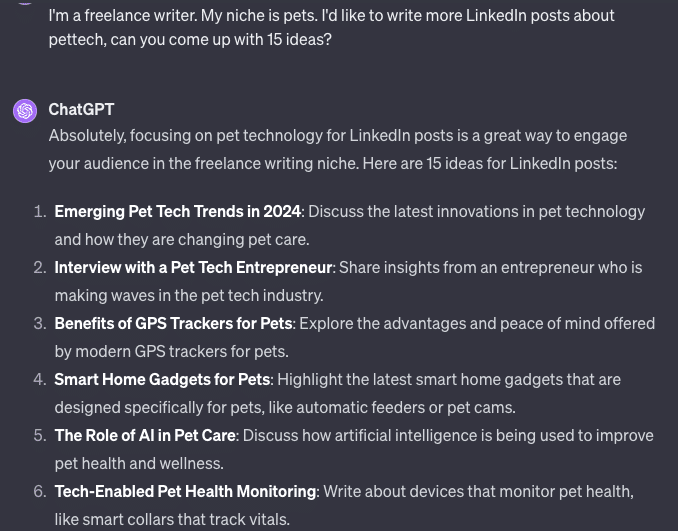
- Leverage AI as a Collaborative Sparring Partner: When you hit a creative wall, utilize AI writing tools like ChatGPT to jumpstart your thinking. Prompt the tool to generate 10 unique thought-leadership angles for your specific niche, then infuse those prompts with your personal voice, expertise, and unique perspective.
Official Statements and Industry Expert Insights
Industry leaders continually emphasize the shift toward community-backed, relationship-driven platforms over traditional outbound prospecting.
"LinkedIn has evolved far beyond a digital Rolodex. For modern independent professionals, it is an active market square where business buyers openly signal their challenges. If you are not showing up there with a clear, client-focused point of view, you are surrendering market share to writers who are."
— Sean Ogle, Founder of Location Rebel
Similarly, veteran B2B marketing strategists point out that client acquisition in the digital age relies heavily on ambient awareness—the psychological phenomenon where prospects hire the expert whose name they see repeatedly and consistently in their professional feeds over weeks and months.
Future Outlook
As artificial intelligence continues to shift the landscape of commodity content creation, the baseline demand for generic, low-cost writing will inevitably decline. However, the value of strategic thought leadership, specialized domain expertise, and human perspective has never been higher.
LinkedIn sits at the intersection of this evolution. Companies are not looking for software-generated text; they are looking for trusted partners who understand regulatory nuances, can interview subject matter experts, and can translate complex corporate value propositions into compelling narratives.
By dedicating just 20 to 30 minutes a day to optimizing your profile, engaging with intentional prospects, and consistently sharing niche-specific insights, you insulate your freelance business from market volatility. The transition from chasing low-paying gigs on crowded job boards to commanding high-end inbound rates is entirely achievable—and it starts with mastering the professional web’s most powerful networking engine.
